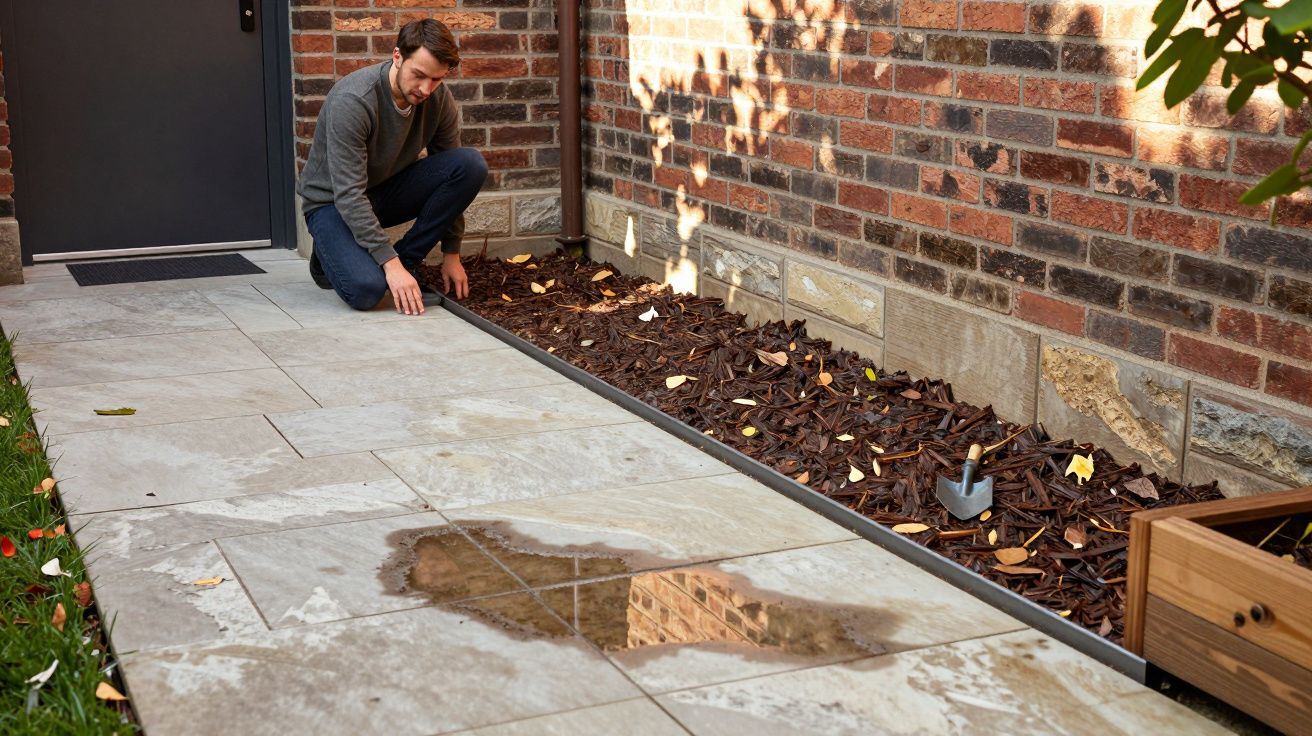
Structural garden works are the unglamorous choices-levels, edges, bases, drainage-that stop urban gardens turning into a perpetual clean-up job. In tight courtyards, roof terraces, and narrow plots, structure isn’t a “nice-to-have”; it’s what makes the space usable in February as well as July. Style can transform a garden’s mood, but without a sound framework it tends to collapse into wobble, weeds, and water where you don’t want it.
You can spot the pattern on any street with converted basements and small patios: new pots, a fresh bench, a string of lights, then a winter of pooling water and cracked paving. The fix usually isn’t another plant. It’s going back a step and building the bones properly.
Why structure matters more in the city
Urban sites ask more of a garden than rural ones. They’re often shaded by walls, blasted by wind funnels, and fed by rain that has nowhere to soak in. Add constant foot traffic, bikes, bins, and the need for storage, and the garden becomes a working space, not a postcard.
There’s also less margin for error. If a border slumps or a surface fails, it can block your only route to the back door, flood a neighbour, or create a trip hazard on a path you use daily. The city magnifies small mistakes.
A beautiful finish on top of a shaky base doesn’t age into “character”. It ages into repairs.
The core pieces of structural garden works (and what they prevent)
Think of structure as a set of quiet systems. If they’re right, you don’t notice them. If they’re wrong, they hijack your weekends.
Common elements include:
- Ground levels and falls: to move water away from the house and towards a drain or planted area.
- Edging and retaining: to stop soil migrating into paths and to hold terraces in place on sloped sites.
- Sub-bases under paving and decking: to prevent rocking slabs, dips, and frost heave.
- Steps and thresholds: to make awkward level changes safe, legal, and comfortable.
- Drainage details: channels, soakaways (where appropriate), permeable surfaces, and overflow routes.
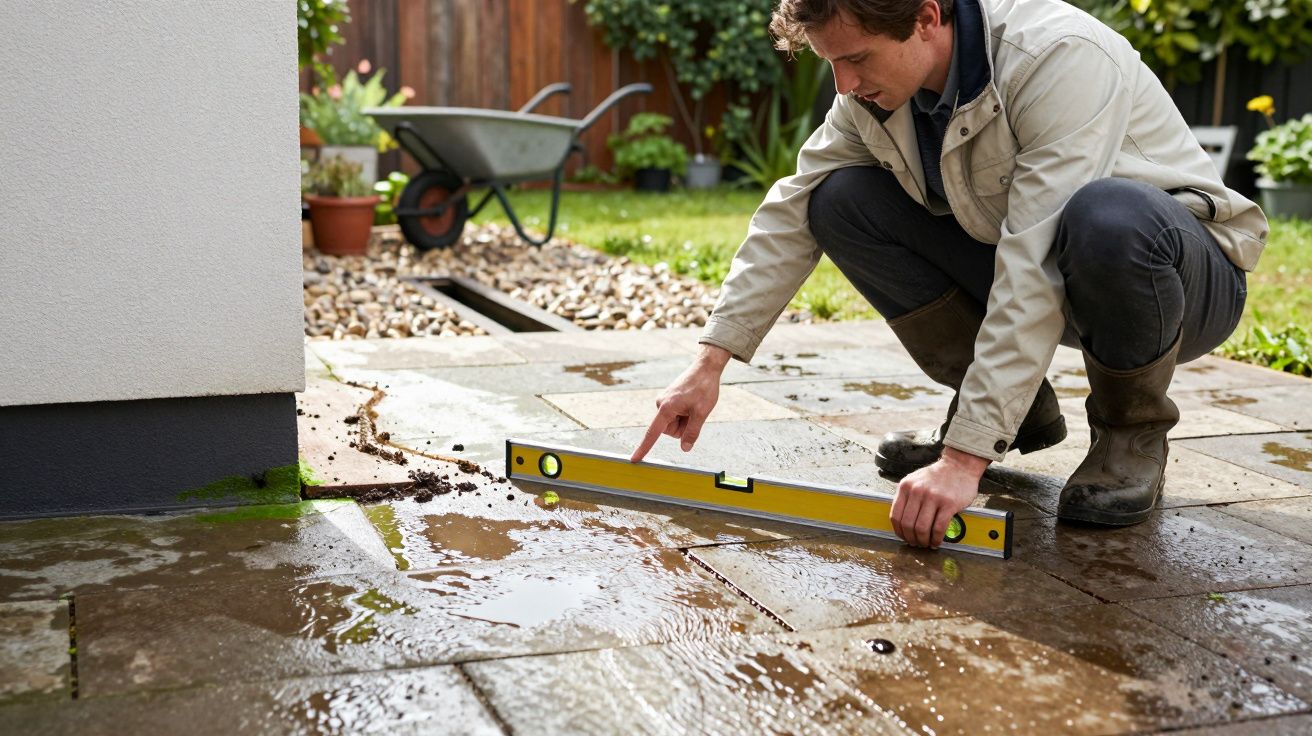
Each one is boring until it isn’t. A half-degree fall sounds trivial until the puddle forms against your wall and the algae makes the patio slick.
Start with water: the fastest way to ruin a small garden
Most urban garden failures are water stories wearing a different costume. The surface looks fine in summer. Then autumn arrives, leaves block the outlet, the corner stays wet, and everything downstream follows: slippery paving, rotting timber, fungus in pots, and a damp smell near the back door.
A practical way to think about it is “where does rain go in the first five minutes?” If you can’t answer that confidently, the design is running on luck.
A basic checklist that saves pain later:
- Keep finished surfaces sloping away from buildings.
- Avoid trapping water between raised planters and walls.
- Choose permeable paving or gravel where runoff would otherwise concentrate.
- Plan an access point to clear drains and channels without dismantling the garden.
Let’s be honest: nobody wants to talk about falls and outlets when they’re choosing cushions. But this is the part that keeps the cushions from going mouldy.
Levels, access, and the reality of how you move through the space
In urban gardens, every metre does double duty. Paths become routes for prams, recycling, and wheelbarrows. Steps become seats. Edges become places to rest a cup. If circulation is awkward, you stop using the garden, no matter how well styled it looks.
Good structure makes movement obvious:
- A clear line from door to shed or bin store.
- A stable, non-slip surface where you’ll walk in wet shoes.
- Steps that feel generous rather than steep and apologetic.
- Turning space if you need it-especially on terraces where furniture already eats the footprint.
If you get these right, the garden feels larger. Not because it is, but because it works without negotiation.
Soil and containment: the hidden battle against mess
City plots are often made of made-ground, rubble fill, or compacted subsoil that behaves badly in containers and borders. Even in a healthy site, narrow beds and raised planters dry out faster and get stressed quicker. Structure helps by defining where soil lives and how it’s renewed.
Three interventions tend to pay back immediately:
- Proper raised beds or planters with liners and drainage gaps so roots don’t sit in water.
- Robust edging that keeps mulch and compost where you put it.
- A deliberate “dirty zone”-a corner or cabinet for compost, tools, and potting-so the tidy zone stays tidy.
Style is easier when the garden has somewhere to be imperfect.
Materials that suit urban punishment (not just a showroom photo)
Cities are hard on surfaces: soot, shade, moss, foot traffic, and constant rearranging. The choice isn’t “natural versus modern”; it’s “forgiving versus fussy”.
As a rule, prioritise:
- Slip resistance over the perfect colour tone.
- Repairability over seamless finishes that fail all at once.
- Edges that can take knocks-especially where bikes and chairs scrape by.
- Timber detailing that can dry (ventilation under decks, end-grain protected, fixings that won’t rust).
A small garden reveals wear quickly. Choose materials that look decent when lived-in.
A simple order of operations that keeps the budget under control
Structure-first doesn’t mean blowing the entire budget on hard landscaping. It means spending in the right sequence so you don’t pay twice.
A sensible build order is:
- Set levels and deal with water (falls, drains, permeable areas).
- Build the “bones” (retaining, steps, sub-bases, main paths).
- Create containment (beds, planters, edging, storage).
- Add the finish (lighting, paint, furniture, pots, planting schemes).
The win is flexibility. When the structure is sound, you can change the style every season without rebuilding the garden each time.
Signs you should pause the styling and fix the structure
Some warning signs are easy to ignore because they arrive slowly. In urban gardens, they rarely fix themselves.
Watch for:
- Water sitting on paving more than an hour after rain.
- Slabs that rock, or gravel that migrates into the house.
- Soil washing onto paths, or borders slumping each winter.
- Decking that stays dark and damp for days.
- Steps that feel awkward, especially when carrying things.
These aren’t aesthetic problems. They’re early-stage structural ones.
The quiet payoff: a garden that’s easy to keep good
When structural garden works are handled properly, urban gardens become calmer. You stop fighting mess and moisture. Plants do better because their conditions are steadier. Cleaning takes minutes, not half a Saturday, and you can invite people over without rearranging the entire space first.
Style still matters. It’s just meant to sit on top of a garden that behaves.
FAQ:
- Do I need drainage even if my garden is tiny? Often, yes. Small urban gardens can shed water quickly and have limited places for it to go, so a clear drainage plan (falls, permeable areas, or channels) matters more, not less.
- What’s the most common structural mistake in urban gardens? Skipping the sub-base and levels under paving or decking. The surface may look fine at install, then settles unevenly and starts holding water.
- Can I prioritise planting and do the hard work later? You can, but it’s risky. If you later need to regrade levels or rebuild paths, you’ll likely damage new planting and end up paying twice.
- Are permeable surfaces always better? Not always, but they’re often helpful in cities. The right choice depends on the ground below, nearby buildings, and where overflow water can safely go.





Comments (0)
No comments yet. Be the first to comment!
Leave a Comment