
Space zoning sounds like something you do with an architect, not a trowel. But in terraced house gardens-those long, narrow strips behind the back door-it’s the difference between a space you use every day and a space you only look at while you wait for the kettle to boil. When everything is competing in one rectangle, your garden doesn’t need more features. It needs a plan.
Most people start with the fun bit: a new bistro set, a raised bed, maybe a fire pit if the neighbours won’t mind. Then summer arrives, and you realise you’ve built a lovely obstacle course. The chair blocks the shed, the herbs are too far from the kitchen, and the “quiet corner” is directly under the washing line.
That’s the moment to borrow a trick from interiors: zone it like a floor plan, so every metre earns its keep.
The terraced garden problem isn’t size. It’s everything happening in one line.
Terraced house gardens are usually shaped like a corridor: house at one end, fence at the other, borders squeezing the sides. The layout encourages a single pathway, a single view, and a single “do it all here” patio that ends up doing nothing particularly well.
You can feel it in the way you move. You step out, hesitate, and default to the same spot because it’s easiest. The rest becomes storage, long grass, or a graveyard of good intentions.
Space zoning fixes that by giving each part of the garden a job, a boundary, and a reason to exist-without making it fussy.
What “space zoning” looks like outdoors (and why it works)
Indoors, you wouldn’t put the dining table in front of the wardrobe and call it cosy. You’d decide where cooking happens, where eating happens, where relaxing happens, and you’d arrange the room around those behaviours.
Outside is the same, just louder. Sun, wind, privacy, mud, and noise all change what works where. The magic isn’t in buying things; it’s in placing functions where they naturally succeed.
A simple zoning mindset usually includes:
- Arrival zone (just outside the back door): clean, hard-wearing, practical
- Living zone (sitting/eating): comfortable, slightly protected, close enough to feel easy
- Working zone (bins, shed, potting, bike storage): accessible, but not centre-stage
- Growing zone (beds, herbs, compost): where light is best and watering is convenient
- Quiet/wild zone (a bench, grasses, pollinator plants): where you can look through the garden, not just at it
The point is not to cram all five into every plot. The point is to choose the two or three you actually live with-and stop forcing the rest into the same square of paving.
Start with a two-minute “floor plan” before you move anything
You don’t need graph paper. You need honesty.
Stand at the back door and answer three questions:
- What do I do here most weeks? (Dry laundry? Eat outside? Grow herbs? Let the dog out? Store bikes?)
- What annoys me every time? (Mud brought in, nowhere to put tools, no privacy, can’t open the shed without moving furniture)
- Where are the natural advantages? (Sunniest patch, shadiest patch, sheltered corner, overlooked fence line)
Then sketch the garden as three rectangles in a row-front, middle, back-and assign a function to each. Terraced gardens love this because it matches the shape they already have, and it breaks the “everything by the door” habit.
If you do nothing else, do this: keep the first zone by the house deliberately boring. Make it a place for boots, watering cans, a small rack, maybe a slim bench. When the practical mess has a home, the rest of the garden stops feeling like a cupboard you’re embarrassed about.
Boundaries matter more than features (and you can make them softly)
A zone isn’t real until it has an edge. Not a brick wall-just a signal that tells your brain, “this bit is different”.
In terraced house gardens, good boundaries are usually light and vertical, because width is precious. A few that work without shrinking the space:
- A change of surface: paving near the house → gravel or bark further out
- A thin “threshold” bed: a 30–50cm strip of planting that you step past
- A simple frame: an arch, a pergola beam, a washing line moved to the back third
- A line of pots: not scattered, but used like a low divider
- A screen where it counts: slatted panels or trellis to block one key sightline
People worry zoning will make a small garden feel smaller. The opposite is usually true. When the garden is one uninterrupted strip, your eye reads it as a tunnel. When there are two or three clear scenes, it reads as depth.
A real-world zoning layout that fits most terraces
Here’s a layout that quietly solves the usual problems without needing a redesign budget:
Zone 1 (0–3 metres from the house): “Utility patio”
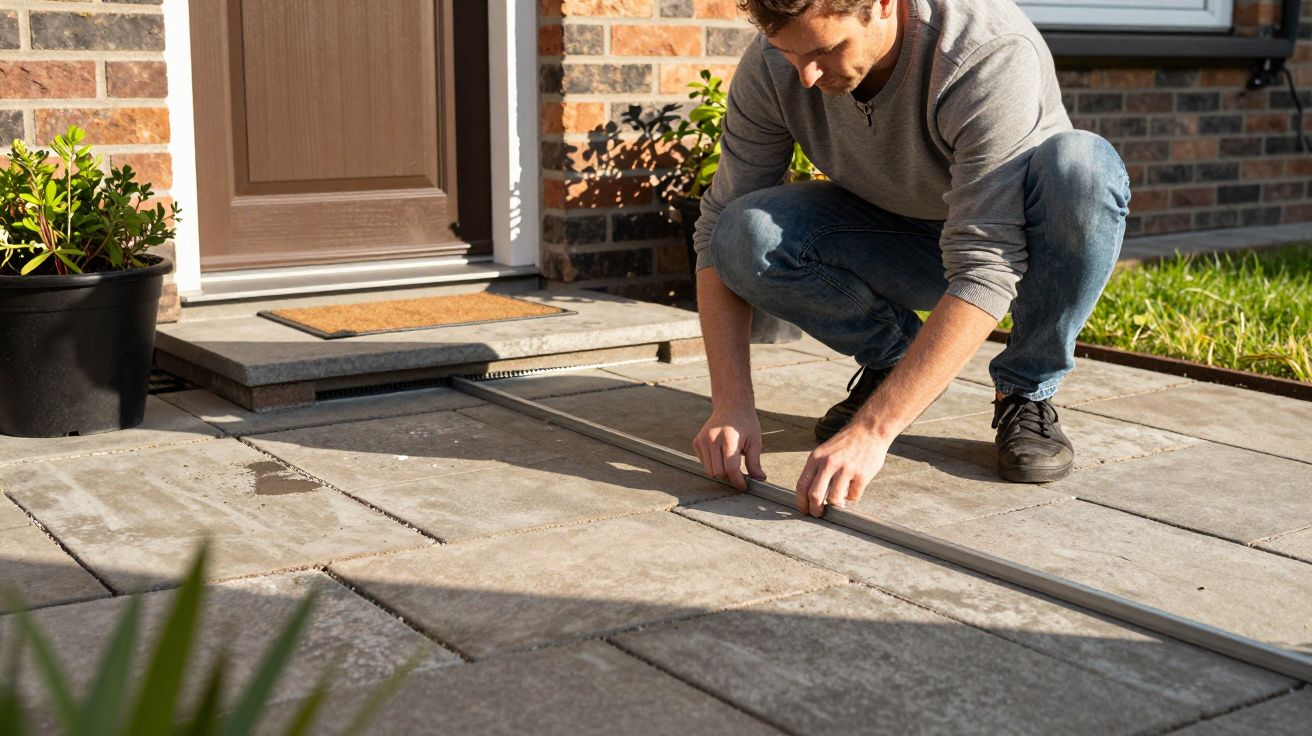
This is where you put the boring things on purpose: a tidy bin store, somewhere to hang a watering can, a narrow console for herbs you actually use, a mat that catches mud. Keep it uncluttered so you can step out with a cup of tea and not trip over life.
Zone 2 (the middle): “Living room”
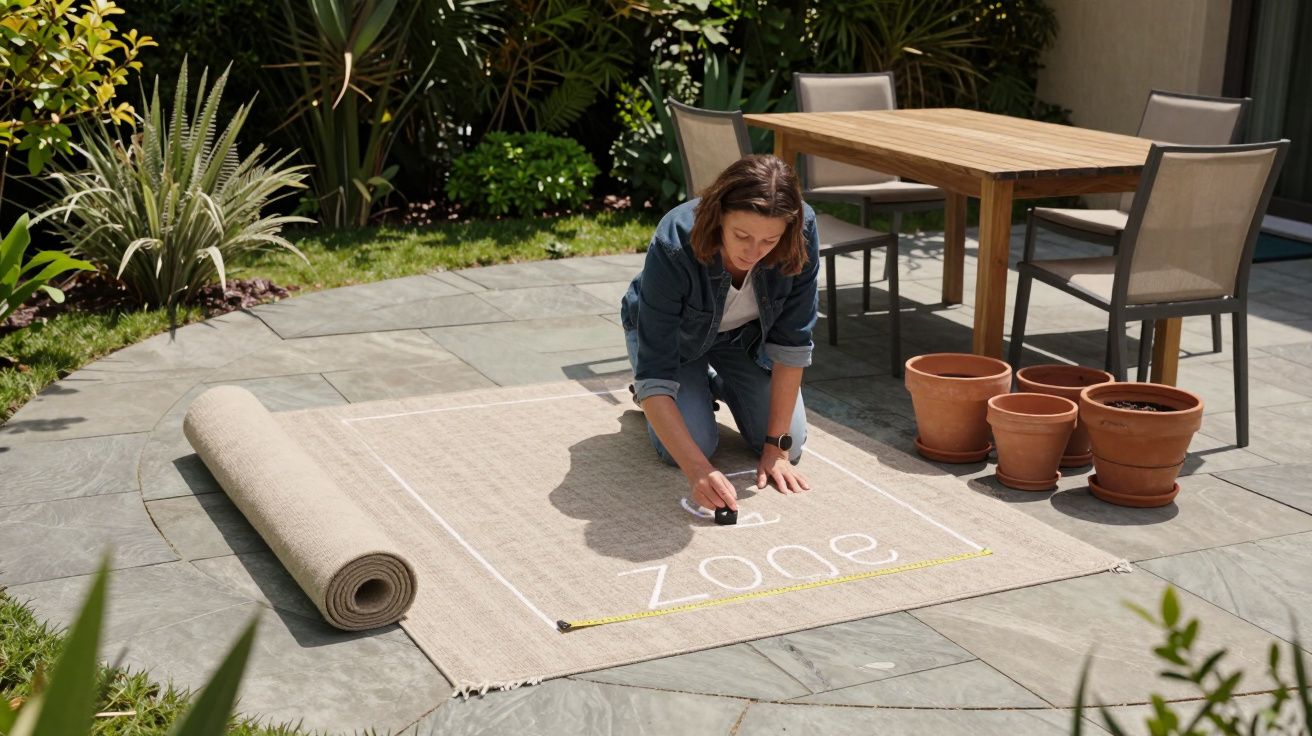
This is where seating belongs, not shoved against the fence like punishment. Add one comfort item (shade sail, outdoor rug, cushions you’ll bring in) and one privacy move (a tall planter, a screen, a climber on wires). The goal is a place you’ll sit for 20 minutes without rearranging anything.
Zone 3 (the back): “Work + grow”
Shed, compost, raised bed, potting shelf, kids’ sandpit-this is the messy zone, and that’s fine. Put the tall, ungainly stuff at the end so the view from the house stays calm. If you want a “secret” bench, tuck it to one side of this zone so it feels like a destination, not a spare chair.
The small surprise: when the living zone moves into the middle, you get privacy and peace without taller fences. You’re simply not sitting on the most overlooked edge of the plot.
The common mistake: choosing furniture before choosing behaviour
A terraced garden gets chaotic when you shop in individual items instead of roles. You buy the table, then wonder why there’s no path. You install beds, then realise you hate watering because the tap is miles away. You add a fire bowl, then discover the only safe spot is exactly where everyone needs to walk.
Try this order instead:
- Decide zones
- Decide routes (how you move between them)
- Decide boundaries
- Only then choose objects (table, storage, beds, lighting)
It feels less exciting, but it saves money and makes the garden feel “done” sooner, because every addition has a home.
A quick zoning checklist you can do this weekend
- Keep a clear main path (even if it’s stepping stones through gravel)
- Give the back door a landing space that stays clear
- Put seating where you’re most likely to use it: sun + privacy + near the house, not just “where it fits”
- Push storage and mess to the back third, then screen it lightly
- Repeat one material or plant across zones so it still feels like one garden, not three unrelated projects
You’re not trying to make a show garden. You’re trying to make a small outdoor space behave like a good home: each area doing its job, without arguing with the next.
| Point clé | Détail | Intérêt pour vous |
|---|---|---|
| Zoner comme un plan | Attribuer une fonction à chaque “bande” du jardin | Moins de bazar, plus d’usage au quotidien |
| Créer des limites douces | Surfaces, pots, treillis, cadres légers | Donne de la profondeur sans réduire l’espace |
| Mettre le “pratique” quelque part | Zone utilitaire près de la porte + stockage au fond | Le coin détente reste réellement agréable |
FAQ:
- Faut-il zoner même un tout petit jardin de terrasse ? Oui, surtout. Plus l’espace est étroit, plus les usages se gênent. Deux zones claires (utilitaire + détente) suffisent souvent.
- Est-ce que le zoning va “couper” le jardin et le rendre plus petit ? Pas si les limites sont légères. Un changement de sol, une arche, ou une bande plantée créent des scènes et donnent souvent une impression de profondeur.
- Quelle est la zone la plus importante à définir en premier ? Celle juste à la sortie de la maison. Si l’arrivée est encombrée, tout le jardin se ressent comme une zone de stockage.
- Comment garder une unité visuelle avec plusieurs zones ? Répétez un matériau (gravier, briques, bois) ou un thème de plantation (graminées, blancs/verts, aromatiques) dans chaque zone.




Comments (0)
No comments yet. Be the first to comment!
Leave a Comment