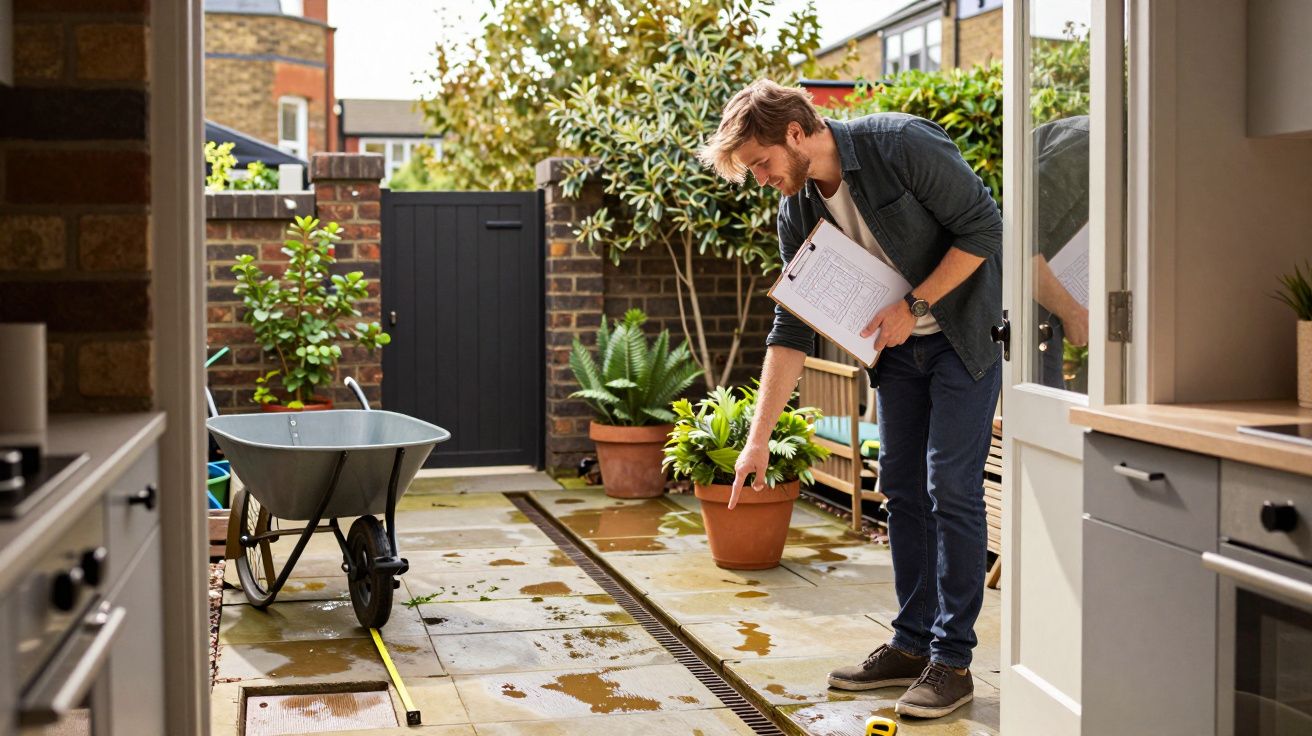
Garden construction in london gardens often goes wrong long before a spade hits the ground. Not because Londoners don’t care, but because small spaces punish vague plans, optimistic measurements, and “we’ll figure it out on site” thinking. In a terrace square where every centimetre matters, the failure usually starts on paper-or in your head-weeks earlier.
I’ve watched it happen on side returns in Hackney, paved courtyards in Clapham, and new-build balconies dressed up as “gardens”. The client is excited, the contractor is booked, the mood is hopeful. Then one quiet reality check lands: the gate is too narrow, the drains are in the wrong place, the neighbours have opinions, and the design was never built around how the space actually works.
Small London gardens don’t fail at construction. They fail at decision-making.
The first mistake: treating a tiny garden like a scaled-down big one
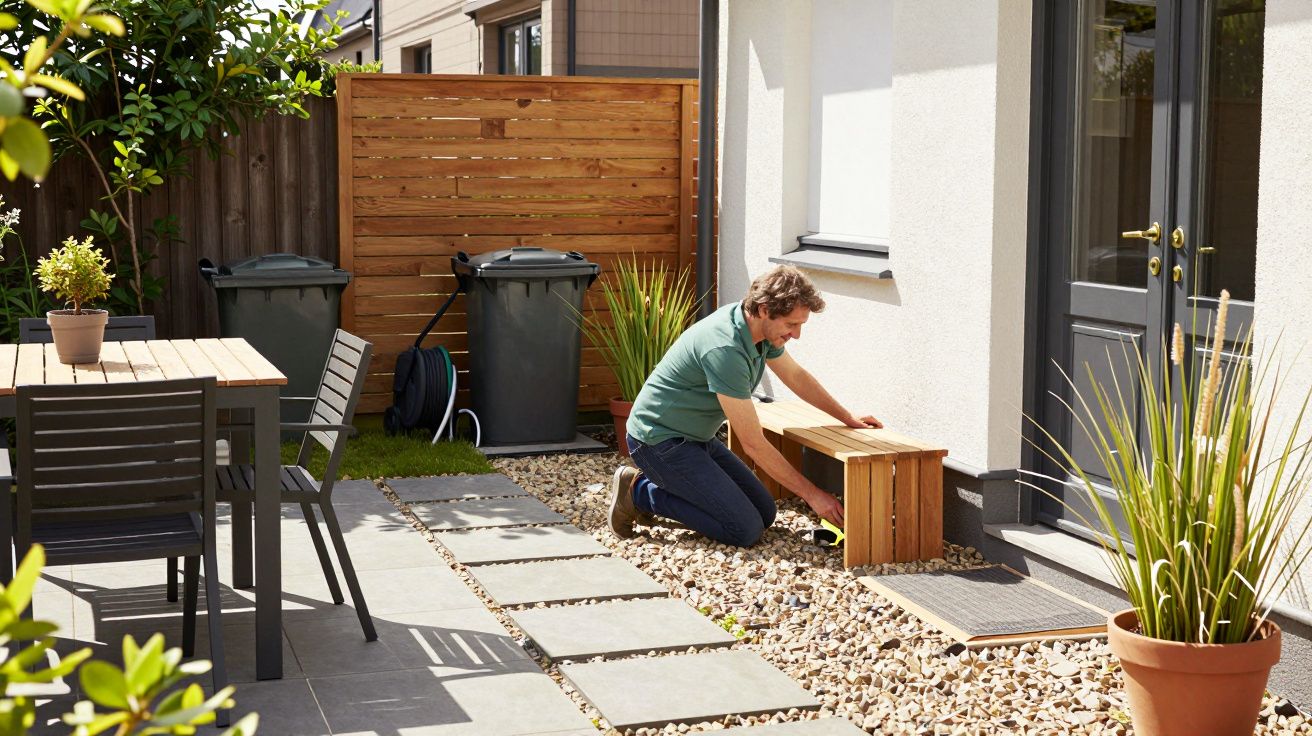
On Pinterest, a small garden looks like a miniature version of a grand one: a dining zone, a lounge zone, raised beds, a water feature, lighting, a shed, and a tree for “height”. In real life, those elements compete. Each one steals circulation space, daylight, or drainage capacity.
A compact garden needs fewer ideas, not more. The most successful ones I’ve seen choose one clear job-hosting, growing, low-maintenance calm-and let everything support that job. When the brief is “a bit of everything”, the build becomes a string of compromises.
Ask yourself one slightly annoying question early: What will we do here on an average Tuesday, not the one perfect Saturday? The answer should drive the layout.
The hidden killer: guessing levels, falls, and where the water goes
In London, water is the uninvited stakeholder. Many small gardens sit lower than the house, or have old hardstanding, or have drains that don’t behave the way you think they do. People plan surfaces as if they’re purely aesthetic-pavers here, decking there-without planning the slope, the falls, and where rain will discharge.
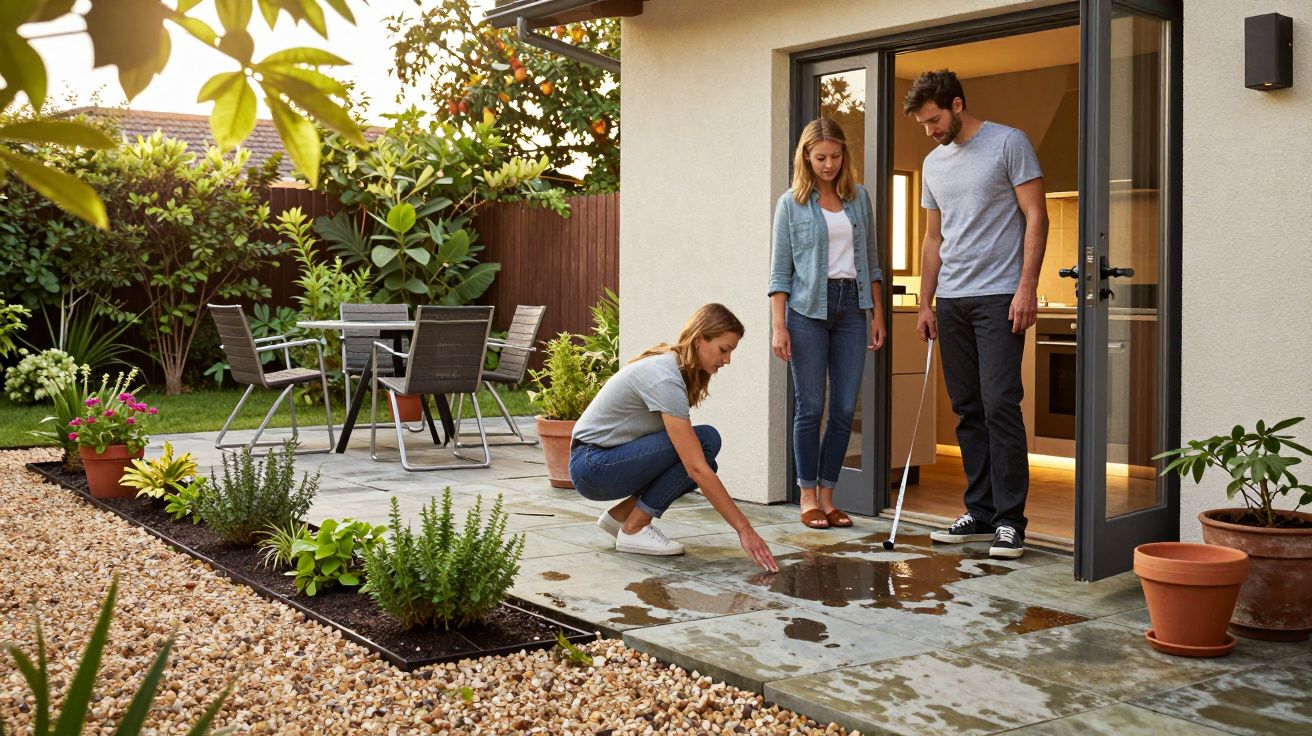
Then the first heavy downpour arrives. Puddles sit against the back door. The paving “looks wrong” because the contractor had to introduce a fall at the last minute. Or worse, water runs to the neighbour’s side and becomes a dispute you didn’t budget for.
A quick survey and a drainage plan can feel boring compared to choosing porcelain tiles. It’s the unsexy work that stops the whole thing becoming a damp regret.
Access: the garden is small, but the materials aren’t
A London garden can be 4 metres wide and still be a logistical nightmare. Side passages are tight. Alleyways are shared. Steps are steep. Flats have no direct access. Every tonne bag of soil, every paving slab, every sleeper has to get through a physical bottleneck.
This is where projects quietly bleed money before they “start”. If access isn’t thought through, you end up paying for:
- Extra labour time (everything carried by hand, multiple trips)
- Smaller-format materials (chosen for access, not preference)
- Specialist removal (waste can’t be barrowed out easily)
- Protection works (hallways, tiles, communal areas, neighbours’ walls)
A good early step is a simple access audit: measure gates and passages, check turning space, note steps, and confirm where skips or grab lorries can legally go. It’s not overthinking. It’s the difference between a smooth build and daily improvisation.
The design trap: forgetting that plants need light, soil, and time
Many london gardens are shaded by extensions, fences, and neighbouring buildings. People fall in love with planting schemes built for sun, then wonder why everything sulks. Others want “lush” but specify shallow planters on top of concrete, leaving roots nowhere to go and irrigation as an afterthought.
Planting fails before construction because the growing conditions were never part of the design. A small garden needs plants that match:
- The aspect (north-facing is a different world)
- The wind tunnel effect between walls
- The available soil depth (especially over basements or slabs)
- Your tolerance for maintenance in winter, not just summer
If you want green quickly, build in proper soil volumes, not decorative skim layers. If you want low effort, plan for structure: evergreen backbone, fewer species, repeat planting, and a watering plan that doesn’t rely on guilt.
The budget mistake: spending on finishes before you’ve funded the bones
There’s a classic sequence in small gardens: money goes on the surface you can photograph-tiles, composite decking, fancy fencing-then the budget can’t stretch to the things that stop movement and mess.
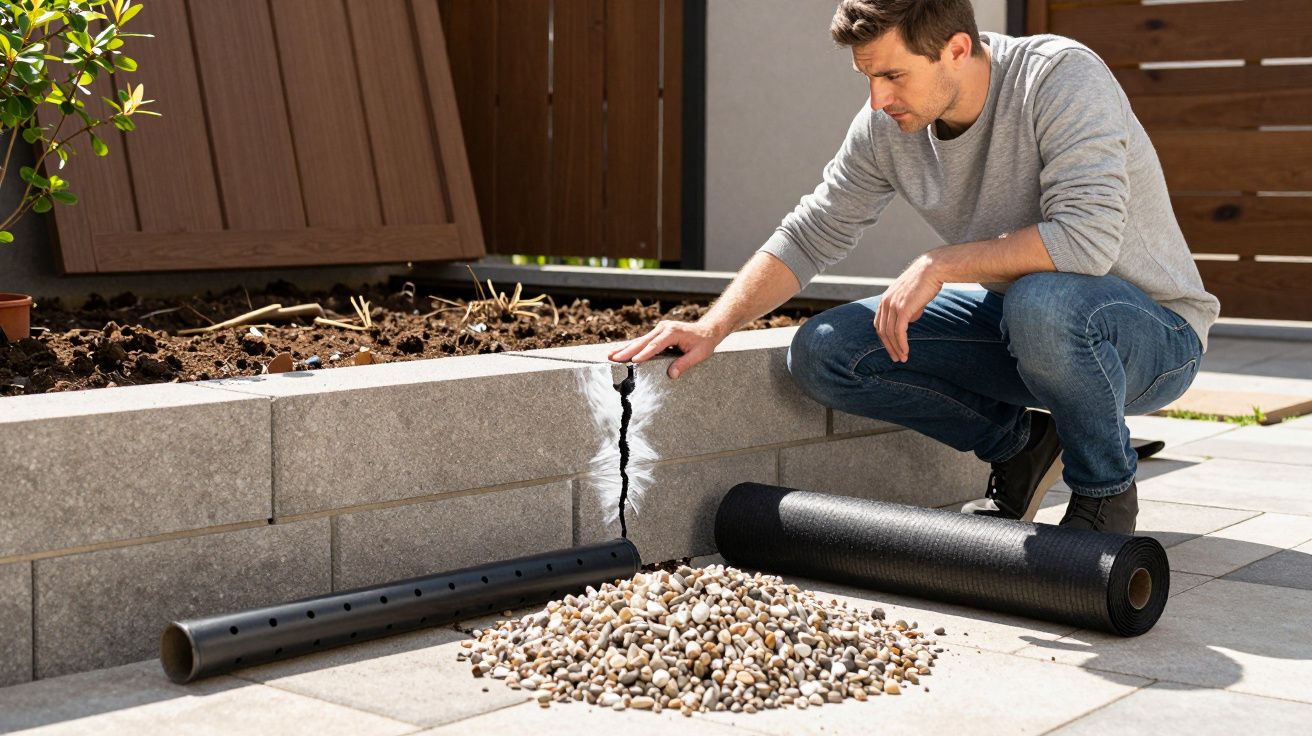
The “bones” are the boring bits: sub-base depth, edge restraints, drainage channels, retaining details, soil improvement, root barriers, electrical routes, and lighting conduits. When these are value-engineered out, you might still get a pretty reveal. You just won’t get a garden that stays level, drains well, and ages gracefully.
A helpful budgeting rule is to ring-fence the invisible work first. If you have to compromise, compromise on finishes you can upgrade later, not on structure you’ll have to dig up.
The neighbour factor: boundaries, noise, and assumptions
London gardens are close quarters. Sound travels. Fences sit on lines that were “agreed” 20 years ago. Overhanging trees are emotional. Party wall issues aren’t only for lofts-retaining walls and groundwork can trigger them too.
A surprising number of projects stall because a conversation happens too late. Someone objects to a new fence height. Someone claims the boundary is wrong. Someone doesn’t want workers crossing a shared alley. None of this is rare, and none of it is solved by rushing.
Before you lock dates, clarify:
- Who owns and maintains each boundary
- Whether any work affects shared access or shared walls
- Working hours expectations (especially in conversions and flats)
- Where materials will be stored and how waste will leave
It’s not about being overly polite. It’s about not betting your schedule on other people staying quiet.
A practical pre-build check that saves weeks later
Think of it as a “ten-minute sanity walk” before you sign anything. Stand at the back door and trace the whole project in your head, as if you’re the rain, the wheelbarrow, and the future you.
- Where does water go in a storm?
- How does a tonne of materials get from the street to the garden?
- Where will you store tools, plants, and waste during the build?
- What will you see from the kitchen window in February?
- What’s the one non-negotiable function of the space?
If you can’t answer those, you don’t yet have a plan-you have a mood board.
“Small gardens don’t forgive ‘we’ll see’. They reward clarity. The earlier you decide what matters, the cheaper the build becomes.”
What “good” looks like in a small London garden
The best projects feel almost calm. Not because they’re simple, but because they’re decided. They prioritise circulation, they handle water quietly, and they don’t fight the light.
Here’s the difference that shows up most often.
| Early decision | What it prevents | What it enables |
|---|---|---|
| Drainage + levels first | Puddling, rework, disputes | Clean lines, stable paving |
| Access plan | Delays, surprise labour costs | Predictable schedule and budget |
| One clear use-case | Cluttered layout | Space that feels bigger |
FAQ:
- What’s the biggest reason small London gardens go wrong? Lack of early planning around levels, drainage, and access. A pretty design can’t rescue a site that can’t move materials or shed water properly.
- Do I need a garden designer for a small space? Not always, but you do need a clear layout, measured levels, and a buildable plan. A short design consult can be cheaper than fixing on-site mistakes.
- Is decking easier than paving in a tiny garden? Sometimes, but it still needs proper structure, ventilation, and drainage. Decking can also reduce light and trap damp if poorly detailed.
- How do I make a small garden feel bigger? Reduce the number of zones, keep circulation clear, repeat materials, and use planting for softness rather than lots of separate “features”.
- When should I speak to neighbours? Before you book dates and before you order boundary-related materials. Early clarity avoids late conflict and last-minute redesigns.


Comments (0)
No comments yet. Be the first to comment!
Leave a Comment