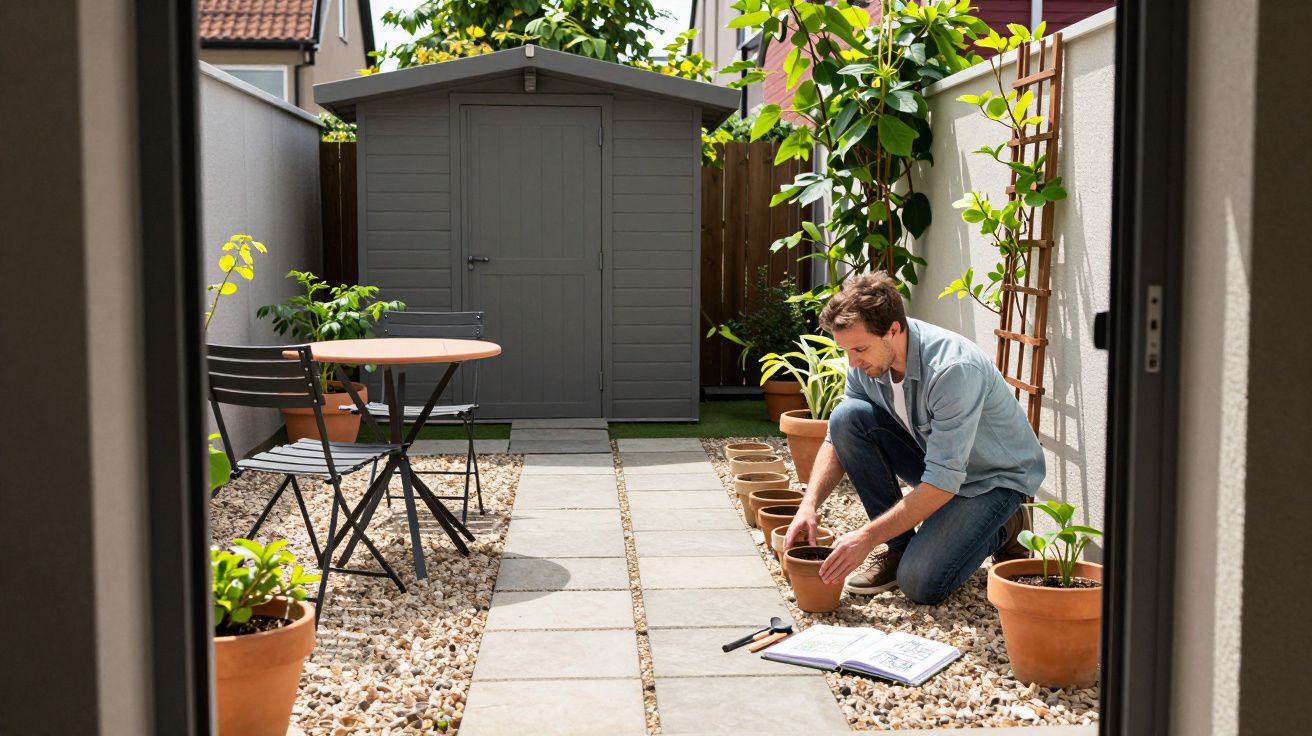
Small urban gardens make you practise space zoning whether you planned to or not: every pot, path and chair competes for the same few square metres. In a larger plot you can “add one more thing” and barely feel it; in a small one, each addition changes how the whole place works. That is why the decisions feel harder - and why getting them right pays back every day you step outside.
There’s also a quieter pressure: small spaces are always visible. You notice clutter, awkward corners and dead zones in a way you don’t when there’s a long border to swallow mistakes. The garden becomes less a backdrop and more a tiny room you live in.
The real dilemma: what is this garden for?
People often start with a shopping list - a raised bed, a bistro set, some climbers, a water butt. Then the space refuses to fit the fantasy. In small gardens, “multi-purpose” can turn into “nothing works properly”: the chair blocks the gate, the herbs shade the seedlings, the storage box eats the only sunny patch.
The first hard decision is to pick a primary purpose and let it lead. Not forever, but for this season, in this version of your life.
- If you want to eat from it: prioritise sun, access and soil volume.
- If you want to sit in it: prioritise a comfortable footprint and privacy.
- If you want it to calm you down: prioritise sightlines, repetition and low-maintenance planting.
In small gardens, every square metre needs a job description.
Why small spaces punish “just one more thing”
A small garden behaves like a tightly packed flat. Circulation matters, and tiny inefficiencies compound. A path that is 10cm too narrow becomes a daily shuffle; a planter placed for “a bit of greenery” becomes a permanent obstacle when you carry compost through.
Designers talk about edges, pinch points and thresholds. You feel them most in small urban gardens because you can’t walk around the problem; you must walk through it.
A useful rule of thumb is to protect a clear route first, then decorate what’s left. That might mean:
- Keeping a straight run from back door to shed/bin store.
- Avoiding planters that narrow a path at the same point as a door swing.
- Using wall-mounted or hanging solutions where floor space is precious.
Space zoning: fewer zones, clearer boundaries
Space zoning sounds formal, but it’s simply agreeing where the garden changes from “moving through” to “staying put” to “growing things”. The mistake in small plots is creating too many micro-zones: a reading nook, a fire pit corner, a mini lawn, a herb bar, a wildlife patch. It reads as busyness, and it’s harder to maintain.
Instead, aim for two or three zones, with boundaries that do more than look pretty. Let materials and levels do the work.
A practical zoning mix that fits most small gardens
- A living zone: seating, lighting, maybe a small table.
- A growing zone: containers, raised bed, trellis, greenhouse shelf.
- A service zone: bins, tools, water access, bike storage.
The boundary can be as simple as a change in surface (gravel to paving), a narrow planter strip, or a vertical screen that hides the “service” mess. What matters is that each zone stays legible when you glance out of the window.
The hidden cost of ignoring sun and shade
In big gardens you can usually find a compromise spot. In small ones, shade is a hard fact. A fence, a neighbour’s extension, your own wall - they dictate what will thrive, and where seating will feel pleasant.
Map your light in one day before you commit. Morning sun can suit herbs and breakfast coffee; afternoon sun can turn a tiny paved patio into a hotplate. The “wrong” placement doesn’t just affect plants; it affects whether you use the space at all.
- Full sun (6+ hours): fruiting crops, Mediterranean herbs, many roses.
- Part shade (3–6 hours): salad leaves, ferns, hydrangeas, many grasses.
- Shade (under 3 hours): evergreen structure, shade-tolerant groundcover, mossy textures.
If you only have one reliably sunny patch, treat it like premium real estate.
Vertical space is not a hack - it’s the plot
Small urban gardens often have more wall than ground. That’s not a limitation; it’s your main growing surface. Done well, vertical planting also reduces visual clutter because it lifts activity off the floor plane.
A trellis, wire system or narrow shelving can replace bulky containers, but it has to be planned like joinery in a kitchen: fixings, watering, access, and what happens in winter when things look bare.
- Train climbers where you want privacy, not just where there’s a fence.
- Use narrow planters for herbs near the door; keep deeper tubs for shrubs further back.
- Choose one strong vertical element (a small tree, a screen, a pergola) rather than several competing ones.
Maintenance is a design choice, not an afterthought
Small gardens can be high-maintenance precisely because they’re small: every weed shows, every fallen leaf reads like neglect. The hardest decision sometimes is to choose fewer plants with more impact, instead of cramming in variety.
A restrained palette makes the garden feel larger and calmer, and it turns maintenance into repetition rather than constant improvisation. Let’s be honest: nobody enjoys a garden that demands an hour a day to look “fine”.
Here are swaps that tend to work:
- Many small pots → fewer, larger containers (they dry out slower and look intentional).
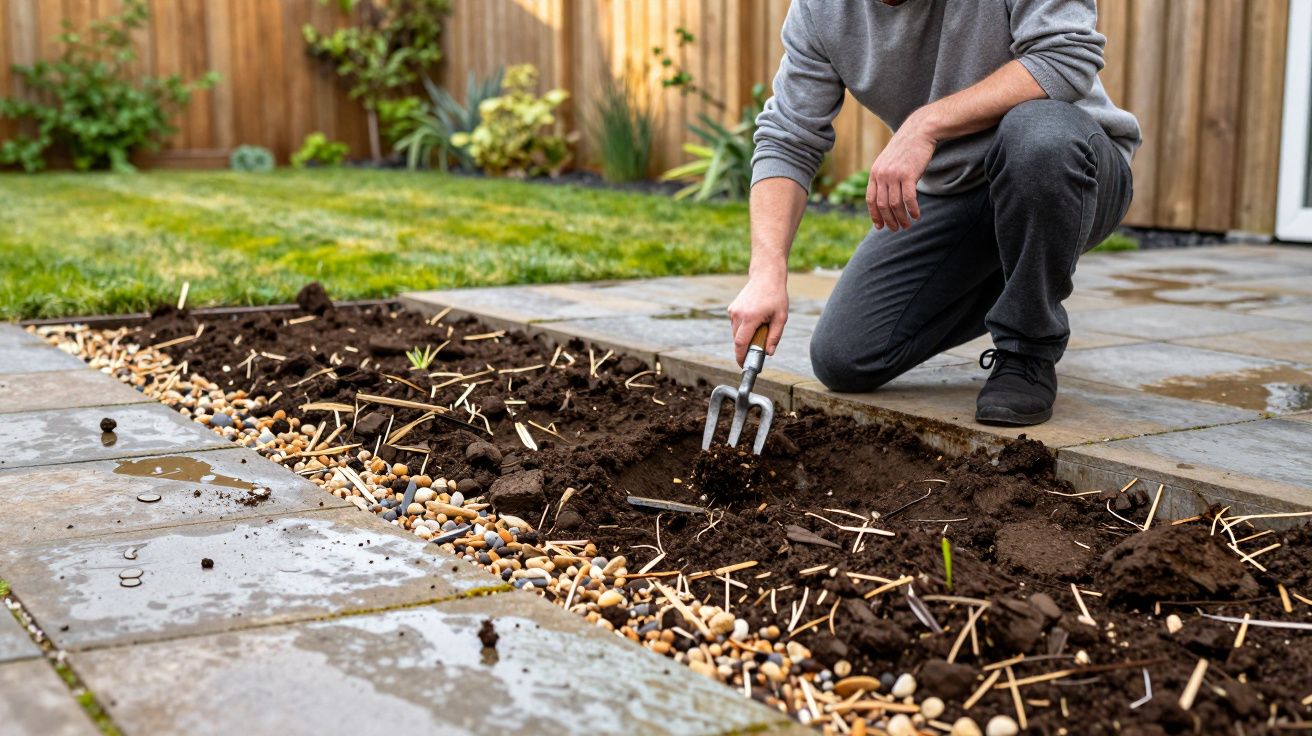
- A fussy lawn patch → gravel or permeable paving with planted edges.
- Mixed everything borders → one backbone shrub repeated, with seasonal layers.
| Decision | Smaller-garden win | Typical trade-off |
|---|---|---|
| Fewer, bigger planters | Less clutter, steadier moisture | Higher upfront cost |
| Two-zone layout | Clear use, easier flow | Less “novelty” |
| Vertical growing | More planting without crowding | Needs regular training/pruning |
The calm test: could you explain it in one sentence?
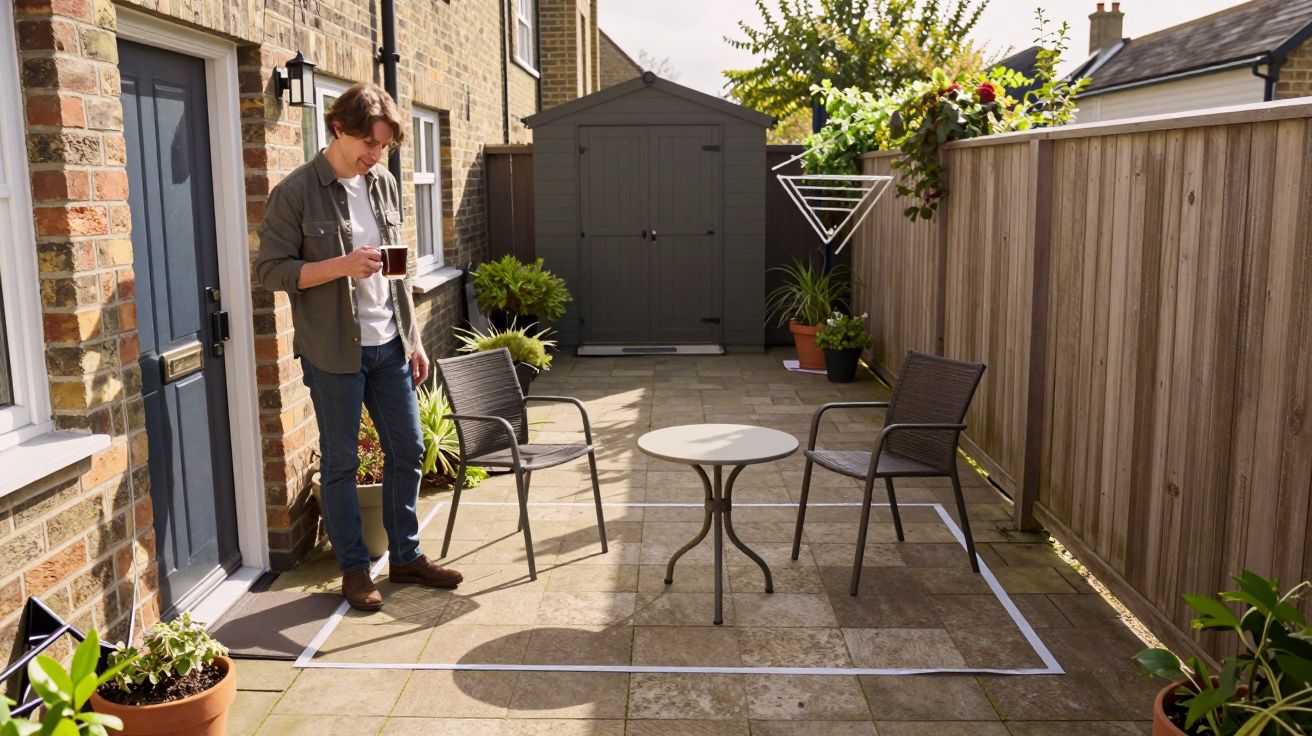
Before you buy anything else, stand at the back door and finish this line: “This garden is mainly for…”. If you can’t answer, you’ll keep trying to satisfy every version of you at once - dinner-party you, allotment you, minimalist you - and the space will feel tight no matter what you do.
When the sentence is clear, the decisions get simpler. Not easy, but simpler. In a small garden, that’s the difference between a space you manage and a space you actually use.
FAQ:
- Is space zoning worth doing in a very small garden? Yes. Even a 3–5 metre run benefits from clear zones: a route, a place to sit, and a place for growing or storage. It reduces clutter and makes the space feel bigger.
- What’s the first thing to plan: plants or hard landscaping? Circulation and seating footprint first, then light, then planting. If you don’t protect movement and use, the prettiest planting will still feel in the way.
- How do I make a small garden feel larger without “tricks”? Keep materials consistent, limit the number of zones, and use vertical planting to lift greenery off the floor. Fewer, larger elements usually read as more spacious than many small ones.
- Can a small garden be both productive and relaxing? Yes, but it needs firm priorities. Combine functions where you can (a bench with storage, climbers that give privacy and fruit), and avoid scattering small planters everywhere.

Comments (0)
No comments yet. Be the first to comment!
Leave a Comment