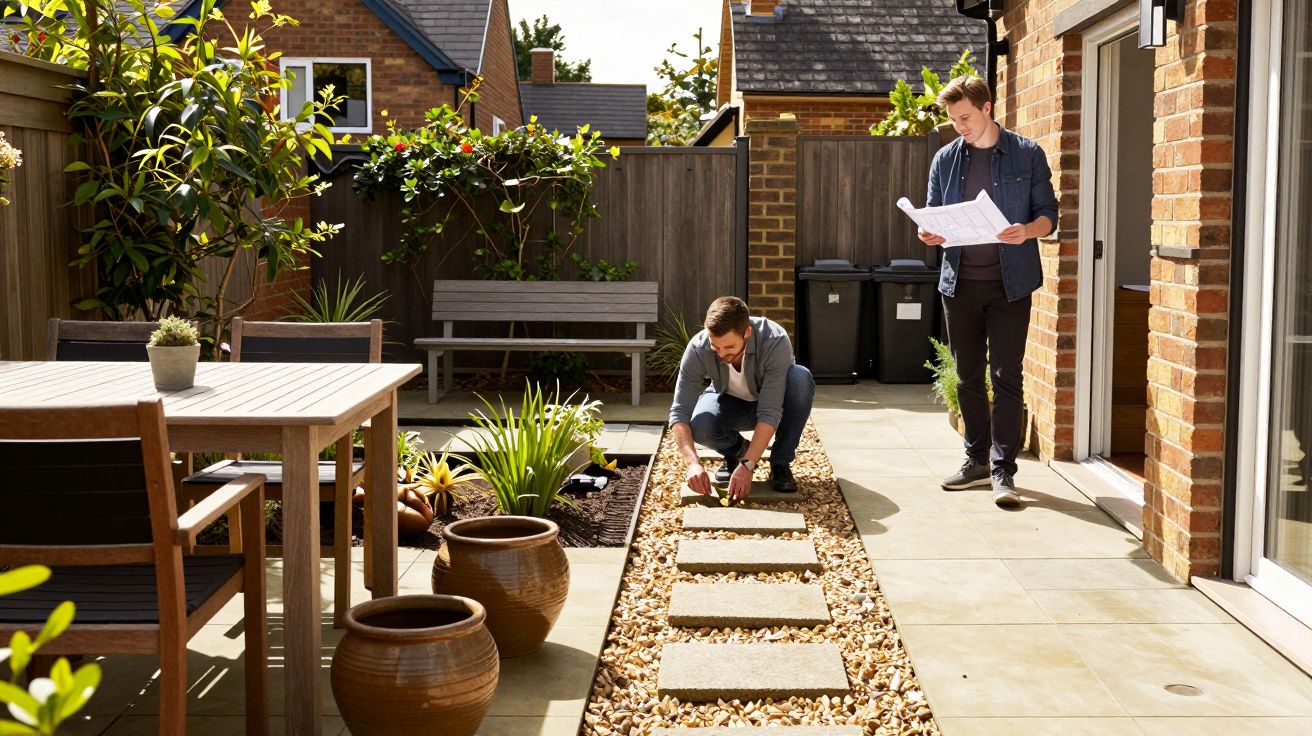
It usually starts with a good intention: a tidy set of patios so you can sit outside more often, keep shoes clean, and make the garden feel “finished”. But without space zoning - deciding what each area is for before you build - the patio quietly becomes the default answer to every problem. That’s when the garden turns into one big hard surface, long before any cracking, puddling, or regrets show up.
It’s not that patios are wrong. It’s that they’re powerful. They lock in circulation routes, sightlines, and where people gather, which then dictates where plants can live, where shade can happen, and how water behaves. Once it’s down, everything else is forced to compromise around it.
The trap: one surface doing ten jobs
A patio often tries to be the dining room, the play area, the suntrap, the BBQ zone, the potting bench, and the “don’t-look-at-that-shed” solution at once. It can’t be all of those things without growing-so it spreads. And when it spreads, the garden stops having rooms and starts being a single slab with a border.
You’ll notice it in small moments first. You keep moving the table to chase shade, stepping over toys because there’s nowhere else for them, and avoiding planting because “we might need the space”. The garden still works, but only on the patio’s terms.
What good space zoning looks like (before you touch a spade)
Space zoning sounds like something for architects, but it’s just making the garden legible. You’re deciding what happens where, and what should feel separate-even in a small plot.
Think in three simple zones:
- Arrival / circulation: where you walk, wheel bins, carry laundry, bring shopping in.
- Living: where you actually sit, eat, talk, read, supervise children.
- Growing / soft space: where you want texture, wildlife, privacy, and seasonal change.
A patio belongs in “living”. Paths belong in “circulation”. When a patio tries to do both, you end up paving to solve movement, and calling it seating because it’s easier than redesigning the route.
The early warning signs (that appear before the “issues”)
Most patio problems people talk about are technical: drainage, algae, loose pointing. The earlier problems are behavioural, and they’re easier to miss.
If any of these are true, the patio is already defining the whole garden:
- You only use the garden if the patio is tidy.
- You can’t picture where a tree would go without “blocking the space”.
- You avoid adding a shed, bike store, or compost area because it would “ruin the look”.
- Every new need becomes “shall we extend the patio?”
- The lawn (if you have one) feels like leftover space, not a destination.
None of this means you’ve failed. It just means the garden has one dominant room and no supporting cast.
“A patio should be a place you go to - not the thing you walk across to reach everything else.”
A better way to plan: size for use, then shape for flow
Patios get oversized because we plan for rare events: the one big barbecue, the one birthday party, the one heatwave week. Plan for normal Tuesday first, then give yourself flexible overflow elsewhere.
Try this quick method:
- Place furniture on paper first. Table + chairs + space to pull chairs out comfortably.
- Add a working edge. A strip for pots, a bench, or a narrow planting bed so the patio doesn’t feel like a helipad.
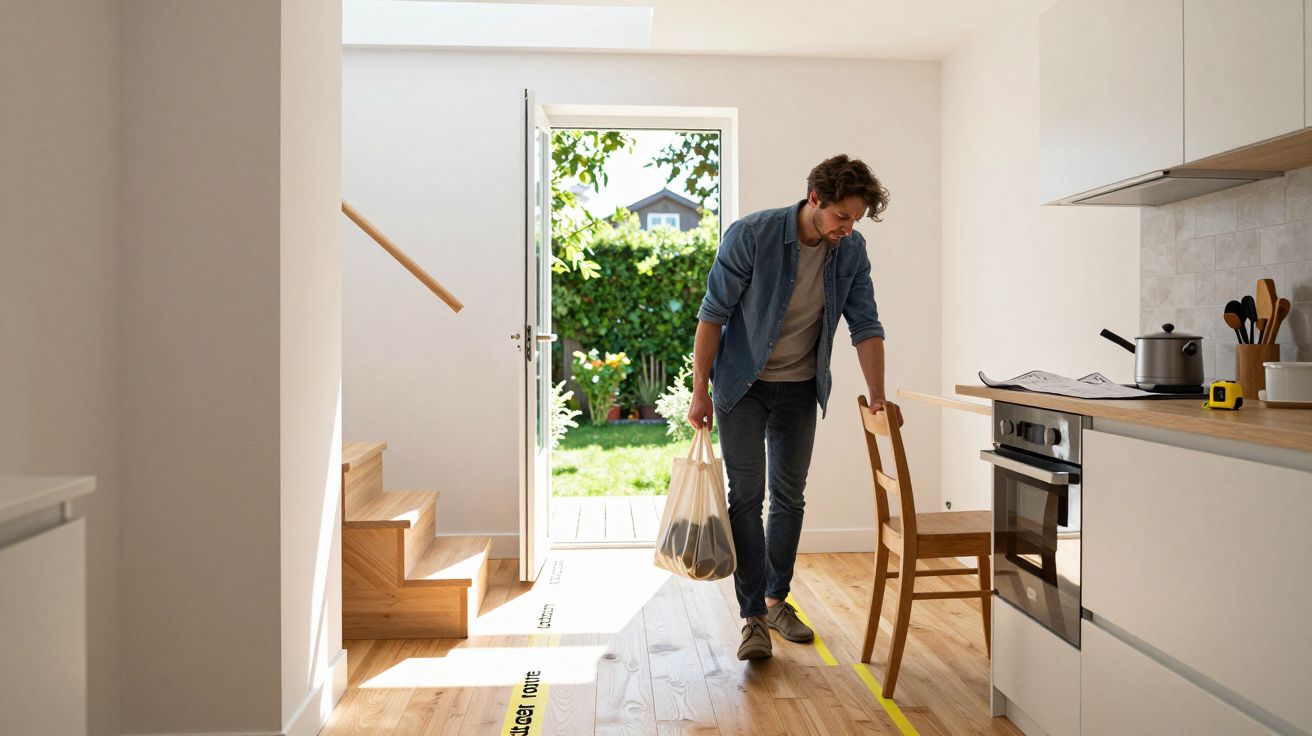
- Draw the route separately. The line from back door to shed/bins/side gate should not cut through the sitting area.
- Decide what must be soft. Even one dedicated planting zone changes the feel of the whole plot.
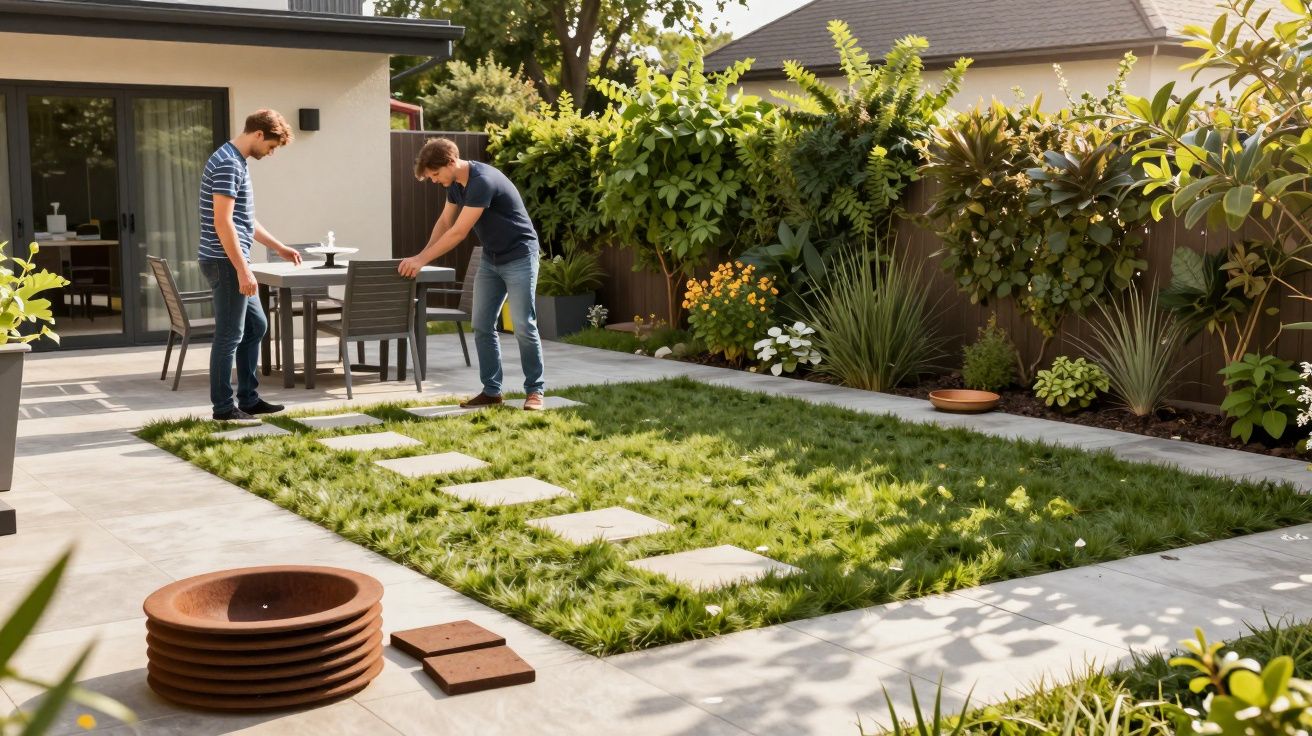
If your circulation route keeps slicing the seating zone, don’t widen the patio. Change the route: a stepping-stone path, a gravel strip, or a narrow paved run that does one job well.
Three small zoning moves that change everything
You don’t need a masterplan and a digger. You need a few deliberate separations so the garden reads as “designed”, even if it’s simple.
- Create a threshold. A pergola, a change in level, or even two large planters can mark “this is the sitting room”.
- Give utility a home. Bin store, log stack, compost, kids’ toys-if they have a defined zone, they stop colonising the patio.
- Add one destination away from the house. A bench under a tree, a small gravel circle, a hammock spot. It stops the patio being the only place worth going.
The aim isn’t fussiness. It’s to stop one material making every decision for you.
Materials are secondary; proportion is the real design choice
People agonise over porcelain versus sandstone, grout colours, and pointing. Those details matter, but proportion matters more. A perfectly laid patio that’s too big will still feel flat, hot in summer, and strangely exposed. A modest patio with good edges-planting, shade, a change of texture-feels inviting even when it’s damp and the cushions are indoors.
Here’s a simple way to keep it honest:
| Decision | Better question | What it prevents |
|---|---|---|
| Patio size | “How many people sit here weekly?” | Building for rare events |
| Patio shape | “Where do we walk every day?” | Seating becoming a corridor |
| Patio edges | “What softens this view?” | The ‘one big slab’ effect |
The quiet payoff: a garden that can change
When patios don’t define the whole garden, the plot becomes adaptable. Kids get older. You might want raised beds. A dog arrives. Shade patterns change as trees grow. A well-zoned garden absorbs those shifts without immediately reaching for more paving.
And that’s the real point: you’re not just building a surface. You’re setting the rules of the space for years.
FAQ:
- Do I need a patio at all? Not necessarily. Many gardens work better with a small paved threshold by the back door and a separate seating spot elsewhere (gravel, decking, or even lawn), depending on how you use the space.
- How big should a patio be for a typical UK garden? Big enough for your everyday set-up (often a table and 4 chairs) with comfortable pull-out space. If you can’t describe the regular use, it’s usually a sign it’s oversized.
- What’s the simplest form of space zoning? Separate “walking routes” from “sitting zones”. Even a narrow path material change can stop the patio becoming the main thoroughfare.
- Will plants make a patio feel smaller? Plants usually make it feel more comfortable, not smaller, because they add enclosure and reduce the sense of exposure. A planted edge often improves usability.
- What if my garden is tiny and I only have room for one hard area? Use zoning through cues rather than size: a bench planter as a divider, a different texture strip for the route, and vertical planting to create a distinct “room” feeling.

Comments (0)
No comments yet. Be the first to comment!
Leave a Comment