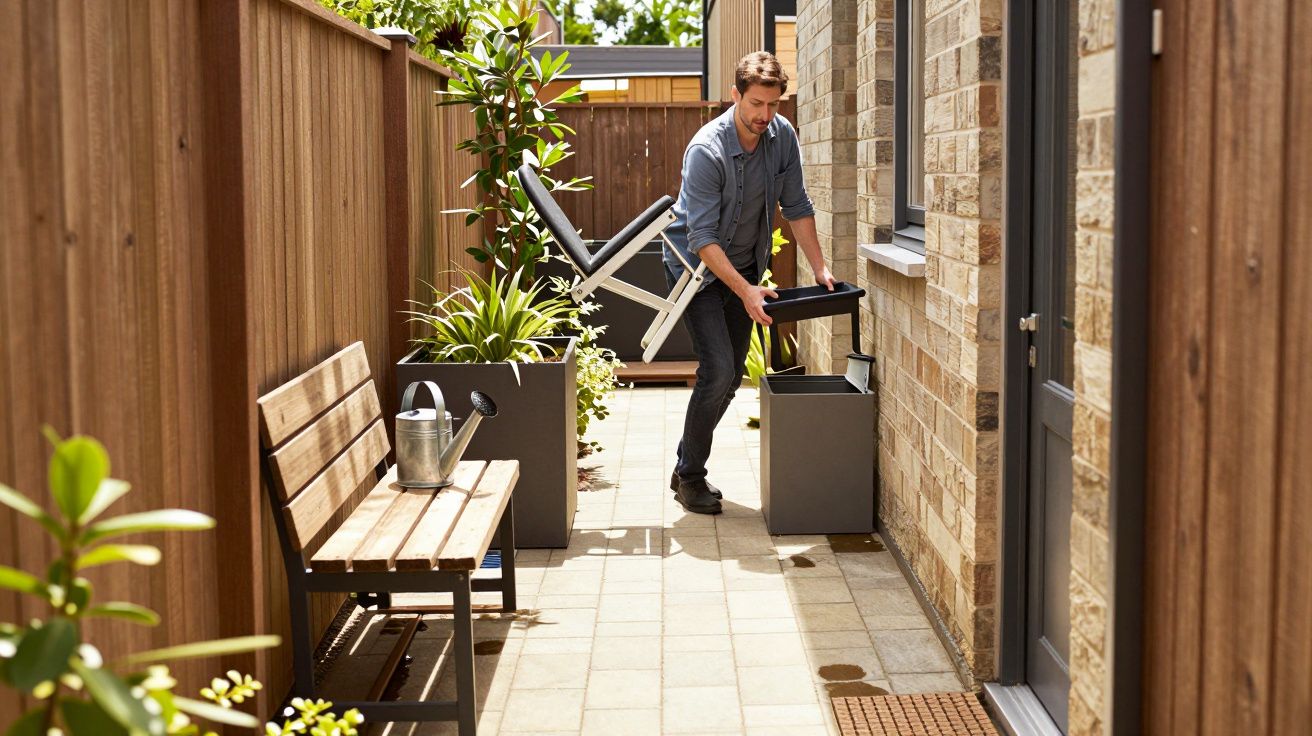
Narrow gardens don’t forgive “we’ll figure it out later” thinking. On narrow plots-common across dense urban space types like terraces, infill builds and townhouses-every decision steals from something else: light, circulation, storage, or the one usable seating spot. That’s why the consequences of poor planning show up instantly, not after a season.
You feel it the first time you try to carry a chair through a pinch point, or when a new planter turns the only route into a slalom. In wider spaces, mistakes blur into the margins. In narrow ones, there are no margins.
Why narrow plots expose mistakes faster than any other garden
The simplest way to understand a narrow garden is to think in “one-route living”. Most narrow plots have a single line of travel from house to end fence, with very little ability to divert around obstacles. If you interrupt that line, you don’t just make it inconvenient-you make it unusable.
There’s also a physics problem that feels like mood. Tall boundaries, neighbouring buildings and the garden’s own depth create shade pockets that move quickly and unevenly. A plant that “likes sun” may get two bright hours and then nothing. A seating area that looked fine at 11 a.m. can feel cold and gloomy by 2 p.m.
In narrow gardens, a 20 cm mistake isn’t a detail. It’s the whole experience.
The instant punishments: what goes wrong first
Most failures aren’t dramatic. They’re small, daily irritations that pile up until you stop using the space.
- The path becomes the patio. If the walkway is too wide, you lose room for planting and seating. If it’s too narrow, you clip pots, brush wet foliage, and avoid going out.
- Everything feels “busy”. Too many materials, shapes and levels compress the view and make the space feel shorter and tighter.
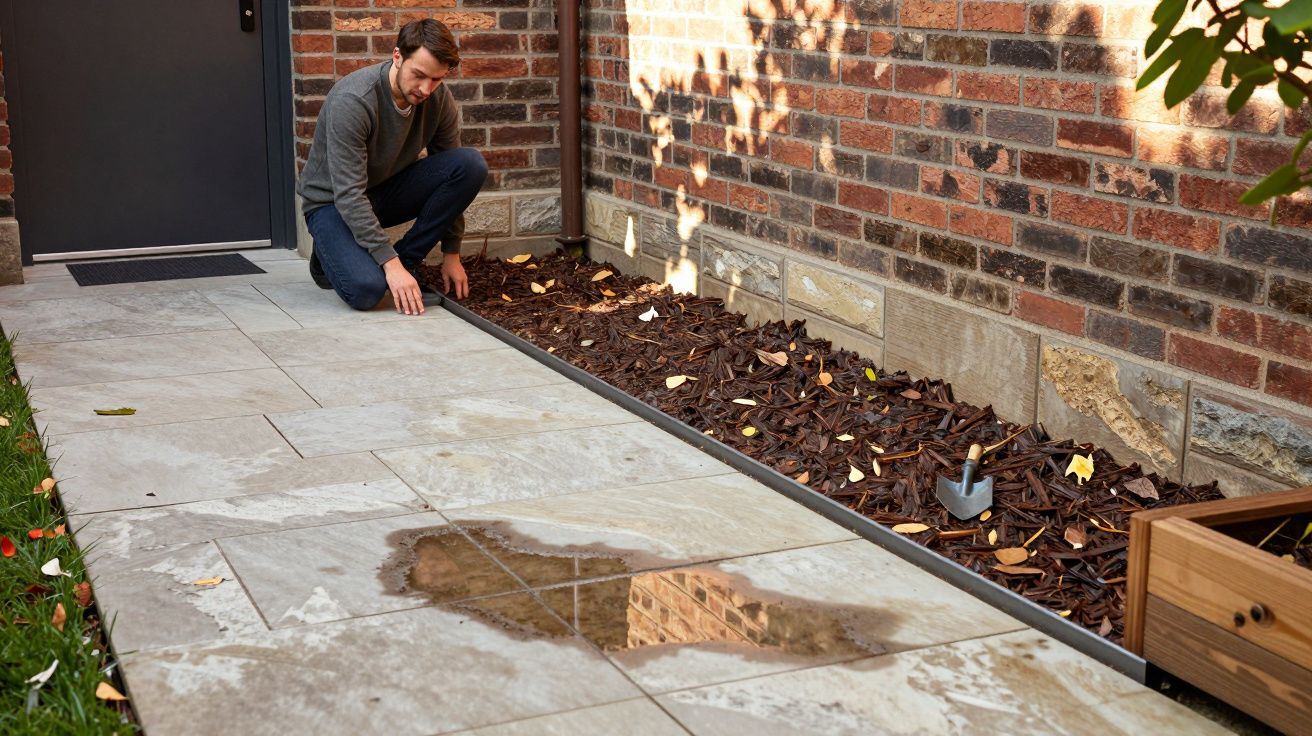
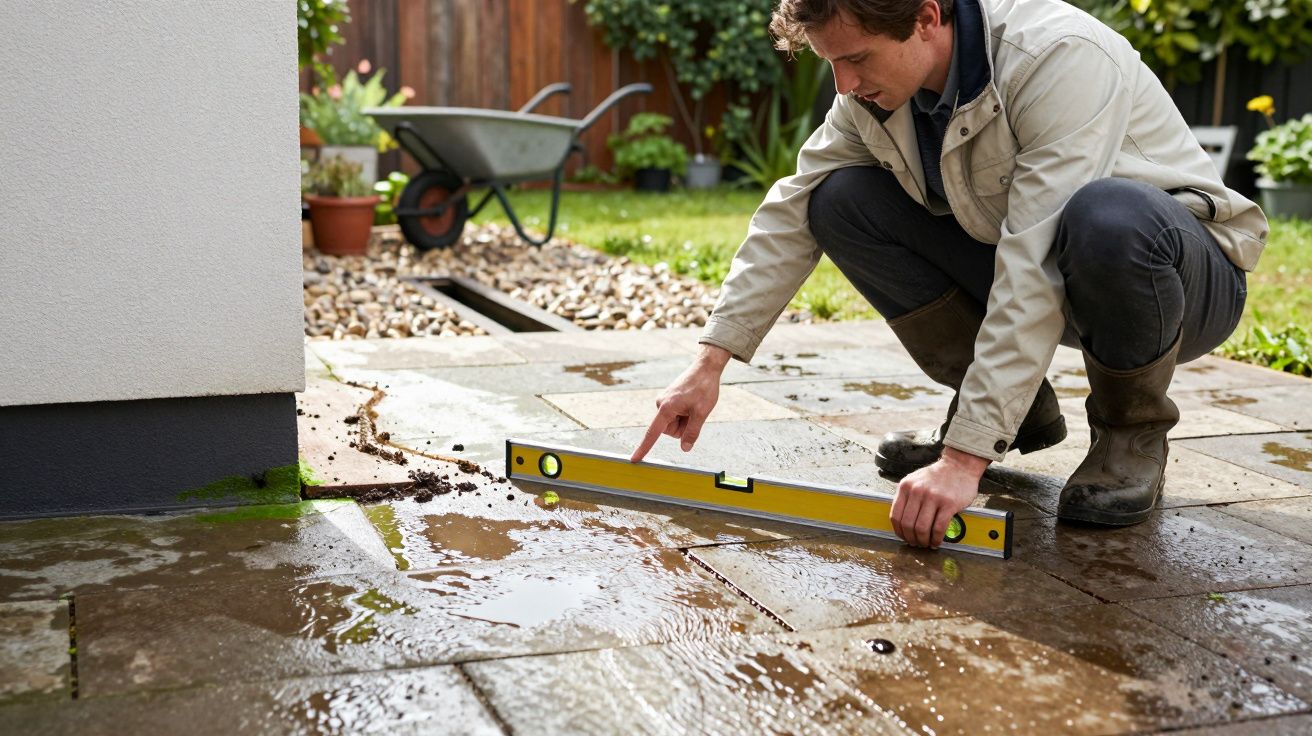
- Drainage shows up as mess. Hard surfaces without proper falls turn into puddles, algae, and slippery stepping stones.
- Wind tunnels form. Long, straight runs between fences can funnel gusts; flimsy screening and tall, sparse planting make it worse.
- Maintenance becomes impossible. If you can’t reach borders, you won’t weed them. If you can’t store tools, you won’t keep up.
The painful part is that these issues appear before the garden is “finished”. You don’t need a full summer to learn you can’t comfortably pass the barbecue without turning sideways.
The one decision that fixes half the garden: circulation
Before style, planting, lighting or furniture, solve movement. You’re designing a route, not a collection of features.
A useful mental model is to choose one of these on purpose:
- Straight run (fast, modern, can feel like a corridor if unchecked).
- Gentle offset (a slight dogleg that breaks the tunnel effect without killing space).
- Stepping moments (small “pauses” where you can stand, put something down, or turn without bumping into everything).
Then keep the route clear. Not visually clear-physically clear. That means checking door swings, bin access, bike manoeuvres, and how you’ll carry things through.
Quick reality check in 60 seconds
Stand at the back door and imagine doing each of these without moving anything:
- taking rubbish out
- carrying a watering can and a cushion
- bringing a pram, bike, or laundry rack through
- walking two people past each other
If any of those feel awkward in your head, they’ll be worse in real life.
The light trap: copying “full sun” ideas into part-shade gardens
Narrow plots often get a strip of sun that slides along the garden like a spotlight. People plan as if the whole space shares that light, then wonder why the lawn sulks and the Mediterranean palette fails.
Instead, plan by zones:
- Bright strip: herbs, pots you can move, dining if it catches late sun.
- Dappled middle: ferns, shade-tolerant grasses, hydrangea-type structure (in the broad sense of layered shrubs).
- Deep shade end: seating with lighting, pale materials, and plants chosen for foliage rather than flowers.
This is where “instant punishment” becomes emotional. A seat placed in the wrong light feels unwelcoming, even if it’s technically comfortable.
Narrow gardens love fewer, stronger moves
The fastest way to make a narrow garden feel calmer is to reduce decisions. That doesn’t mean minimalism; it means coherence.
Try limiting yourself to:
- one main hardscape material (e.g., a single paver tone)
- one timber tone or metal finish
- two planting textures (say, upright and soft-mounding)
- one repeated element (a pot size, a light type, a trellis rhythm)
Repetition is not boring in narrow space. It’s what makes it read as intentional rather than cramped.
A narrow plot doesn’t need more “features”. It needs fewer conflicts.
Storage: the silent difference between “styled” and usable
If you don’t plan storage, you will store things in the route. That’s the moment the garden stops functioning.
Aim for at least one of these, built into the plan rather than added later:
- a slim bench with hidden storage
- a vertical cabinet tight to a fence line
- a bin screen that doubles as a trellis
- wall hooks for folding chairs and tools
Even a 30–40 cm deep solution can transform how the garden feels, because it returns the walkway to being a walkway.
A compact planning sequence that actually works
You don’t need a grand masterplan. You need a sequence that protects the basics.
- Measure the pinch points. Doors, steps, narrowest part of the plot, any downpipes or inspection covers.
- Lock the route first. Decide the circulation width and keep it consistent where possible.
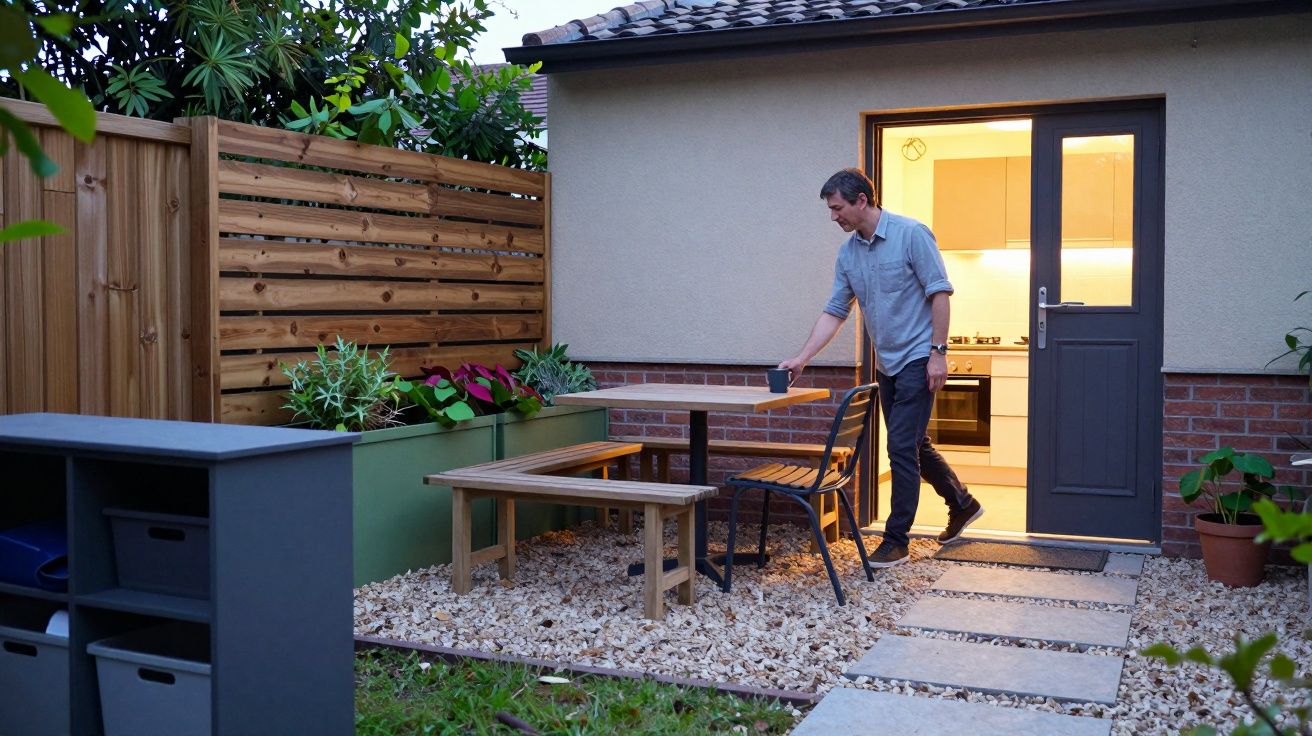
- Place one destination. A seat, a small table, or a bench-one place you genuinely want to be.
- Only then add planting. Use plants to soften edges and draw the eye, not to fill every gap.
- Finish with lighting. In narrow gardens, lighting is less about drama and more about depth and safety.
If you reverse this-buy furniture first, plant everything next, then “see what’s left”-you’ll discover what narrow gardens do best: punish the order of operations.
Common “looks good on day one” mistakes
- laying a patio right up to the fence and calling it a border later
- using bulky furniture that fits once and never moves
- creating multiple micro-levels that trip you up and steal width
- planting spiky or sprawling plants along the main route
FAQ:
- Do narrow plots always need a path down one side? Not always, but they do need a clear circulation logic. A central route can work if you keep edges reachable and avoid cluttering the middle with pots and furniture.
- Is decking better than paving in a narrow garden? Either can work. The key is drainage, consistent levels, and a finish that isn’t slippery in shade; narrow gardens often stay damp, so material choice matters more than trends.
- What’s the quickest way to make a narrow garden feel wider? Reduce visual noise and create one strong destination point. A consistent material palette, repeated vertical elements, and lighting that draws the eye forward usually beat adding mirrors or lots of small features.



Comments (0)
No comments yet. Be the first to comment!
Leave a Comment