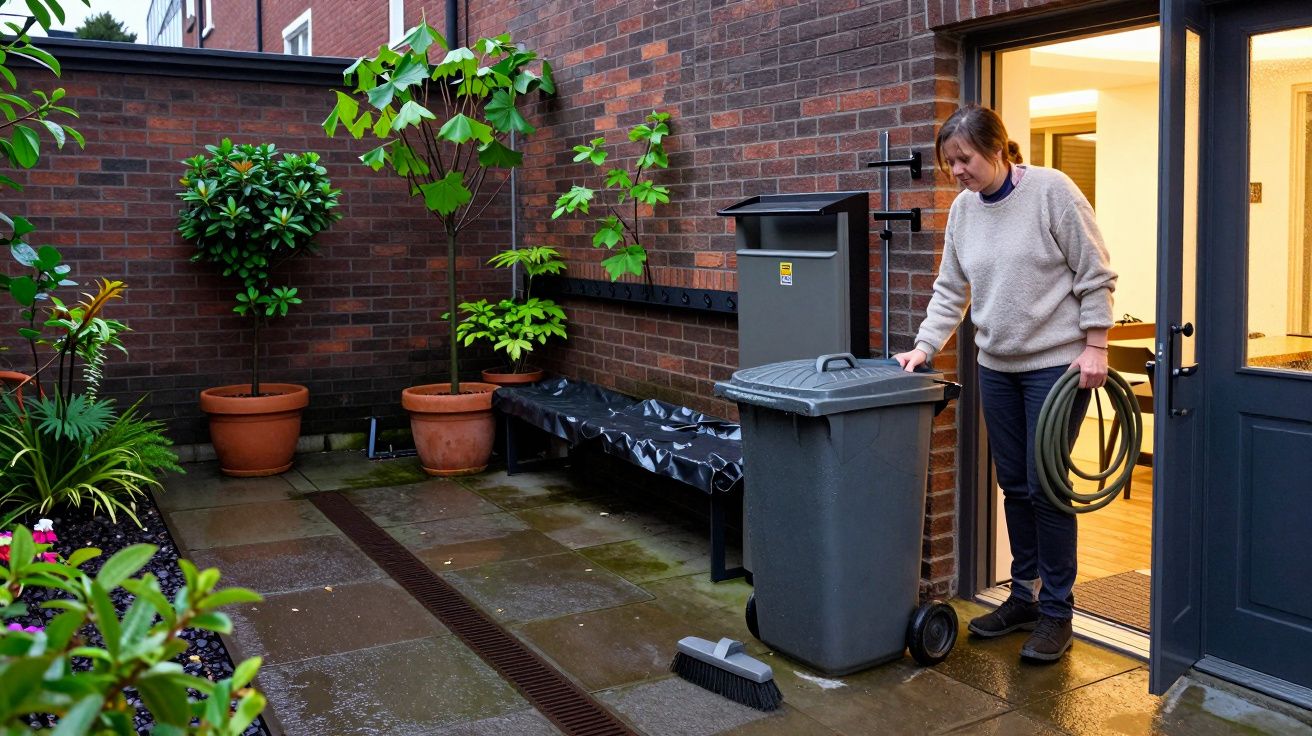
Most urban garden failures don’t happen during the first big weekend of digging; they happen quietly afterwards, when garden renovations collide with real life and the awkward realities of urban space types. A roof terrace behaves differently to a back courtyard, and a narrow side return has its own little weather system, but we tend to renovate them all with the same optimism. If you’ve ever rebuilt a city garden once and then watched it unravel, you weren’t “bad at gardening” - you were designing for a fantasy version of your week.
The first rebuild is usually thrilling: new paving, crisp edges, the promise of using the space properly this time. Then winter arrives, the bins need somewhere to live, the hose doesn’t reach, the wind batters the flimsy screen, and that beautiful corner becomes a storage bay for wet plant pots and half a bag of compost you swear you’ll use.
The rebuild problem: you renovate for photos, then you live in it
City gardens are small enough to feel controllable, which tricks us into over-specifying everything. We pick materials like we’re finishing a kitchen, not building an outdoor room that has to cope with mud, algae, foxes, and the fact you will take the recycling out in the rain. In tight spaces, every compromise is louder: one slippery path becomes the slippery path, and one awkward corner becomes the place where everything gets dumped.
The other issue is pace. Renovations are fast and decisive; gardens are slow and petty. Plants sulk, drainage reveals itself after the first proper downpour, and your “sunny seating nook” turns out to be sunny for 23 minutes a day in May.
1) You rebuild the surface, but you don’t rebuild the systems
The most common urban garden breakdown isn’t aesthetic - it’s functional. You can lay gorgeous porcelain tiles and still end up with puddles that creep towards the back door because the fall was guessed, not engineered. You can install raised beds and still have nothing thrive because the soil is shallow, dry, and bakes against brick.
These are the systems that decide whether a garden holds together:
- Drainage: where water goes after it hits the paving, and what happens when gullies block with leaves.
- Water access: whether you can actually water without dragging a hose through the house.
- Storage: somewhere dry for tools, pots, and the unglamorous stuff (sand, compost, plant feed).
- Power and lighting: not fairy lights for the photo - light you can walk by, and a socket that stops you running an extension lead like a tripwire.
If those are missing, the garden turns into a daily negotiation. People stop using it, then stop maintaining it, then decide they “need another revamp”.
The tiny test that catches most failures
Stand at your back door on a wet evening and ask: “Can I take the bins out without stepping into a puddle, brushing a plant, or walking in the dark?” If the honest answer is no, your rebuild has already started to decay.
2) You underestimate microclimates (because your garden is basically a brick canyon)
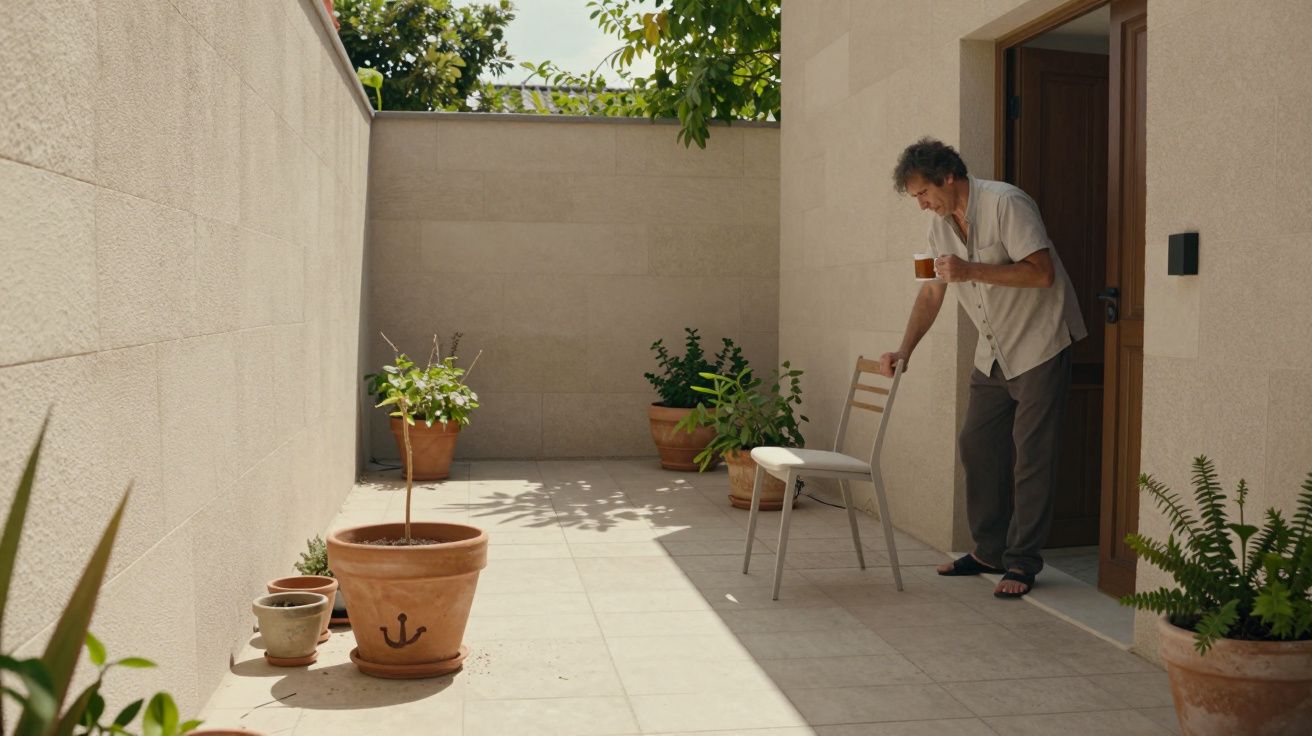
Urban gardens are extreme little environments. Heat bounces around walls, wind funnels through gaps, shade sits stubbornly under neighbouring extensions, and rainfall can be oddly patchy. A roof terrace might be bright and brutal; a courtyard can be damp and still; a side return might be a wind tunnel with an echo.
When the planting plan ignores this, the first season looks fine because everything is freshly watered, fed, and fussed over. Then the reality settles in: pots dry out faster than you imagined, climbers scorch on south-facing walls, and damp corners grow algae and disappointment.
A quick way to design with the site (not against it) is to be specific about the space you have:
- Courtyard: prioritise drainage, shade-tolerant planting, and surfaces that don’t go slimy.
- Roof terrace: plan for wind, weight limits, irrigation, and plants that forgive drying out.
- Balcony: think about exposure, privacy without turning it into a sail, and easy watering.
- Side return: treat it like a corridor: durable, clear path, vertical planting, and lighting.
You don’t need to become a meteorologist. You just need to stop assuming “outdoors” is one consistent thing.
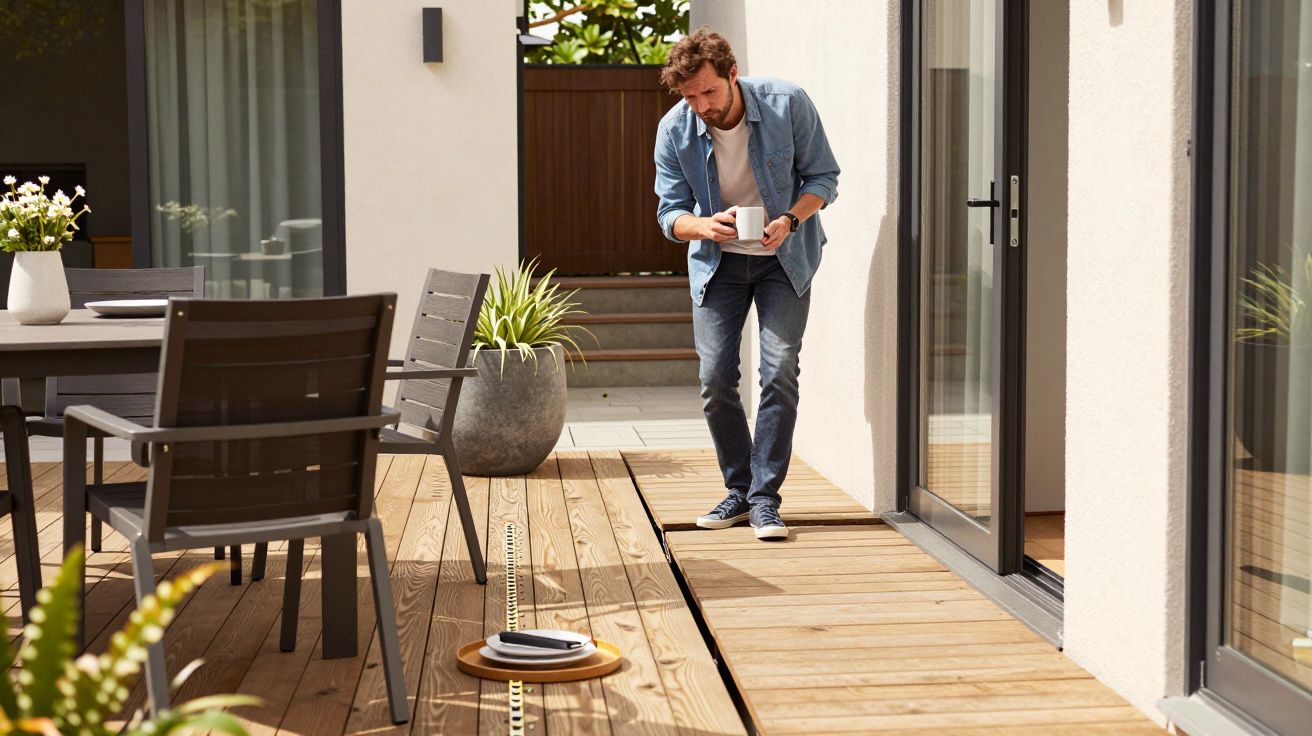
3) You design for weekends, not Wednesdays
Most gardens don’t break down because the owner hates them. They break down because the garden requires a version of the owner who doesn’t exist: someone who deadheads daily, hoses pots twice a day in summer, and stores everything neatly in a shed that was never installed.
City life runs on short bursts. You want a garden that survives:
- the school run week
- the week you’re ill
- the week it rains solidly
- the week it’s 29°C and you’re working late
If your layout needs constant tidying to remain usable, it will become unusable. That’s not laziness; that’s design.
Friction works outdoors too
Just like any habit, maintenance depends on how awkward it is. If your compost lives at the far end behind the table, it won’t get used. If the tap is inside the kitchen, watering will become “tomorrow”. If the tools are buried behind the bikes, you’ll prune less, then everything grows into everything else, and suddenly the garden feels like a task, not a place.
4) The first rebuild often ignores “mess management” (and mess always wins)
Gardens are inherently messy. Leaves fall, pots crack, soil spills, birds fling berries onto paving, and foxes treat your borders like a suggestion. In urban spaces, there’s also city-specific clutter: bins, parcel boxes, scooters, folding chairs, that one broken plant stand you keep meaning to fix.
Most first rebuilds leave no space for this, because storage isn’t romantic. Then the mess colonises the only available area: the seating. Once the seating is gone, the garden stops being used. Once it stops being used, it stops being maintained. That’s the slide.
A surprisingly effective fix is to build in one “ugly” zone on purpose:
- a narrow, tucked-away strip for bins and bags
- a waterproof bench with storage
- wall hooks for hose and tools
- a lidded box for cushions that doesn’t pretend it’s furniture
You’re not lowering standards; you’re protecting the part you actually want to enjoy.
5) Materials age faster in cities, and your maintenance plan is usually imaginary
Urban grime is real. Shaded paving goes green, cheap timber greys and splinters, metal fixings rust, and planters stain walls. If the rebuild uses finishes that need specialist care, you’ll do that care twice, then forget, then resent it.
Choose finishes the way you choose footwear: based on where you’ll actually walk.
Here’s a simple rule: if you can’t clean it with a stiff brush and something you already own, it will slowly become “a problem for future you”.
How to make the second rebuild the last one
You don’t need to rip everything up again. You need to do a calmer, systems-first mini-redesign - the sort that feels boring and then makes your garden work.
Start with a “route and reach” audit
Walk the routes you use most:
- Back door to bins
- Back door to seating
- Tap (or kitchen) to every planted area
- Shed/storage to where you actually do jobs
Then fix the worst pinch points first: lighting, puddles, hose access, and somewhere to put things down.
Rebuild in layers, not in one dramatic leap
- Layer 1: drainage, falls, water access, electrics, storage
- Layer 2: hard landscaping you can live with when it’s muddy
- Layer 3: planting that suits the microclimate and your time
- Layer 4: the nice bits (pots, soft furnishings, styling)
Most first rebuilds start at layer 4 and work backwards. It looks great. It doesn’t last.
The quiet truth: urban gardens don’t fail - they revert
Left alone, a city garden will revert to its most convenient shape: the path you naturally walk, the corner where clutter naturally lands, the plants that can survive your watering habits, the surfaces that can tolerate being ignored for a month.
A rebuild that lasts is one that decides those defaults on purpose, before the garden decides them for you.




Comments (0)
No comments yet. Be the first to comment!
Leave a Comment