
You can feel it the moment you step through a gate: garden walls seem to “hold” the air, and suddenly the space makes sense. Professionals notice it early because walls don’t just mark boundaries - they choreograph visual depth, guiding what your eye reads as near, far, private, open. If you’re redesigning a garden, that shift matters because it can make a modest plot feel composed and calm, or make a large one feel oddly flat.
I’ve watched clients point at a plan and say, “But it’ll feel smaller.” Sometimes they’re right, but usually they’re sensing the wrong thing. A wall can reduce area on paper while making the garden feel larger in real life, because it changes how you move, pause, and look.
Why a wall isn’t “just a boundary” in a garden
In interiors, we accept that walls create rooms. Outside, we often expect the opposite: uninterrupted openness. But gardens are read in layers, not floorplans, and the eye gets tired when it has to take everything in at once.
A garden wall is a hard line that does three quiet jobs at the same time: it frames, it edits, and it gives scale. That’s why designers reach for walls early, not at the end as a finishing detail.
The surprise for most homeowners is that the “solid” thing can make a space feel lighter. The wall removes visual noise, so planting, furniture, and sky can be appreciated rather than competed with.
The professional clue: what the eye does at the end of a path
Stand at your back door and look down the garden. If your sightline runs unbroken to a fence panel, a shed, and a neighbour’s trampoline, your brain reads it as one long, slightly anxious sentence.
Put a low wall across part of that view and you create punctuation. The eye stops, rests, then continues. That stop-start rhythm is one of the simplest ways to create visual depth without adding square metres.
Designers will often place a wall where you naturally slow down anyway: near a step, at a change in paving, beside a seating area. Done well, it doesn’t feel like a barrier. It feels like the garden has decided where to “speak”.
The most effective wall placements don’t shout “division”. They quietly tell your eye where to land.
How garden walls manufacture visual depth (even in small plots)
Visual depth isn’t only about distance. It’s about contrast, overlap, and partial reveal - the same tricks used in stage sets and landscape paintings.
Walls help because they’re legible shapes. Planting is beautiful but messy in outline; fences are often visually busy; hedges take time to bulk up. A wall gives instant structure, then everything else can be softer around it.
A few common depth-boosting moves professionals use:
- Step the height: a lower wall near the house, a slightly higher return at the side. Your eye reads progression.
- Create overlap: let a wall partially hide what’s next - a bench, a tree, a path turning. Mystery adds distance.
- Use a “borrowed view” slot: an opening, grille, or gap that frames a single feature beyond, instead of showing everything.
- Change texture with distance: rough brick closer, smoother render further away (or vice versa). Texture cues proximity.
- Anchor a focal point: a wall becomes the backdrop that makes a pot, fountain, or clipped shrub look intentional.
The key is restraint. One well-placed wall can do more than three competing ones.
The awkward truth: walls can make a garden feel bigger by making it smaller
People fear losing openness, but openness is only relaxing when it’s coherent. A single expanse with no hierarchy can feel exposed, like you’re sitting in the middle of a car park.
A wall gives you a “near zone” that belongs to you - a terrace, a breakfast spot, a place to lean a shoulder. Once that zone feels secure, the rest of the garden can unfold as a sequence rather than a measurement.
This is also why courtyard gardens work. They’re not large; they’re held. Containment can be a kind of luxury.
The “outside room” effect, without the conservatory vibe
A wall at seat-back height (often around 900–1100mm) does something subtle: it supports the body as well as the view. You sit down and feel protected, but you can still see planting and sky above the line.
That height is common in professional schemes because it creates enclosure without shutting down light. It also gives you a place for lighting, pots, and a ledge for a mug - the small human behaviours that make a garden used, not just looked at.
What walls do to light, wind, sound, and privacy
Design talk often stays visual, but the best gardens feel good because the microclimate improves. Garden walls change the sensory setting in ways you notice before you can explain.
- Light: pale walls bounce it; dark walls absorb it. Either can be right, but it’s never neutral.
- Wind: walls break gusts, creating calmer pockets for dining and tender planting. (They can also cause turbulence if placed badly.)
- Sound: solid mass reduces sharp street noise; textured surfaces scatter echoes so spaces feel less “ringy”.
- Privacy: a wall at the right angle blocks direct sightlines more effectively than taller screening placed flat-on.
If you’ve ever wondered why one corner of a garden becomes the default sitting spot, it’s often because a wall has improved wind and privacy there, not because the chair is better.
Materials and detailing professionals choose early (because they affect the whole scheme)
A wall is permanent and visually loud, so pros tend to lock in its “character” before choosing planting palettes. The wall becomes the garden’s grammar.
A quick, practical checklist designers consider:
- Thickness and copings: a proper coping throws water off the face and stops frost damage. It also finishes the wall so it looks deliberate.
- Returns and ends: how the wall stops matters. A blunt ending can feel mean; a return or pier can feel generous.
- Relationship to planting: leave room for growth and maintenance. Crammed planting against a wall can look romantic for a year and then become a nuisance.
- Ageing: brick, stone, and render all weather differently. A wall should look better in five years, not worse.
Here’s a simple way to think about common choices:
| Wall choice | What it tends to do | Best used when |
|---|---|---|
| Brick (warm/red) | Feels domestic, grounding | You want a “garden as extension of home” feel |
| Render (light) | Brightens, calms, modernises | You need light in shade, or a clean backdrop |
| Stone (textured) | Adds weight and age | You want timelessness and strong structure |
A small test you can do before building anything permanent
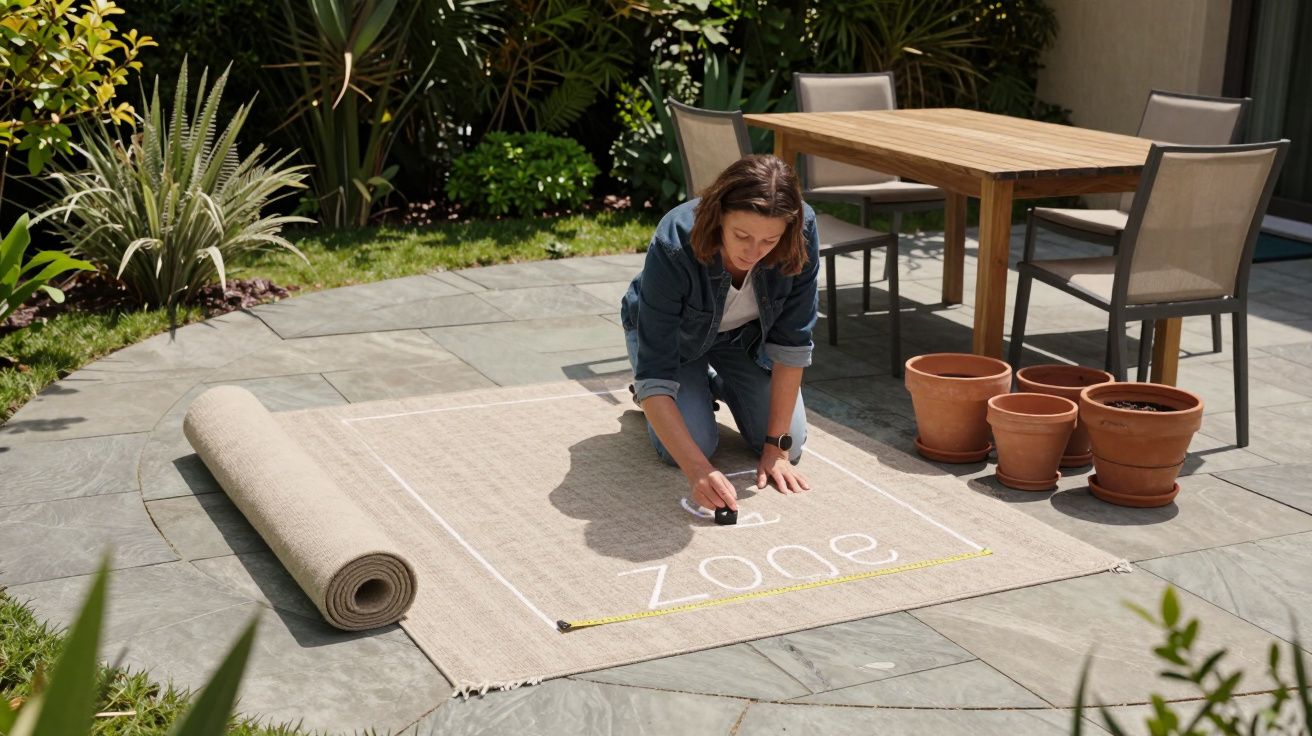
Before you commit to masonry, test the effect. Professionals do this all the time with temporary screens, staking, or even stacked pots.
Try this for a weekend:
- Mark a proposed wall line with canes and string, or place tall planters to suggest a solid edge.
- Stand at the key viewpoints: back door, kitchen sink, patio chair, upstairs window.
- Notice where your eye stops and whether the garden suddenly has “zones”.
- Walk the route you actually take (washing line, bin, shed). If it feels awkward now, it will feel worse in brick.
If the space feels calmer and more legible with a temporary “wall”, that’s your answer. If it feels pinched, the location is wrong - not the idea.
The mistake that makes walls feel harsh
The common error is building a wall that’s the same height, the same material, and the same line all the way along, as if you’re defending a border.
Gardens rarely need that kind of insistence. They need variation: a low stretch that becomes a seat, a pier that marks an opening, a short return that shelters planting. Even a slight step in height can make a wall feel like design rather than enforcement.
A good garden wall doesn’t just separate. It composes - and once you notice that, you start seeing why the best spaces feel effortless.
FAQ:
- Do garden walls always make a garden feel smaller? No. They often make it feel larger by creating zones and stopping the eye in stages, which increases visual depth.
- What height works best for an “outside room” feel? Roughly seat-back height (around 900–1100mm) is a common sweet spot: enclosed enough to feel protected, low enough to keep light and views.
- Is a wall better than a hedge for privacy? They do different jobs. A wall gives instant, year-round screening and structure; a hedge softens and adds greenery but takes time and needs maintenance.
- How do I stop a wall looking stark? Use a coping, consider a return or pier at the end, and plan planting in front or above it (climbers, espalier, or layered shrubs) with enough space to grow and maintain.



Comments (0)
No comments yet. Be the first to comment!
Leave a Comment