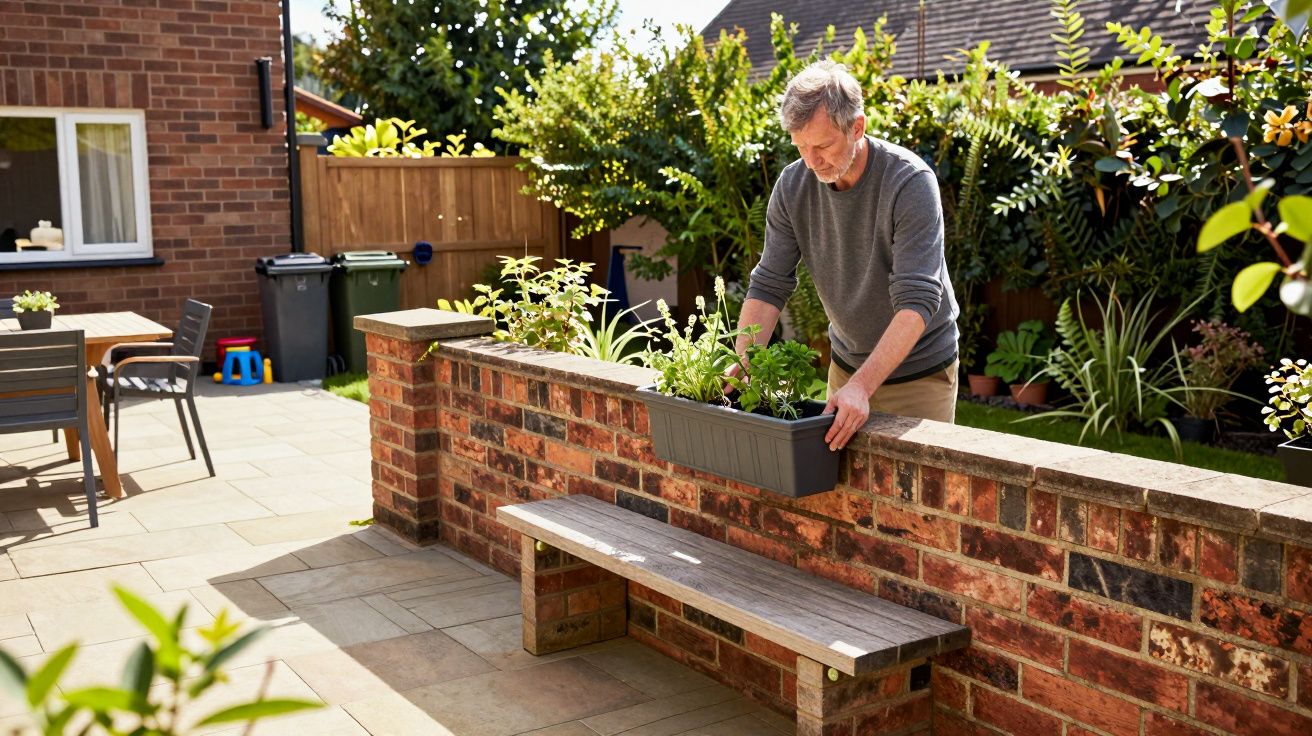
Estate agents talk about bedrooms and square metres, but buyers often decide with their shoulders - the moment they step outside and feel the garden “make sense”. Garden walls sit right in that decision-making zone, delivering property value enhancements by shaping how a plot is used, seen, and cared for. They don’t add space on paper; they add order, privacy, and confidence in the real world.
You notice it in the houses that photograph well. The lawn isn’t bigger. The patio isn’t wider. Yet the garden looks finished - like somewhere you could host, relax, or let the dog out without fuss. That’s the quiet magic of boundaries.
The value isn’t the bricks - it’s the behaviour they enable
A wall is a cue. It tells you where to sit, where to plant, where the bins belong, where the dog doesn’t bolt through. When buyers sense that a garden is “sorted”, they stop pricing in hassle and start pricing in enjoyment.
The shift is practical: fewer exposed edges, fewer awkward corners, fewer questions about who owns what. In UK conveyancing, uncertainty is expensive emotionally, even if it isn’t expensive legally. A clearly defined boundary calms the viewing.
Privacy sells, even when the footprint stays put
Most gardens are used less than they could be, not because they’re small, but because they feel overlooked. A well-placed wall changes the micro-experience: you can sit down without feeling observed, and suddenly the patio becomes a room.
That’s why half-height walls can outperform “bigger” improvements. They create separation without turning the garden into a bunker, especially when paired with steps, planting, or a built-in bench. People pay for the feeling of retreat.
A garden can feel larger when it’s divided well
Open, undefined space often reads as blank rather than generous. A wall creates chapters: a dining area, a play corner, a small kitchen garden, a utility strip that hides the mess. You’re not increasing area - you’re increasing clarity.
Think of two identical plots. One is a single rectangle of grass. The other has a low wall that frames a terrace and screens a compost/bike area. Buyers don’t measure; they imagine routines. The second plot tends to win because it offers a lifestyle, not a task list.
The “finished” signal: low maintenance, high confidence
Buyers scan for signs of ongoing cost. A decent wall can act as a reassurance marker: the garden has been invested in properly, drainage and levels are likely thought through, and boundaries probably aren’t a future argument with neighbours.
It also reduces visual noise. Wheelie bins, air-source units, spare pots, kids’ toys - when those are hidden behind a wall, the rest of the garden reads as calm. Calm is a feature.
Design choices that typically translate into property value enhancements
Not every wall adds value. The ones that do tend to share the same traits: they solve a problem buyers already worry about, and they look like they belong.
- Height with a purpose: low walls for zoning and seating; taller sections only where privacy is genuinely needed.
- Materials that match the house: brick that echoes the property, or stone that feels local and intentional.
- Clean lines, good coping: the top finish matters more than people expect; it’s where “DIY” shows.
- Integrated use: planters, benching, lighting, steps - features that make the wall feel like architecture, not a barrier.
- Hidden utilities: a small screen wall for bins and storage can be a bigger win than a decorative curve.
A useful test: if it looks like it would still make sense in ten years, it usually adds more value than something trendy that dates quickly.
Practical checks before you build (the boring bits that protect value)
Walls touch boundaries, structure, and sometimes planning - which means the wrong move can frighten buyers rather than impress them. If you’re building near a boundary, or making a tall wall, do the admin up front and keep records.
- Planning and height: in many situations, walls over a certain height (especially by highways) may need permission; check your local authority guidance.
- Party wall and neighbours: if it’s on or near the boundary, agree in writing where possible and keep the tone friendly.
- Drainage and weep holes: retaining walls without proper drainage can become a future defect.
- Foundations and stability: a leaning wall reads as “money pit” immediately, even if it’s cosmetic.
The goal isn’t just to build; it’s to build in a way that survives a surveyor’s glance.
“Buyers don’t pay extra for bricks. They pay extra for a garden that feels private, usable, and already decided.”
| What the wall changes | What a buyer feels | Why it can lift value |
|---|---|---|
| Privacy and screening | “We can actually sit out here” | More usable outdoor living |
| Zoning and structure | “This garden is easy” | Less perceived work and uncertainty |
| Finish and boundary clarity | “It’s been done properly” | Fewer doubts during viewing/survey |
FAQ:
- Do garden walls add value in the UK even if the garden is small? Often, yes. Zoning and privacy can make a small garden feel more usable, which is what buyers respond to.
- Is a higher wall always better for property value enhancements? Not necessarily. Overly tall or bulky walls can feel oppressive and may raise planning or neighbour concerns; targeted screening usually performs better.
- What’s the most “saleable” type of garden wall? A neat, well-finished wall that matches the house and has a clear job (seating edge, terrace frame, bin store screen) tends to translate best at resale.
- Can a poorly built wall reduce value? Yes. Cracks, leaning, missing coping, or bad drainage can signal future costs and put buyers on edge during surveys.



Comments (0)
No comments yet. Be the first to comment!
Leave a Comment