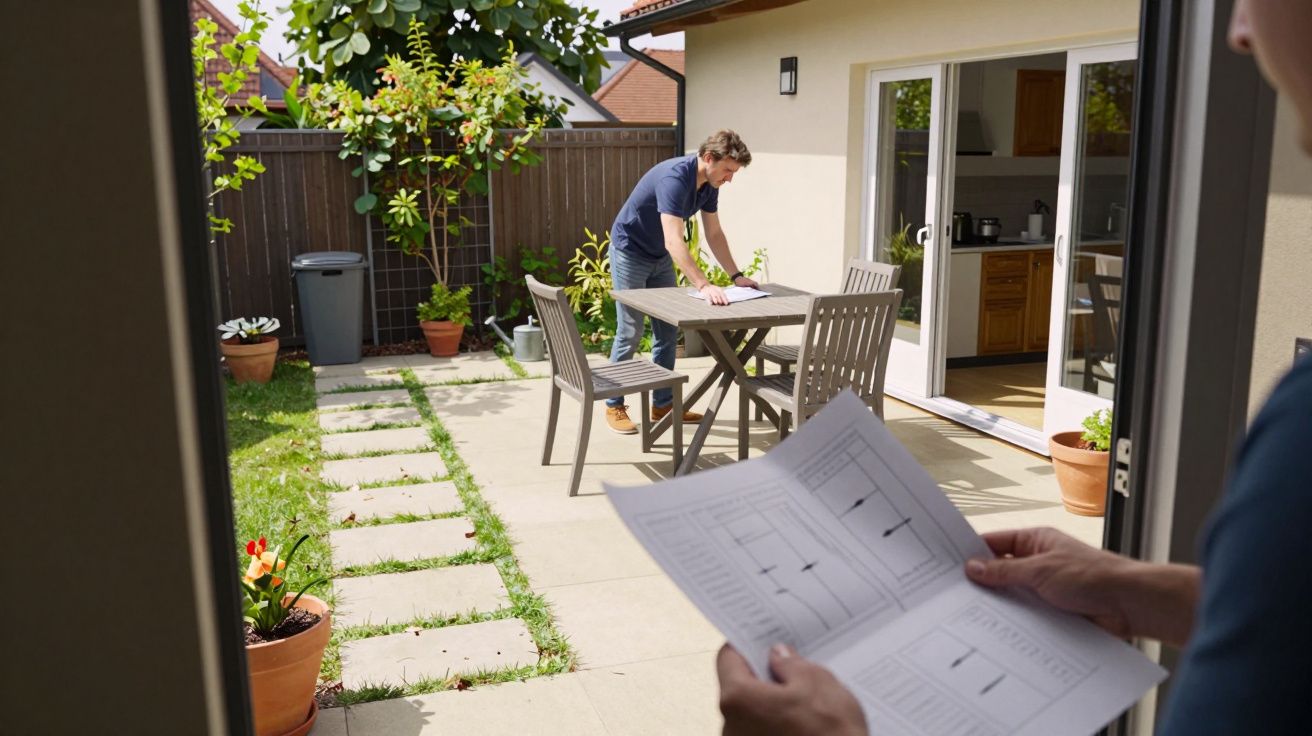
The trouble starts innocently: you pick out plants, a new path, maybe a seating set, and call it garden redesign. But without space zoning-deciding what each part of the garden is for and how people move between those purposes-you’re mostly arranging props. It can look lovely on day one and still feel awkward, unusable, and oddly unfinished by week three.
You see it in the small tells. The barbecue sits where the wind always funnels. The “quiet corner” is on the route to the bins. The lawn is the biggest feature, yet no one ever steps on it without apologising to themselves. The garden becomes a picture you maintain, not a place you live in.
When “zones” become styling, the garden stops working
A styled zone is a vignette: two chairs, a lantern, a pot that matches the cushions. A functional zone is a promise: this is where we eat without juggling plates, this is where the dog can tear about without wrecking borders, this is where you can sit and not be seen from the kitchen sink.
Treat zoning like decoration and you end up designing for the camera angle, not the body. The result is a garden full of micro-scenes that don’t add up to a day. You wander, hesitate, backtrack, and keep moving things “just a bit” all summer.
The shift is subtle. You stop asking, “What needs to happen here?” and start asking, “What would look good here?” That’s when space gets wasted in the most expensive way: not in square metres, but in effort.
The predictable failure modes (that feel like bad luck)
Most “failed” garden redesigns aren’t about taste. They’re about friction-tiny, daily annoyances that make you avoid your own outside space.
Here are the classics:
- The dining area is too far from the kitchen. You do one meal out there, then decide it’s “a faff” forever.
- Paths are implied, not clear. People cut across beds, edges crumble, and you resent the garden for behaving like gravity.
- Privacy is assumed, not built. You add a pergola, but the sightline from next door still lands right on your chair.
- Sun and shade aren’t zoned. The only seating spot bakes at 2pm, while the one shady patch is occupied by the compost bins.
- Storage is an afterthought. Tools migrate to corners, then corners become clutter-zones that poison the vibe of everything nearby.
None of this is dramatic. That’s why it’s deadly. A garden doesn’t have to be “bad” to be abandoned; it just has to ask for too many small compromises.
What space zoning is meant to do (and what it isn’t)
Space zoning isn’t drawing boxes on a plan and labelling them “lounge” and “plants.” It’s organising behaviour: movement, mess, noise, views, and the way a garden changes across a day and a year.
Think of it like this: a good garden has a rhythm you don’t have to think about. You can step outside with a mug, put it down without hunting for a surface, sit without shifting into the sun like a rotisserie chicken, and get back inside without tracking mud through the house. That’s not aesthetic. That’s structure.
A useful zone has three ingredients:
- A reason to be there (function).
- An easy way to arrive and leave (routes).
- A boundary of some kind (definition), even if it’s soft-height change, planting, edging, a change in material.
Without those, your “zone” is just furniture stranded in open space.
A quick test: does each zone survive real life?
Try this on your current layout or your draft plan. Walk it like a normal weekday, not a Pinterest weekend.
- Can you carry food from the kitchen to the eating area in one trip?
- If it rains, where do wet coats, muddy shoes, and garden tools go?
- If a child runs through, where is the safe, obvious route?
- From inside the house, what’s the first thing your eye hits-and is it what you want to maintain looking-at daily?
- At 9pm, where would you actually sit, and what would you hear?
If the answers feel vague, that vagueness will become maintenance. You’ll “sort it later”, then later turns into years.
What actually works: zoning by use, then dressing it
Start with behaviour and constraints, then choose materials and planting that support them. Not the other way round.
A simple way to do it without turning your life into a design project:
- List the non-negotiables (3–5). Eat outside, kids play, grow herbs, a quiet seat, somewhere to dry washing-whatever is real in your home.
- Map the daily routes. Back door to shed, kitchen to bins, patio to lawn, side gate to front. These routes are your garden’s “desire lines”; fight them and you lose.
- Place the messy zones downwind/downview. Compost, bins, wood store, hose-tuck them where you won’t stare at them from the sofa.
- Give each zone an edge. A change in paving, a low hedge, a raised bed, a trellis. The brain relaxes when it can read a boundary.
- Only then decorate. Furniture, lighting, pots, colour themes. Styling lands better when the underlying promises are true.
A designer once put it to me in the plainest way:
“If you can’t say what happens in a space in one sentence, you haven’t zoned it-you’ve furnished it.”
That sentence saves money.
The small change that makes everything feel intentional
Pick one “anchor” zone and make it work flawlessly. Usually it’s the one nearest the house: the spot you step into first, the one that decides whether you linger or retreat.
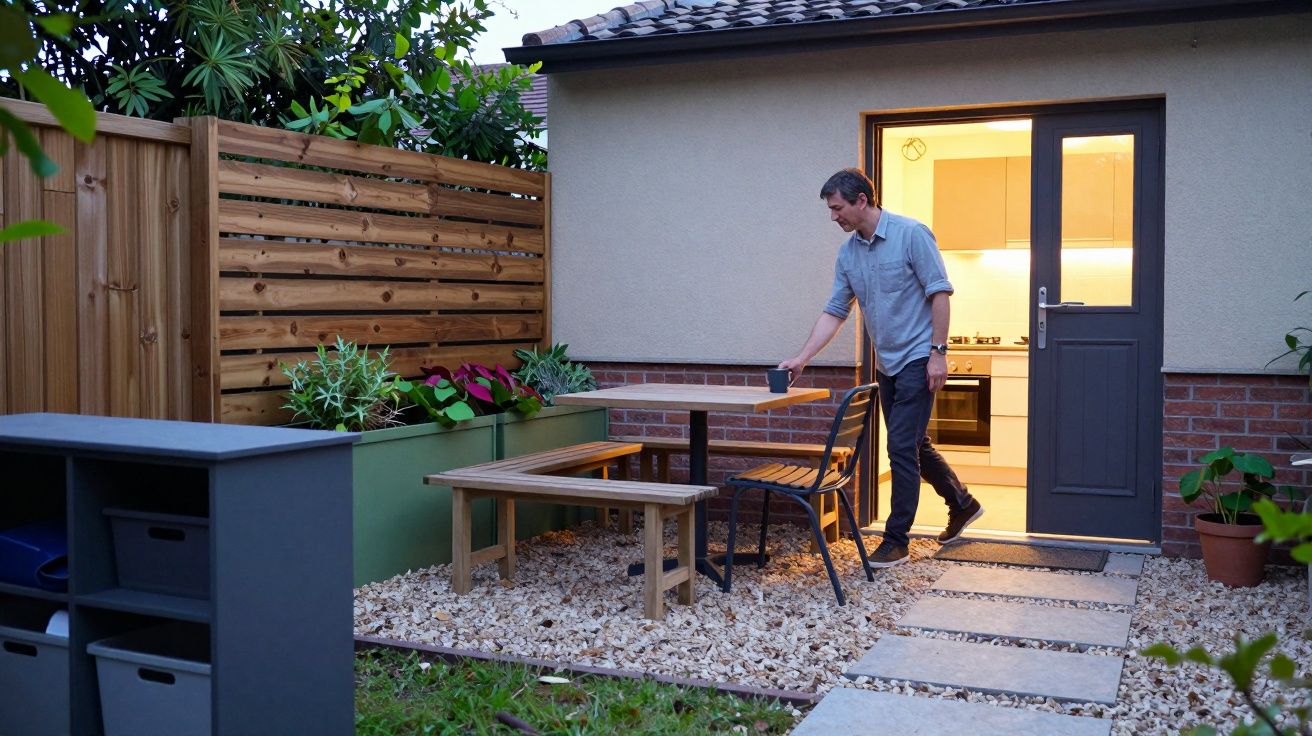
Make it easy: a stable surface, room to pull a chair out, a place to set a drink, and a route that doesn’t slice through planting. When that first zone works, the rest of the garden stops being a problem you manage and starts being a place you extend into.
Decor is the fun bit. But if you use it to compensate for missing structure, you’ll keep buying fixes for a problem you can’t name. Zone for living first. Dress it second. The garden will look better because it finally behaves.
| Point clé | Détail | Intérêt pour le lecteur |
|---|---|---|
| Zones aren’t vignettes | Define use, routes, and boundaries before styling | Stops “pretty but awkward” layouts |
| Friction predicts abandonment | Distance, unclear paths, poor privacy, no storage | Fixes daily annoyances that make you avoid the garden |
| Anchor zone first | Make the area by the house effortless to use | Creates momentum for the rest of the redesign |
FAQ:
- Isn’t space zoning just for big gardens? No. Smaller gardens need it more, because one awkward decision can hijack the whole space.
- What’s the fastest way to spot bad zoning? Notice what you keep walking around, moving, or avoiding. Repeated annoyance usually means a route or function is fighting the layout.
- Can planting create zones without hard landscaping? Yes. Hedges, tall grasses, trellis screens, and even pot “lines” can define edges-just keep access and maintenance realistic.
- Should I design zones for looks or for seasons? For seasons. A garden that only works on warm, still afternoons will disappoint; aim for at least one comfortable sun spot and one comfortable shade/shelter spot.
- What if I want an open-plan feel? Open-plan still has zones-it just uses softer boundaries (material changes, furniture placement, sightlines) instead of walls and fences.


Comments (0)
No comments yet. Be the first to comment!
Leave a Comment