Most people approach a tired garden like they approach a tired face: buy something pretty and hope it distracts from the problem. They’ll spend on plants, lighting, furniture - then wonder why it still looks “unfinished”. The missing piece is usually level changes, and in garden construction they’re the quiet decisions that dictate how everything drains, feels underfoot, and sits in the landscape.
You can swap shrubs for years and never fix a space that’s subtly sloping the wrong way. Get the levels right once, and even modest planting starts to look intentional.
The moment you realise it isn’t the planting
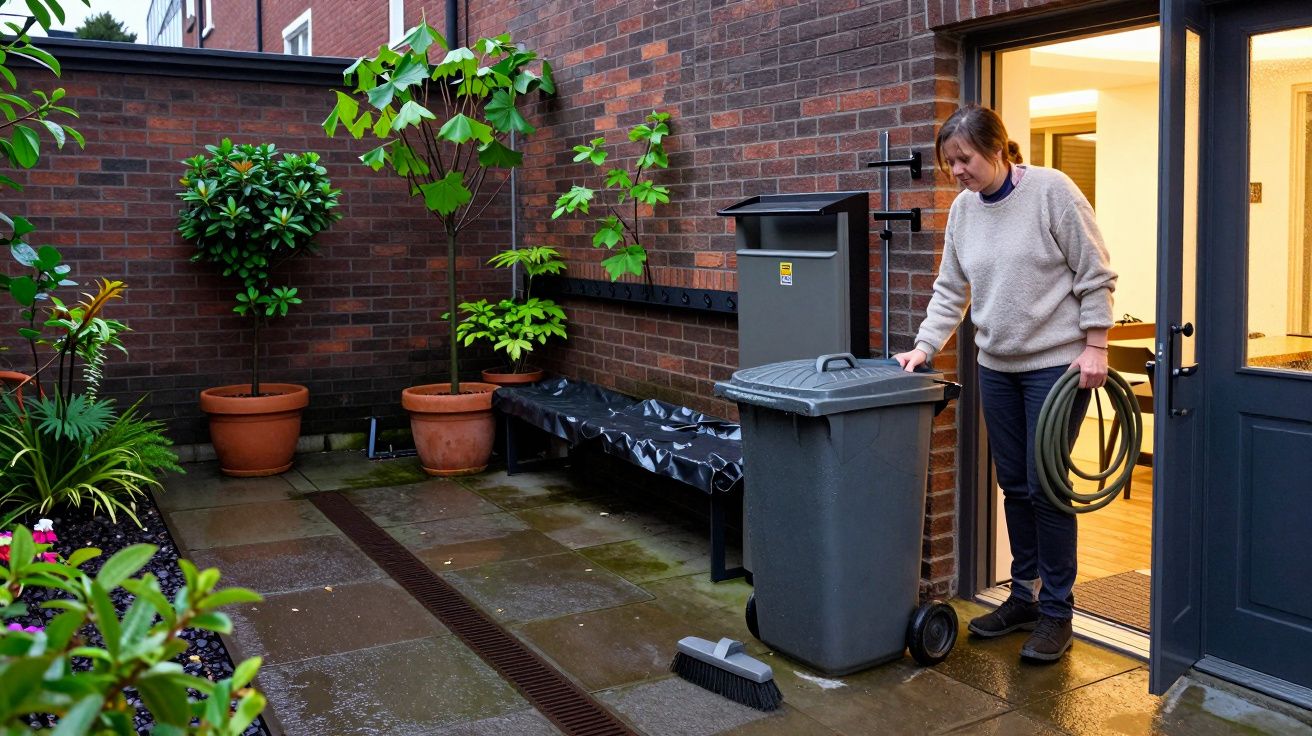
It tends to show up after the first proper rain. Water gathers where you swear it never used to. The patio feels slightly “off”, like your chair is always on a wobble. The lawn has a damp patch that never quite dries, and the steps feel too steep or too shallow, but you can’t explain why.
Homeowners often blame the obvious: heavy soil, a shady corner, “bad grass”. Sometimes it is. More often, it’s the invisible choreography of height, falls and transitions - the stuff no one posts on Instagram.
Level changes: the hidden framework that makes a garden work
Level changes don’t have to mean dramatic terraces. They can be as simple as a 150mm drop from the back door to the patio, a shallow swale that nudges water away, or a retained edge that stops soil creeping onto paving.
Think of them as the skeleton. Plants are the outfit. If the skeleton is twisted, the outfit never hangs properly.
In practical terms, good levels do four jobs at once:
- They move water (away from the house, out of puddle zones, into planted areas that can cope).
- They make spaces feel deliberate (a seating area reads as a “room” when it’s held level and edged correctly).
- They control maintenance (less soil wash, fewer muddy thresholds, less moss-prone paving).
- They affect safety (no surprise steps, no slippery ramps, no awkward trip-lips).
The three level mistakes that cost the most (and look like “small issues”)
1) Patio falls that drain the wrong way
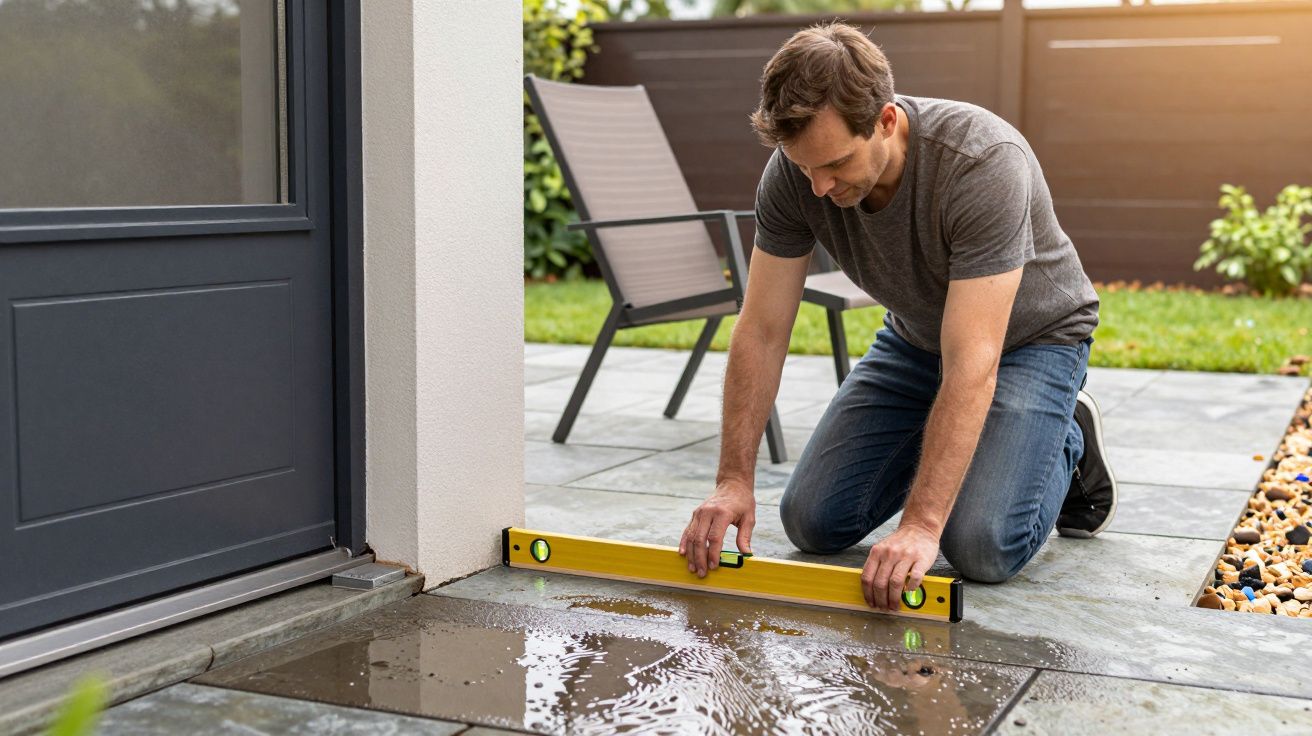
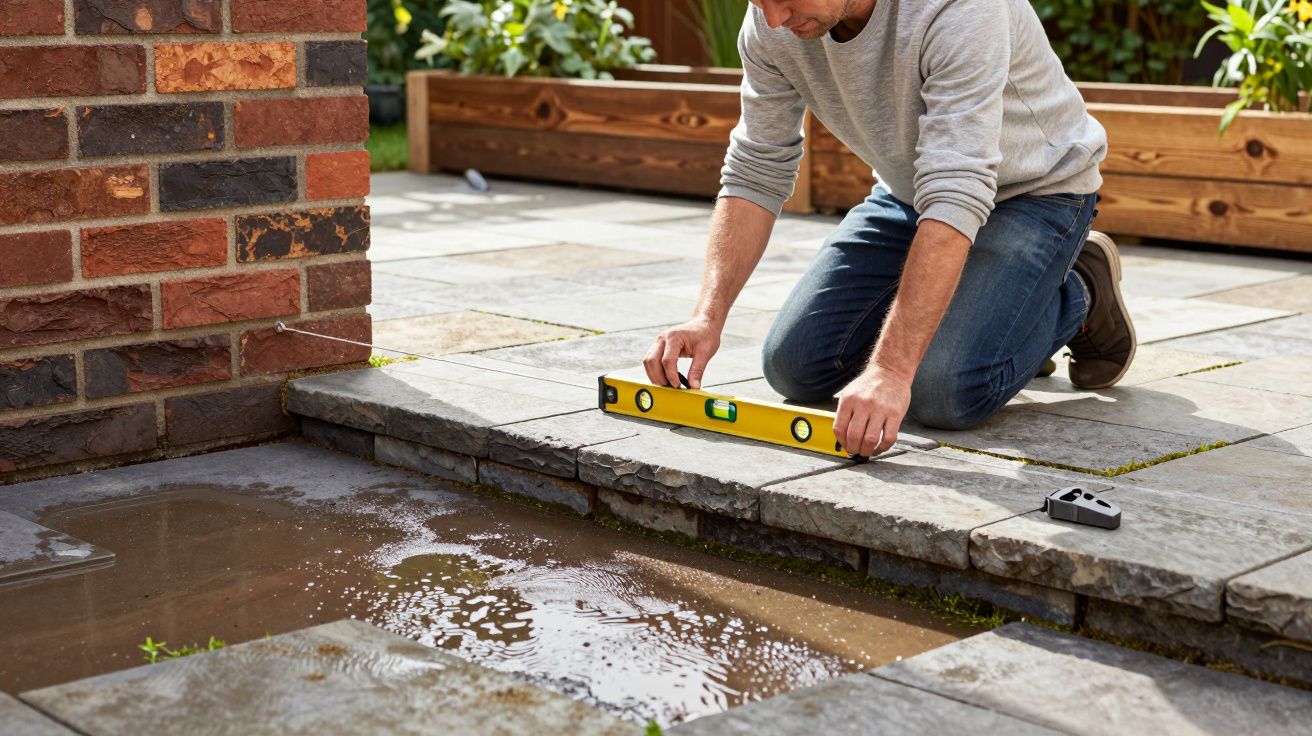
A patio can look perfectly flat but still be built with a fall towards the house, or with dips that collect water. That’s when you get damp walls, green slime lines, and those permanent dark patches that make paving look older than it is.
A simple rule of thumb used in many builds: water should be encouraged away from buildings, not left to “find its own route”. If it finds the route under your threshold, it will take it.
2) Lawn-to-border edges that slowly migrate
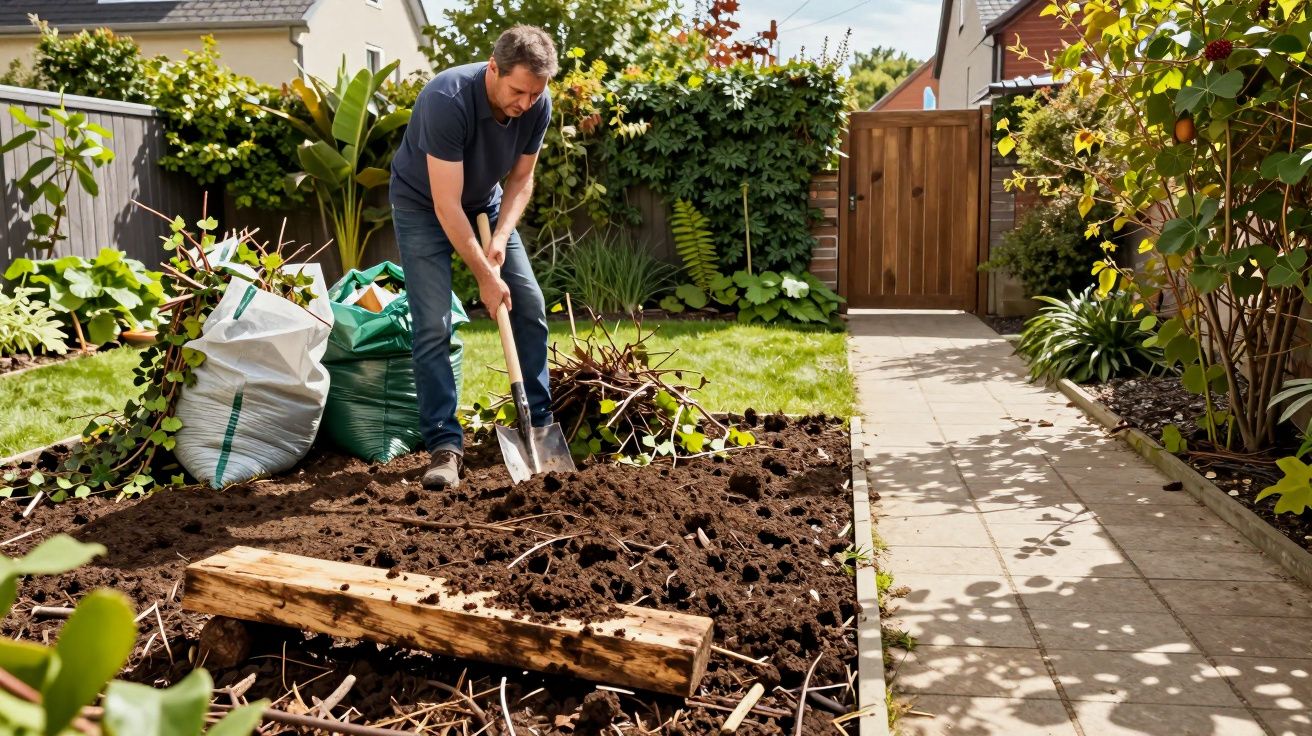
If your lawn is slightly higher than your borders, rain will carry fine soil onto the grass. If your borders are higher, mulch and compost creep onto the lawn. Either way, the edge blurs, and you end up constantly re-cutting and re-leveling without knowing why you’re losing the battle.
A clean edge is rarely about the plant choice. It’s about a tiny, controlled level difference and a physical boundary that holds it.
3) Steps and risers designed by eye, not by measure
This is where gardens feel “DIY” even when the materials are lovely. Steps that are inconsistent by even a small amount make people slow down, shuffle, and avoid using that route. In wet weather, it’s worse.
Good steps feel boring - which is exactly the point. Your body shouldn’t have to negotiate them.
How pros think about levels before they think about plants
A solid garden construction process usually starts with levels, then surfaces, then planting. Not because planting is unimportant, but because planting is the flexible layer.
A typical order of thinking looks like this:
- Survey what you actually have (high points, low points, thresholds, existing drainage routes).
- Decide where water should go (and where it must never go).
- Set the “fixed” heights (door thresholds, air bricks, manhole covers, boundaries).
- Design the level changes (terraces, retaining edges, ramps, steps, gentle grading).
- Only then choose plants that suit the micro-conditions you’ve created.
When this order is reversed, people end up buying plants to “solve” a wet corner that was created by a mis-fall in paving.
Small level changes that make an average garden feel expensive
You don’t need a multi-tiered show garden. A few restrained moves often change the whole read of a space:
- A slightly raised bed (even 200–300mm) to give structure, seating edge potential, and better drainage for plants that hate wet feet.
- A single retained terrace so the dining area sits properly level, with planting held back neatly.
- A shallow channel or gravel strip where runoff naturally wants to travel, instead of fighting it with wishful thinking.
- A subtle “threshold step” to make the transition from house to garden feel intentional (and to protect the doorway from splashback).
The difference is psychological as much as practical. When levels are controlled, the garden stops feeling like a leftover patch and starts feeling like a designed place.
A quick check you can do this weekend
You don’t need laser levels to spot the big problems. You need patience, a wet day (or a hose), and an honest look.
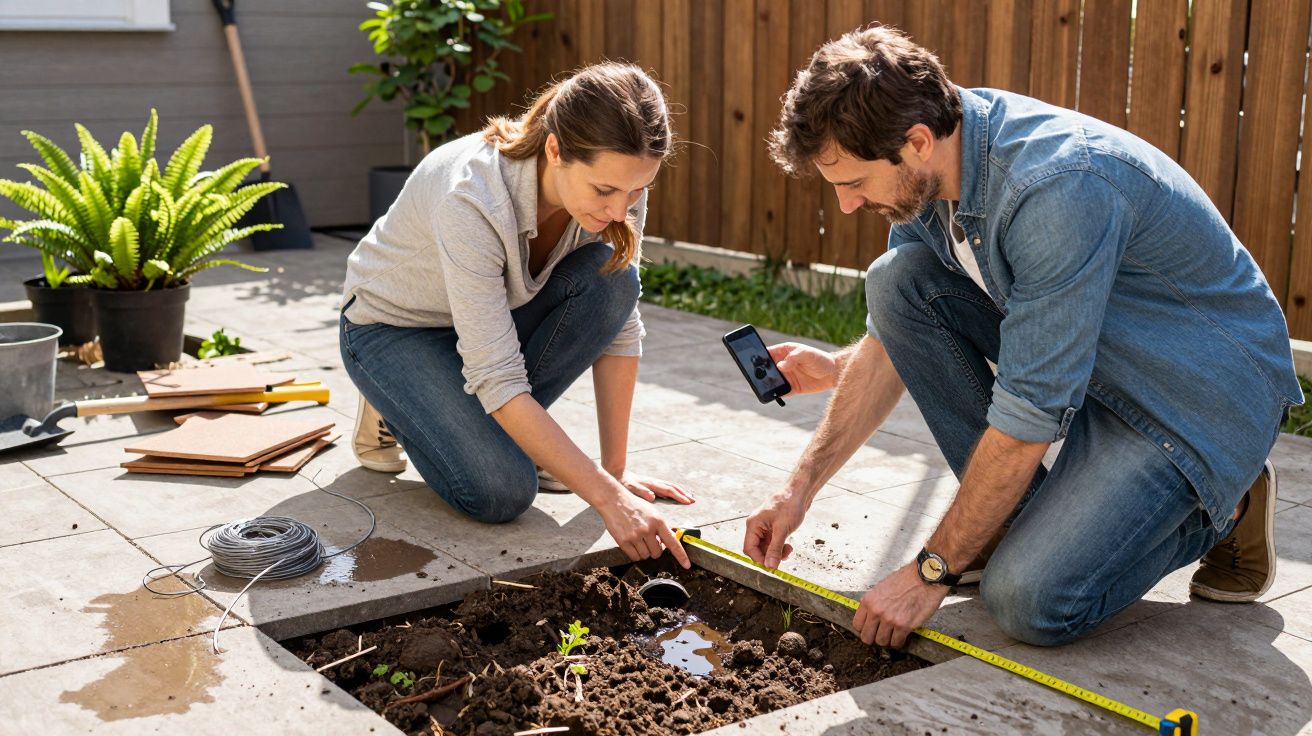
- After rain, photograph puddles and damp lines from the same spot each time.
- Watch where water goes from downpipes; if it disappears immediately, ask where it disappears to.
- Lay a straight piece of timber on paving and paths; you’re looking for dips and rocking points, not perfection.
- Stand at the back door and note whether you step down into the garden (often good) or feel like you’re stepping onto something that pushes back towards the house (often a warning sign).
If you find multiple “mystery wet areas”, it’s rarely a coincidence. It’s usually one level decision echoing across the whole plot.
The planting comes last - and it gets easier when the ground is right
Once the levels and water behaviour make sense, plant choice becomes simpler, not harder. You’ll know which spots are reliably free-draining, which hold moisture, and where wind funnels through because of a raised terrace or a retained wall.
And the best part is slightly unfair: when the framework is right, even straightforward planting looks composed. The garden reads as calm, usable, and cared for - because it functions.
| What you notice | Likely level issue | What it affects |
|---|---|---|
| Persistent puddles on paving | Dips or fall to the wrong point | Safety, moss, staining |
| Mud tracked into the house | Threshold too low / splashback zone | Cleanliness, damp risk |
| Borders always spilling onto lawn | No defined level edge | Maintenance, tidy lines |
FAQ:
- Can I fix level changes without a full rebuild? Sometimes. Minor regrading, adding a small retaining edge, or relaying a problem patch of paving can solve a lot, but if the main falls send water towards the house, it’s worth getting proper advice.
- Do level changes always require retaining walls? No. Many are achieved with gentle grading, raised beds, or subtle steps. Retaining is only needed when you’re holding back soil at a sharper change.
- What’s the biggest risk of ignoring levels in garden construction? Water. Poor levels tend to show up as drainage problems first, then as slipping hazards, staining, and eventually damage near thresholds.
- Should I choose plants to cope with wet areas instead? Only after you’re sure the wet area is meant to be wet. Using plants as a workaround can mask a drainage or fall problem that’s affecting paths, patios, or the house.


Comments (0)
No comments yet. Be the first to comment!
Leave a Comment