
Basement gardens promise a pocket of green where square footage runs out, but they also come with a quiet trap: you can make them look beautiful long before they behave like a garden. Structural garden works matter first because in a below‑ground space, water, walls and weight will always win arguments with pots, paint and fairy lights.
If you get the structure right, the planting becomes simpler and cheaper to maintain. If you get it wrong, the “design” becomes a repeating cycle of rot, algae, cracking and replacing things that never had a fair chance.
The problem with treating a basement garden like a patio makeover
Most basement gardens fail in the same dull way. Rain finds the lowest point, drainage slows, and the space turns into a damp bowl that never properly dries. You might not notice in the first month, when the furniture is new and the planters are full, but you will by the first winter.
Below ground, the basics are more extreme:
- Moisture pressure builds against retaining walls.
- Sunlight is limited and uneven, so drying is slower.
- Access is tight, which makes repairs harder and more expensive later.
- Surfaces stay colder, which encourages moss and slippery algae.
A neat seating area can’t compensate for a wall that’s weeping, or paving that slopes the wrong way. In a basement garden, “cosmetic first” usually means “pay twice”.
Why structure is not boring here - it’s the whole point
A normal garden can survive small mistakes. A basement garden is less forgiving because it behaves like a system: water comes in, water must go out, and everything you build should assume it will happen again tomorrow.
Think of structural garden works as the parts you don’t want to redo once the space is finished:
- Levels, falls and thresholds (so water moves away from the house)
- Drainage routes and access points (so blockages can be cleared)
- Retaining walls and coping (so soil and pressure stay where you intended)
- Waterproofing details (so “damp” doesn’t become “damage”)
If you’re choosing between a pergola and a drain inspection chamber, the unglamorous choice is usually the correct one. Not because it’s nicer, but because it decides whether the pergola lasts.
The most expensive feature in a basement garden is the one you have to remove to fix what’s underneath.
The three structural questions to ask before you buy anything decorative
1) Where does the water go in heavy rain?
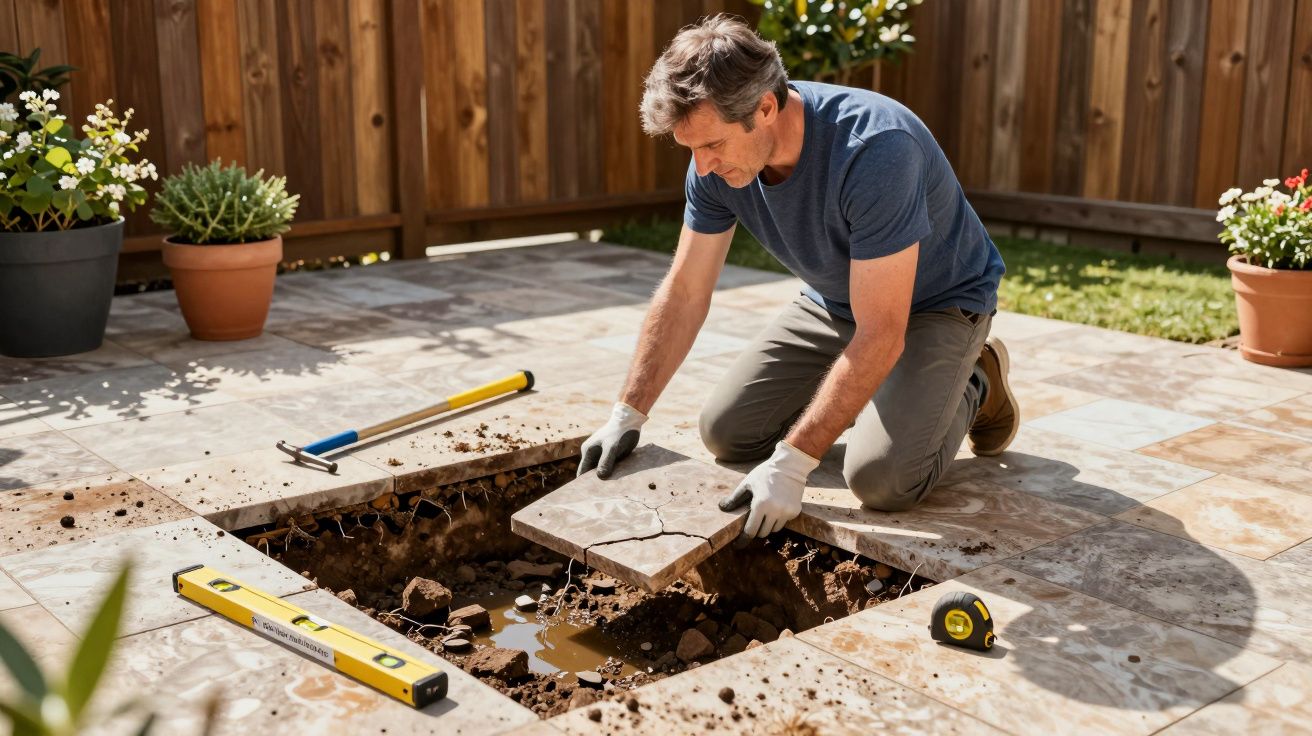
Don’t guess. Watch it during a downpour, or do a hose test and see where water pools and how long it takes to clear. The danger is not just puddles; it’s water sitting against walls and thresholds.
Common needs in basement gardens include:
- Regrading so paving falls away from the building
- Channel drains at the base of steps or along walls
- A soakaway or connection (where legal and appropriate) to manage runoff
- Permeable surfaces where possible to reduce volume
If the only plan is “it’ll evaporate”, you’re already behind.
2) What’s holding the ground back - and is it built to last?
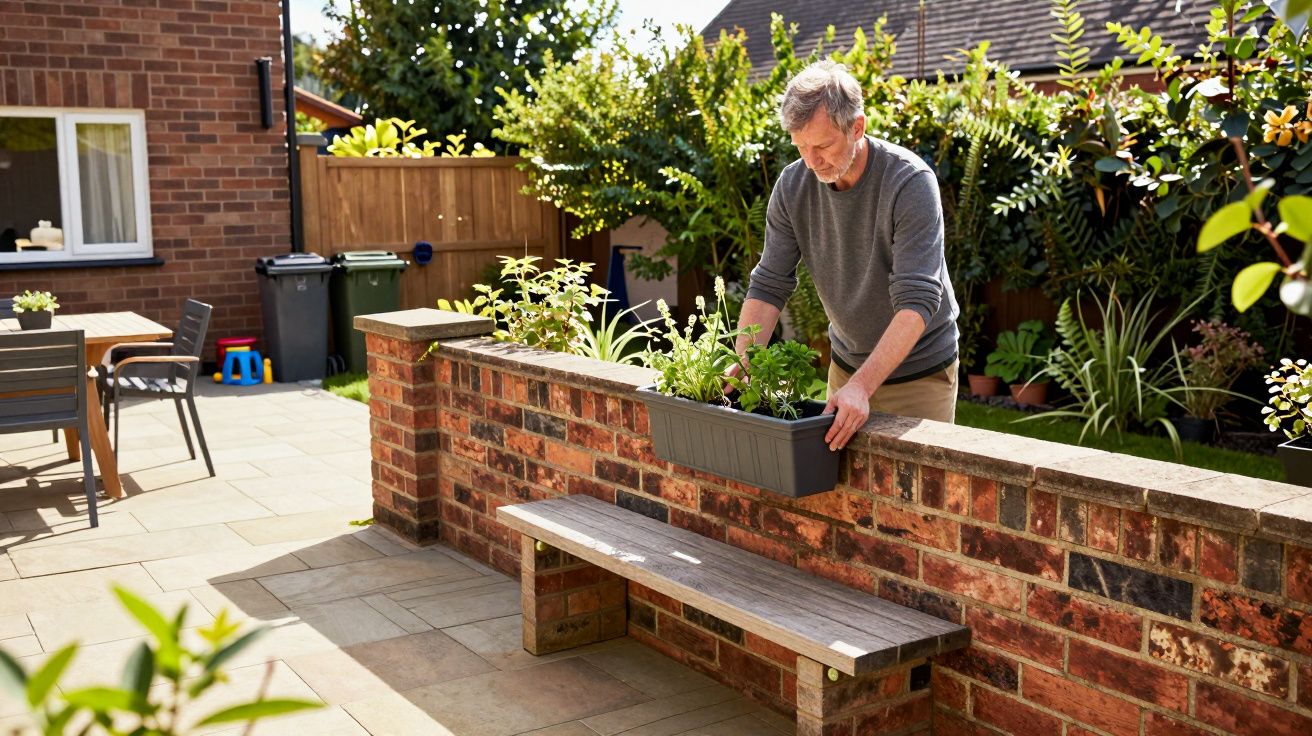
Many basement gardens rely on retaining walls, raised planters, or existing boundary structures that weren’t designed to be a garden feature. Pressure from saturated soil is not subtle; it finds weak mortar, pushes bulges, and cracks renders.
Structural garden works here can include:
- Proper retaining wall construction (or strengthening what exists)
- Back‑of‑wall drainage (to relieve hydrostatic pressure)
- Copings and caps that throw water away from the face
- Fixing or rebuilding steps where movement has started
The early warning signs are often small: hairline cracks, staining, a step that feels slightly loose, a planter that always looks wet at the back.
3) Can you reach and maintain the “invisible” parts later?
Basement gardens often have awkward access: narrow side passages, steep steps, or shared routes. That’s exactly why you need maintenance access built into the structure now.
Plan for:
- Inspection points for drains (not buried under decking)
- Space to clear leaves and silt from channels
- Removable panels where services run
- Safe, non-slip routes for carrying compost, not just cocktails
If you can’t access it, you can’t maintain it. If you can’t maintain it, it will fail.
A simple order of operations that saves money (and arguments)
The temptation is to start with “what you’ll see”: tiles, lights, a statement planter. In basement gardens, the smarter sequence is almost always the reverse.
- Water management first: falls, channels, gullies, soakaways, overflow routes.
- Retaining and stability second: walls, steps, raised beds, handrails if needed.
- Surface build-up third: sub-base, membranes, paving/decking, slip resistance.
- Planting and irrigation fourth: shade-tolerant choices, soil depth, watering plan.
- Decor last: furniture, lighting, paint, pots, outdoor kitchen add-ons.
This order feels slow when you want results. It is also what prevents the “rip it up again” moment.
What “decorating too early” looks like in real basement gardens
It usually starts with optimism and ends with stains.
- A timber deck goes down to hide ugly concrete, then stays damp and grows slick.
- Planters are pushed against a wall to “soften” it, then trap moisture and encourage mould.
- String lights and cushions make the space feel finished, but the paving still slopes towards the house.
- A trendy porcelain tile looks sharp, then becomes a skating rink because the microclimate never dries.
None of these are taste problems. They are structural sequencing problems.
The good news: once structure is right, the design becomes easier
A basement garden with proper drainage and stable levels gives you freedom. You can choose lighter, cheaper finishes because they aren’t being asked to solve engineering.
A few design wins that become possible once the bones are correct:
- Raised beds that actually drain and don’t weep onto seating
- Shade planting that thrives instead of limping through mildew
- Lighting that’s installed with safe cable routes and accessible junctions
- Paving that stays clean because water isn’t constantly dragging silt across it
The best-looking basement gardens tend to feel “calm” for a reason: nothing is fighting the site.
A quick checklist before you spend on the pretty stuff
Walk through this before ordering tiles or furniture:
- Do all hard surfaces fall away from the building?
- Can water escape without crossing a doorway or pooling by steps?
- Are retaining walls built or assessed for the loads they’re carrying?
- Is there a maintenance route to drains and services?
- Have you chosen finishes suitable for shade, damp and algae risk?
If you can answer those confidently, decoration becomes the fun part it’s meant to be. Without them, it’s just a cover-up with a short lifespan.
FAQ:
- Are structural garden works always necessary in basement gardens? Nearly always. Because the space sits below ground level, managing water, wall pressure and safe access is fundamental before any decorative spend makes sense.
- Can I just add more drainage gravel or a few extra pots to fix damp? Gravel and planting can help at the margins, but they rarely solve incorrect levels, missing drainage routes, or retaining walls under pressure.
- What’s the biggest structural mistake people make? Getting the falls wrong so water runs towards the house or into a corner with no exit. It’s a small error that creates constant damp and maintenance problems.
- Do I need permission for structural changes? Sometimes. Retaining walls, changes near boundaries, drainage connections, and works affecting the building can trigger approvals or party wall considerations. Check before you build.



Comments (0)
No comments yet. Be the first to comment!
Leave a Comment