You notice it the moment you step down the stairs: the air changes, the light thins, and your plans suddenly feel ambitious. Basement gardens sit at an awkward edge of urban space types-part home extension, part outdoor room-and that makes them intensely relevant if you’re trying to steal greenery from a tight city plot. They can be beautiful, but they make you choose: comfort or daylight, privacy or plants, drama or durability.
On paper, it’s “just a lower-level terrace with planting”. In practice, it’s a damp, shaded bowl beside your foundations, where every design move has consequences. The brutal part isn’t the budget. It’s the physics.
Why basement gardens feel harsher than other small outdoor spaces
A roof terrace is exposed; a courtyard borrows light from above. A basement garden, by definition, sits below street level and below your internal floor line, which means it starts with a handicap: less sun, less airflow, and more water trying to go the wrong way.
The geometry does most of the bullying. Tall retaining walls steal sky view; the house casts shadow; neighbouring buildings lean in. Even a “south-facing” basement can behave like partial shade because the sun’s angle gets blocked by everything around it.
Then there’s the emotional bit nobody puts on the plan. When you’re down there, you either feel sheltered or sunken. Design has to tip it towards sheltered-without pretending you can make it a meadow.
The non-negotiables: drainage, structure, and the fear of water
If you take one idea into a basement-garden project, take this: water is always interviewing your weakest detail. The area is low, so it collects runoff; it’s close to the building, so mistakes become interior problems; and it’s surrounded by hard surfaces, so water arrives fast.
Most “brutal decisions” are really anti-leak decisions dressed up as style.
- Drainage first, aesthetics second. Falls (slopes), channel drains, and where the water discharges matter more than the paving pattern.
- Your wall is not a flower bed. Retaining walls need proper waterproofing and drainage layers; soil pressed against the wrong build-up is a slow-motion failure.
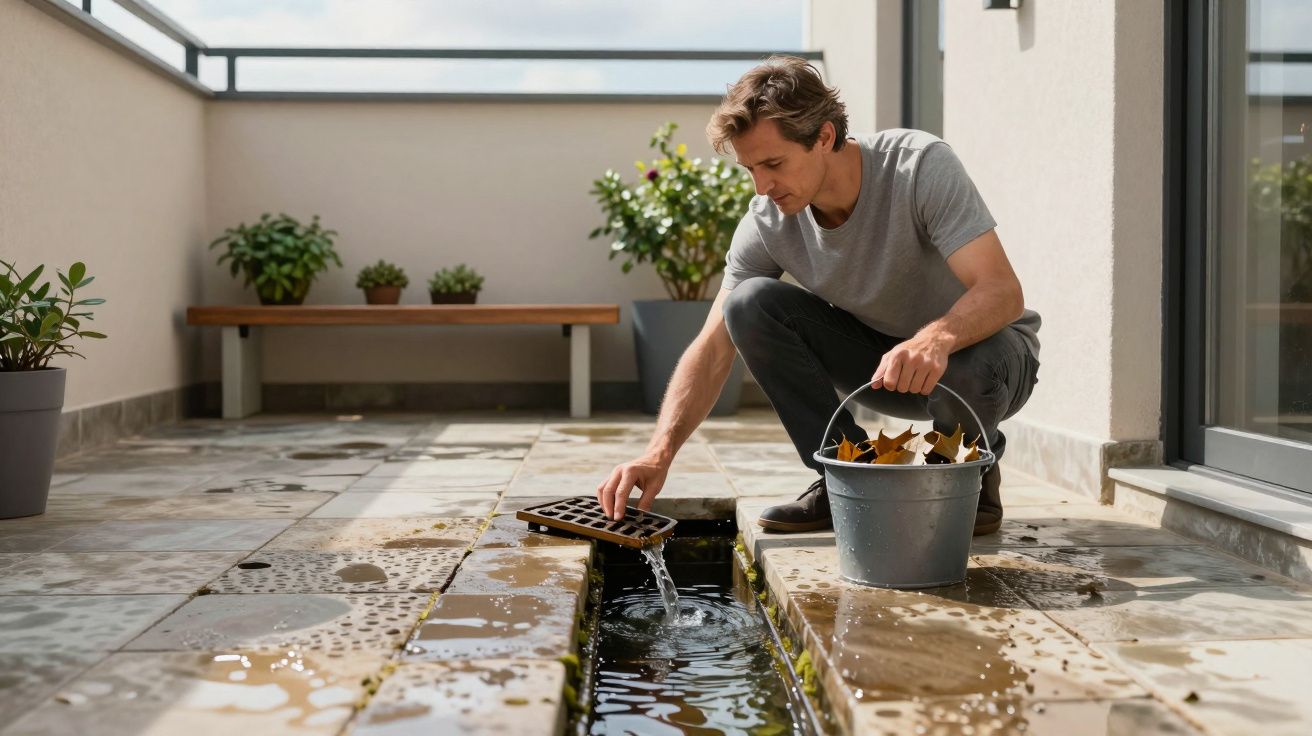
- Plan for access. Gullies and drains must be reachable to clear leaves and silt, or your perfect terrace becomes a pond after the first storm.
A common trap is trying to maximise planting by pushing soil right up to the building. It looks lush in week one. In year three, it can look like a damp line on your internal wall.
Light is a ration, so you spend it deliberately
Basement gardens tempt you into two opposite fantasies: “I’ll make it bright with white paint” or “I’ll lean into moody and add ferns”. Both can work, but only if you pick a side and design ruthlessly around it.
Start by finding the real light, not the imagined light. Stand down there at three times: morning, midday, late afternoon. Notice where the sky is visible, because sky view-not just orientation-predicts how plants and people will feel.
Three ways designers buy back brightness (each with a cost)
- Open up the balustrade. Glass feels obvious, but it also shows smears and needs regular cleaning. Metal railings can be lighter visually, but less wind-blocking.
- Choose pale, matte surfaces. They lift gloom without the glare of shiny tiles. The trade-off is that pale paving shows dirt, algae, and tannin stains faster in damp shade.
- Reduce visual clutter. Fewer materials, fewer levels, fewer planters. The cost is emotional: you must let go of “more features” and accept a calmer, emptier look.
You can absolutely create a cosy, dark garden too. The brutal choice there is admitting it’s an evening room, not a sun deck, and picking planting and lighting that suit.
Privacy versus sky: the wall-height dilemma
Basement gardens often exist because you wanted more privacy than a typical back garden provides. Below street level helps-until you remember that privacy usually comes from height, and height is the enemy of light.
Screens, trellis, and dense planting can protect sightlines from neighbours above. They also reduce airflow and sky view, which increases damp and makes winter feel longer. It becomes a constant negotiation: every extra centimetre of screening can cost you a noticeable amount of brightness.
A good compromise is to make privacy selective. Shield the seating zone and leave other edges open, so the garden can still “breathe” and catch what light it can.
Planting is where optimism goes to get edited
Basement gardens ask you to plant for shade, wind stillness, and occasional waterlogging-sometimes all in the same square metre. The winning approach is less about rare specimens and more about accepting the microclimate.
Think in layers you can control:
- Canopy substitute: multi-stem shrubs that tolerate shade and can be thinned to let light through.
- Middle layer: tough evergreens for structure, so winter doesn’t look like a drained aquarium.
- Ground plane: ferns, shade grasses, and resilient groundcover that won’t sulk in low light.
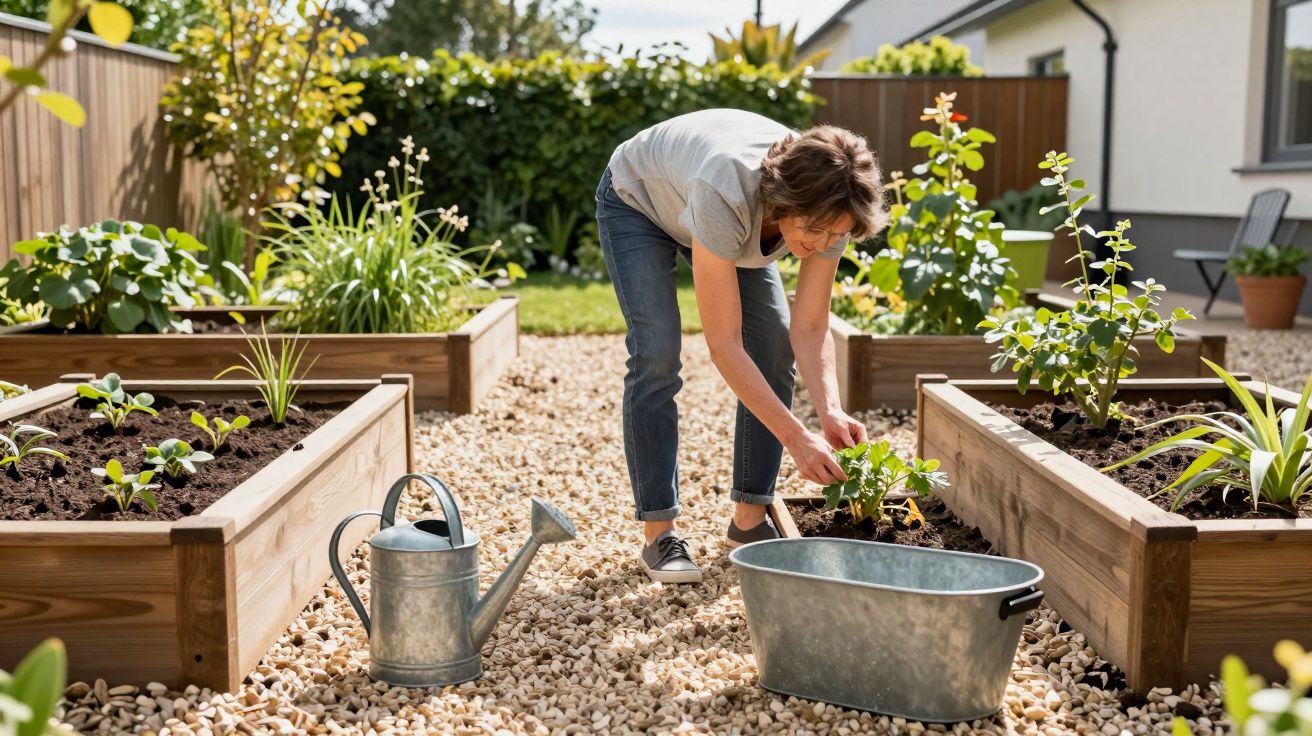
- Containers: your “escape hatch” for sun-lovers-placed where light actually reaches, and moved if it doesn’t.
The brutal design decision here is density. People overplant basement gardens to make them feel abundant. In damp shade, that can turn into mildew, pests, and a perpetual “wet compost” smell. Air gaps are not wasted space; they’re maintenance insurance.
Materials: the slippery truth about damp shade
In a typical garden, you choose paving for looks and budget. In a basement garden, you also choose it for grip, algae resistance, and how it ages when it never fully dries in winter.
Some materials look stunning in photos and become treacherous underfoot when shaded and wet. Others look plain and behave brilliantly.
- Go for texture. Flamed, bush-hammered, or riven finishes are your friend; polished stone is not.
- Assume algae will arrive. Choose surfaces you can clean without panic, and avoid tiny grooves that trap grime.
- Limit material changes. More junctions mean more edges to fail, more lines to catch dirt, and more visual busyness in a small bowl-like space.
If you want timber, accept the full deal: it will weather, it will move, and it will need airflow beneath. Composite can reduce splintering and upkeep, but it can still grow biofilm in shade and feel less natural underfoot.
The “usable room” problem: seating, storage, and circulation
Basement gardens are often designed like stage sets: a bench here, a planter there, a pretty light. Then you try to live in it and realise you can’t get past the chair without turning sideways, or you have nowhere to put cushions when it rains.
Treat it like a small room with one difficult constraint (the outside).
- Prioritise one primary function. Dining, lounging, or planting showcase-pick the lead role.
- Keep a clear path. You’ll use the garden more if it’s easy to move through, not if every step is a negotiation.
- Build in storage. A simple waterproof bench box changes how “usable” the space feels, especially in the UK where weather flips quickly.
And yes, lighting matters more down there. Not fairy lights for vibe, but practical light that makes steps safe and faces readable.
A quick decision filter before you commit
When a design choice feels painful, run it through three questions. It keeps you honest.
- Does this reduce the risk of damp or slipping?
- Does this improve light, or at least not steal it?
- Can I maintain it in ten minutes a week?
If the answer is “no” to all three, it’s probably a mood-board idea, not a basement-garden idea.
| Brutal choice | What you gain | What you give up |
|---|---|---|
| Fewer planters, more open floor | Light, airflow, easier cleaning | The “lush jungle” look |
| Textured paving over sleek stone | Grip, safer winter use | That glossy magazine finish |
| Selective screening, not full height | More sky view, less damp | Total privacy from every angle |
Leaving space for beauty without lying to the site
Basement gardens can be the most satisfying of urban space types because they’re intimate and close to the home. They just don’t forgive wishful thinking. If you design for the actual light, actual water, and actual maintenance you’ll do on a tired Thursday, the space starts to feel generous.
The surprising win is restraint. When you stop trying to make it behave like a sunny back lawn, you can build something it’s naturally good at: a sheltered, green, calm outdoor room that works in real life-not just on the day it’s finished.
FAQ:
- Are basement gardens always damp? Not always, but they’re more prone to damp because they sit low and often have limited airflow; good drainage and breathable detailing make the biggest difference.
- Can I grow vegetables in a basement garden? Sometimes, if you have strong direct sun for several hours; otherwise, lean towards shade-tolerant edibles (herbs, salad leaves) in containers placed in the brightest spots.
- What’s the biggest design mistake people make? Overcrowding-too many planters, too many materials, and too much screening, which reduces light and increases maintenance in a naturally shaded space.
- Do I need professional help? If you’re altering retaining walls, waterproofing, or drainage near the house, professional design and qualified installation are worth it; those are the failures that become expensive quickly.




Comments (0)
No comments yet. Be the first to comment!
Leave a Comment