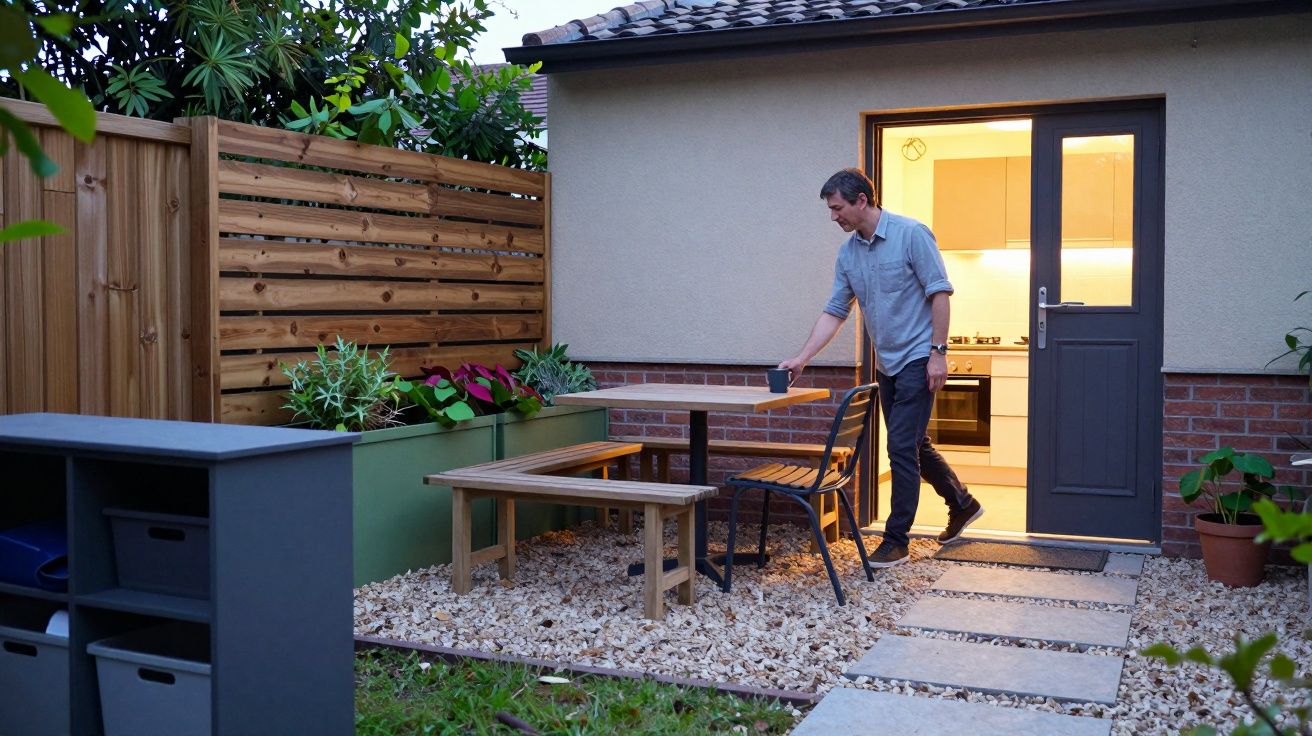
Outdoor space transformation is one of those upgrades people talk about like it’s “just for lifestyle”, right up until the estate agent starts pointing at it during viewings. Done well, it’s one of the simplest routes to property value improvements because it turns dead square metres into usable, saleable living space. And if you’ve got a patch outside that’s currently too awkward, too damp, too shady or too overlooked to enjoy, it’s probably not “small” - it’s just unmanaged.
Most of us live with an outdoor corner we’ve quietly written off. The narrow side return that collects bins. The sloping bit of lawn you can’t mow without swearing. The paved area that bakes in summer, floods in winter, and somehow never looks intentional. You stop seeing it as space, and start seeing it as a chore.
The unusable-space problem is rarely the size - it’s the friction
Unusable outdoor areas usually fail for boring reasons: there’s no easy route to the back door, nowhere to sit without dragging furniture out, and no sense of shelter. If stepping outside feels like “going out there”, you won’t do it on a Tuesday at 7pm with a cup of tea. You’ll stay inside and the space will keep gathering moss and guilt.
There’s also the visual problem. Outdoor clutter reads louder than indoor clutter: a couple of pots, a leaning fence panel, a bag of compost and suddenly the whole garden looks “unfinished”. Even if the house is immaculate, that outside mess signals work, cost and uncertainty to buyers.
The quickest way to add value isn’t to make the garden bigger. It’s to make it obviously usable, with a clear purpose the moment you look at it.
What “value” really means in a garden (and what buyers actually notice)
Property value improvements aren’t just about spending more; they’re about reducing doubt. A tidy lawn doesn’t raise eyebrows, but a defined seating area, good access and lighting quietly tell people the home is well-run and easy to live in.
Buyers tend to clock a few things fast:
- Flow: can you get to the space easily, with a path that doesn’t feel like an obstacle course?
- Privacy: is there any shelter from neighbours, wind, or street view?
- Maintenance: does it look like it will eat every weekend from April to September?
- Versatility: could it be dining, kids’ play, a small veg patch, a dog zone, or a home-working nook?
If the space answers those without explanation, it feels like an extra room. That’s the mental shift you’re aiming for.
The transformation that works most often: define one “outdoor room”
The most reliable outdoor space transformation isn’t “redo everything”. It’s choosing one section - even a tiny one - and giving it a job. A bench and a surface for a drink. A bistro set that fits the proportions. A small deck or patio that says: this is where people sit.
That definition reduces chaos. Once there’s an obvious place to be, the rest of the area can be simpler and still feel coherent. You’re not trying to create a show garden; you’re creating a habit.
The three-part formula: access, surface, edge
If you want a simple checklist that rarely fails, this is it:
- Access: a clear path from the back door (or kitchen) that stays clean and non-slip.
- Surface: a stable, level base for furniture (paving, compacted gravel, or decking).
- Edge: a boundary that makes it feel contained (planters, a low wall, slatted screening, or planting).
Without an edge, outdoor areas feel exposed. Without a decent surface, they feel temporary. Without access, they won’t be used.
Small fixes that change the feel more than a full makeover
Not every upgrade needs a builder. Often the “unusable” label comes from a few fixable irritations that have piled up.
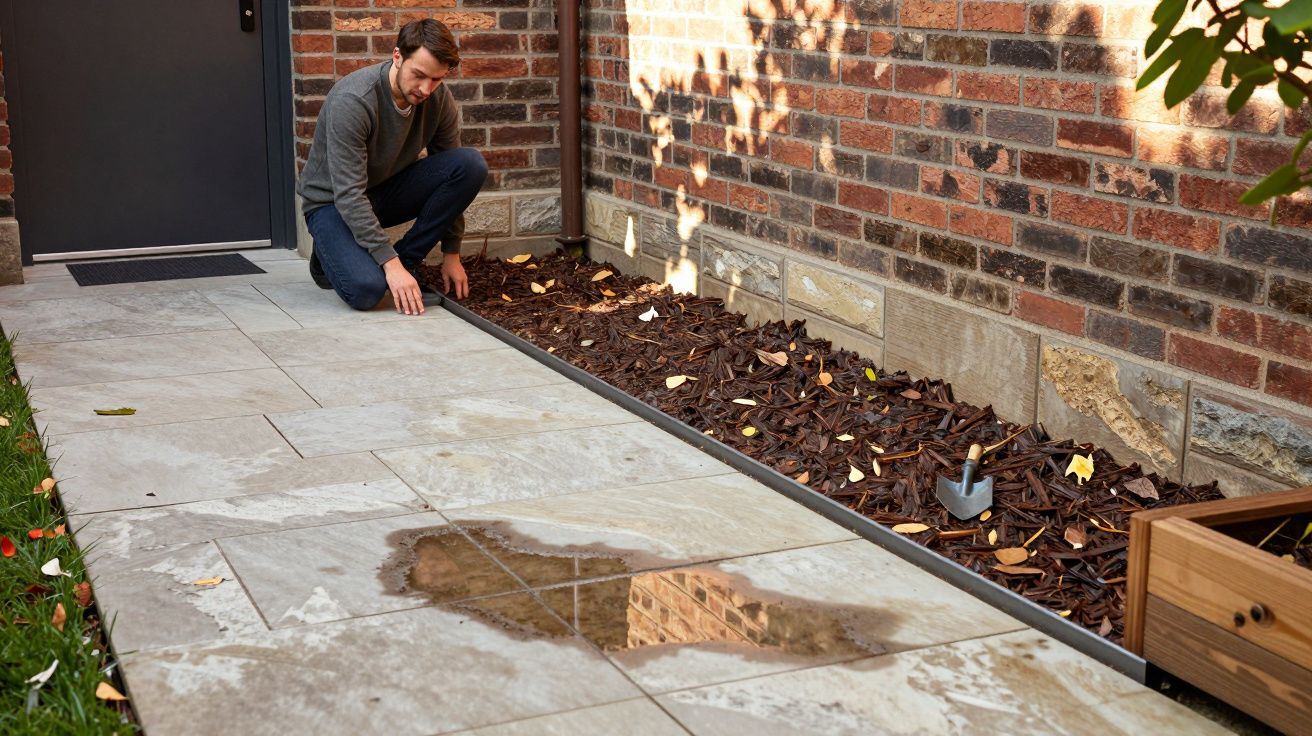
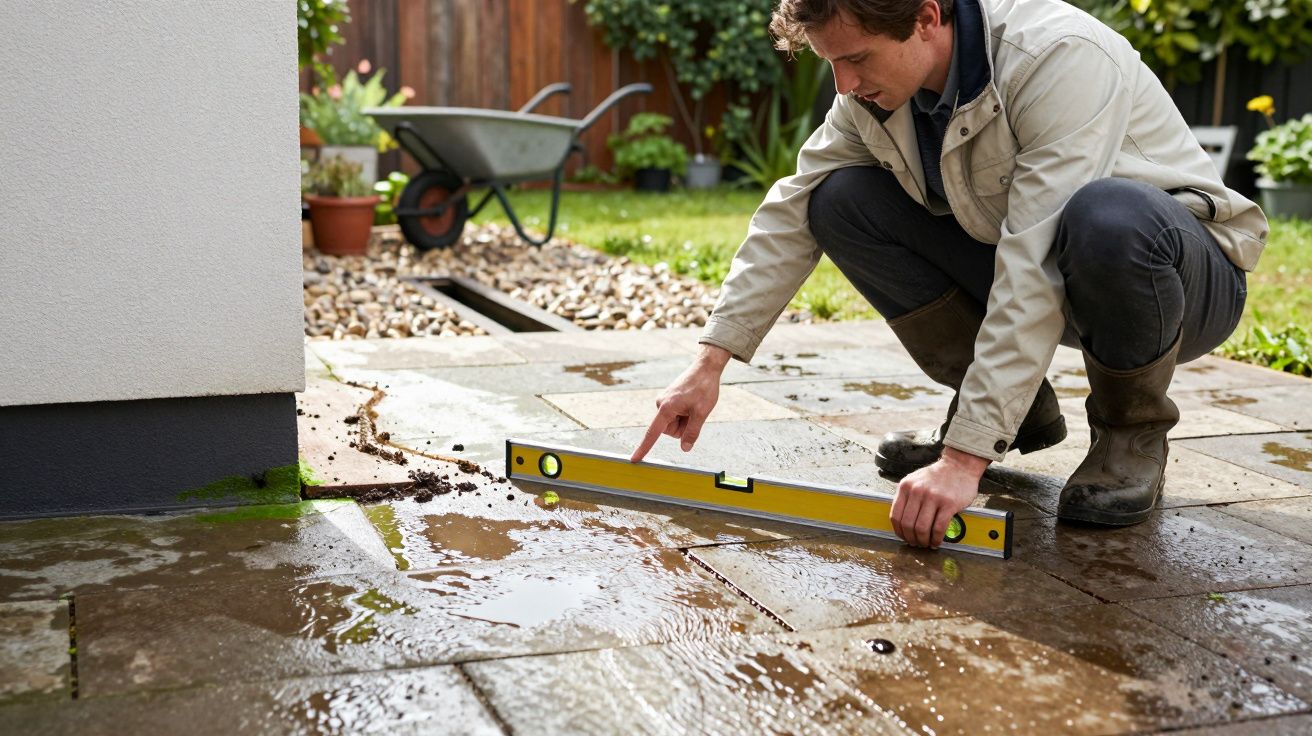
- Drainage first: if water sits, nothing else will look good. Clear gullies, regrade a small section, or use permeable gravel.
- Lighting: one warm wall light and a couple of low path lights can turn “dark back corner” into “evening space”.
- Storage: hide the practical stuff. A slimline store for bins and tools instantly reduces visual noise.
- Planting with structure: fewer, larger planters read calmer than lots of small pots. Evergreen plus one seasonal element is enough.
The goal is not perfection. It’s lowering the effort required to enjoy the space.
Budget vs impact: where the money actually shows
Some outdoor spending disappears into the ground (sometimes literally). Other spending photographs well, feels good underfoot, and reads as “finished” in a viewing. If your aim includes property value improvements, prioritise the things that are obvious and durable.
| Spend area | Why it pays back | Typical “win” |
|---|---|---|
| Level, usable seating base | Makes the space instantly functional | Buyers can imagine daily use |
| Privacy screening / boundary | Adds comfort and reduces overlooked feel | Feels like an extra room |
| Lighting + power point | Extends use into evenings, adds polish | “This has been thought about” |
A new lawn can be lovely, but it rarely carries the same punch as a defined place to sit with decent privacy and lighting.
The quiet mistakes that keep gardens “unusable”
Most outdoor spaces don’t fail because the owner didn’t care. They fail because the decisions were made in isolation: a patio without shade, planting without a plan, furniture that doesn’t fit, gravel without proper edging.
Avoid these common traps:
- Too much hard surface, no softness: it feels harsh, hot in summer and bleak in winter.
- No storage plan: bins, bikes and tools become the “feature”.
- Oversized furniture: it turns a modest space into an obstacle course.
- Ignoring sightlines from indoors: if the view from the kitchen window is messy, the whole home feels messier.
If you can make the space look calm from inside, you’ve already improved daily life - and how the house presents.
A simple way to start: design for one normal evening
Forget the dream barbecue for twelve. Picture a normal weekday. You come home, you want ten minutes outside, and you don’t want to move five things to do it. That’s the benchmark.
Ask yourself:
- Where would you naturally step out with a drink?
- Where could you sit without feeling watched?
- What would you want lit, and what would you want hidden?
Answer those, and you’ll end up with an outdoor space transformation that feels human, not performative. The value comes from that feeling: a space that used to be ignored, now quietly pulls its weight.




Comments (0)
No comments yet. Be the first to comment!
Leave a Comment