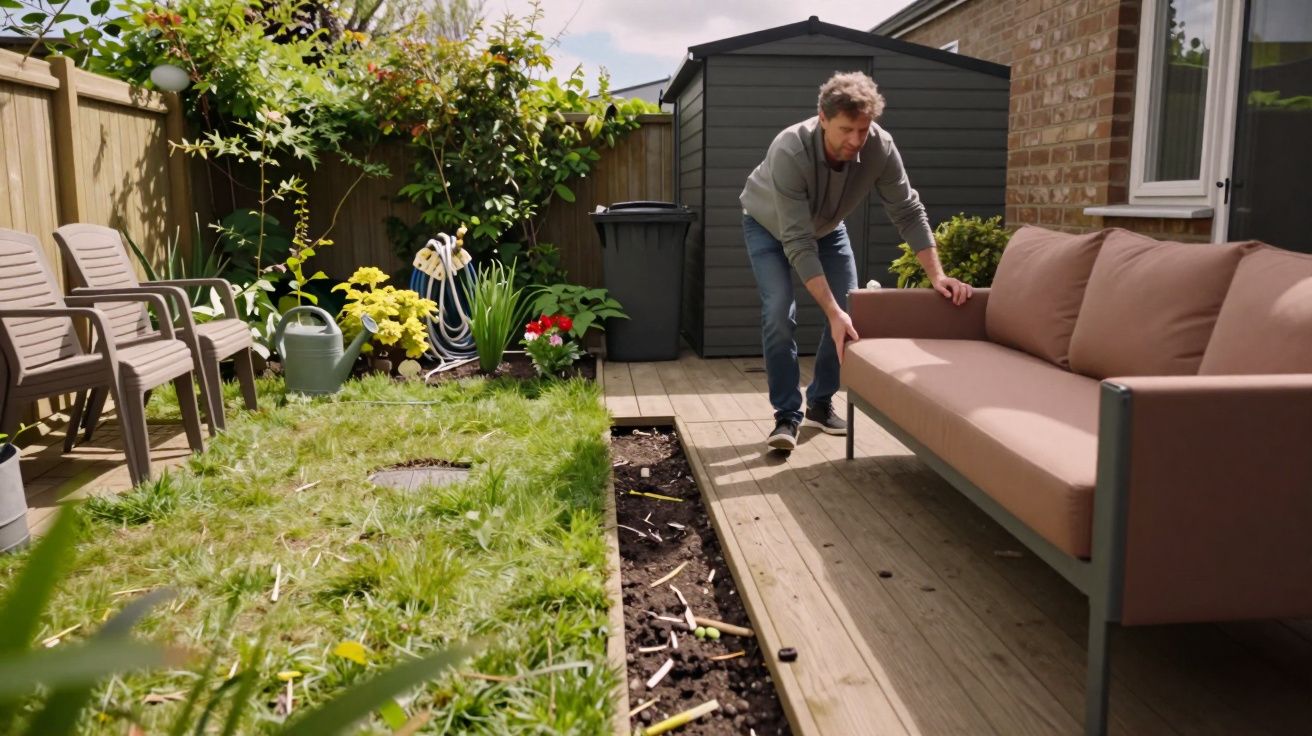
You can have the prettiest outdoor seating areas in the world and still end up with a garden that feels awkward, bare, and oddly hard to use. The quiet culprit is often space zoning: one early decision about where “life happens” outside, made for convenience, that starves every other corner of light, water, and attention. It matters because most gardens don’t fail from lack of plants - they fail from one dominant zone that dictates everything else.
It usually starts innocently. A new table. A bargain settee. A promise to “use the garden more”. Then you place it where it’s easiest, and six months later you’re wondering why the border looks tired, the lawn won’t recover, and the far end has become a storage annex for pots you meant to plant.
The seating choice that eats the garden alive
The mistake isn’t having a seating zone. It’s making it the only zone that counts, then building the whole layout around protecting that one patch of comfort. Once you do that, everything else becomes leftover space: too narrow to plant properly, too shaded to thrive, too awkward to maintain without stepping on something.
Most people pick the spot that feels practical: right outside the back door, tight to the house, close to the kitchen. That’s not wrong. What goes wrong is scale and dominance. A big footprint in the “prime” position quietly blocks the routes, the light, and the natural flow that the rest of the garden needs.
You can see the chain reaction in ordinary details. The herb trough that never gets sun. The border you can’t reach without moving chairs. The damp corner that suddenly exists because you’ve placed a solid mass where air used to move.
The real problem is not the patio - it’s the traffic
Gardens live or die by how you walk through them. If you create outdoor seating areas that sit directly on the main line of travel - door to shed, door to washing line, door to bin - you build a garden that’s constantly being crossed, dragged across, and trampled.
The lawn takes the hit first. A “temporary” path forms along the quickest route, soil compacts, and grass thins. Then you patch it. Then you avoid the muddy bit by walking wider. The damage spreads, and the garden starts to look like it’s wearing out.
Space zoning fixes this by separating resting from passing through. A seating area should feel reached, not walked across. If you can’t get to your bins without skirting chair legs, the zone is in the wrong relationship to the rest of the space.
Sun, shade, and the slow death of borders
Seating tends to bring structures with it: umbrellas, pergolas, privacy screens, taller planters, even a barbecue station that lives there “for ease”. Each one makes sense on its own. Together, they create a shade pattern you didn’t plan for, and plants respond with brutal honesty.
A border that used to get morning sun can become half-day shade. A sunny pot becomes a leggy, thirsty mess. Damp lingers because airflow is blocked, and you start seeing more mildew, more slugs, more sulky growth.
The saddest version is when you react by simplifying. You stop planting things that excite you and start planting what “survives”. Gravel appears. A few evergreens. The garden becomes sturdy, but dull, because the main zone forced every other choice into compromise.
The maintenance trap: seating that blocks care
A garden thrives when it’s easy to do the tiny jobs. Deadheading takes 30 seconds. Watering takes five minutes. Cutting back is painless because you can reach the base of the plant without performing furniture Tetris.
When outdoor seating areas are placed too close to planting, they turn those jobs into a project. You put off weeding because you have to move chairs. You stop watering properly because you can’t swing a hose without soaking cushions. You ignore the back border because you can’t get past the table without scraping your shins.
Then the garden looks “high maintenance”, when the real issue is the layout making small care feel like work.
A simple zoning reset that saves the whole space
You don’t need a new patio or a full redesign. You need the zones to stop competing.
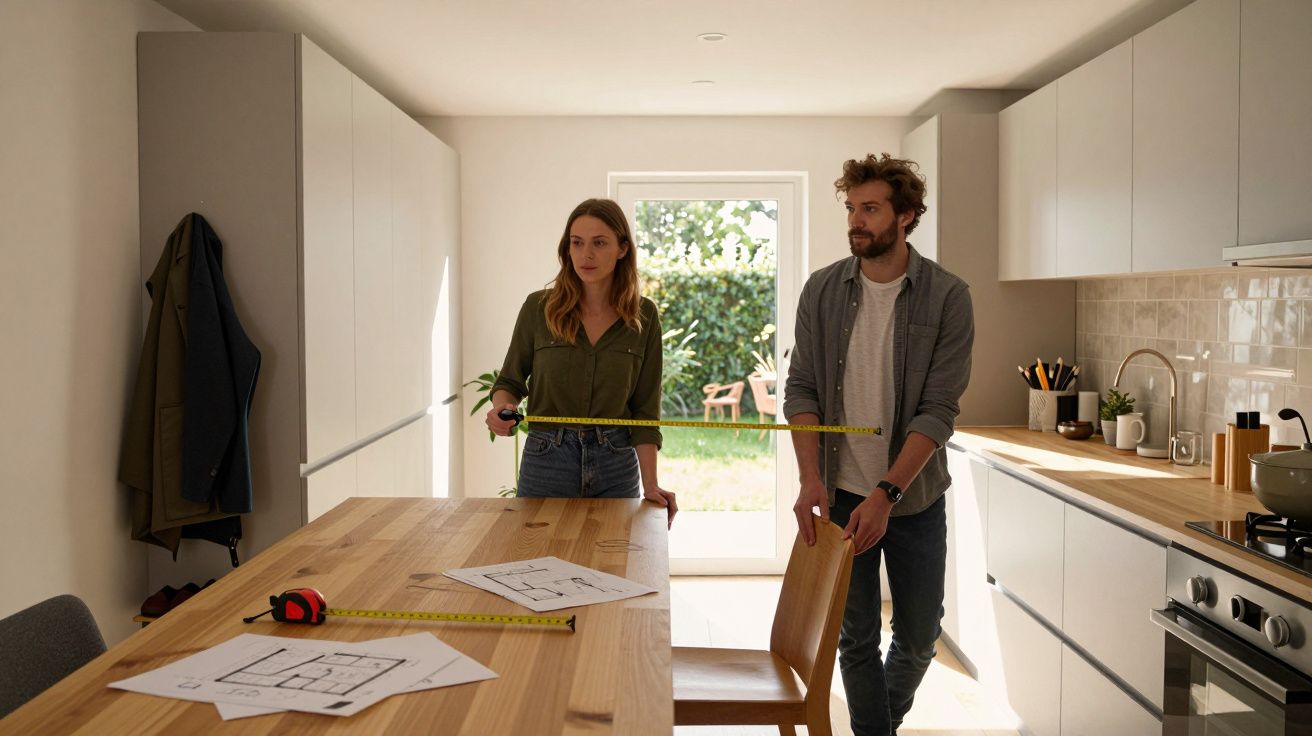
Start with a quick audit and be honest about what you actually do outside.
- Where do you walk every day (bins, shed, washing, compost)?
- Where do you sit most often (morning coffee, evening sun, shade on hot days)?
- Where do you want the garden to feel alive (colour near the house, scent by a path, a view from indoors)?
Then build space zoning around two rules:
- Keep a clear travel line that doesn’t cut through the seating. Even a 60–90cm “no-furniture corridor” along a fence or border can remove 80% of trampling.
- Let the seating area borrow the view, not the growing space. It should face your best planting rather than occupy it.
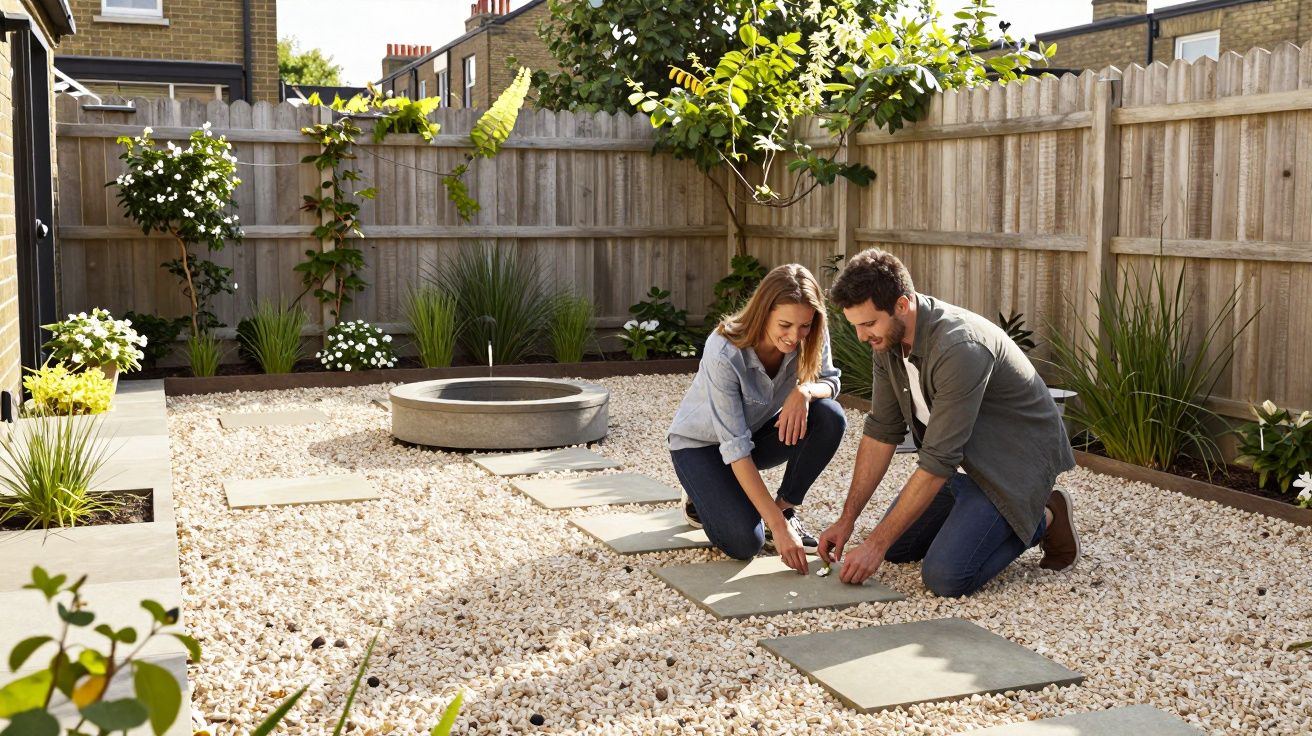
A practical reset that works in many UK gardens is to shrink the hard zone and expand the green zone right next to it. Swap one bulky item for flexible seating, and suddenly you have room for a planted edge that softens the area and brings back biodiversity.
What good seating placement looks like (without overthinking it)
A seating zone works when it supports the garden instead of replacing it. You’ll feel it immediately: you can move, reach, and maintain without friction.
Use these quick checks:
- Can you open the door fully without bumping a chair?
- Can you get to the shed/bins without stepping onto soil or lawn?
- Can you water a border without moving furniture first?
- Does the seating get sun when you want it, and shade when you need it (not the other way round)?
- From the seat, do you see plants - or the bits you’re trying to hide?
If two or more answers are “no”, it’s not a plant problem. It’s a zoning problem.
| Quiet symptom | What’s really happening | Quick fix |
|---|---|---|
| Lawn wears in one strip | Seating sits on the main route | Create a defined path line away from the chairs |
| Borders look “tired” | Light/air blocked by structures | Lower screens, thin planters, open a gap for airflow |
| You stop maintaining | Furniture blocks access | Pull seating 30–60cm off beds; simplify to lighter pieces |
The goal: more garden, not more furniture
The best outdoor seating areas don’t dominate. They give you a reason to be outside, then let the rest of the space do its job: growing, changing, softening the edges, pulling you further in.
If your seating zone is “perfect” but the garden feels like an afterthought, treat it like any other layout issue. Move it a little. Shrink it slightly. Give walking and planting their own rights. Quietly, the whole garden comes back to life.
FAQ:
- Can I keep seating right by the back door if space is tight? Yes - just keep it compact and protect a clear walkway so daily traffic doesn’t cut through the chairs or across the lawn.
- How far should seating be from borders? Aim for 30–60cm minimum so you can water, weed, and cut back without moving furniture or crushing plants.
- Do I need two seating areas for good space zoning? Not always, but even a “micro second spot” (a single chair in evening sun) can stop one zone from dominating the whole garden.
- What’s the fastest fix if my garden already feels blocked? Remove one large item (often a bulky sofa set or oversized table), then re-mark a clear route to bins/shed and reclaim the edges for planting.




Comments (0)
No comments yet. Be the first to comment!
Leave a Comment