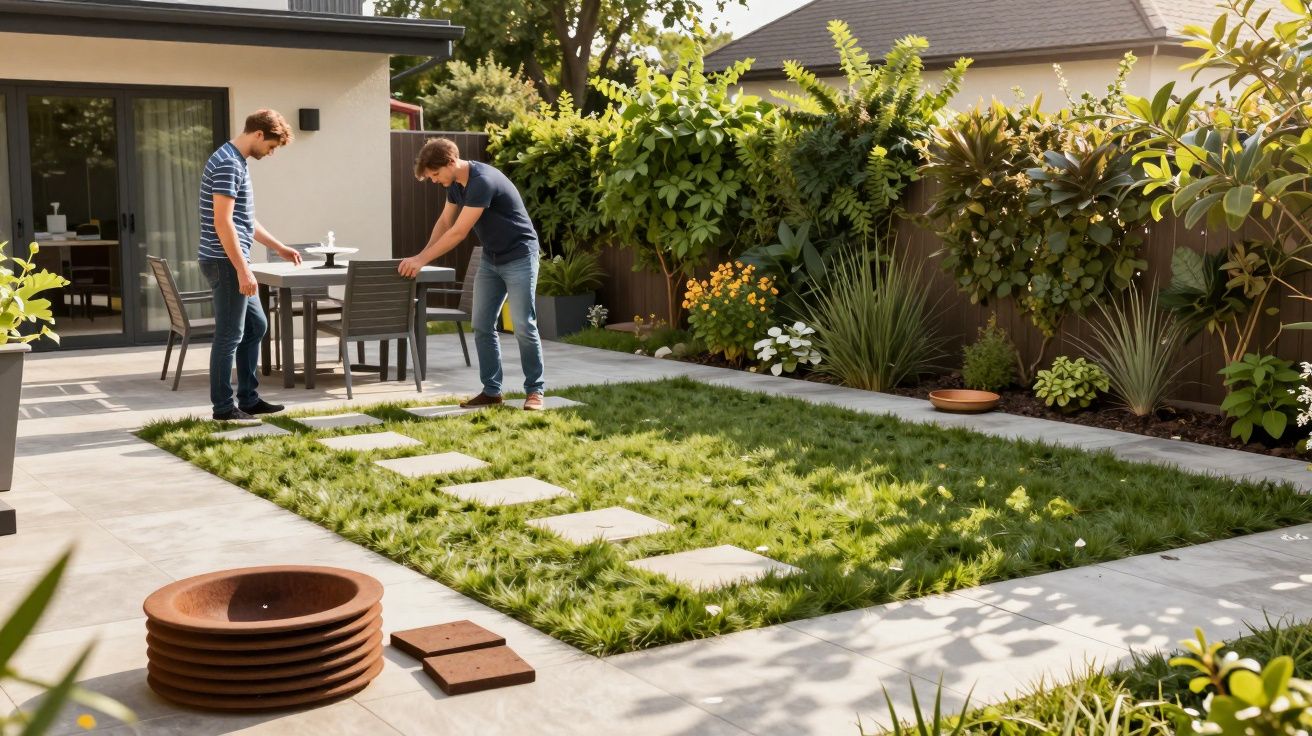
The turning point in our messy plot of complete garden renovations wasn’t a fancy pergola or a new patio set, it was space zoning and a willingness to delete things we’d paid good money for. The garden had become a catalogue: a fire pit we never lit, a water feature that sounded like a leaking toilet, and “paths” that only led you to more paths. It looked busy and still felt unusable, which is the worst combination.
The day we admitted it wasn’t working was the day we stopped adding and started subtracting. Not because minimalism is morally superior, but because too many features create friction: you can’t sit anywhere without being in the way of something else, and you can’t maintain it without resenting it.
We didn’t need a bigger garden. We needed a clearer one.
The garden that had everything, except a reason
On paper, the layout was impressive. There was a raised bed area, a bench nook, a barbecue corner, a pond, a curved lawn, a second curved lawn (why?), and a skinny border that demanded weekly attention like a needy houseplant. Every “zone” existed, but none of them worked together, so the space never settled.
The biggest tell was how we moved through it. We cut across the lawn because the stepping stones were awkward, we avoided the bench because it was exposed, and we left the pond to fend for itself because it needed constant topping up. In summer, it still felt like a place to manage rather than a place to be.
So we did something that felt backwards in renovation culture: we made a list of what we actually do outside. Eat. Read. Let a child run. Grow a few things we’ll genuinely cook with. Everything else had to justify itself.
The move: delete half the features, keep the function
Space zoning sounds like a designer phrase, but it’s just giving each part of the garden a job and enough room to do it without apologising. The trick is that the jobs need to match your life, not your aspirations.
We removed the features that created maintenance without delivering use. That gave us literal space and mental space. The garden stopped arguing with itself.
Here’s what went, and what replaced it:
- The water feature became a deep planted bed with one small wildlife dish hidden in foliage. Same life, less plumbing.
- The fire pit circle became a flat, open patch of lawn that actually works for games and drying in the sun.
- The wandering paths became one direct route: door to seating, seating to compost, compost to veg. No scenic detours.
- The extra “nook” became storage screening: a slim fence, climbers, and somewhere for bins to disappear.
None of this is dramatic individually. Together, it changed the way the garden feels: calmer, larger, and easier to use on a Tuesday, not just in a magazine photo.
How to zone a small garden without drawing a masterplan
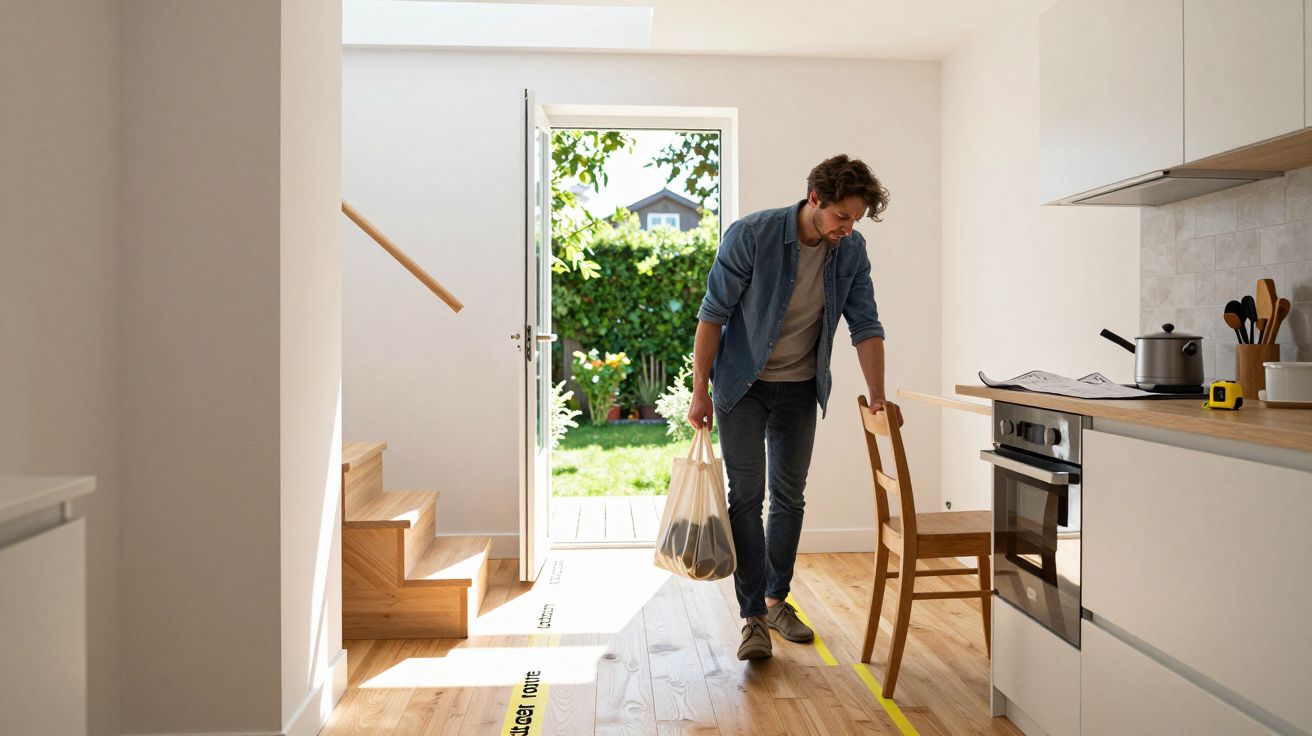
We didn’t start with a scale drawing. We started with tape on the ground and a brutally honest walkthrough: where do you step first, where does the sun land, and where do you want to stop.
A simple method that works even if you hate planning:
- Mark your “anchor” activity. For most people it’s seating. Put it where you’d genuinely sit at 6pm, not where you think seating “should” go.
- Give each zone a clear edge. Edges can be hedges, sleepers, a change of gravel, or even just a straight line of planting. Blurry borders make everything feel temporary.
- Keep circulation boring. Paths are not a feature, they’re logistics. Make them direct, wide enough for a wheelbarrow, and don’t waste turns on them.
- Limit materials. Two hard surfaces max (for example: patio + gravel). More than that starts to look like samples.
Once we did that, the layout basically chose itself. The garden stopped being a set of ornaments and started being a set of rooms you can actually enter.
What we kept (and why it mattered)
We didn’t strip it bare. We kept the few elements that earned their place by doing more than one job.
- A single dining area that also works as a potting bench zone in spring.
- A one-shape lawn (rectangle beats amoeba) that makes the whole plot read as bigger.
- Planting with depth, not variety for variety’s sake: fewer species, repeated, so it looks intentional and is easier to maintain.
- One focal point, not five. Ours is a small tree that holds the view together year-round.
It’s surprising how quickly you stop missing the deleted features. The garden becomes quieter, and in that quiet you can hear what you actually enjoy: shade moving across the paving, the smell of herbs when you brush past, the fact you can sweep the patio in two minutes.
The payoff: less maintenance, more garden
Complete garden renovations often get sold as “add value” projects, but the real value shows up in ordinary time. We now walk outside and sit down without rearranging cushions, stepping over edging, or wincing at a feature we’re neglecting. The garden asks less, so we give it more.
There’s also a hidden benefit: when you remove clutter, you see problems sooner. Drainage becomes obvious. Sun and shade patterns make sense. Planting failures stand out and can be fixed without everything else competing for attention.
The garden didn’t need more personality. It needed fewer decisions.
| What we removed | What we gained | Why it helped |
|---|---|---|
| Extra features (pond/fire pit/nooks) | Clear zones | Easier to use without “dead” areas |
| Winding paths | One direct route | Better flow, less wasted space |
| Too many materials | A simple palette | Looks calmer, cheaper to maintain |
FAQ:
- Isn’t removing features just making the garden boring? Not if you keep one focal point and use planting for texture. “Boring” usually means “nothing to do”; zoning gives you places to actually live.
- What’s the fastest win if I can’t do a full rebuild? Delete one underused element and reclaim the space for a larger seating area or a cleaner lawn shape. One decisive change beats five small tweaks.
- How many zones should a typical back garden have? Usually two to three: seating/eating, a practical route/storage, and either lawn or planting/veg. More zones need more space to feel comfortable.
- Do I need a designer for space zoning? Not necessarily. Tape out shapes, place your furniture where you’d use it, then build edges around that reality. The garden will tell you what works if you listen to your own routines.
Comments (0)
No comments yet. Be the first to comment!
Leave a Comment