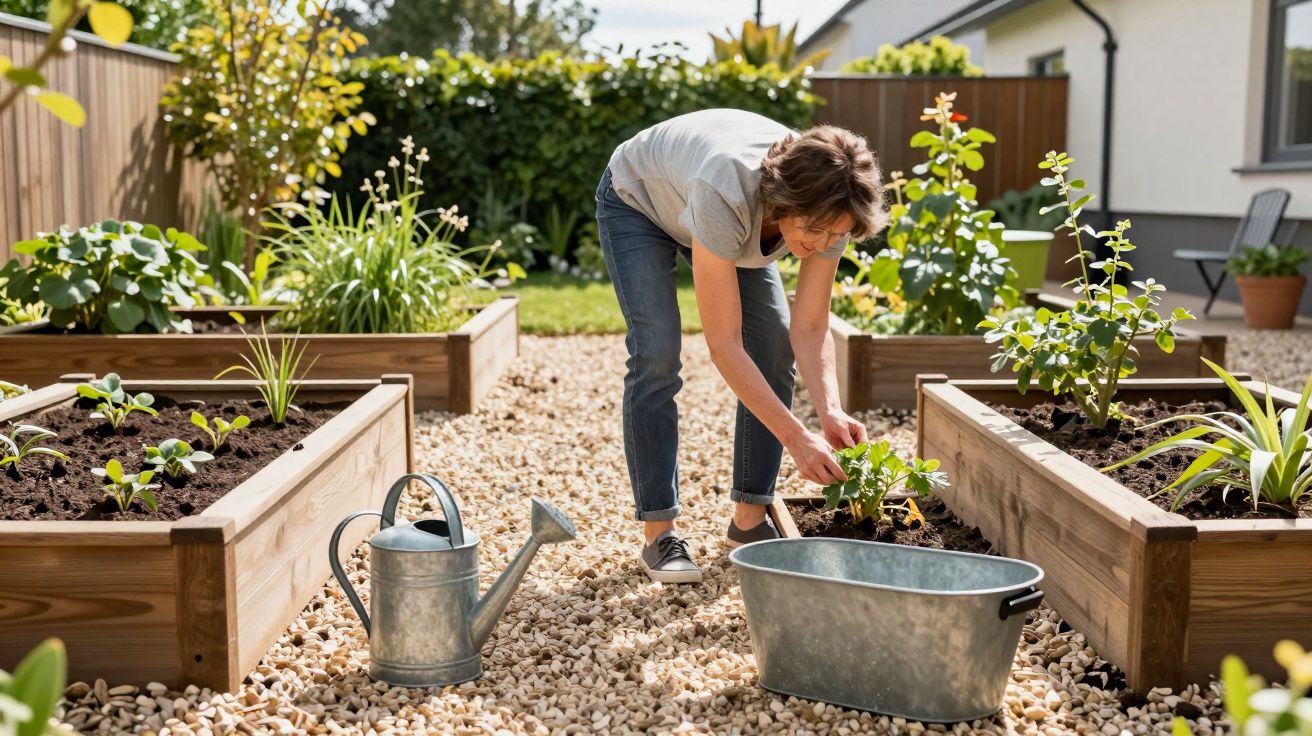
A tidy, waist-high vegetable plot can feel like the most sensible upgrade you’ll ever make. Raised beds promise less bending, better drainage, and a garden that looks intentional - but proportion and scale decide whether that promise holds once the first season gets going. Get those wrong and the “clever” setup starts to look awkward, dry out too fast, or become strangely hard to work.
Most failures aren’t about soil, compost, or which timber you chose. They’re about sizing everything as if the bed is a standalone object, not part of a working space you need to reach into, water, weed, and walk around.
The setup that wins you over in the first five minutes
The appeal is immediate: crisp edges, straight lines, clean paths. A raised bed at roughly knee to hip height reads as ergonomic and modern, especially when it’s repeated in a neat grid.
The trouble is that our eyes like symmetry more than our bodies do. People often choose dimensions that photograph well - tall, narrow, perfectly aligned - then discover that gardening is mostly reaching, carrying, and turning, not looking.
A raised bed can be beautiful and still be unusable. The breaking point is almost always reach.
The common “clever” pattern
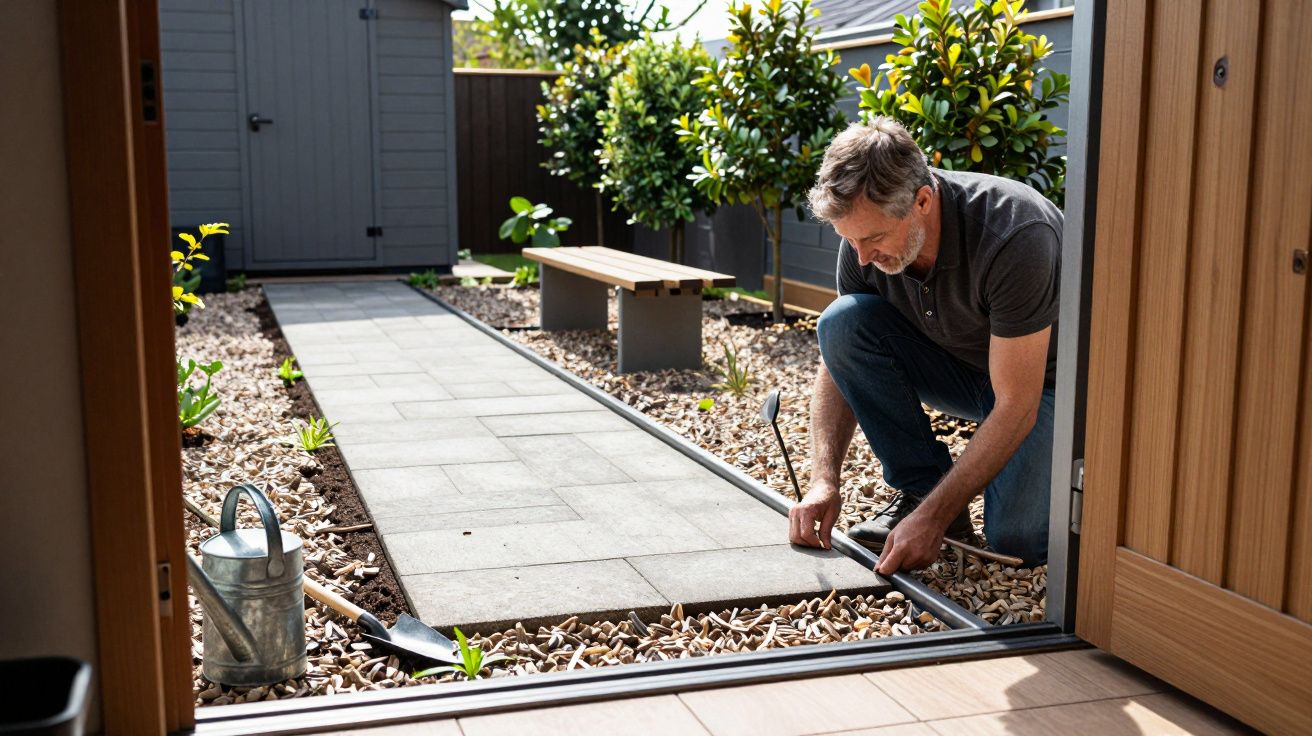
You see it in new-build gardens, on social media, and in DIY plans: multiple tall beds, tight paths, and a matching bench or edging strip. It looks efficient because everything is close together.
In practice, that closeness compresses movement. You end up stepping off the path to get leverage, leaning over the sides, and accidentally compacting soil where you meant to grow.
When proportion and scale collapse (and what it feels like)
The moment tends to arrive mid-season. Plants are big. The soil level has settled. You’re trying to harvest salad leaves without snapping stems, or you’re reaching for a weed that’s somehow always in the centre.
The bed hasn’t changed, but your relationship to it has. A few small choices stack up until the space starts fighting you.
1) The bed gets too wide to reach
A bed can be a sensible height and still be too wide, which is the most common proportion mistake. Wide beds make you lean - and leaning turns simple tasks into strain.
If you can’t comfortably reach the middle from either side, you’ll either ignore the middle (it becomes a weed nursery) or you’ll climb in (you compact the soil and undo the whole point).
A practical rule of thumb - If you can access from both sides, keep the bed narrow enough that you can reach the centre without stretching. - If you can access from only one side (against a fence or wall), it needs to be narrower still.
2) The walls go tall, but the soil doesn’t
Tall sides look premium. They also invite you to underfill to save money, which creates a deep “box” with a low working surface.
That’s where the cleverness collapses: you paid for height, but you still bend down into a pit. Worse, the top edge becomes an awkward barrier against your ribs and forearms while you work.
3) Paths shrink until they’re not paths anymore
In a plan, narrow paths look like efficient use of space. In real life, you need room for a watering can, a wheelbarrow, kneeling, turning with a trug, and passing another person without stepping into the bed.
Tight paths also change behaviour. You start cutting corners, stepping on the edge, and nudging soil out of place. Over time the geometry degrades: crisp lines become wobbling edges and muddy pinch points.
4) The bed is “perfectly level” but the garden isn’t
A bed that sits square in a sloping or uneven garden can look slightly wrong even when it’s well built. More importantly, it can behave wrong: water runs, one end dries quicker, and soil settles unevenly.
This is where scale matters beyond the bed itself. A raised bed reads as a strong shape, so any mismatch with the surrounding ground is visually amplified.
The fix is not more material - it’s better sizing
Most people respond to awkward beds by adding things: trellises, extra edging, more compartments, more gadgets. That tends to make the proportions feel even busier.
Instead, treat the bed like a work surface in a kitchen. It needs clear access, comfortable reach, and enough open space around it to move naturally.
A quick proportion check you can do today
Walk to the bed with the tools you actually use. Then try these without “cheating”: - Reach to the centre and pinch an imaginary weed between finger and thumb. - Lift a full watering can and aim it at the far corner without tipping your balance. - Turn around while holding a trug or bucket and step away cleanly.
If any of those feel like a small struggle, it will feel like a big struggle when everything is wet, heavy, and overgrown.
A more workable raised-bed layout (that still looks tidy)
You can keep the clean, structured look - just scale it to bodies and routines rather than photos.
- Prioritise reach over volume. A slightly smaller bed you can work comfortably will outproduce a large bed you avoid.
- Keep height honest. Only go tall if you will actually fill it high enough to work at that level.
- Give paths breathing room. Make them wide enough for the mess of real gardening: mud, buckets, barrows, and awkward turns.
- Align with the garden’s lines. Beds that follow fences, patios, and sightlines tend to feel calmer and more intentional, even when the shapes are simple.
The quiet lesson raised beds teach
Raised beds are often sold as a shortcut to an easier garden. They can be - but only when proportion and scale are treated as the main design problem, not a finishing touch.
The good news is that this is fixable. A bed doesn’t need to be complicated to work beautifully; it needs to fit the human using it, season after season.




Comments (0)
No comments yet. Be the first to comment!
Leave a Comment