You see it in the glossy brochures: paving that looks like it belongs outside a boutique hotel, not a back garden in Zone 3. In london gardens, though, paving isn’t just a style choice - it’s a daily surface that has to cope with rain that arrives sideways, leaf litter that stains overnight, and winter freeze-thaw that turns “smooth” into “sketchy”. I learned that the hard way after choosing a finish that looked premium on day one, then started misbehaving by month three.
It began with a clean, pale patio that made the whole space feel bigger. Then London did what London does: a damp autumn, a mild winter, a spring that couldn’t commit, and a summer that steamed the grime into every pore. The slabs didn’t crumble or crack - they did something more annoying. They looked permanently dirty, no matter how much I swept.
The “premium” finish that fails in real weather
The mistake wasn’t spending money; it was spending it on the wrong kind of surface. Highly polished porcelain, honed limestone, smooth concrete flags - anything with a refined, uniform face can look stunning in a showroom or on a dry day. In a shaded garden that stays damp, that same smoothness becomes a stage for algae, water marks, and little black spots that appear like gossip.
London’s problem isn’t dramatic heat or deep snow. It’s persistence: moisture that lingers, not a downpour you can rinse away. When paving stays damp for hours, organic film builds quietly, and the slabs start to shift from “hotel terrace” to “slippery at the edges” without you noticing until you’re carrying a tray.
You can usually tell it’s happening when:
- the colour looks patchy after rain instead of drying evenly
- the shady side stays darker all day
- the surface feels slightly slick under trainers, even when it doesn’t look green
- you get stains that appear “from nowhere” beneath planters and pots
Why London punishes certain paving (it’s not just “dirt”)
A lot of people blame themselves: wrong brush, not enough jet-washing, too many trees. Some of that matters, but the bigger factor is how the material behaves when it’s wet.
Porous stone and some concrete flags drink in tannins, soil, and the fine black grit that London air seems to deliver for free. Smoother finishes, meanwhile, don’t absorb as much - but they also don’t give grime anywhere to hide except right on top, where you can see every footprint and every bit of pollen. Add shade, and algae treats your patio like a long-term rental.
There’s also the “sealed but not really sealed” trap. Many paving products are sold with sealers as an optional add-on, and it’s easy to assume that one coat equals immunity. In reality, sealers wear unevenly (especially on pathways), and patchy sealer can make staining look worse because it creates a map: protected here, exposed there.
The bit nobody mentions: maintenance is part of the material
Some paving looks calm because it’s low-contrast. Mid-tones, lightly textured surfaces, and natural variation hide the normal mess of outdoor life. The most “premium-looking” options are often the most demanding because they show everything.
That doesn’t mean you can’t have a pale patio in London. It means you need to choose your battle upfront: are you willing to do light cleaning little and often, or do you want something that forgives you for ignoring it through February?
A realistic maintenance rhythm for London patios tends to look like this:
- sweep weekly in leaf season (leaves are basically dye packs when wet)
- rinse and spot-clean as soon as you see marks, not “when you get time”
- treat algae early in spring before it gets established
- avoid blasting joints to bits with a pressure washer, then wondering why weeds moved in
What I’d choose again (and what I wouldn’t)
If you want the high-end look without the high-end sulkiness, texture is your friend. Not “rippled like a swimming pool” texture - just enough tooth to break up sheen, improve grip, and hide normal outdoor residue.
More London-proof choices:
- textured porcelain with a proper outdoor rating (often labelled R11)
- sandstone or granite with a naturally riven face (variation works in your favour)
- concrete flags with a light brush finish rather than a smooth, trowelled face
- darker or mixed-tone paving where stains don’t read as a personal insult
Choices I’d treat with caution in typical london gardens:
- very pale, very smooth paving in shade
- soft limestones without a plan for sealing and re-sealing
- glossy finishes near lawn edges (fertiliser + rain = odd marks)
- anything marketed with “minimal maintenance” but no mention of algae
The simple test before you buy a single slab
If you can get a sample, do this at home. It’s not glamorous, but it’s faster than learning the lesson on 20 square metres.
- Wet the sample and leave it in the shadiest part of your garden for a day.
- Let it dry naturally - don’t bring it inside.
- Rub it with a light-coloured cloth and see what lifts off.
- Stand on it in damp shoes and notice whether it feels secure or slightly skaty.
You’re looking for how it behaves when it’s not at its best. In London, “not at its best” is most of the year.
If you already have the “punished” paving
You don’t necessarily need to rip it all up. Most patios can be brought back to something you’re happy with, as long as you accept that the goal is “stable and clean-looking”, not “showroom perfect”.
A practical reset that usually works:
- sweep thoroughly, including joints
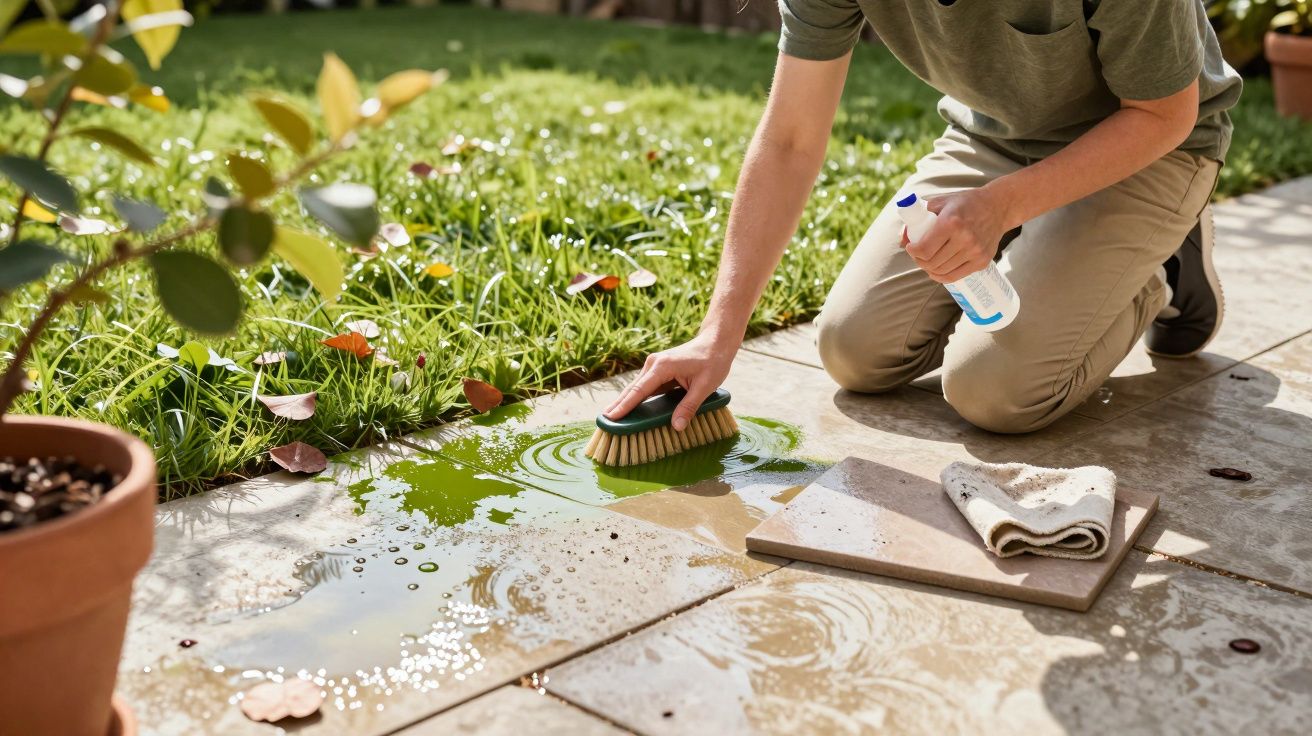
- use a patio cleaner that targets algae (not just general soap) and follow dwell times
- rinse well and let it dry fully before you judge the colour
- re-sand or re-point joints if pressure washing has hollowed them out
- consider a breathable sealer only once the surface is genuinely clean and dry
The biggest change is timing. Clean when the first signs appear, not when it’s already slippery. Outdoor surfaces reward early, boring interventions.
The takeaway I wish I’d had at the start
“Premium” paving isn’t the one that photographs best on installation day. It’s the one that still looks decent after a week of rain, a layer of plane-tree dust, and a forgotten plant pot that sat in the same spot all winter. London doesn’t care what your patio cost - it only tests how it lives.
Pick paving the way you’d pick shoes for this city: something that looks good, yes, but also something that can handle being damp, scuffed, and used. That’s what keeps a garden feeling finished, not fussy.
FAQ:
- Can I pressure-wash my patio to fix the stains? Yes, but go gently and avoid blasting the joints. High pressure can strip jointing, loosen slabs, and create a perfect seedbed for weeds.
- Is porcelain paving always slippery in the wet? Not always. Outdoor-rated textured porcelain can be very grippy, but smooth or semi-polished finishes can become slick, especially in shade.
- Do I need to seal my paving in London? It depends on the material. Some natural stones benefit from a breathable sealer, but sealing won’t fix existing grime and can look patchy if applied to damp slabs.
- Why are the edges going green first? Moisture and shade are usually higher at borders, near lawns, or under overhangs. That’s where algae establishes before spreading across the surface.



Comments (0)
No comments yet. Be the first to comment!
Leave a Comment