You can spend months on garden modernisation projects and still end up stuck with a space that feels dated by the time the barbecue’s lit. It usually comes down to one quiet choice about patios: what you build them from, and how permanently you fix them in place.
It doesn’t look like a “future” decision when you’re standing in the builders’ merchant car park. It looks like colour samples, a price per square metre, and whether you can get it done before the bank holiday. But the material and the base you choose will decide how your garden drains, how it ages, and how easy it is to change when your life does.
The patio choice that feels sensible - until it isn’t
Most people default to what’s familiar: a big, mortared slab patio, laid flat, edged tight, pointed neat. It’s solid. It photographs well on day one. It also locks the garden into a single, rigid answer to problems that will keep changing: heavier rain, hotter spells, shifting tastes, and the way you actually use the space.
If your patio is built like a sealed lid, your whole garden has to work around it. Water has to go somewhere. Roots have to fight. Future cables and lighting have to be threaded like a needle. And when you decide you want a different layout, it’s not “a tweak”. It’s demolition.
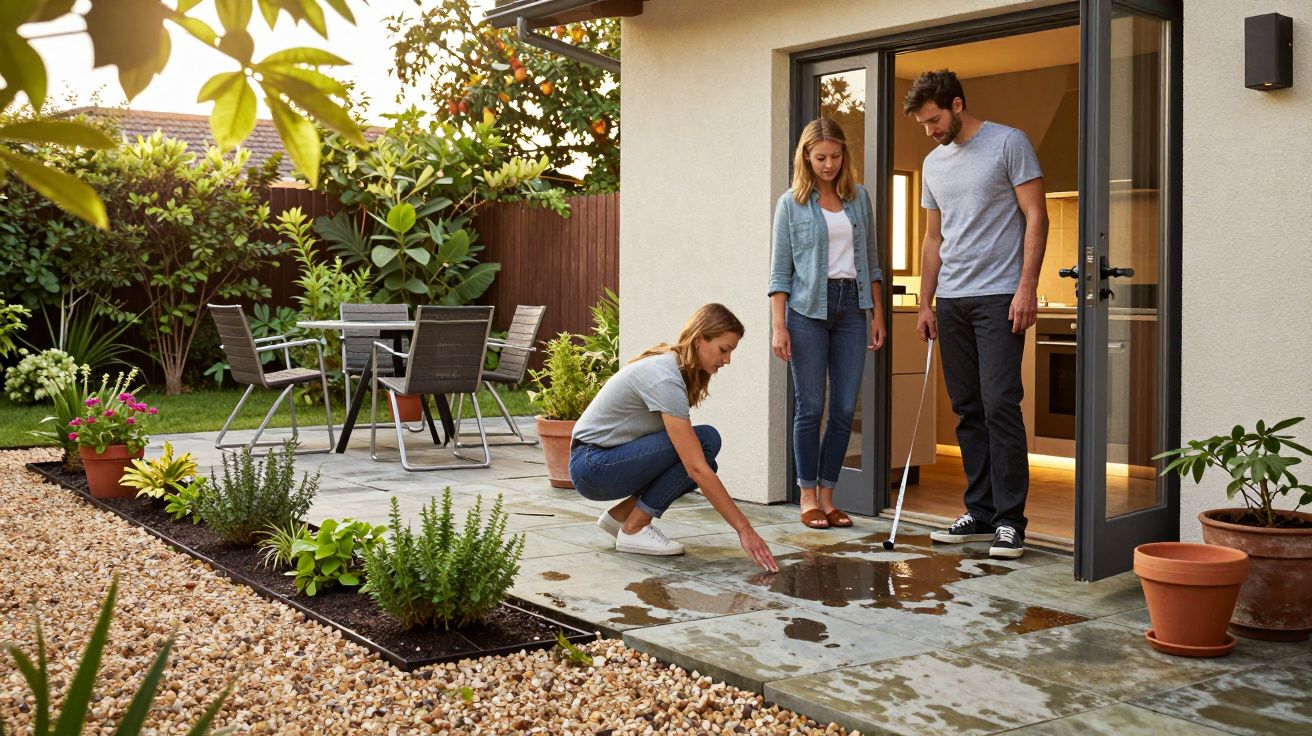
We’ve all had that moment where a space looks finished, but doesn’t feel easy. The table never quite fits. The suntrap is in the wrong place. The puddle forms exactly where the back door opens. A patio can do that: it can make a garden feel “done” while quietly making it harder to live in.
What your patio is really deciding for you
A patio isn’t just a surface for chairs. It’s a system that affects the rest of the plot, and the knock-on effects show up slowly.
Here’s what the “wrong future” tends to look like in real gardens:
- Drainage that can’t adapt. A fully mortared, low-fall patio can push water towards the house or create standing puddles that freeze in winter and slime up in spring.
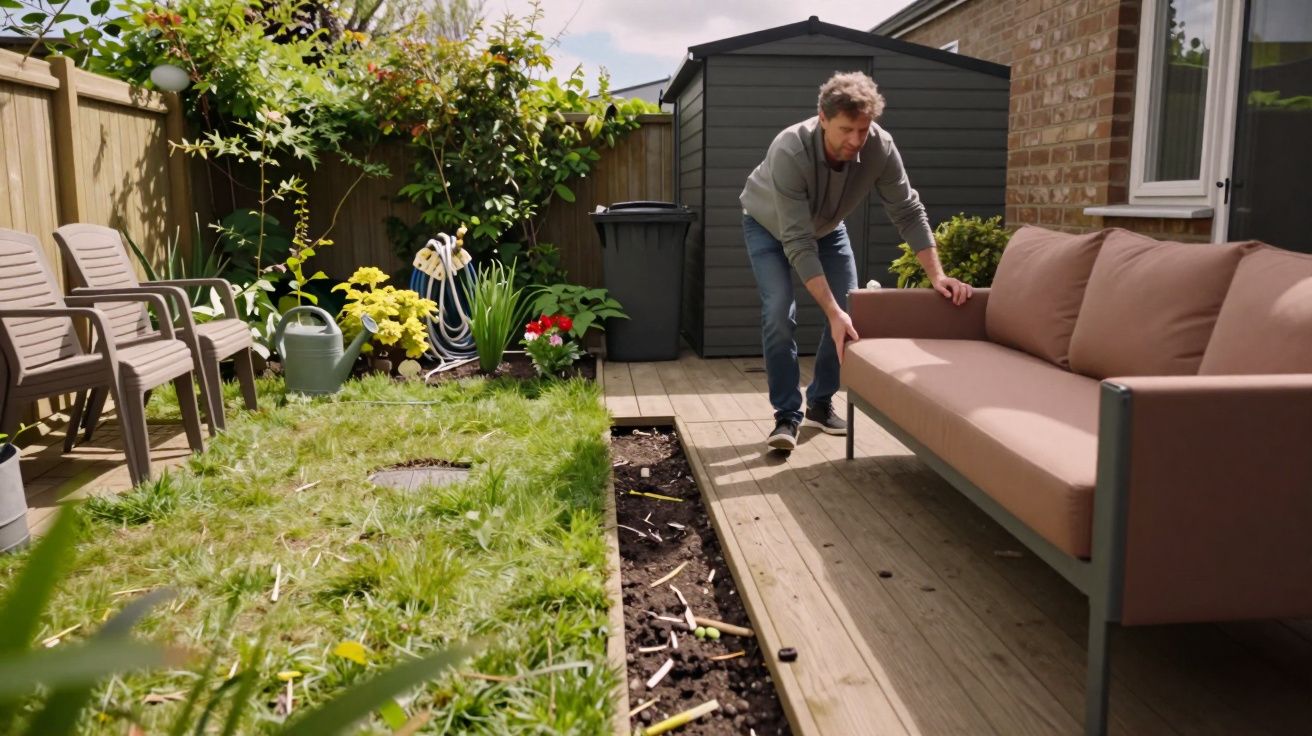
- A layout you can’t evolve. Once it’s set, you’re less likely to change the garden in small ways-because every change feels expensive and messy.
- A heat island right by the back door. Dark, dense materials can make summer evenings feel stuffy, even when the rest of the garden is pleasant.
- Wildlife and planting squeezed out. Tight edges and solid runs can discourage the soft transitions that make gardens feel alive: gravel margins, herb strips, permeable gaps.
On paper, it’s “just paving”. In practice, it’s the backbone of how the garden behaves.
The modernisation trap: building for resale, not for living
There’s a reason patios often go wrong in garden modernisation projects. People design them like a showroom: a big rectangle, centred on the doors, the same colour as the indoor flooring, a clean line that says “new”.
But gardens aren’t kitchens. They move. They settle. They flood and dry. They’re used with muddy shoes, wet dogs, tipped watering cans and chairs dragged an inch at a time. A patio that looks minimal can feel unforgiving when you’re living on it.
A neighbour of mine did what many do: extended the patio to “create an outdoor room”. It worked for parties, twice a year. The rest of the time, it was a bright, empty hardscape that baked in summer and turned slick in winter, with no easy way to add planting without breaking it up. The garden became something to look at from indoors, not a place to be.
“It’s not that it’s ugly,” he said, “it’s that it won’t let us change our minds.”
That’s the lock-in.
What to do instead: build flexibility into the ground
The alternative isn’t “don’t have a patio”. It’s choosing a build that can breathe, drain, and be edited without a skip on the drive.
A few principles that keep your options open:
- Choose permeable where you can. Gravel, permeable porcelain systems, or paving with wider joints over a suitable sub-base can reduce standing water and relieve pressure on drains.
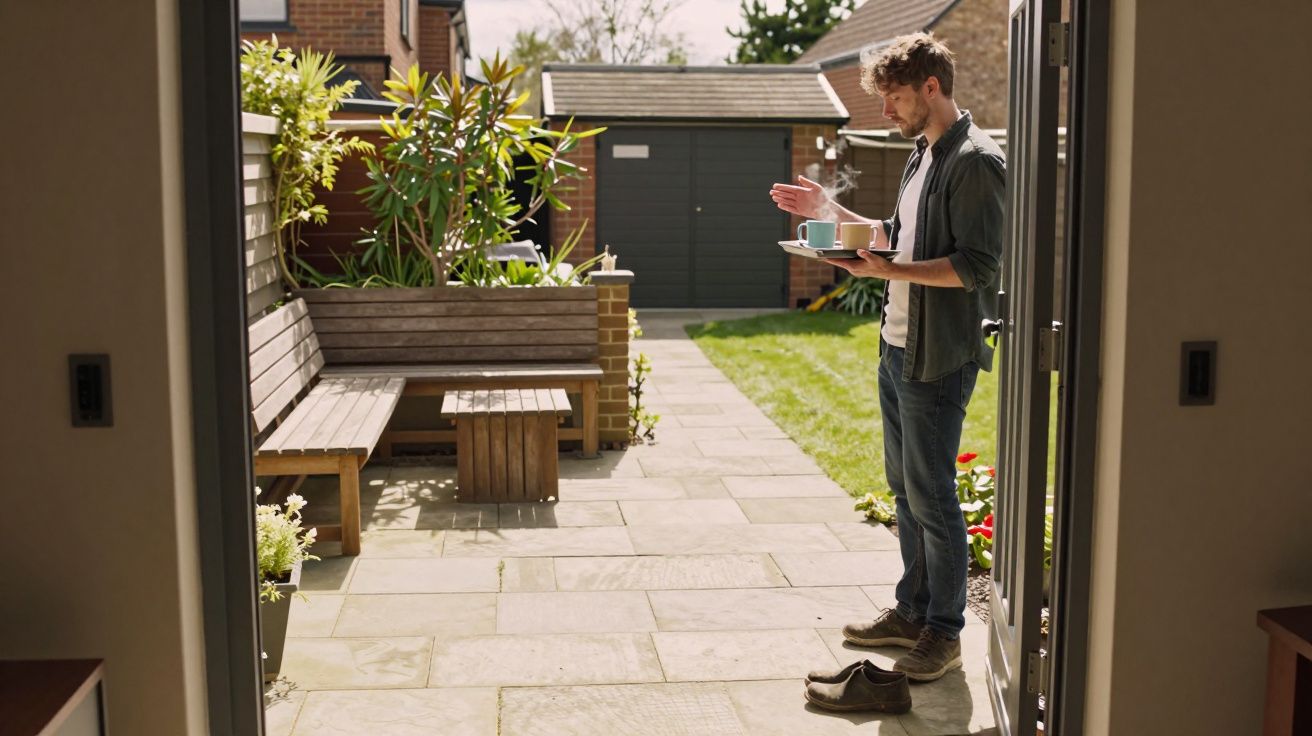
- Break up the footprint. Two smaller terraces often work better than one big slab: a morning coffee spot, and a dining area where the evening light actually lands.
- Plan edges like transitions, not borders. A 300mm gravel margin, a strip for herbs, or a planter trench turns “hard” into “garden” without fuss.
- Lay with future access in mind. If you think you’ll add lighting, an outdoor tap, a pergola or a socket, plan ducting routes now. Future-you will thank you.
If you want the crisp look of stone without the permanent feel, look at systems designed to be lifted and re-laid. It’s not about being indecisive. It’s about admitting that life changes faster than mortar sets.
A simple check before you commit
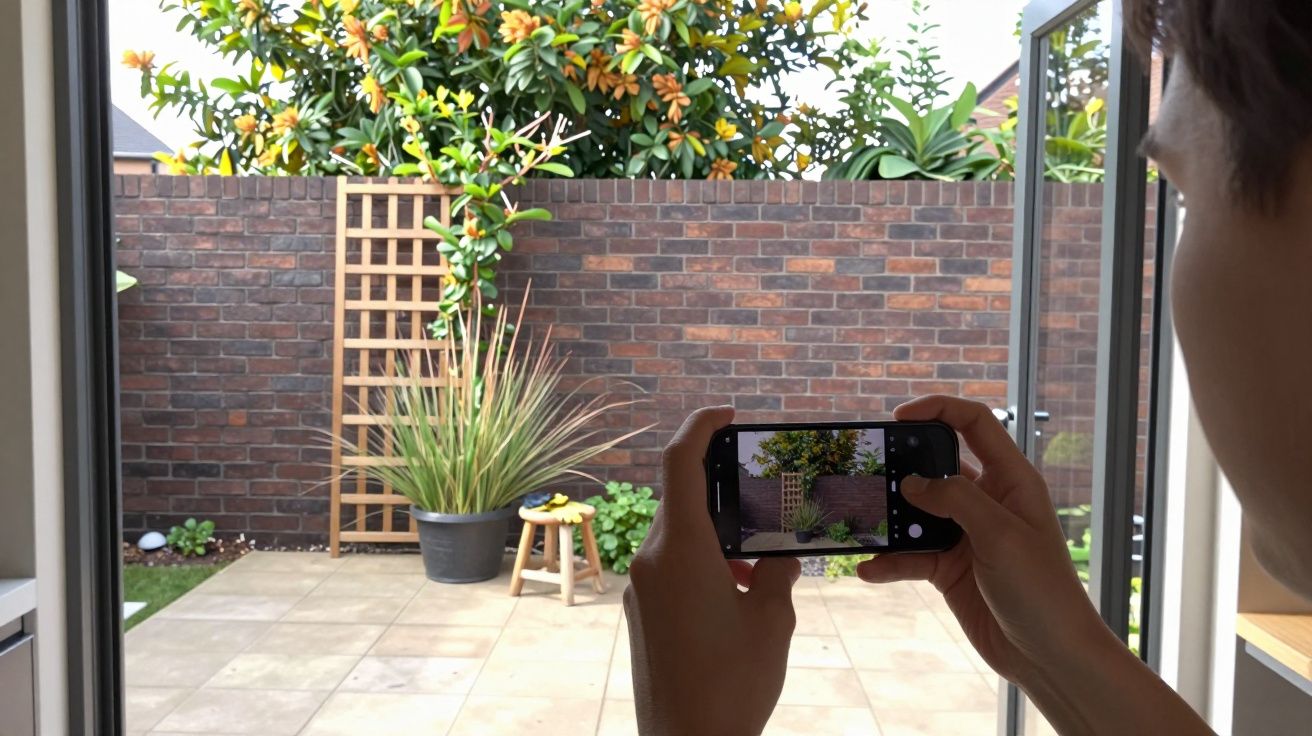
Before you sign off the design, do a two-minute reality test. Stand at your back door and imagine a wet February, not an August photo.
Ask yourself:
- Where does the water go when it really rains?
- Where will you actually sit when the sun moves at 7pm?
- What will you do with bins, bikes, muddy boots, and a hose?
- If you wanted to change 20% of this in five years, could you?
If the honest answer is “I’d need to break it up,” that’s your signal. Build the version that expects change, not the version that punishes it.
The small decision that keeps the garden young
The best patios don’t shout. They support. They drain quietly, age well, and let you re-arrange your life without turning it into a building project.
You don’t need to predict the future of your garden. You just need to stop locking it into one.
| Decision point | What to choose | Why it helps later |
|---|---|---|
| Base and joints | Permeable options where possible | Less standing water, fewer drainage regrets |
| Size and shape | Split zones, not one giant slab | More usable space across seasons |
| Edges | Soft transitions (gravel/planting strips) | Easier updates, more “garden” feel |
FAQ:
- Is a fully mortared patio always a bad idea? No, but it’s the most “fixed” option. If drainage, access, and future changes matter, you’ll need to design those in from the start.
- Do permeable patios look messy? They don’t have to. Many modern systems look crisp; the difference is in the sub-base and the way water passes through.
- What’s the quickest way to make an existing patio feel less locked-in? Add soft edges: planters, gravel margins, and planting pockets. You’re creating flexibility without lifting the whole surface.
- Will splitting the patio into zones make the garden feel smaller? Often the opposite. It gives the space purpose and rhythm, and it stops one big hard area dominating the view.
- What should I prioritise if I’m modernising on a budget? Drainage and layout. A cheaper finish that works well beats an expensive surface that puddles, bakes, or forces a redesign later.



Comments (0)
No comments yet. Be the first to comment!
Leave a Comment