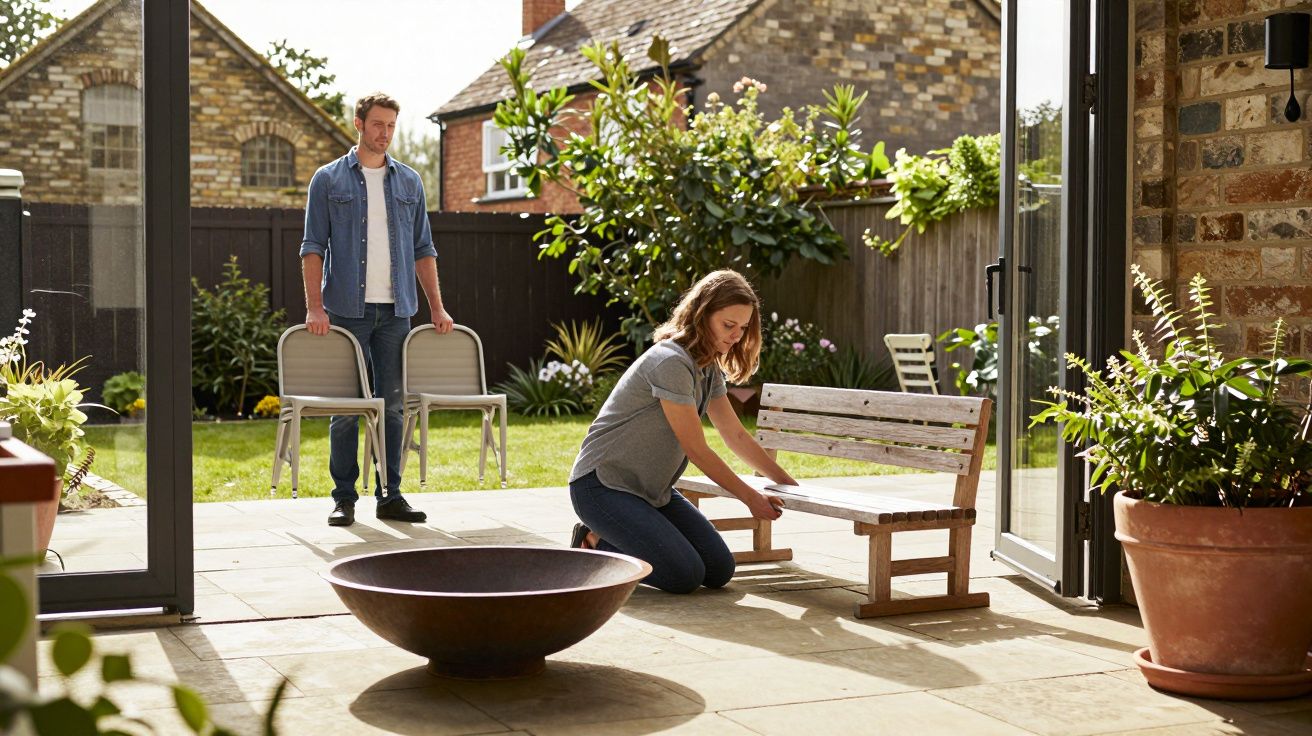
Outdoor seating areas are often sold as the finishing touch: a neat paved pad, a built-in bench, a fire pit that looks like it belongs in a magazine. But if you care about multi-use outdoor layouts - space that can handle kids, guests, gardening, work-from-home breaks and the odd wet British summer - one “stylish” setup can quietly lock you in for years.
It usually starts innocently: you just want somewhere solid for a table. Then the shape becomes permanent, the furniture becomes heavy, the flow becomes fixed, and suddenly the garden can only do one job.
The setup that steals your garden’s options
It’s the hard-edged, built-in seating zone: an L‑shaped bench in brick or sleepers, wrapped around a fire pit or a fixed dining table, set on a big rectangle of paving. It photographs brilliantly and feels decisive, like you’ve “finished” the garden.
The problem is that it turns outdoor living into a single scene you can’t easily edit. And gardens, unlike living rooms, change constantly: the sun angle shifts, trees grow, families change, neighbours extend, your needs evolve.
A garden that only works for one type of afternoon will punish you on every other day.
Why it looks so good (and why that’s the trap)
Built-ins feel premium because they remove choice. The lines are clean, the corners are crisp, and nothing looks “temporary”. Designers love them because they create a focal point, and homeowners love them because the decision fatigue disappears.
But that same finality is exactly what kills flexibility. Once you’ve pinned your seating to one direction, one capacity and one microclimate, the rest of the space has to orbit around it.
Common regrets show up fast:
- The bench faces the wrong way for evening sun, but it’s literally part of the wall.
- The fire pit sits in the windiest pocket, so it smokes people out.
- The dining spot is too far from the kitchen, so you stop using it.
- The “social corner” is too exposed, so you avoid it unless it’s blazing hot.
The three hidden costs people don’t price in
1. The space becomes single-purpose
A fixed L‑shape tends to dictate one layout: sit here, talk here, eat here. That sounds fine until you want to do anything else - yoga mat, paddling pool, a birthday table, a pop-up gazebo, a potting bench, a winter cover for plants.
Loose furniture can move to make room. Built-in seating can’t, so your garden loses its “spare capacity”, the bit that saves you when life gets messy.
2. Maintenance gets awkward
Built-ins create seams and shaded corners where grime, algae and leaf litter sit. In the UK, that matters. Damp lingers in the joints, and the bits behind benches become the places you never quite clean properly.
You also inherit long-term upkeep:
- Timber sleepers warp and split; stains fade unevenly.
- Masonry joints crack; pointing needs redoing.
- Cushions become a storage problem (and a mildew problem if you gamble).
3. Changing it later is louder and pricier than you expect
Removing a built-in zone isn’t “moving furniture”. It’s demolition, skips, re-levelling, and usually repairing the paving you thought would last forever. Even small changes - widening a path, adding a step, creating a planting bed - become big because the hardscape is continuous.
If you’re not sure how you’ll use the garden in two, five, ten years, permanence is a bet, not a feature.
A quick test: is this seating zone helping, or locking you in?
Stand at the back door and answer these without optimising in your head:
- Where do you naturally want to sit on a warm evening: left, right, or somewhere else entirely?
- Can you seat 2 people comfortably and 10 people occasionally without it feeling ridiculous?
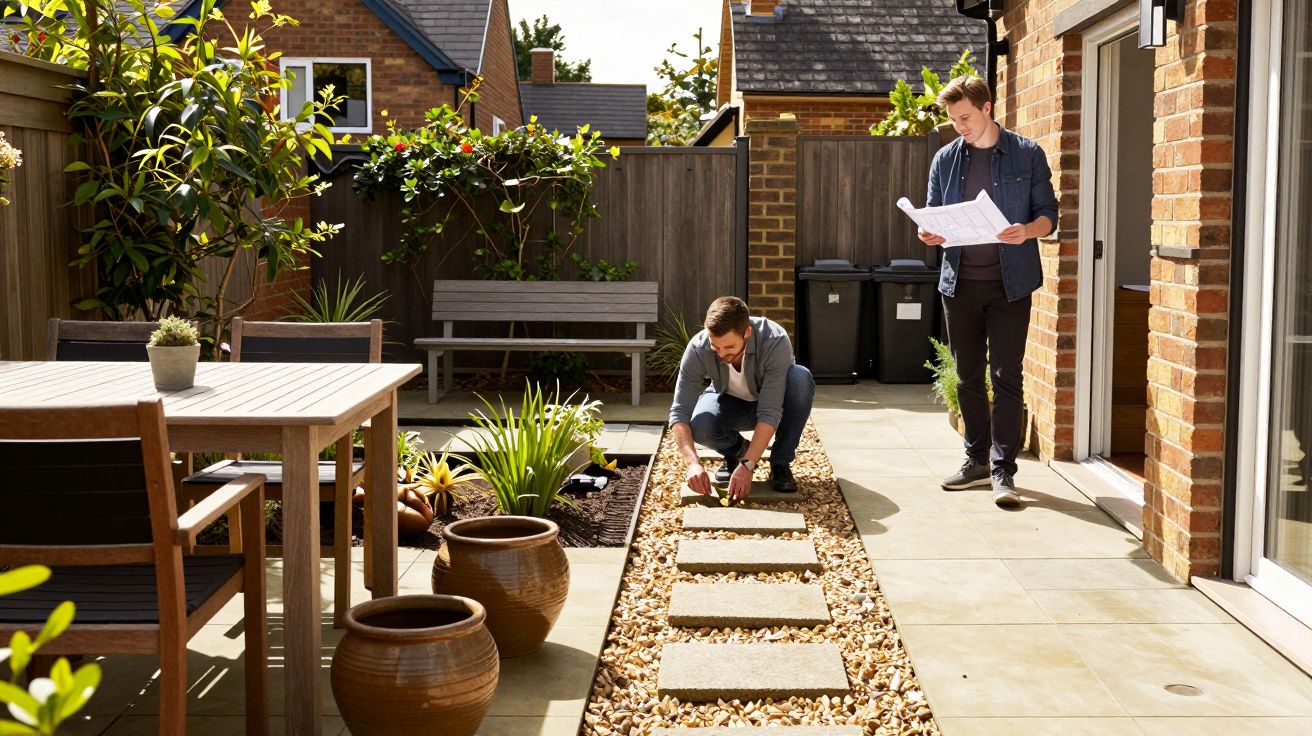
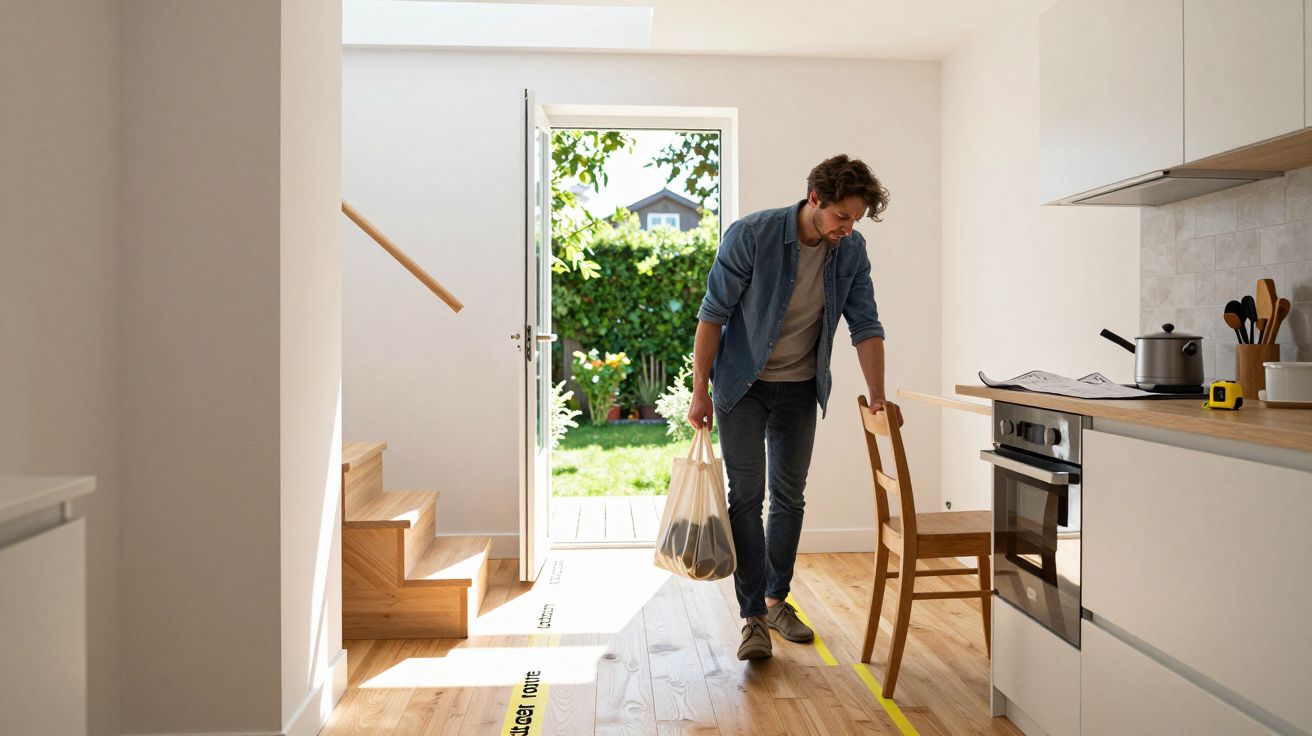
- Can you create a clear route for muddy shoes, bikes, bins and a lawnmower without weaving around a “feature”?
- If you had to add a small greenhouse, a dog run, or a child’s play frame next year, where would it go?
If the honest answers are all “it depends”, you want flexibility more than a fixed statement piece.
What to do instead (without ending up with a wobbly, sad patio)
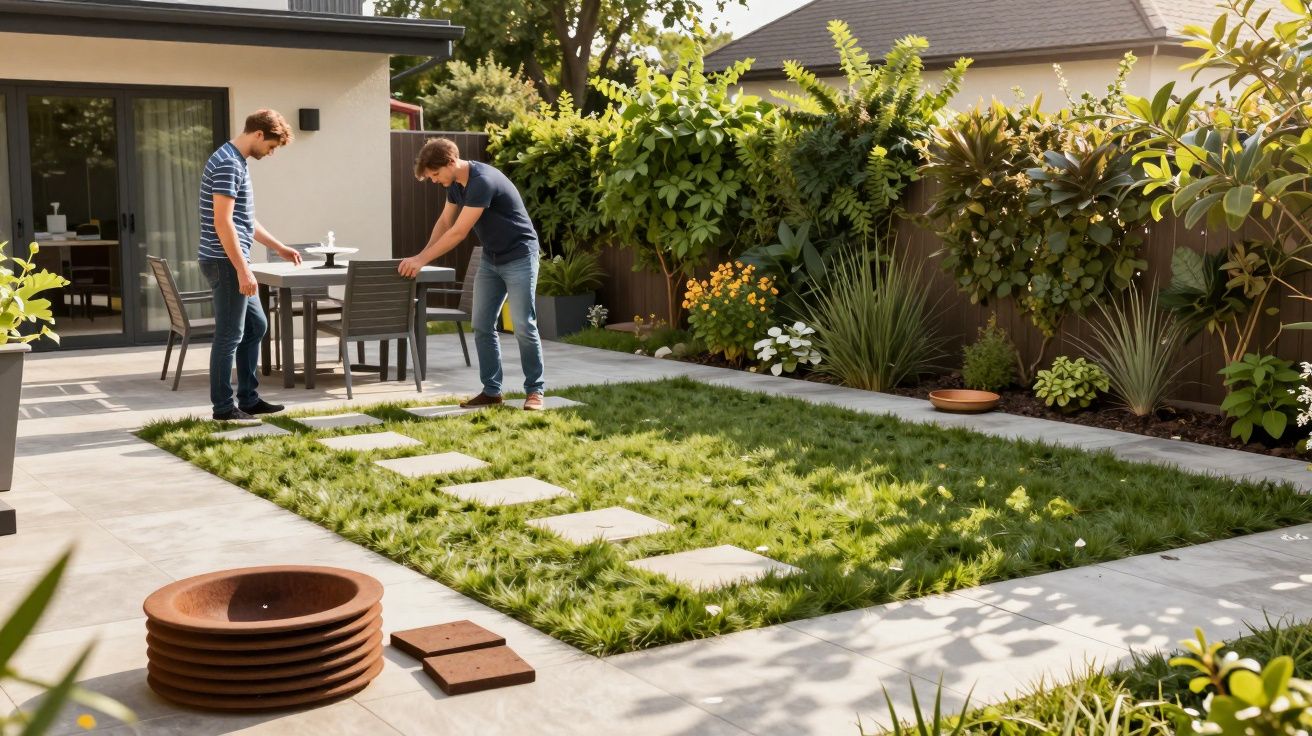
You can keep the polished look and still protect your options. The trick is to build a platform, not a scene.
Build the base, keep the edges soft
- Lay a simple pad (square or gentle rectangle) sized for movement, not just a table footprint.
- Leave at least one side open to “borrow space” from the lawn or gravel area.
- Use planting, pots, or a low freestanding screen to create privacy that can be shifted later.
A seat that can move is not a compromise; it’s a design tool.
Choose furniture that can change jobs
A flexible set-up usually beats a fixed one with the same budget:
- Two small benches instead of one built-in L.
- Stackable chairs for “extra people” days.
- A lightweight bistro set for morning sun, plus one larger table you bring out for hosting.
- Storage that doubles as seating (weatherproof box with a cushion, not a brick wall).
If you love built-ins, do a “semi-fixed” version
You can get the tailored feel without permanent regret:
- Make a straight bench (not an L) so the layout can rotate around it.
- Keep it freestanding, even if it’s heavy.
- Avoid boxing yourself into corners; corners are where flexibility dies first.
The better long-term aim: a garden that can reconfigure in minutes
Multi-use outdoor layouts work when you can do small seasonal changes without a builder. In spring you might want sun and shelter; in summer you want shade and airflow; in autumn you want a dry perch near the door.
A good rule is to design for at least two “modes”:
- Daily mode: two seats, a small surface, easy access, no fuss.
- Host mode: add chairs/table, clear a route, light a fire bowl or bring out a heater.
If your current plan can only do host mode, it will sit unused more than you think.
A simple comparison before you commit
| Option | Looks finished? | Easy to change later? |
|---|---|---|
| Built-in L bench + fixed fire pit | Yes | No |
| Freestanding bench + movable fire bowl | Yes | Yes |
| Simple paved pad + flexible furniture | Yes | Yes |
The best outdoor seating area isn’t the one that looks most “designed”. It’s the one you’ll still enjoy when your routines change.
FAQ:
- Is built-in seating always a bad idea? No. It works well in tiny courtyards or rooftops where every centimetre is planned, or where you know you’ll always use the space the same way. It’s riskier in family gardens where needs shift.
- What’s the biggest mistake with fixed seating? Placing it for how it looks from inside, rather than how it feels outside (sun, wind, privacy, distance to the kitchen, and whether people can move around it comfortably).
- How can I keep it stylish without losing flexibility? Use a clean, simple hardstanding and invest in furniture with good proportions, matching finishes, and a couple of “anchors” (one bench, one large pot, one light). Make the elements movable, not the vibe temporary.

Comments (0)
No comments yet. Be the first to comment!
Leave a Comment