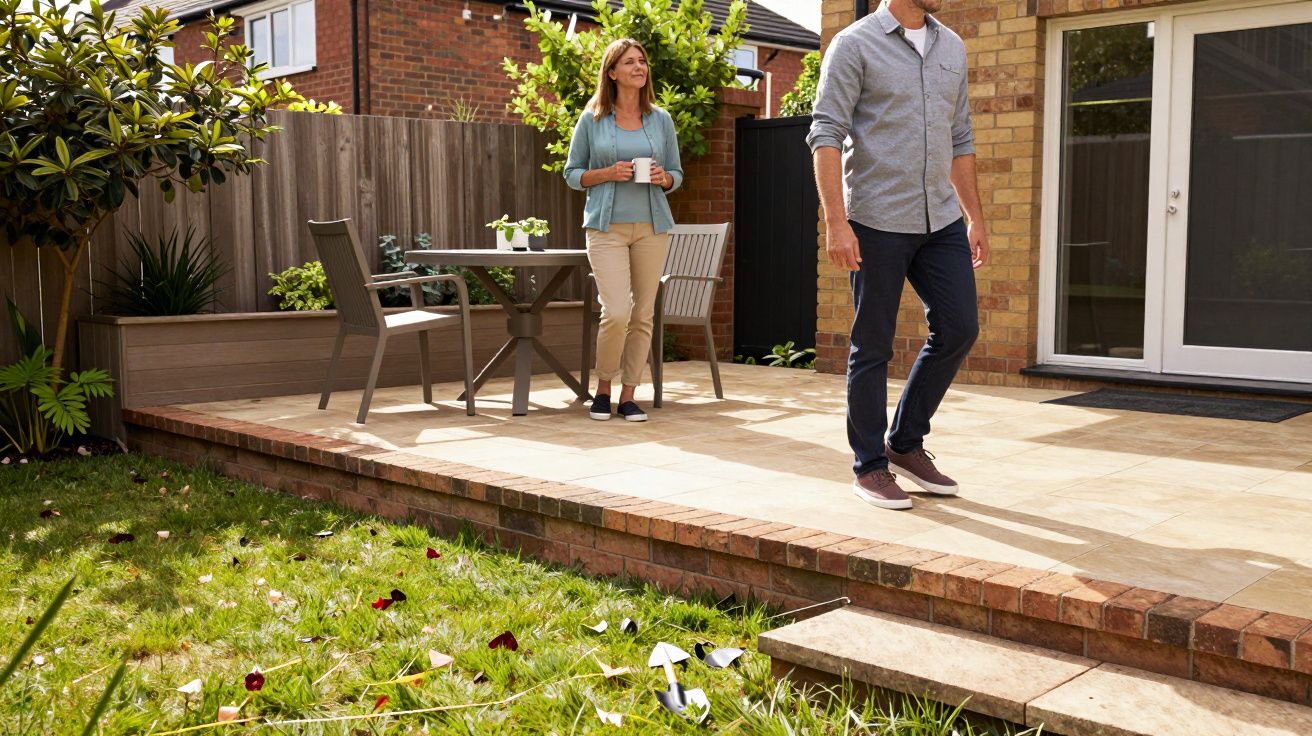
I used to think my garden just “needed a bit of furniture”. Then I realised the real problem was that everything sat on one flat plane, so it all read as one vague area you walked through, not a place you stayed. Level changes are the quiet fix: a small step up, a shallow drop, or a raised edge that makes space zoning feel obvious without a fence, hedge, or big spend.
The first time I noticed it properly was at a friend’s house where the patio sat just one step higher than the lawn. Nothing fancy. But the moment you stepped up, your body registered: this is the room. We sat there for hours, and nobody drifted back onto the grass because the garden finally had a “here”.
Why a 150mm step changes everything (even if it feels trivial)
A minor level shift does two jobs at once. It defines a boundary you can feel underfoot, and it creates a natural “threshold” that makes the space behave like an indoor room: enter, settle, linger. On a flat garden, your eye and your feet keep moving, which is why patios can feel like corridors.
The secret is that you don’t need dramatic terracing. A single step (often around 150mm), a slightly raised deck, or a sunken seating spot makes the layout legible. Suddenly you know where dining belongs, where lounging belongs, and where the mess can live without staring you in the face.
It also fixes a common UK-garden problem: damp, shade, and the sense that the lawn is always “in charge”. A small change in level lets you prioritise the usable surface and treat the lawn like the soft border, not the main event.
The “outdoor room” recipe: threshold + edge + purpose
If you copy one pattern, make it this: create a threshold you step over, give the new area an edge, and assign it one clear job. That’s space zoning in practice, and it stops the garden becoming a multi-use muddle.
Here’s what it looks like in real gardens:
- Step up to dine: Raise a paved or decked area one step above the lawn. Add a simple edge (sleeper, brick soldier course, or a crisp kerb) so it reads as finished. Dining sets look instantly more intentional when they’re “contained”.
- Step down to lounge: Sink a seating nook slightly, even just one step, and it becomes sheltered and cosy without building anything tall. It’s the same psychology as a conversation pit, just scaled for a back garden.
- Raised border as a wall: A 300–450mm raised planter around a patio doubles as back support, wind break, and visual boundary. People stop walking through your seating area because the route is now obvious.
None of these require acres. In fact, small gardens benefit most, because you’re using level to create separation instead of sacrificing precious width to screens and hedges.
How to choose the right level change for your garden (without regretting it)
Start with how you actually live outside. Do you eat out often, or do you mostly sit with a tea and a book? The “room” should suit that first, then the level change supports it.
A quick, practical way to decide:
- Stand at the back door and pick the destination. Where do you want to land with a mug in your hand? That’s your primary zone.
- Mark a rectangle with string or a hose. Make it slightly bigger than you think; outdoor furniture needs breathing space.
- Choose one move: up or down.
- Go up if you want a dry, dominant surface and a clearer view across the garden.
- Go down if you want shelter, privacy, and a “tucked-in” feel.
- Go up if you want a dry, dominant surface and a clearer view across the garden.
- Add an edge that can take wear. Sleeper edging, brick, stone setts, or a metal lawn edging stops the border blurring over time.
Two small cautions that save a lot of annoyance: keep steps generous (narrow steps feel awkward in the dark), and don’t create a trip hazard by making a “half step” that looks like a paving joint. If it’s a step, make it obviously a step.
The materials that make it feel intentional (not like a DIY afterthought)
The level change itself is only half the story. The finish decides whether it reads as a designed outdoor room or a patch job.
A few combinations that work hard in typical UK conditions:
- Porcelain or concrete paving + brick step: Clean, durable, and easy to pressure-wash. The brick adds a subtle contrast line that reads as a threshold.
- Decking + gravel strip: Deck up one step, then a gravel “moat” before the lawn. It drains well and visually separates zones without a big border.
- Raised planter + matching coping: If your raised edge has a neat cap (coping stones, timber, or a wide paver), it becomes somewhere to perch-extra seating without extra furniture.
Let’s be honest: gardens get messy. A defined edge gives your eye somewhere to stop, which means you notice the plants and people, not the muddy bits.
“Think of a small step as punctuation. It tells your brain where the sentence ends, so you can relax.”
What this fixes that furniture never will
When a patio is flush to a lawn, chairs migrate, muddy footprints travel, and the space feels temporary-like you’re borrowing the garden rather than using it. A level change creates a psychological “indoors” outside, and suddenly you treat it with the same habits: you keep cushions there, you light it, you use it after dinner.
It also solves circulation. People stop cutting across the middle of where you’re sitting because the route becomes clearer: path stays low, seating sits high (or vice versa). That’s the quiet power of space zoning-guidance without signage.
And if you’re dealing with drainage, a properly built raised area can help keep the main seating zone drier. (Do check falls, drainage gaps, and building rules if you’re altering levels near the house.)
| Point clé | Détail | Intérêt pour le lecteur |
|---|---|---|
| One-step definition | A single step up/down creates a threshold | Makes the garden feel like a room, not a walkway |
| Edge = zone | Sleeper/brick/metal edging locks in the boundary | Stops sprawl and keeps furniture “in place” visually |
| Purpose-first planning | Choose dining, lounging, or a nook | Space zoning becomes effortless and natural |
FAQ:
- Do level changes make a small garden feel smaller? Not if they’re minor and purposeful. One defined zone often makes a small garden feel bigger because it stops everything blending into one cramped strip.
- What’s the easiest level change to add? A single step up to a small deck or paved pad, finished with a crisp edge. It’s the quickest way to create a clear “destination”.
- Is a sunken seating area a bad idea for drainage? It can be if it’s built like a bowl. If you want the sunken look, plan drainage properly and use permeable surfaces or a discreet channel.
- How do I stop a step becoming a trip hazard? Make it obvious: consistent height, good lighting, and a contrasting nosing/edge line. Avoid shallow “almost steps”.
- Can I use level changes without major building work? Yes. A raised planter edge, a low retaining lip, or a deck platform can create the same zoning effect with less disruption.






Comments (0)
No comments yet. Be the first to comment!
Leave a Comment