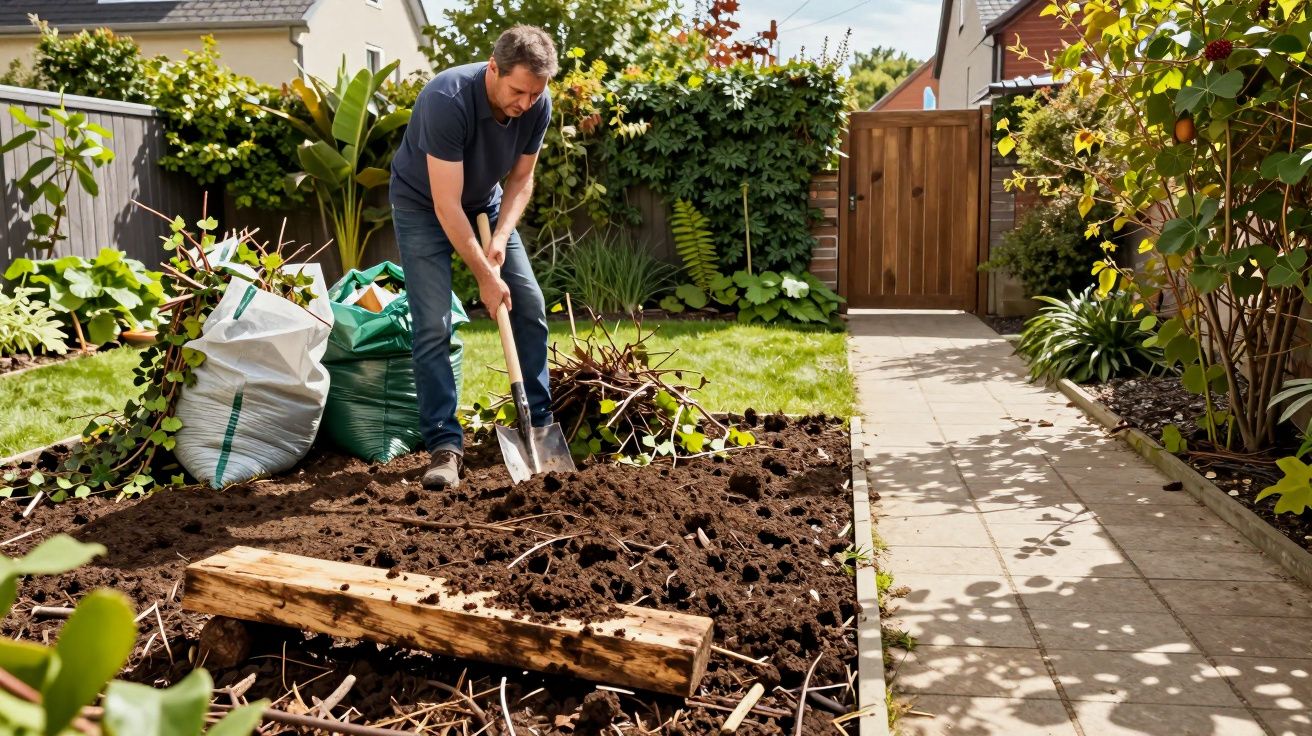
By the time you decide an outdoor space transformation is needed, long-neglected gardens have usually already made the decision for you. The paving tilts, the shrubs bully the path, and every “quick tidy” turns into an argument with a bramble. What’s relevant for you is simple: the fastest route to a calm, usable garden often starts with removing almost everything - not to be ruthless, but to see what you actually have.
On the first morning, it can feel wrong. Birds are in the ivy, the old rose still flowers, and the overgrown corner has a strange privacy to it. Then you lift one rotten sleeper, smell the wet mulch underneath, and realise this isn’t a garden right now - it’s a storage unit for time.
The counterintuitive first step: make space, not plans
Most people start by shopping: new furniture, new plants, a new “look”. But neglected gardens don’t need decoration first; they need legibility. You can’t design around a mess you haven’t measured, and you can’t fix drainage, levels, or light with a border of lavender.
The goal of the big clear-out isn’t a blank slate for Instagram. It’s to reveal the bones: where the sun actually lands at 11 a.m., where water sits after rain, which boundaries are sound, and which “features” are really just problems wearing leaves.
Before you add anything, remove what’s stopping the garden from behaving.
What “remove almost everything” really means (and what it doesn’t)
This isn’t a call to strip the place bare and regret it by Sunday. It’s a controlled demolition: take out the things that lock you into the current dysfunction, keep the things that earn their keep.
Start by classifying what you see into four buckets:
- Hazards: unstable sheds, loose slabs, spiky overgrowth on main routes, dead trees. These go first.
- Bullies: plants that win by force (brambles, self-seeded saplings, rampant ivy, bamboo). Reduce hard, dig out where possible.
- Fakes: “beds” that are actually rubble-filled edges, planters that don’t drain, weed membrane stuffed under gravel. Remove to soil and start properly.
- Keepers: one good tree, a healthy hedge, a wall with warmth, a strip of decent lawn. Protect these while you work.
What you don’t remove: functioning structure. If a path is level and wide enough, keep it. If a fence is sound, don’t replace it just because you’re in a mood. Your budget needs somewhere to breathe.
The quick survey that saves you from redoing work
Once the clutter is gone, do ten minutes of unglamorous checking. This is the part people skip, then pay for twice.
- Watch where the rain goes. Puddles tell the truth.
- Stand in three spots (by the house, middle, back) and note sun/shade at morning, midday, late afternoon.
- Find the high point and low point. A long-neglected garden often slopes in ways you only notice when it’s empty.
- Look at boundaries: leaning posts, gaps under fences, neighbour trees shading your whole plot.
If you’re changing levels, adding a patio, or touching a drain, this is where you decide whether you need a professional - not after you’ve laid new gravel on top of soggy ground.
The clean rebuild: a simple order that works
When you can see the space, the sequence becomes obvious. The best outdoor space transformation isn’t a big reveal; it’s a set of boring moves that stack up.
1) Define routes before you define “areas”
Paths are behaviour. If you don’t give people a clear way to move, they’ll cut corners, compact soil, and turn your new border into a shortcut.
- Make the main route at least shoulder width.
- Keep turns gentle where you can.
- If you have steps, make them consistent and safe; one odd step is where ankles go to die.
2) Fix the ground so plants can do their job
In long-neglected gardens, soil is often either compacted to brick or buried under years of organic litter with no air. Aim for “crumbly and draining”, not “perfect”.
- Dig out invasive roots properly rather than chopping and hoping.
- Add compost where you’re planting, not everywhere like seasoning.
- If you’re laying paving, build the base correctly. Pretty slabs over a bad sub-base are just expensive wobble.
3) Choose one structure that makes the garden usable
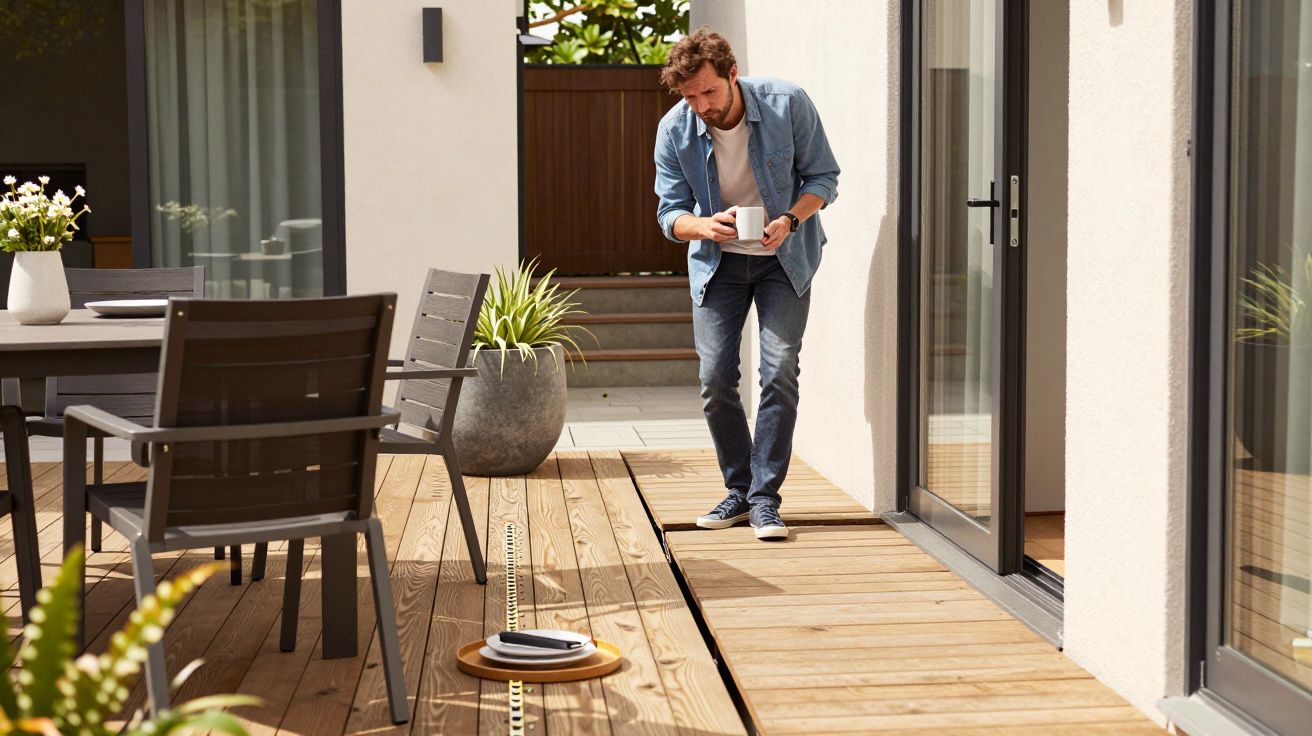
A small patio, a simple deck, a level seating pad - one anchor changes how the space feels. Without it, you’ll keep “meaning to sit outside” and never actually do.
Keep it modest. A usable 2.5m x 3m area beats a huge hardscape you can’t afford to finish.
4) Plant for calm, not for panic-buying
Once the mess is gone, the temptation is to fill every metre with “something”. Don’t. Leave breathing space and plant in repeats so the garden reads as intentional.
A simple palette for a low-drama reset:
- One evergreen structure (yew, holly, pittosporum in sheltered spots)
- One flowering shrub repeated (hydrangea, viburnum, philadelphus)
- One grass or strappy plant for movement (miscanthus, hakonechloa, phormium where mild)
- Ground cover to stop weeds returning (geranium, epimedium, lamium in shade)
The emotional bit nobody warns you about
Clearing a neglected garden can feel like admitting something. That you let it go, that time ran ahead, that your weekends got eaten by other worries. The pile of green waste looks like evidence.
Then, about halfway through, you get the first real moment of relief: a clean line along a fence, a square of open ground, the sense that the space is yours again. It’s not just tidiness. It’s control returning in small, practical increments.
A tight checklist for the first weekend
If you want momentum without chaos, keep it blunt:
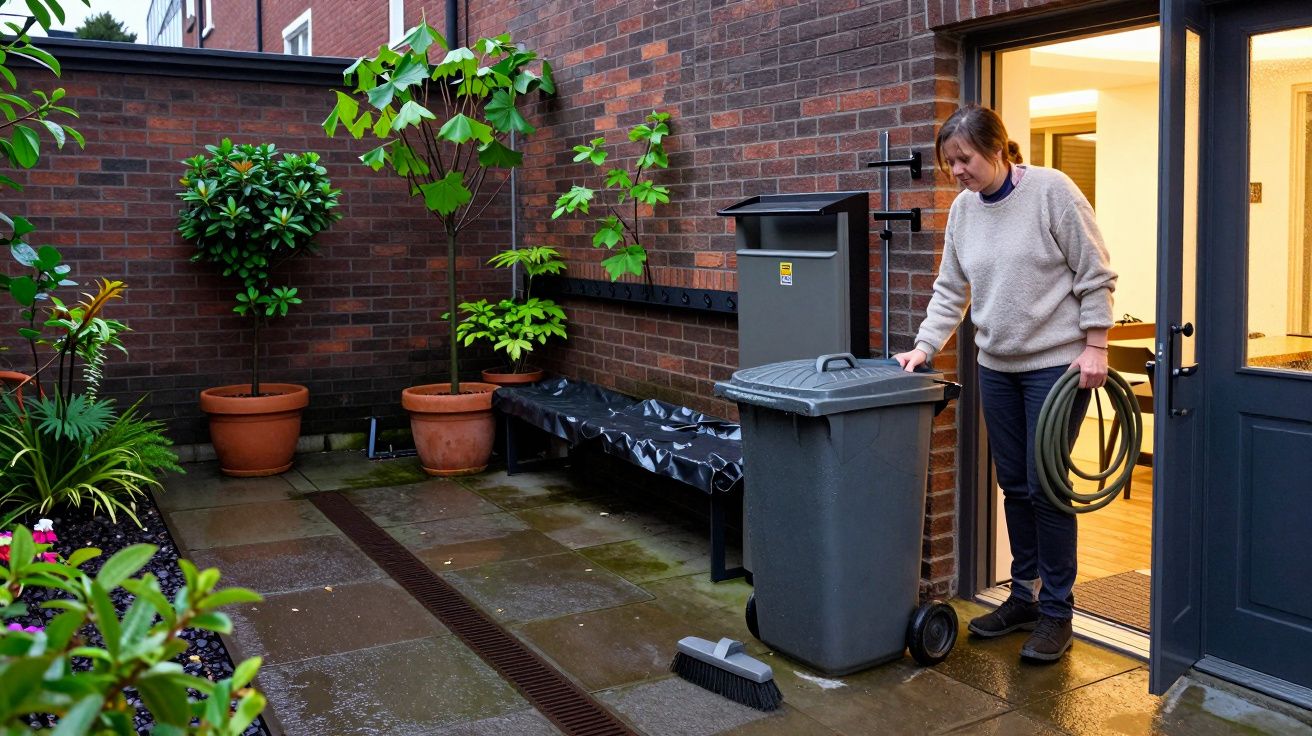
- Clear access: gate, paths, bin route.
- Remove bullies: bramble, ivy, self-seeded trees.
- Lift and assess any failing edges, sleepers, or broken pots.
- Mark what stays with tape or canes so you don’t “accidentally” remove your best plant.
- Bag waste as you go; a neat site keeps you working.
If you finish the weekend with space you can walk through, you’re already winning. The garden doesn’t need to be finished to start feeling better.
Try this rule to avoid over-clearing
If you’re unsure about a plant, don’t decide with a spade in your hand. Decide with a calendar.
Cut it back, label it, and give it one season to prove itself. If it sprouts weakly, flops into the path, or looks scruffy even when maintained, it’s not a keeper - it’s nostalgia with thorns.
FAQ:
- What if removing almost everything makes the garden feel exposed? Add temporary structure fast: a simple trellis panel, a pergola post-and-wire line, or tall planters near seating. Privacy can be rebuilt more quickly than a functional layout can.
- Do I need to replace the soil after years of neglect? Usually not. Improve it where you plant: remove rubbish, loosen compaction, and add compost. Full soil replacement is for contamination, extreme rubble, or serious drainage failures.
- How do I stop weeds returning after a big clear-out? Don’t rely on membrane alone. Block light with living ground cover, keep bare soil mulched, and make edges easy to maintain so small problems don’t become a season-long job again.
- When should I bring in a professional? If trees are unsafe, levels and drainage need altering, or you’re planning substantial hard landscaping. For clearance and replanting, many people can DIY with a realistic plan and proper disposal.



Comments (0)
No comments yet. Be the first to comment!
Leave a Comment