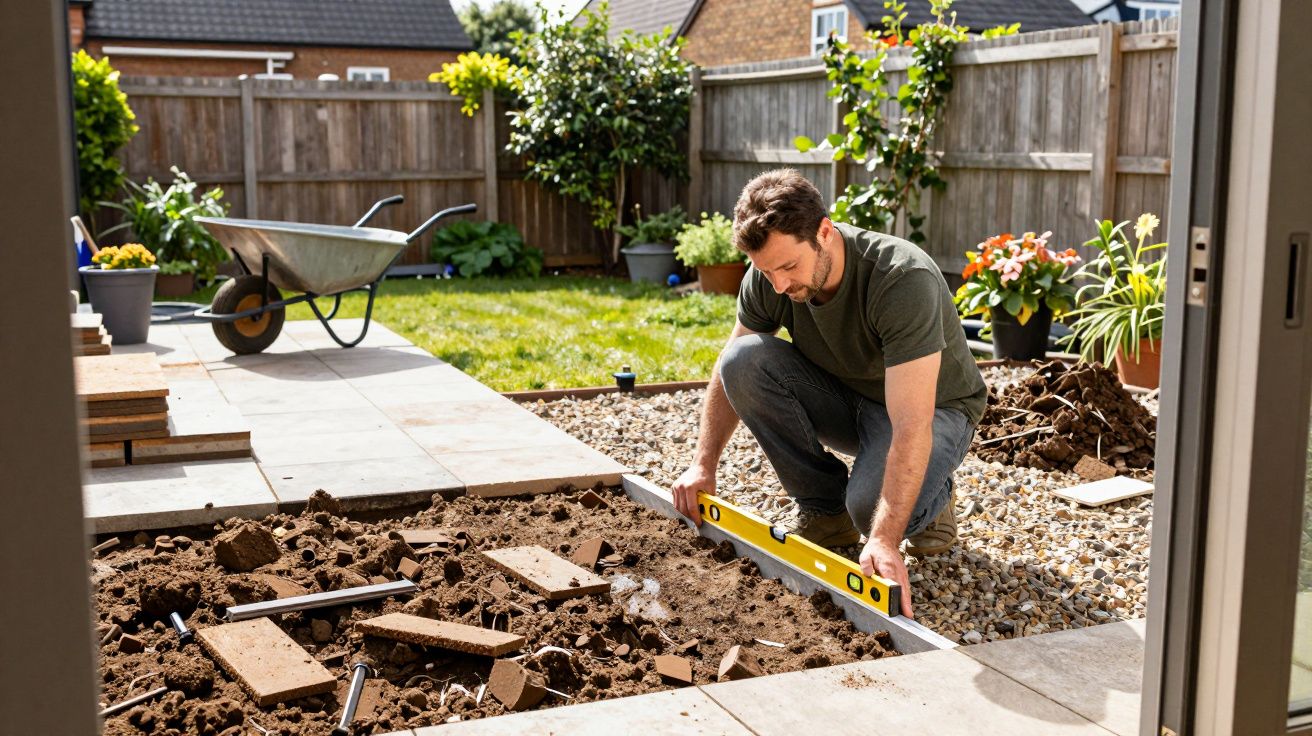
Complete garden renovations can look like chaos in the moment: soil piled high, paving ripped up, fences down, and a patio that seems to have vanished overnight. But if you’ve ever scrolled through before / after transformations, you’ll know the “extreme” phase is often the price of a garden that finally works in real life. The point isn’t to impress the neighbours mid-project; it’s to build something you can actually use, in British weather, on a normal weeknight.
At the start, it’s common to feel like you’ve made things worse. The trick is understanding that the mess is usually the proof you’re fixing the right problems, not papering over them.
Why the rebuild looks dramatic (and why that’s usually a good sign)
Most tired gardens don’t fail because of one ugly border or a wobbly slab. They fail because the basics are off: water doesn’t drain, the levels are wrong, the layout wastes space, and everything needs constant attention to look “acceptable”. A proper renovation pulls those faults out by the roots.
That’s why the first days are so confronting. When you strip back the surface, you can finally see what’s been quietly dictating the whole space: compacted subsoil, shallow topsoil, broken edging, and paving laid straight onto mud years ago.
The day a garden looks worst is often the day it stops pretending.
Common “hidden” issues that force a bigger reset include:
- Poor falls and pooling water near the house, which turns patios into slip hazards and lawns into bogs.
- Thin, tired soil that won’t hold nutrients or moisture, so plants struggle every summer.
- Mismatched levels between lawn, paths and beds that make mowing awkward and seating areas feel perched.
- Overgrown boundaries that steal light and create damp corners where nothing thrives.
The demolition phase: the part nobody photographs (but everyone remembers)
The extreme look tends to peak when the old hard landscaping comes out. Slabs get lifted, hardcore gets barrowed away, and what used to be “a patio” becomes an uneven crater with a skip beside it. It feels backward because you’ve lost the one usable part of the garden.
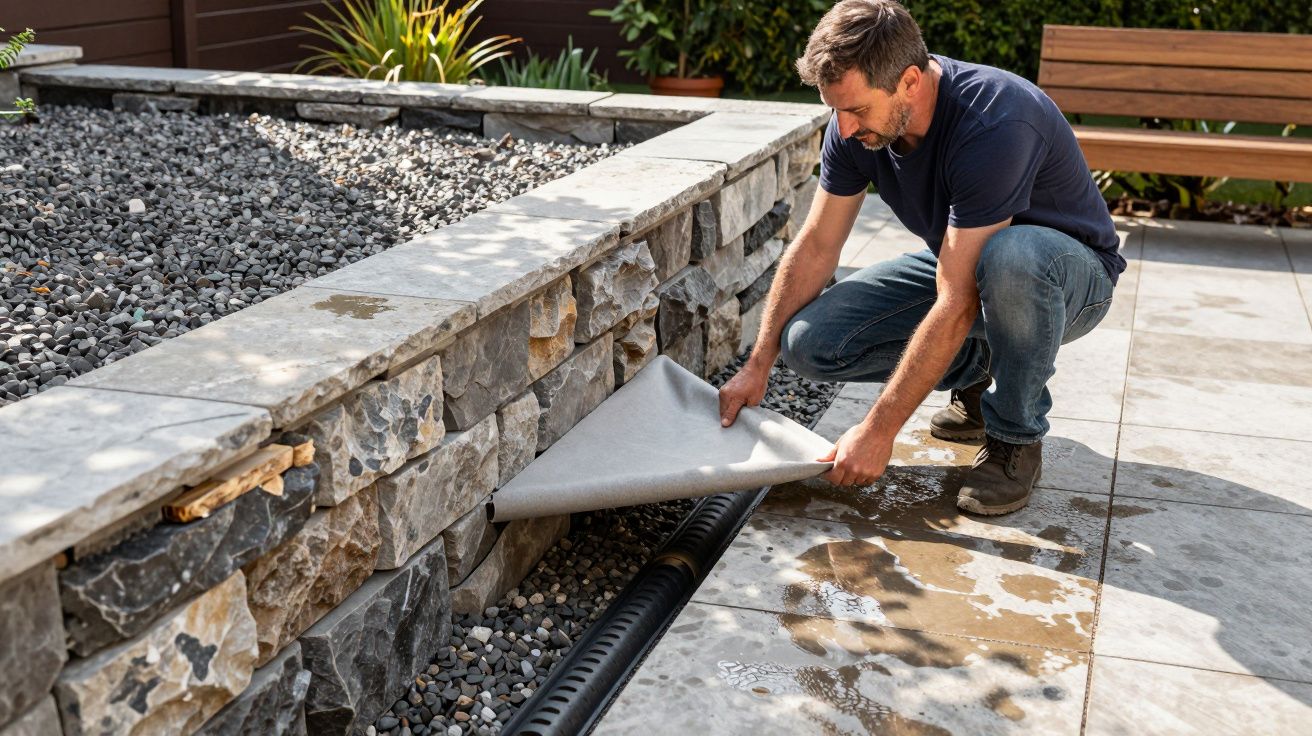
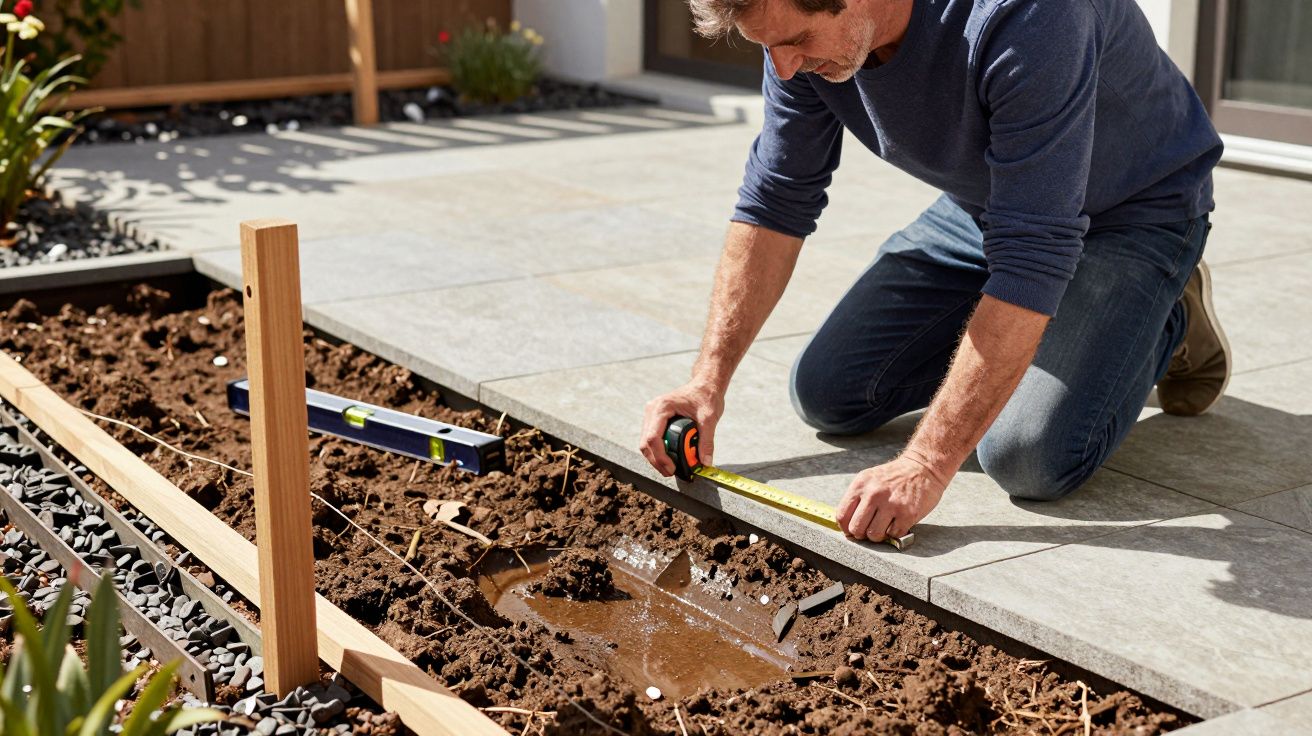
This is also when the smart decisions happen. If you’re already breaking ground, it’s the moment to sort drainage, run electrics for lighting, or set foundations for steps and retaining edges. Doing those later means cutting into your new work, which is both expensive and demoralising.
What a good “messy middle” usually includes
You don’t need a building site aesthetic for weeks on end, but some disruption is normal when the job is done properly:
- Removing failed bases (not just replacing slabs on top)
- Rebuilding sub-base with the right depth and compaction
- Resetting levels so water runs away from buildings
- Creating crisp edges for lawns and beds so maintenance gets easier, not harder
The turning point: when the layout starts to make sense
There’s a specific moment in most renovations when the panic eases. It’s not when the plants go in; it’s earlier, when the bones are set. Once the lines of the path are visible, the patio shape is defined, and the lawn level is established, you can suddenly “read” the garden.
That’s why so many before / after transformations feel satisfying: the after isn’t just prettier, it’s clearer. Spaces become purposeful. You can tell where you’re meant to sit, where kids can play, where bins go, and where muddy boots stop.
A strong layout often follows a simple rule: fewer, larger shapes. One generous seating area beats three awkward corners. A lawn that’s a clean rectangle is easier to mow than a wavy outline that looks cute in theory and irritating in practice.
The details that make the result feel expensive (even when it isn’t)
The finished garden rarely wins on the big-ticket items alone. It wins on the small decisions that make everything feel intentional, even if you’ve used budget materials.
You can see it in the edges and transitions: how the paving meets the lawn, how gravel is contained, how a step “lands” at a comfortable depth. These are the things your eye notices without you realising.
A few upgrades that tend to punch above their cost:
- Steel or brick edging to keep lines sharp and stop gravel migrating into beds
- A narrow planting strip along fences to soften boundaries and add depth
- Layered lighting (one practical light plus two softer accents) instead of a single harsh flood
- A consistent palette of two hard materials and a repeating plant choice for cohesion
A garden feels finished when nothing looks accidental.
A quick reality check: what you should plan before you start
Complete garden renovations go smoother when the decisions are made early, not on delivery day with a contractor waiting. It’s tempting to “see how it goes”, but gardens punish indecision: levels, drainage and access all depend on knowing the plan.
Before anything comes out, get clear on three things:
- How you’ll use the garden (dining, lounging, kids, pets, storage, all of the above).
- Your problem areas (shade, waterlogging, privacy, wind, overlooked seating).
- Your non-negotiables (space for a shed, room for a table that actually fits, step-free access).
If you’re collecting inspiration, try not to copy whole gardens. Copy solutions. A pergola might be gorgeous, but the thing you really need could be shade on a west-facing patio at 6pm, or screening from an upstairs window.
The “after” isn’t just a photo - it’s how the garden behaves
The best transformations aren’t about novelty. They’re about relief. You stop tiptoeing around loose slabs, you stop fighting mud, and you stop feeling like you’re always behind on maintenance. You start using the garden on ordinary days, which is the real test.
A finished garden that’s been rebuilt properly tends to deliver the same quiet benefits again and again: water drains, surfaces stay stable, planting has room to mature, and the space feels bigger because the layout stops wasting it.
If the rebuild currently looks extreme, it may simply mean you’re doing the hard part that makes the “after” believable. The mess is temporary; the structure is what you’ll live with.




Comments (0)
No comments yet. Be the first to comment!
Leave a Comment