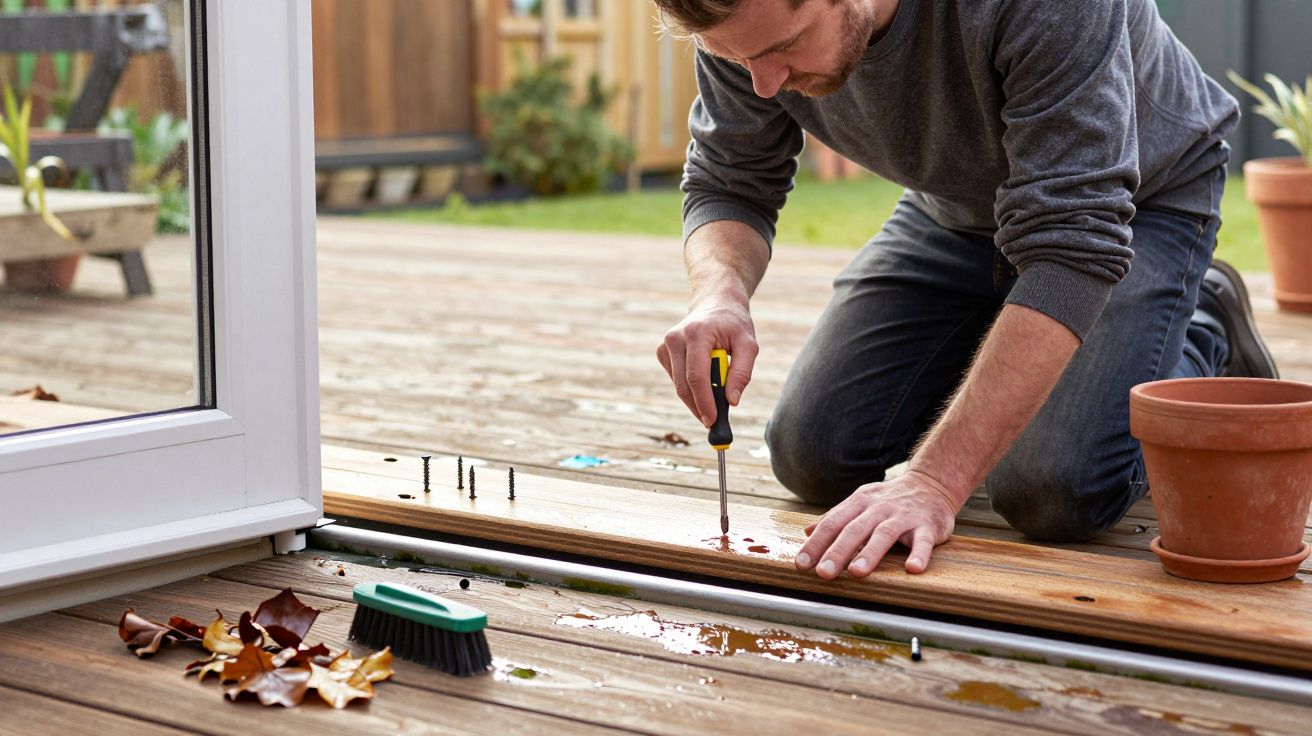
By January, plenty of gardens look fine at a glance - until you step outside and hear it. That hollow creak underfoot, a slight give near the door, a dark patch that wasn’t there in autumn. Decking sits right at the crossroads of materials & surfaces and daily life: it’s a walking surface, a dining spot, a damp trap, and in winter it will expose every shortcut you took.
The repair stories usually start the same way. A bargain pack of boards, a free weekend, and the feeling you’ve “sorted” the patio. Then the first freeze hits, water expands in the grain, and spring arrives with a list: raised edges, black mould freckles, loose fixings, and that one board that always feels wet.
The winter villain isn’t rain - it’s the freeze–thaw loop
British winter is less about dramatic snow and more about repetition: rain, drizzle, overnight frost, then a mild day that never quite dries. Water soaks into the board’s pores and end grain, freezes, expands, and leaves the surface a touch more open for the next round. Do that for a few months and even a decent-looking deck can start behaving like a sponge.
The most frustrating part is how localised it can be. One corner under a pot turns soft while the centre looks fine. The boards by the back door cup slightly because that’s where wet boots land and where heat from indoors creates condensation. You don’t feel it until you do - and then you can’t un-feel it.
The decking choice that keeps turning into “next weekend I’ll fix it”
If you want a single repeat offender, it’s often cheap, untreated softwood decking (or boards that were treated lightly, then cut and fitted without sealing). It’s popular because it’s accessible and looks great for the first season. But winter targets its weak points: knots, shallow grooves, and thirsty cut ends.
A few specific “choices” tend to stack the odds against you:
- Grooved boards on top: those tidy channels hold dirt and stay damp, encouraging algae and rot right where you tread.
- Boards butted tight: no gap, no airflow. Water sits, freezes, and the deck never dries properly.
- Unsealed end grain and cut edges: the timber drinks from the ends like a straw, then splits as it cycles through wet and frozen.
- Thin boards and light joists: more flex means fixings work loose, boards rub, and tiny cracks become water entry points.
It’s not that softwood can’t work. It’s that the “budget version plus minimal detailing” behaves like an annual subscription to maintenance.
The tell‑tale signs you’re heading for a spring repair
Most people notice the look first, then the movement. The surface goes dull and patchy, then the boards start feeling uneven as the fixings loosen and the timber swells.
Run a quick check on a cold, bright day:
- Green or black film that comes back quickly after cleaning (persistent damp).
- Raised edges or a slight “dish” along the board (cupping).
- Hairline splits around screws (water entry + expansion).
- Spongy patches near walls, planters, or steps (poor drainage or rot).
- Screw heads proud or wobbling boards (movement in the frame, not just the board).
If you can push a screwdriver into the timber near the end of a board with little resistance, you’re no longer in “cosmetic clean” territory.
The fix isn’t a miracle product - it’s boring detailing
The decks that sail through winter aren’t the ones with the fanciest stain. They’re the ones built and treated like an outdoor surface that will be wet for months.
If your deck is already down, the most effective winter-proofing upgrades are practical and slightly unglamorous:
- Improve drainage and airflow: clear debris between boards, lift planters off the surface, and make sure soil or gravel isn’t blocking the deck edge.
- Seal cut ends and vulnerable edges: if you replace boards, coat end grain with an end-grain sealer or preservative before fitting.
- Switch to smooth boards (or flip grooved boards): fewer channels to hold grime, easier cleaning, faster drying.
- Use the right fixings: stainless or exterior-grade coated screws reduce staining and loosening; pre-drill near ends to reduce splits.
- Keep a real gap: as a rule of thumb, 5–8 mm between boards (adjust for manufacturer guidance and timber type) helps the deck dry out between downpours.
There’s also a mindset shift that helps: treat the deck like you treat gutters. A small, regular clear-out prevents the bigger spring drama.
“Most winter deck damage is water management failure, not bad luck. If it can’t dry, it can’t last.”
Choosing better materials & surfaces so winter stops being a storyline
If you’re planning a rebuild, this is where you can buy yourself peace. Hardwood can perform well, but it’s not a magic shield if the frame, gaps, and drainage are wrong. Composite can reduce rot risk, but it still needs correct spacing and a solid subframe to prevent bounce and trapped moisture.
A simple rule that holds up: pick a surface that sheds water easily, then build it so air can move beneath it.
Here’s a quick, practical comparison:
| Choice | Why winter goes wrong | Better alternative |
|---|---|---|
| Cheap grooved softwood | Holds damp + splits at ends | Smooth softwood with sealed cuts, or quality composite |
| Tight board spacing | Traps water and dirt | Correct gaps + good edge drainage |
| Low deck over soil | No airflow, stays wet | Raise slightly, add ventilation, consider gravel membrane |
A small winter routine that prevents the spring panic
You don’t need to “deep clean” in December. What you need is to stop the deck becoming a compost tray.
- Sweep off leaves before they mulch down.
- Keep mats breathable; avoid rubber-backed ones that trap water.
- Move pots occasionally so one patch isn’t permanently wet.
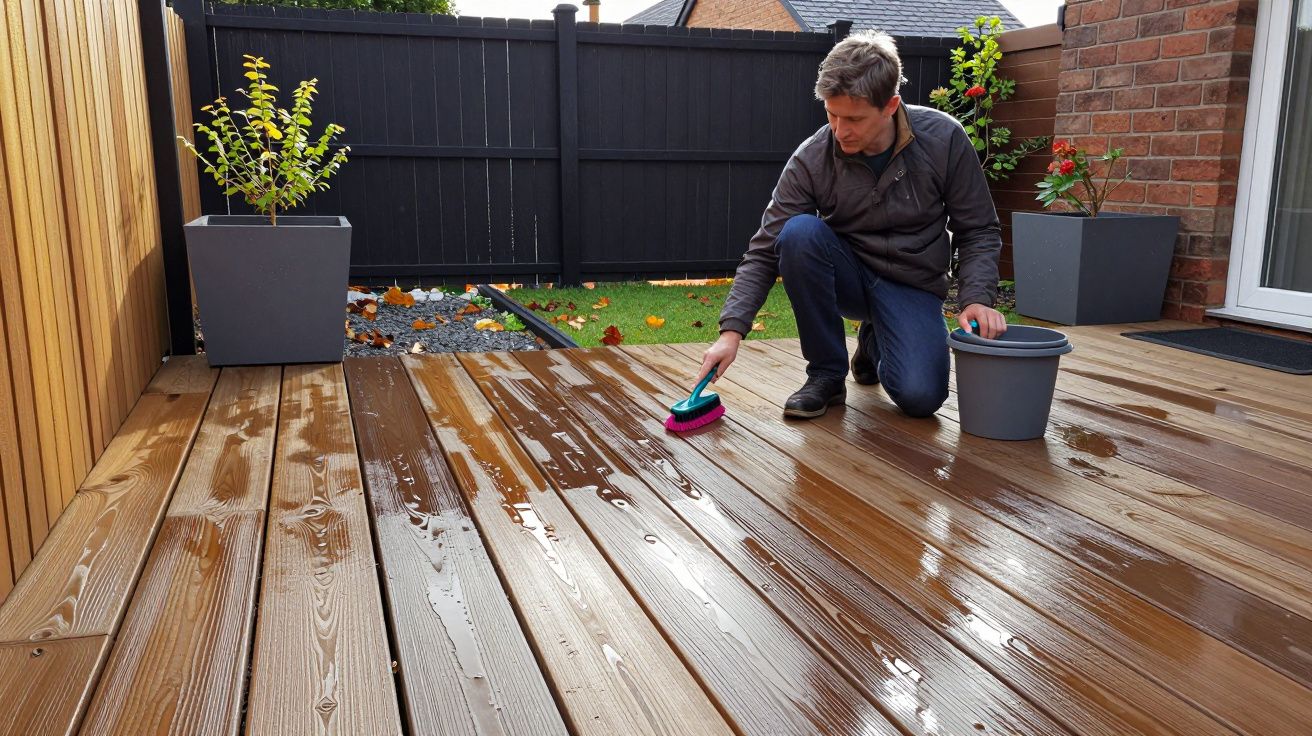
- On a mild day, rinse and brush algae-prone zones (steps and shaded edges).
- Don’t seal over a damp deck in autumn and hope for the best; trapped moisture will find a way out.
Most people only learn this after one slippery winter and one expensive board replacement run. After that, you start looking at decking less like a cosmetic upgrade and more like an exposed outdoor surface with physics, grain, and weather working against it.
FAQ:
- Is grooved decking always a bad idea? Not always, but it’s higher maintenance because the grooves trap dirt and moisture. In shaded UK gardens, smooth boards often stay safer and cleaner through winter.
- Can I just paint or stain over the problem to stop winter damage? Coatings help only if the timber is dry and the structure can drain and ventilate. Sealing in moisture can accelerate rot and peeling.
- Why do the board ends rot first? End grain absorbs water much faster than the board face. If cut ends aren’t sealed and sit in a damp area, they repeatedly soak and freeze, then break down.
- Is composite decking maintenance-free in winter? It’s lower-rot risk, not maintenance-free. You still need correct spacing, drainage, and occasional cleaning to prevent algae and slippery films.
- What’s the quickest safety fix for slippery decking? Remove algae with a stiff brush and suitable outdoor cleaner, improve light and airflow if possible, and consider anti-slip strips on steps and high-traffic routes.





Comments (0)
No comments yet. Be the first to comment!
Leave a Comment