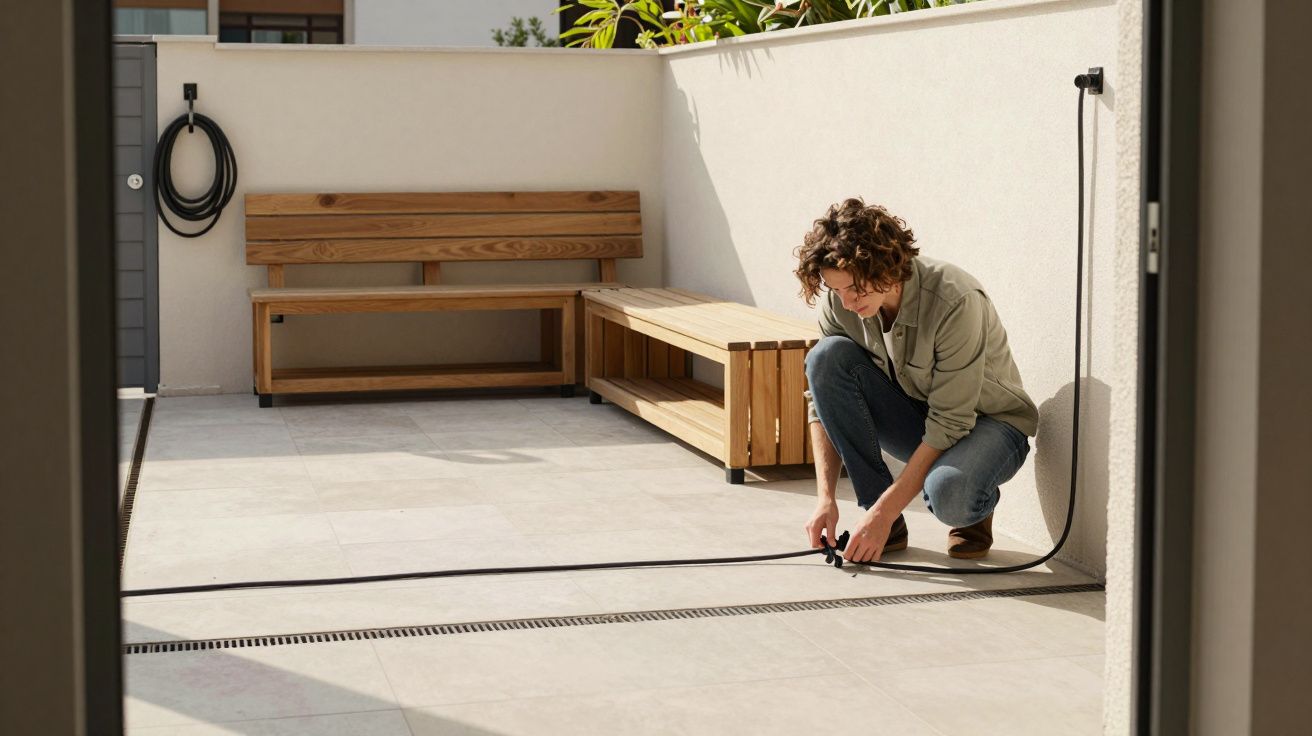
It usually starts with a chair that wobbles and a planter you meant to repaint “when the weather improves”. Garden modernisation projects can turn an urban patch - balcony, roof terrace, tiny yard - from a place you perch into a place you live, and they often begin with structural garden works that quietly fix the bits you keep working around. That’s why they matter: the right upgrades don’t just look better on day one, they make the space feel settled on day one hundred.
I noticed it the first time I visited a friend’s courtyard after they’d “done nothing major”. The plants were still in pots, the footprint was the same, but the whole place felt like it had decided to stay. No more temporary decking tiles shifting underfoot, no more extension lead snaking past a damp wall, no more sense that everything could be packed up in ten minutes.
The difference wasn’t more stuff. It was a few deliberate changes that took the garden out of the “rental vibes” category without turning it into a building site.
The quiet enemy of urban gardens: the feeling that nothing is fixed
In small city spaces, the problem is rarely taste. It’s friction. You’re always lifting, moving, hiding, dragging things out and putting them away again because the garden doesn’t support itself.
Temporary gardens behave like temporary kitchens: everything works, technically, but you never relax. A plant stand blocks the door. A shed won’t fit. The hose has nowhere to live, so it sits in a coil like a trip hazard you apologise for.
The goal of modernisation isn’t to “add features”. It’s to remove the little daily negotiations that stop you using the space properly.
Upgrade 1: Replace “floating” surfaces with one continuous floor
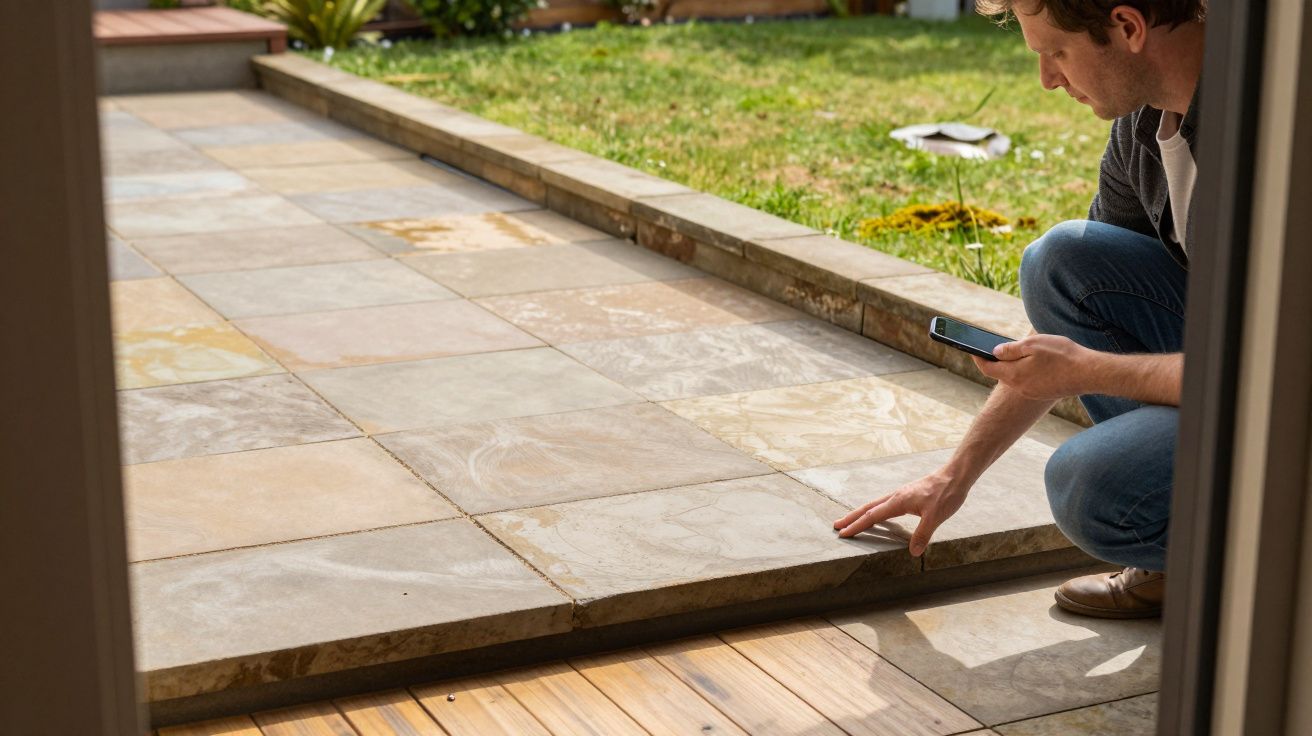
Those click-together deck tiles and loose gravel trays are popular for a reason: fast, cheap, reversible. They also telegraph impermanence because they move, they sound hollow, and they reveal every slope or uneven patch underneath.
A continuous surface doesn’t have to mean pouring concrete. It can be:
- Porcelain paving on adjustable pedestal supports (great for roof terraces)
- Properly laid slabs on a compacted base (for yards)
- Timber decking fixed to a levelled frame (if you want warmth underfoot)
The key is that it reads as one decision. Once the floor stops shifting, everything you put on it looks more intentional, even if it’s still a £12 bistro set.
Quick rule: if you can feel the floor “give” when you walk, your brain files the whole garden under “temporary”.
Upgrade 2: Sort drainage like you actually plan to be there next winter
Nothing makes a garden feel makeshift like water sitting where it shouldn’t. Puddles by the back door, damp staining on a wall, a corner that turns into algae season the moment the temperature drops.
This is where structural garden works do the heavy lifting. You’re not buying prettiness - you’re buying the ability to forget about weather.
Common fixes that change the mood fast:
- Regrading a small area so water runs away from the house
- Installing a channel drain along the threshold
- Swapping impervious surfaces for permeable joints or a soakaway where possible
- Raising planters slightly so they’re not constantly waterlogged underneath
It’s boring work until you realise you’ve stopped tiptoeing around your own space.
Upgrade 3: Build one “anchor” element that can’t be carried away
A garden full of movable items feels like a storage area. One built-in element - even a small one - makes the space feel like part of the home.
Good anchors for urban gardens:
- A fixed bench with storage (timber, brick, or rendered blockwork)
- A built-in planter edge that doubles as seating
- A narrow bar ledge attached to a wall for morning coffee
- A pergola or simple overhead frame that defines a zone
This is the psychological trick: when something is clearly installed, everything else looks like it belongs around it.
If you do only one thing, do this. It’s the outdoor equivalent of putting up shelves instead of living out of boxes.
Upgrade 4: Give the garden a “backbone” with lighting and power that’s not improvised
Extension leads and clip-on solar lights work, but they announce that the garden is an occasional hobby. Permanent lighting says: we use this, even when it’s dark at 4 p.m.
You don’t need a complicated scheme. You need a few reliable points:
- A weatherproof outdoor socket in a sensible place (for tools, speakers, laptop, whatever your life is)
- Low-level lighting along steps or edges (safety and atmosphere)
- One warmer light near seating (so faces don’t look like a horror film)
If you’re renting, you can still move towards “installed” with neat conduit runs, proper cable clips, and a single outdoor-rated junction point. The difference is less about expense and more about refusing the spaghetti.
Upgrade 5: Swap flimsy boundaries for a finished edge
Urban gardens are often defined by whatever came with the property: mismatched fencing, tired brickwork, a view of bins you pretend you don’t have.
A finished edge is the fastest way to stop the space feeling like a leftover. Think in straight lines and consistent materials:
- Paint or stain fences in one colour (a weekend job that reads like a decision)
- Add trellis panels to create height and privacy without rebuilding
- Render or limewash a scruffy wall to make it feel intentional
- Install a simple coping or timber capping on low walls for a “completed” look
Once the boundary looks deliberate, your pots don’t need to work so hard.
Upgrade 6: Choose fewer planters, but make them heavier and consistent
Lots of small pots can look like you’re still experimenting. (Which is fine, until you want the garden to feel calm.) Fewer, larger containers make the garden look designed, even if the planting is chaotic in the best way.
What helps:
- Repeat the same planter shape/material 3–5 times
- Use one “hero” pot near the entrance
- Raise a couple of planters on low plinths so they don’t look like they’ve just been set down
The visual message shifts from “things I bought” to “a garden with structure”.
A small checklist before you spend money on plants
Plants are the fun part, so we buy them first. Then we wonder why the space still feels provisional. Try flipping the order:
- Can you walk barefoot without wincing?
- Does water have a plan when it rains hard?
- Is there one fixed element that defines the space?
- Can you sit outside after sunset without balancing a lamp on a plant pot?
- Do the boundaries look finished, even if simple?
When those answers turn into “yes”, almost any planting style will look like it belongs.
| Upgrade | What it fixes | Why it stops the “temporary” vibe |
|---|---|---|
| Continuous flooring | Movement, unevenness, noise | Makes the whole space read as installed |
| Drainage improvements | Damp, puddles, algae corners | Removes the constant sense of compromise |
| One anchor element | Everything feels movable | Creates a focal point and permanence |
FAQ:
- Do I need planning permission for these upgrades? Often not for like-for-like surfacing, basic lighting, or small planters, but pergolas, raised platforms, and major drainage changes can trigger rules. If in doubt, check your local council guidance and your lease.
- What’s the smallest change that makes the biggest difference? A continuous, level floor or one built-in bench/planter edge. Either one can make the rest of the garden look intentional overnight.
- Can I modernise an urban garden on a budget? Yes: paint the boundaries, reduce planter clutter, and install one dependable lighting point. Spend on the parts you touch and use, not decorative extras.
- Is it worth doing structural garden works in a rental? Sometimes. Portable anchors (free-standing but heavy planters, modular bench storage) plus neat, safe power/lighting can get you 80% of the “settled” feel without permanent alteration.
- How do I stop new upgrades looking messy after a year? Choose fewer materials, repeat them, and prioritise maintenance-friendly finishes (porcelain paving, sealed timber, easy-access drains). Consistency ages better than novelty.



Comments (0)
No comments yet. Be the first to comment!
Leave a Comment