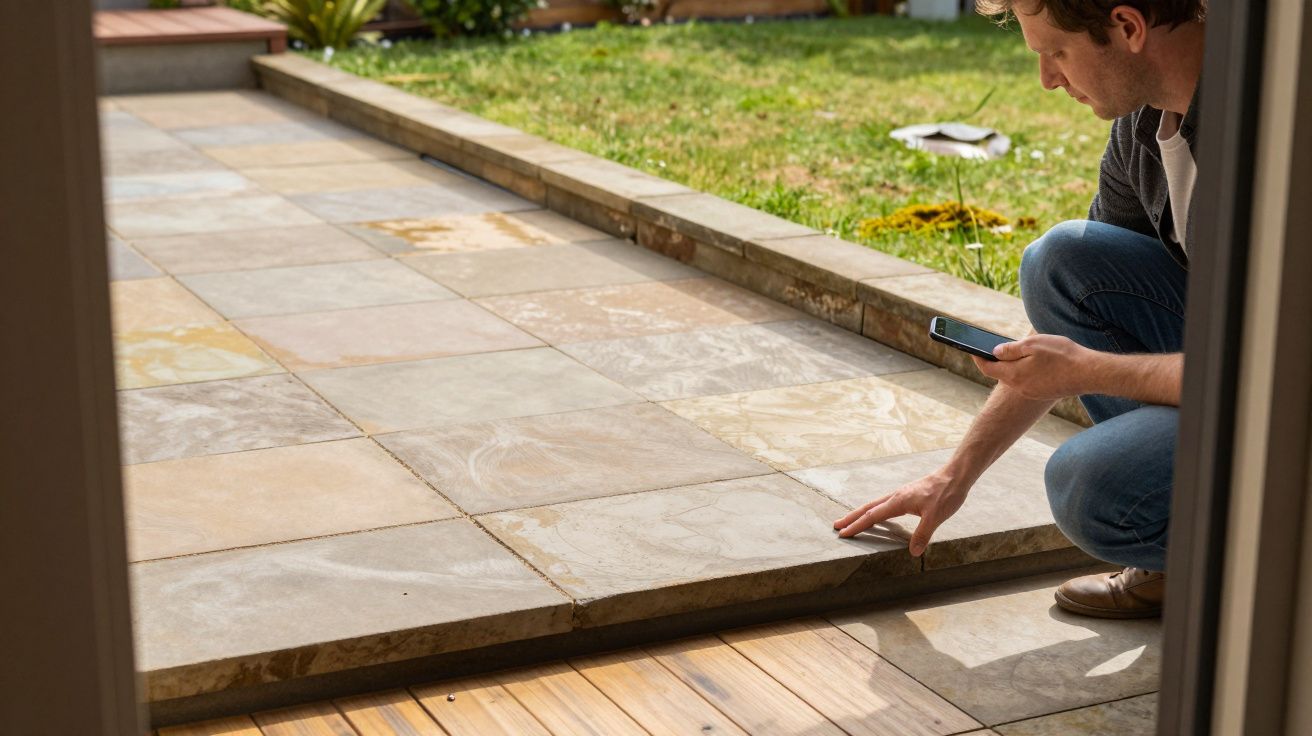
Buyers rarely say it out loud, but structural garden works shape their judgement before they’ve even reached the back door. The right retaining wall, steps, drainage and levels read as quiet competence, and that nudges people towards property value improvements without them knowing why. It’s not just “a nice garden”; it’s a feeling that the home has been looked after properly.
Most viewers can’t price a French drain or spot a subtle fall away from the house. They can, however, sense whether a garden will behave in winter, whether it’s safe underfoot, and whether the outside space feels like an extension of the building rather than an afterthought.
Why structure hits before style
Soft landscaping is easy to imagine replacing. A tired lawn becomes “a weekend job”. Faded planting becomes “a trip to the garden centre”. Hard structure, by contrast, registers as expensive, disruptive and risky, even when it looks tidy.
That’s why the brain scans for clues: does the patio sit level, do the steps feel consistent, do the boundaries hold straight lines, and is water being managed? If the answers are yes, buyers relax. Relaxed buyers stay longer, ask better questions, and negotiate less aggressively.
The strongest gardens don’t shout. They quietly remove reasons to worry.
The one detail most people react to: levels that make sense
A garden with correct levels feels effortless. You don’t notice why walking from kitchen to terrace feels natural; you just feel that it does. When levels are wrong, you notice immediately: a slight slope towards the house, a patio that puddles, a step that’s an awkward height.
Good structural garden works create a clear hierarchy: threshold, terrace, path, lawn, boundary. Each zone sits where you expect it to sit, and transitions are handled with steps, ramps, small retaining edges or gentle grades.
Signs the levels are doing their job
- Water marks aren’t creeping up against external walls.
- The first terrace area feels like a usable “room”, not a landing strip.
- Steps have consistent risers and enough tread depth to feel safe.
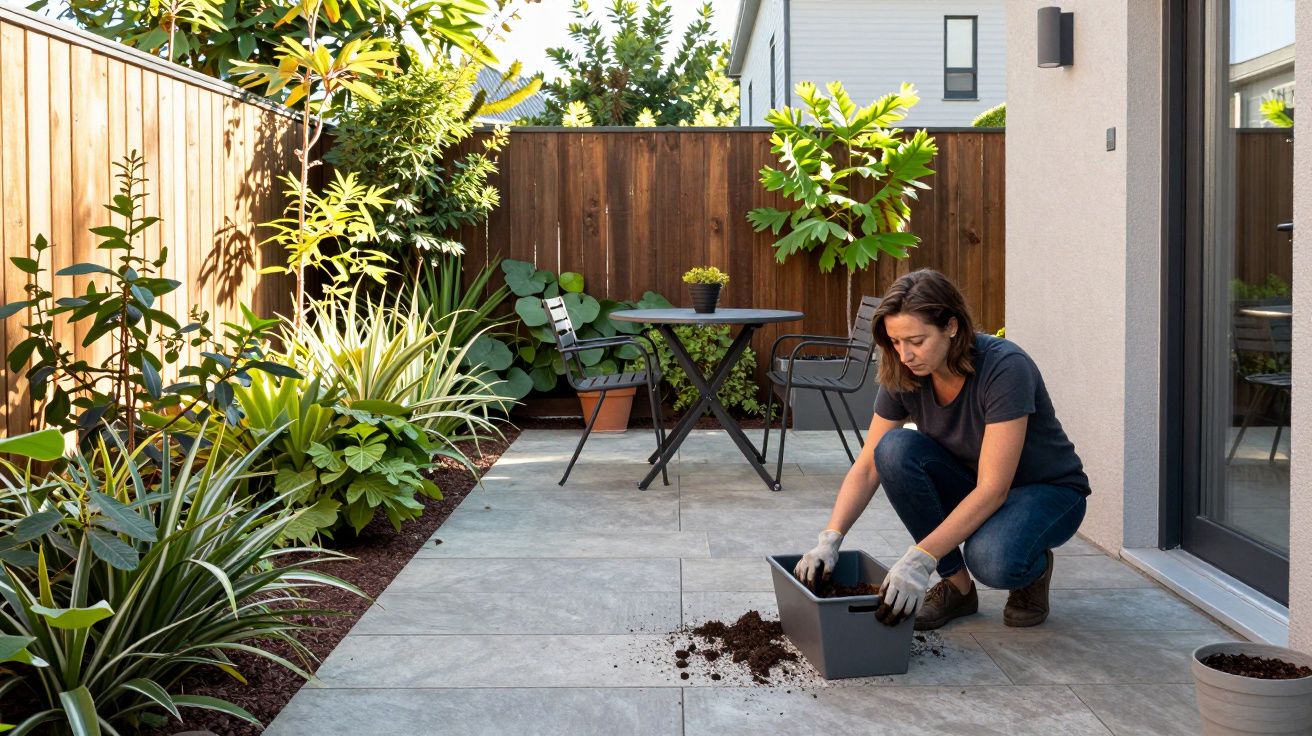
- Edging lines are clean, with no soil spilling onto paving after rain.
Drainage: the invisible comfort cue
Drainage is the classic “subconscious yes”. A buyer may not see the channel drain, but they’ll see the absence of algae, the lack of slippery patches, and borders that don’t look waterlogged. They’ll also notice if the air feels damp near the house, or if the patio has that permanent dark sheen.
The goal isn’t to build something that looks engineered. It’s to make the garden behave quietly through British weather: heavy rain, cold snaps, sudden downpours in summer.
Practical wins that tend to pay back include regrading a lawn that holds water, adding discreet drainage runs near patios, and ensuring downpipes discharge appropriately (not into a corner that turns into a bog).
Retaining walls and edges: where quality shows first
Retaining walls sit in that sensitive zone between “garden feature” and “structural necessity”. A slightly bulging wall, cracked mortar, or makeshift sleepers can be enough to seed doubt about everything else-because it suggests pressure, movement, and future cost.
A well-built wall does the opposite. It reads as stable. It makes a sloped plot feel intentional, and it can create flat, usable areas that buyers value more than extra flowerbeds.
The buyer doesn’t buy the wall. They buy the certainty that the land is under control.
What “good” looks like without being flashy
- Straight lines (or deliberate curves), with no leaning.
- Neat caps and finishes that shed water.
- No staining that suggests persistent seepage.
- Planting kept back so the structure remains visible and dry.
Steps, thresholds and the “trip test”
Viewings are physical. People carry bags, hold a child’s hand, glance at their phone, and walk through unfamiliar spaces. That’s when step design becomes emotional: either the garden feels safe, or it feels like a claim waiting to happen.
One uneven riser can make the entire space feel awkward. A well-set stair, by contrast, makes a small garden feel larger because movement feels fluid and obvious.
If you’re deciding where to spend, spend on the route from the house to the main sitting area. That’s the path most feet will take, and it’s where quality is judged fastest.
The simple checklist to run before photos and viewings
You don’t need to rebuild everything to get the benefit. Often, you need to reveal what’s already working and remove small signals of neglect.
- Clear drains and channels; remove moss from shady paving.
- Repoint or repair loose coping stones and wobbly step edges.
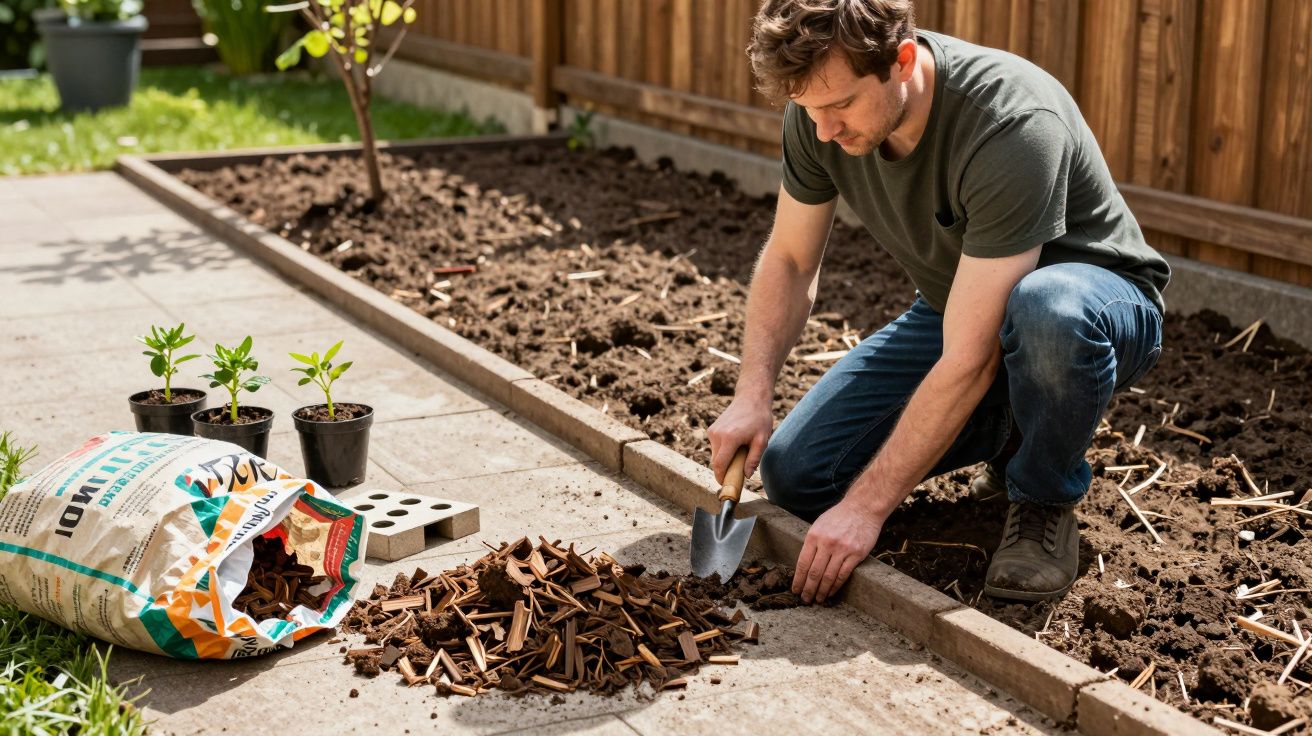
- Recut lawn edges so borders read as deliberate, not collapsed.
- Check patio falls; fix localised dips that hold puddles.
- Make sure gates latch smoothly and fences don’t rack in the wind.
What counts as an upgrade versus a “nice-to-have”
Not all garden spend translates to property value improvements. Buyers pay for usability and reduced risk, then for beauty. If your budget is limited, prioritise the elements that stop problems and create function.
| Spend first | Why it matters | Buyer reads it as |
|---|---|---|
| Drainage and correct falls | Prevents damp, puddling, slip risk | “This house won’t surprise me” |
| Safe steps and thresholds | Daily comfort and safety | “It’s easy to live here” |
| Retaining and boundary stability | Controls land movement and defines space | “It’s solid and finished” |
If you’re selling soon: how to talk about it without sounding like a builder
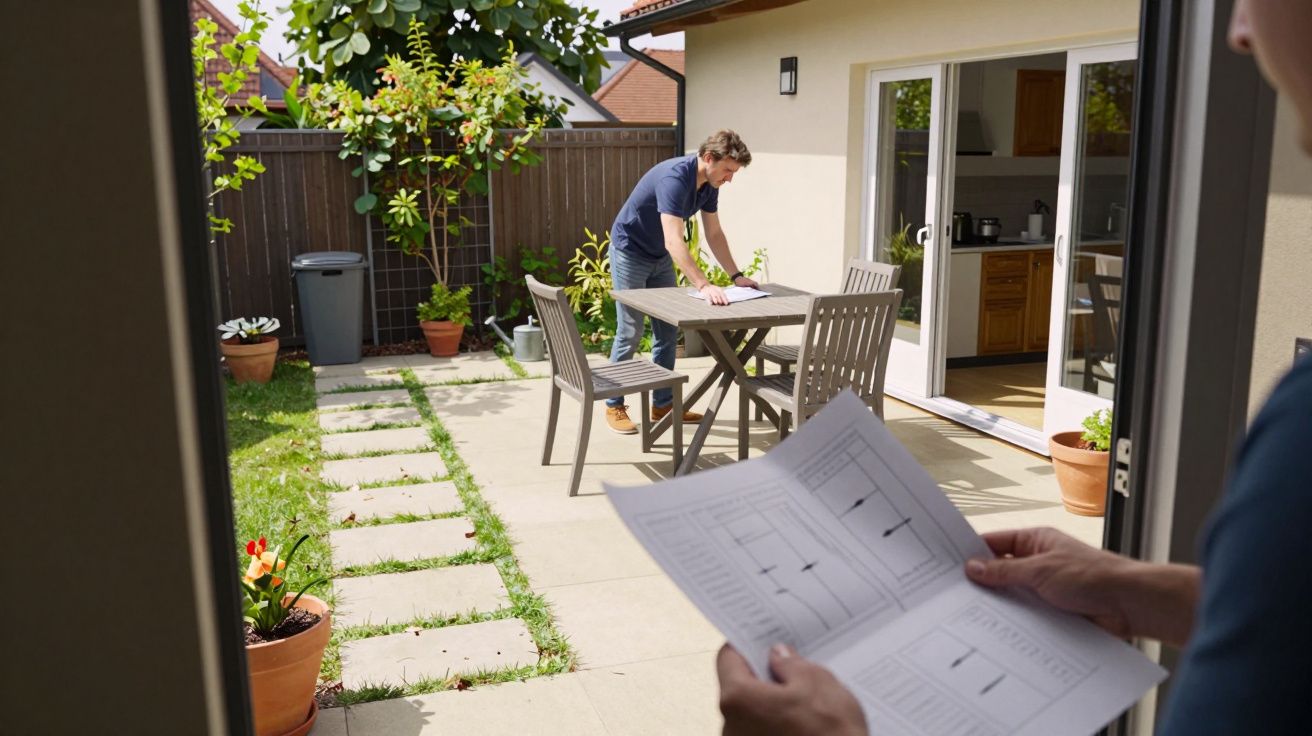
Viewers don’t want a lecture. They want reassurance. One calm sentence can do the job: that the patio was laid with proper falls, that drainage was added where the garden used to hold water, that walls and steps were rebuilt professionally.
If you have paperwork, keep it simple: before-and-after photos, a brief invoice description, and any guarantees. Presented neatly, structural garden works become a quiet proof point that the property has been maintained with care rather than quick fixes.
If you’re buying: the three places to look
Take ten seconds in each spot. You’ll learn more than you will from the planting.
- At the house wall: is the ground level sensible, and does water look like it runs away?
- On the main terrace: are there puddle shadows, slippery patches, or rocking slabs?
- At any retaining edge: is it straight, sound, and properly finished?
You’re not trying to find faults for the sake of it. You’re checking whether the garden’s structure is doing its job so the rest of the home can feel easy.


Comments (0)
No comments yet. Be the first to comment!
Leave a Comment