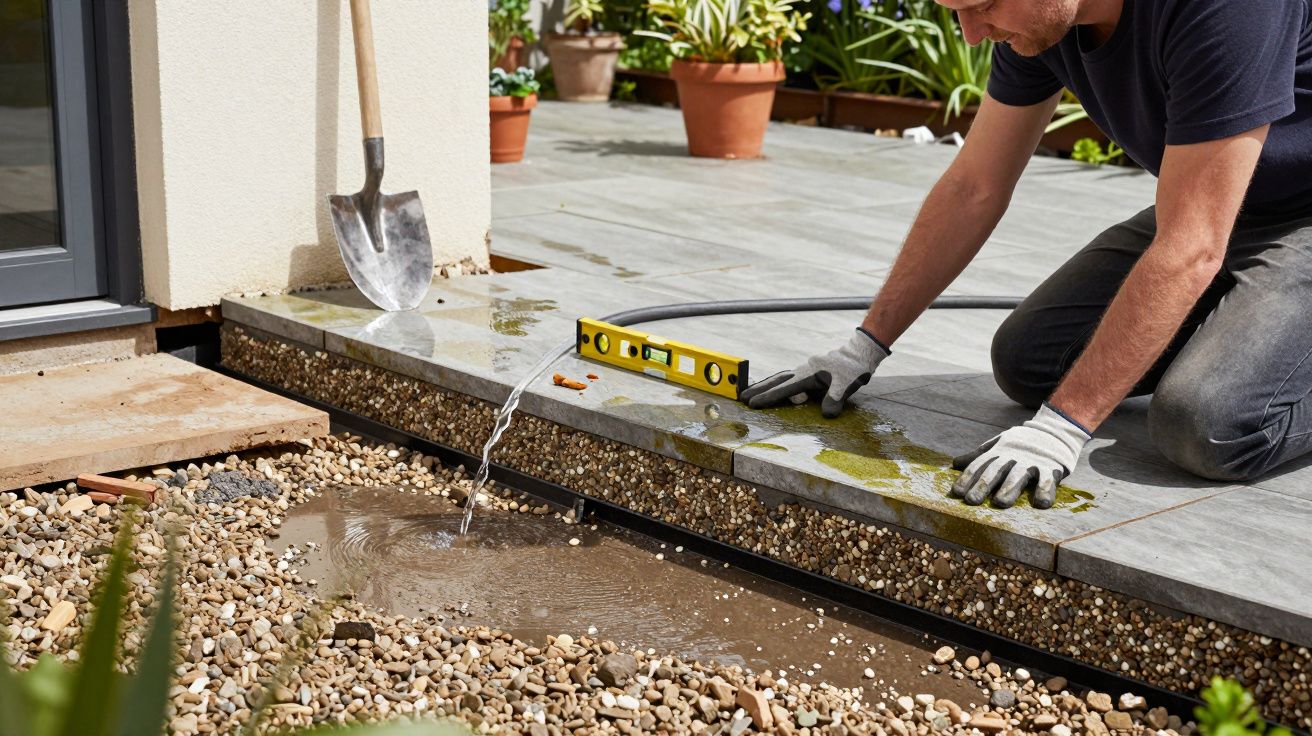
You can see it from the kitchen window: the patio looks “done”, the lawn is green enough, the beds are holding on. Then winter lifts the edges, summer bakes the joints, and suddenly the whole place feels like it’s slipping downhill. That’s where complete garden renovations live or die - not in the flashy finishes, but in the hidden rebuild shaped by project context like soil type, drainage routes, sun, and how the space is actually used.
Most people budget for the pretty bit: paving, planting, lighting. The rebuild nobody budgets for is the one that makes gardens work: levels, water management, foundations, and the boring-but-decisive details that stop a garden from failing slowly.
The “invisible build” that eats the budget - and saves the garden
If your garden has ever felt soggy in March and dusty by July, it’s rarely bad luck. It’s physics, and it’s layers. Water goes where gravity takes it, and plants only thrive where air and moisture can share the same soil.
When those basics are wrong, you get the familiar loop: weeds in open joints, algae on shaded slabs, plants that sulk, and a lawn that looks great for ten days after feeding and then collapses. The fix isn’t another bag of compost. It’s rebuilding what’s underneath.
Most “maintenance problems” aren’t maintenance problems. They’re build problems that surface on a schedule.
Why gardens fail after a “nice makeover”
A makeover changes what you see. A rebuild changes what the garden does.
Here’s what quietly causes the repeat issues homeowners end up paying for twice:
- Wrong falls and levels: patios that tip towards the house, or flat areas that hold water.
- No drainage plan: downpipes dumping into borders, or soakaways placed in clay that can’t soak.
- Poor sub-base: thin or contaminated hardcore under paving that settles, rocks, and cracks.
- Compacted or imported “dead” soil: looks fine on day one, then turns hydrophobic and lifeless.
- Mismatch between planting and exposure: shade plants frying, sun-lovers rotting, wind tunnels stripping beds.
These aren’t rare edge cases. They’re what happens when the design ignores the site’s project context and tries to force a picture onto a plot.
The rebuild checklist: what “making it work” actually means
A good rebuild isn’t mysterious. It’s methodical, and it has a sequence that’s hard to cheat.
1) Levels first, not last
Before you pick a slab colour, decide where water will go and how people will move. Set finished levels against thresholds, air bricks, and boundaries. The garden should fall away from the house, and the transitions should feel effortless underfoot.
2) Water has a route
You don’t need to turn a garden into a civil engineering site, but you do need a plan.
- Permeable areas where possible (gravel, resin-bound where appropriate, permeable paving systems).
- Linear drains only where they genuinely solve a pinch point.
- Soakaways sized for reality, not optimism, and placed where the ground can accept them.
- A clear strategy for roof water so borders aren’t doing gutter duty.
3) Proper bases under hard landscaping
If paving is the “floor” of the garden, the base is the joists. A decent sub-base and bedding layer prevent rocking slabs, dipping paths, and the slow migration of joints that invites weeds.
4) Soil rebuilt like a growing medium, not a dumping ground
This is the bit people skip because it doesn’t photograph well.
Good soil work looks like: - decompaction (often with an air spade or careful cultivation), - organic matter added at sensible rates, - drainage improved without turning beds into rubble, - and a top layer that’s friable, not powdery.
If the soil is wrong, the planting plan is theatre.
The moment you notice you’ve been budgeting backwards
It usually happens mid-project. The paving is quoted. The planting list is exciting. Then someone mentions carting away spoil, bringing in sub-base, raising a manhole, fixing the fall, rebuilding a retaining edge, adding drainage, and improving the soil.
Suddenly the “extras” cost more than the visible work, and it feels like a bait-and-switch. It isn’t. It’s just where the real build lives.
A useful rule of thumb: if you’re changing levels, adding hard landscaping, or touching drainage, you’re no longer doing a tidy-up. You’re doing a rebuild - and it deserves its own line in the budget.
How to scope the rebuild without turning it into a nightmare
You don’t need to become an expert. You need to ask the questions that reveal whether the fundamentals are being handled.
Bring these up early, while plans are still flexible:
- Where does surface water go in heavy rain - and can you show it on a simple sketch?
- What are the proposed finished levels at the house, the lawn edge, and the boundary?
- What is the sub-base specification under each paved area?
- What happens to existing spoil: removed, reused, or regraded?
- How will beds be improved: depth, method, and materials?
Let’s be honest: nobody enjoys paying for things they can’t show friends. But the garden you can show off in year five is built by the work you didn’t post in year one.
A lean budgeting split that keeps priorities straight
If you’re trying to keep a complete garden renovation sensible, split the budget into three buckets and protect the first two before you splurge on the third.
| Bucket | Includes | Why it matters |
|---|---|---|
| Make it work | levels, drainage, sub-bases, retaining edges | stops failures and repeat costs |
| Make it live | soil rebuild, irrigation points, bed edging | keeps plants healthy and manageable |
| Make it pretty | finishes, feature lighting, statement planting | only shines if the first two hold |
Signs your garden needs the rebuild, not just a refresh
You don’t need a survey to spot the patterns:
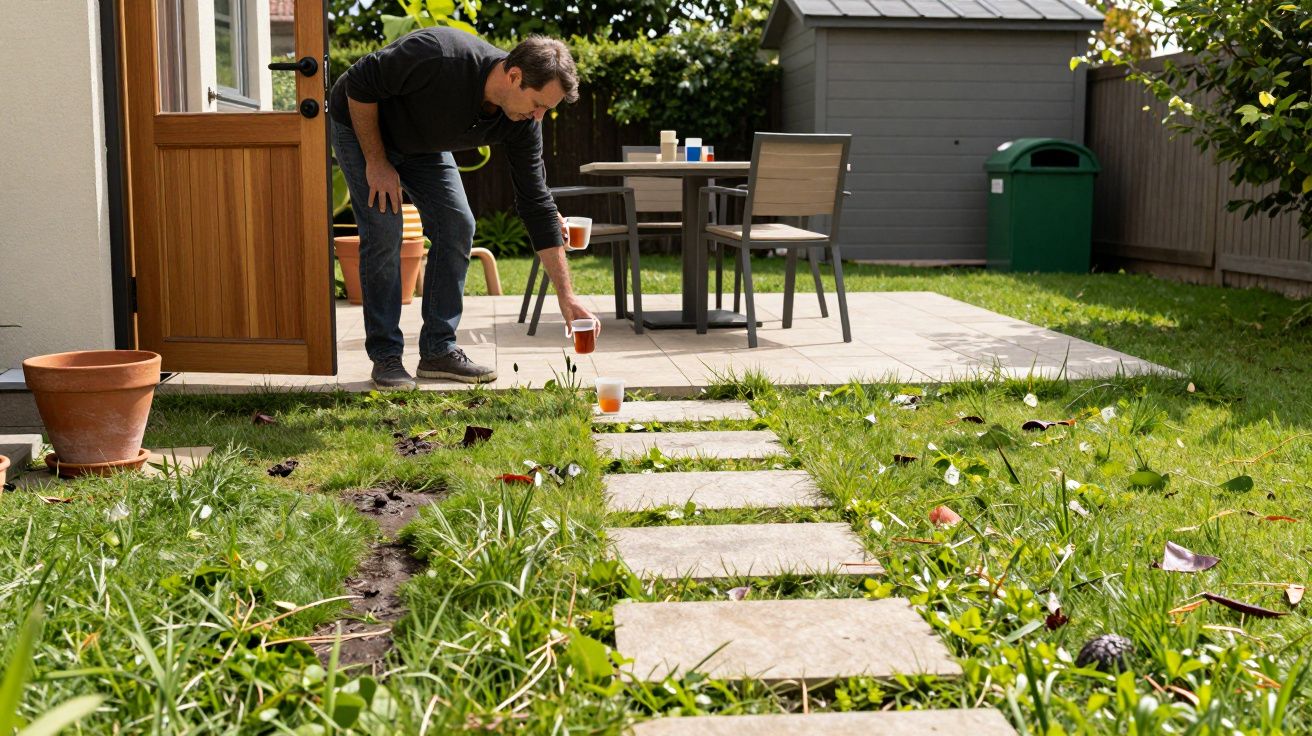
- puddles that sit for hours after rain, especially near paving
- algae or blackening on slabs in the same places every year
- lawn that feels spongy in winter and baked-hard in summer
- plants that die “mysteriously” despite watering and feeding
- patio joints opening up, rocking slabs, or a slow dip you can feel walking across
If two or three of these are true, budget for the invisible work. It will make every visible choice - the paving, the planting, the lighting - perform like it was meant to.
FAQ:
- How much of a renovation budget should go on the “invisible build”? Often a meaningful chunk: levels, drainage, and bases can rival the cost of finishes. If water and settlement are current issues, prioritise the rebuild before upgrading aesthetics.
- Can I do a rebuild in phases to spread cost? Yes, but phase by function. Do drainage and levels first, then hard landscaping, then soil and planting. Doing it the other way round usually means redoing work.
- Do I always need drainage installed? Not always. Sometimes changing falls, increasing permeable surfaces, and improving soil structure is enough. The right answer depends on your project context - especially soil type and where roof water discharges.
- Is adding topsoil enough to fix poor planting areas? Rarely. If the underlying soil is compacted or waterlogged, new topsoil can slump, smear, or turn anaerobic. Decompaction and structure improvement matter more than depth alone.





Comments (0)
No comments yet. Be the first to comment!
Leave a Comment