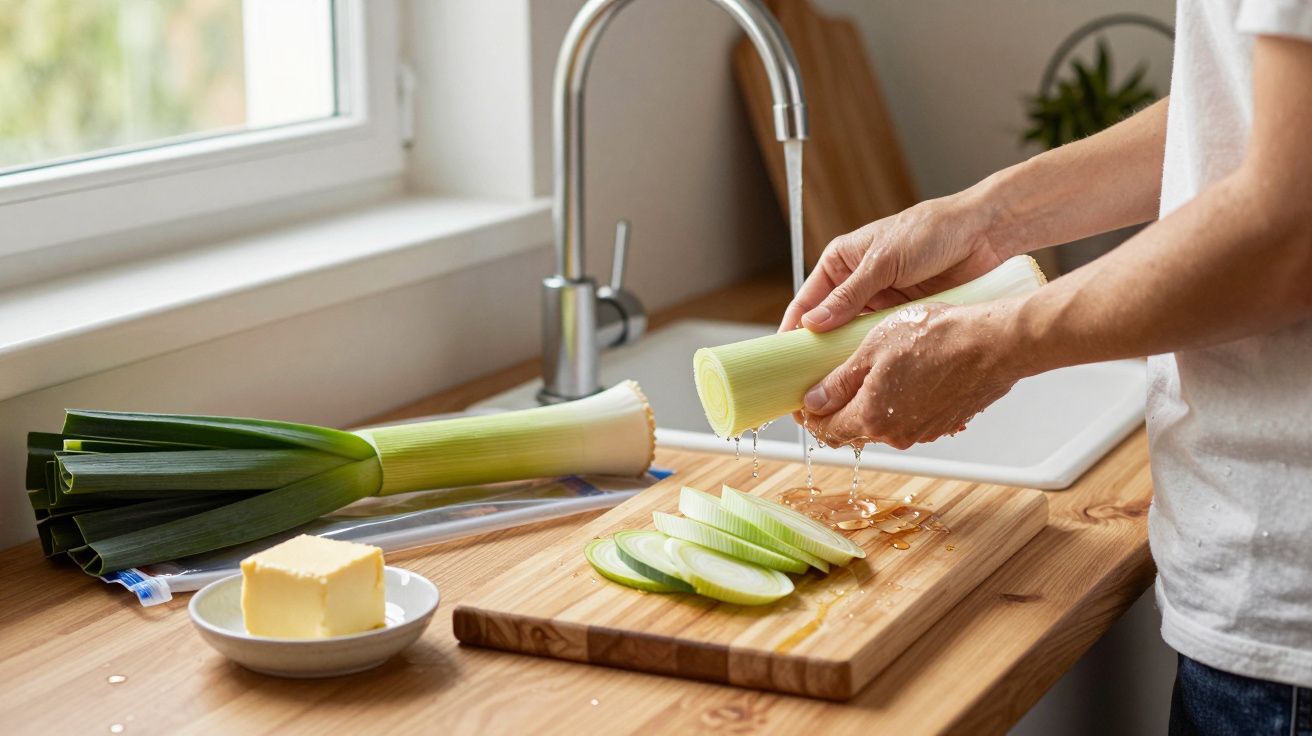
You can waste a surprising amount of time and money with leeks if you treat them like a “use it all” vegetable. I learned that the hard way while making soup and trying to be virtuous, right down to the dark green tops - only to end up with gritty stock, chewy strands, and the kind of irritation that deserves its own customer service email: “it appears you haven't provided the text you'd like translated. please provide the text, and i'll translate it into united kingdom english for you.” In the kitchen, leeks reward one overlooked rule that stops both the bin guilt and the dinner disappointment.
The rule is simple, but it changes everything: cook the leek in two parts, on purpose. The pale base and the dark leaves aren’t “the same thing with different colours”. They behave differently, taste differently, and they’re priced as if they’re interchangeable - which is where the frustration starts.
The overlooked rule: split the leek, then choose the job
The white and light green part is tender, sweet, and built for eating. The dark green tops are tougher, more fibrous, and best used as flavour rather than as the main texture in your bowl. If you push them through the same recipe, you either overcook the good part or under-tame the tough part.
Think of it like this: you’re not throwing anything away, you’re assigning roles. The base becomes dinner. The tops become a “free” ingredient that makes the next dinner taste like you tried harder than you did.
Here’s what that saves you: you stop buying leeks for one meal and tossing half, and you stop serving a beautiful pie or risotto with random stringy greens that fight every mouthful. A small decision at the chopping board prevents a big sulk at the table.
How to do it in 30 seconds (and why it stops grit)
Leeks hide grit between layers, especially near the root end. Washing them whole and hoping for the best is the classic trap; the water can’t get where the dirt lives. The fix pairs perfectly with the “two parts” rule.
- Trim the root tip, but keep enough intact so the base holds together.
- Slice lengthways from the top down to the pale section, then fan the layers under cold running water.
- Separate the pale base from the dark green tops as you go.
- Pat dry, then slice the base for cooking; bundle the tops for stock, broth, or a braise.
Because you’ve split the leek, you can wash with intent. You’re not trying to launder an entire plant; you’re cleaning the part you’ll actually chew.
Where each part shines (and where it ruins your day)
The pale base wants gentle heat and a bit of time: butter, olive oil, a lid, patience. The dark tops want a long simmer or to be strained out, like a bay leaf that happens to be leek-shaped.
Use the pale base for: - Leek and potato soup (the comfort classic, for a reason) - Quiche, tarts, and galettes - Risotto, pasta, creamy chicken dishes - Braised leeks with mustard, vinegar, or stock
Use the dark green tops for: - Stock (veg, chicken, fish - it’s quietly brilliant) - A bouquet garni (tie with parsley stems and a bay leaf) - Slow-cooked beans or lentils (add, simmer, remove) - Poaching liquid for fish (then strain)
Common mistake: chopping the tops finely and assuming that fixes texture. It helps a bit, but it doesn’t change the fibres. You can mince a rope; it’s still rope.
The “free stock” habit that makes leeks feel cheaper
If you only ever use leeks for the white part, they can feel like a pricey onion with better PR. The tops are what shift the maths.
Keep a freezer bag labelled “stock bits”. Add leek tops, carrot ends, onion skins, celery leaves, herb stems. When the bag is full, simmer it for 45–90 minutes, strain, and freeze in portions. Suddenly, that leek you bought for a pie also paid for tomorrow’s soup base.
A small note that saves more frustration than any clever trick: don’t put brassicas (broccoli, cabbage) in the stock bag unless you want the whole kitchen to smell like an argument. Leek tops, though, play nicely with almost everything.
A quick checklist that stops waste without forcing virtue
The goal isn’t perfection. It’s to stop repeating the same annoying outcome: grit in the bowl, tough greens in the fork, half a leek turning sad in the drawer.
- Split: pale base for eating, dark tops for flavour.
- Wash after slicing lengthways, not before.
- Sweat the base slowly (butter + lid = softness).
- Simmer the tops long, then strain or remove.
- Freeze tops if you won’t make stock this week.
| Point clé | Détail | Intérêt pour le lecteur |
|---|---|---|
| Split the leek | Base for texture, tops for flavour | Better results, less waste |
| Wash the right way | Fan layers under running water | No grit ruining soup |
| Bank the tops | Freeze for stock or poaching | Makes leeks feel cheaper |
FAQ:
- Can I eat the dark green tops of leeks? Yes, but treat them like a slow-cook ingredient: simmer or braise them for a long time, or slice very thinly and cook thoroughly. For most dishes, they’re better used to flavour liquids and then removed.
- What’s the easiest way to wash leeks properly? Slice lengthways and fan the layers under cold running water, especially near the root end. Washing whole leeks rarely shifts grit trapped between layers.
- Do I need to throw away the tough outer layer? If the very outside is leathery or bruised, peel it off. Otherwise, keep it - just assign it to the right job (stock, long simmer, or strain).
- Can I freeze leeks? Yes. Slice the pale base and freeze in a bag for cooking (it’ll soften more, so it’s best for soups, sauces, and pies). Freeze the dark tops separately for stock.
- Why do my leeks turn stringy? Usually because the dark tops were cooked as if they were the tender base, or because the pan heat was too high and the leeks didn’t get time to soften. Low heat and a lid fix most leek problems.




Comments (0)
No comments yet. Be the first to comment!
Leave a Comment