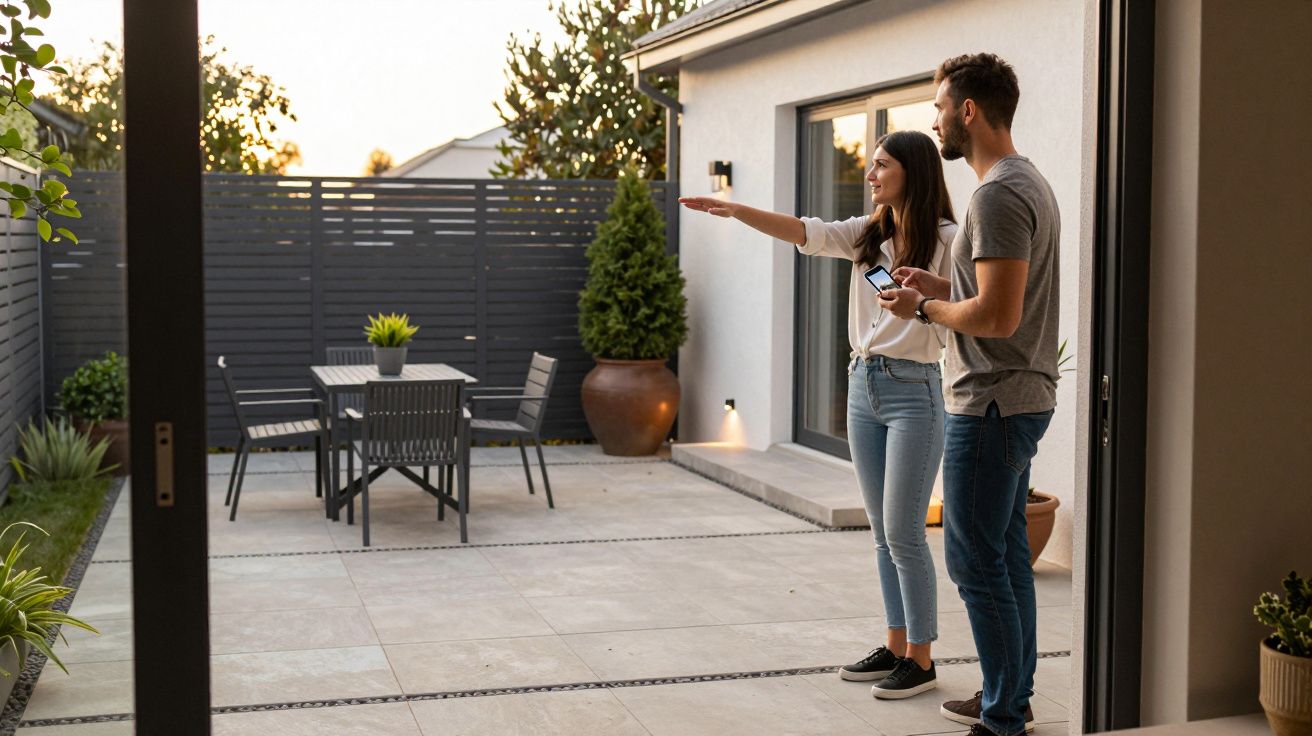
The show-home door clicks shut and the sales agent pauses, just long enough for you to hear birds rather than traffic. That’s not luck; it’s outdoor space transformation, and developers use it as a fast, visual proof that a house will feel bigger, calmer, and easier to live in. For buyers juggling budgets and busy weeks, the garden becomes the quickest “yes” in the entire viewing-because you can understand it in ten seconds.
A brick of new-builds can look identical from the street. Out back, one plot whispers “work”, another says “weekend”, and the difference is usually a few deliberate upgrades that photograph well and remove decision-fatigue.
The first rule: make the outside feel finished
The best outdoor upgrades aren’t extravagant; they’re complete. Developers know most buyers don’t fear a small garden as much as they fear an unfinished one-mud, mismatched levels, and the sense you’ll be spending every Sunday with a spade.
So they build an ending. A clean edge. A clear place to sit. Even on a modest plot, the message lands: you can move in and start living.
The upgrades that sell, again and again
Walk around enough sites and you start spotting the same kit. It’s less “landscaping” and more stagecraft: small touches that read as quality, privacy, and low maintenance.
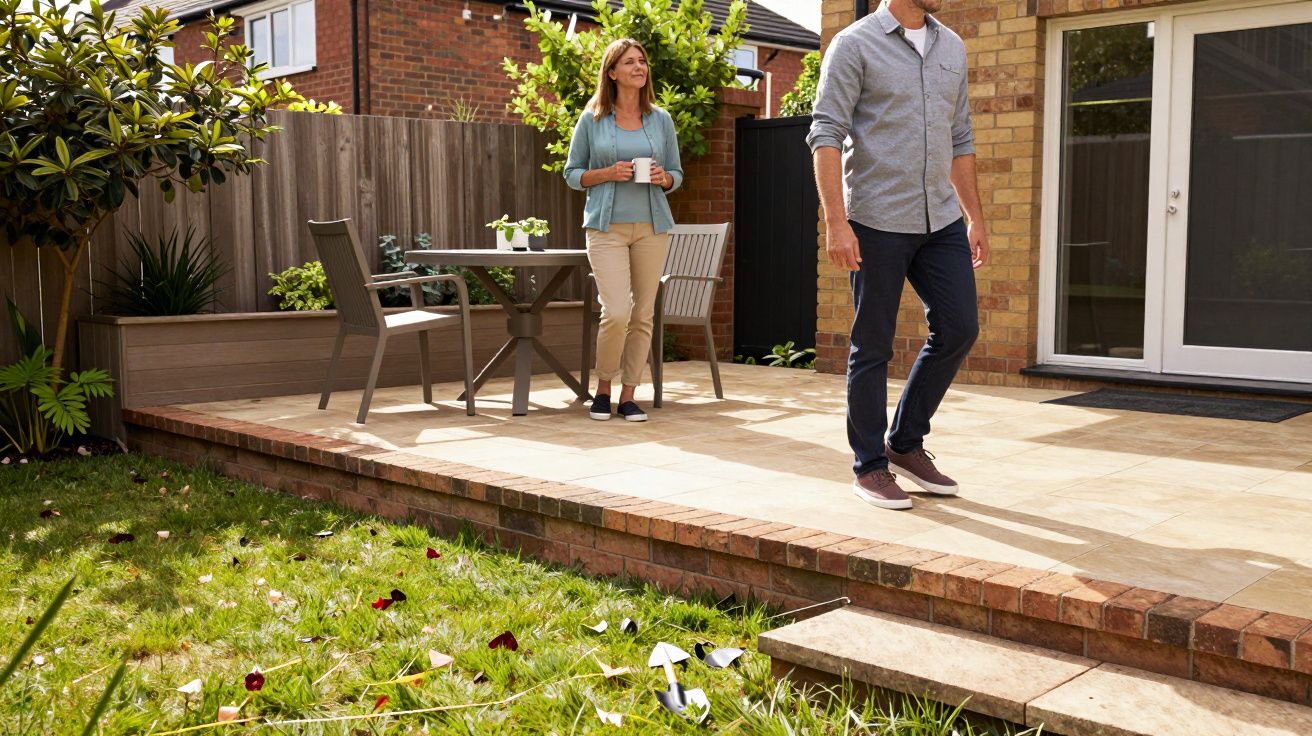
1) A patio that’s the right size (and in the right place)
A token slab by the back door doesn’t cut it. The patio needs to fit a table and chairs without feeling like a puzzle, and it needs to catch light for at least part of the day.
Developers often choose large-format paving in neutral tones because it behaves on camera: fewer lines, less visual clutter, more “room” in photos. The trick is alignment too-square to the house, doors, and fence lines so everything looks intentional.
Buyer takeaway: if you can picture dinner outside, you stop thinking about the compromises inside.
2) A “privacy fix” that doesn’t scream privacy fix
Most new plots are overlooked, and buyers clock it immediately. The quickest remedy is layered screening: a slatted panel, a pergola side, taller fencing in one key sightline, or pleached trees where budgets allow.
Done well, it reads as design rather than defence. Done badly, it reads as “neighbours are a problem”.
- Vertical slats or battens (painted dark) to frame seating
- A pergola to create a ceiling and define territory
- Fast-establishing evergreen structure in pots for the show-home
3) Lighting that makes the garden usable after 4pm
Outdoor lighting sells the idea of extra hours. Developers lean on warm, low-glare fixtures: spike lights to pick out planting, step lights for safety, and a soft wall wash near doors.
Nobody wants a runway. They want a glow that suggests: you can come home, put the kettle on, and still have a garden.
A practical note buyers appreciate, even if they don’t say it: lighting often implies sockets, sensible wiring routes, and a developer who thought beyond the handover photo.
4) Planting with structure, not fuss
Show-home borders tend to be about reliability: grasses, evergreens, and a few seasonal pops that won’t collapse the week after the marketing shoot.
The most effective schemes use three ideas:
- A “backbone” (evergreen shrubs or small trees) so it looks good in winter
- Repetition (same plant in groups) so it feels designed, not accidental
- One focal point (a tree, a raised planter, a sculptural pot) to anchor the view
It isn’t magic; it’s controlled simplicity. Buyers don’t want to inherit a horticulture degree.
5) Level changes that remove awkwardness
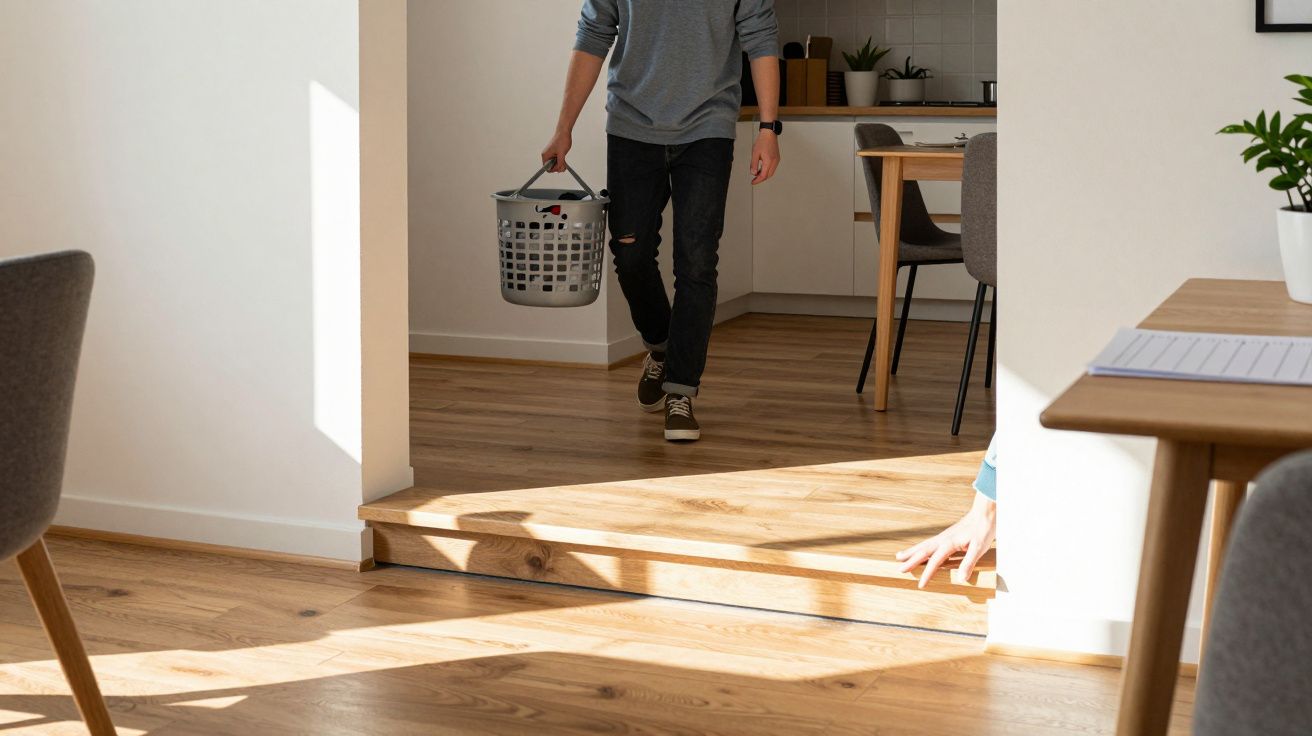
If the ground slopes or the threshold is clumsy, developers often introduce shallow steps, a raised deck, or a retaining edge that turns “problem” into “feature”. The aim is to remove the sense that you’ll be tripping over the garden rather than using it.
A crisp boundary-sleepers, brick edging, metal strip-also signals quality. It tells buyers the garden won’t unravel into weeds at the seams.
Why these tweaks work on human brains (and Rightmove)
Outdoor space transformation is basically conversion-rate optimisation for real life. Buyers scan for three promises: space, privacy, and ease. The upgrades above answer all three, quickly, without requiring the viewer to be imaginative.
They also translate cleanly into marketing:
- A patio photographs like an extra room
- Lighting creates evening mood shots
- Screening reduces the visible presence of other houses
- Simple planting reads as “looked-after”, even before anyone lives there
And there’s a quieter effect: once the outside feels resolved, the inside imperfections feel negotiable. A smaller third bedroom becomes “fine” when the garden looks like a retreat rather than a task.
How developers choose what’s worth paying for
Budgets are ruthless on large sites. The upgrades that survive value-engineering are the ones that pull double duty: they reduce buyer objections and reduce aftercare.
A common internal checklist looks like this:
- Will it make the plot feel bigger?
- Will it reduce overlooking or noise perception?
- Will it survive a year of show-home footfall?
- Will it keep maintenance simple for the buyer?
- Will it photograph well in all seasons?
Soyons honnêtes : personne ne fait vraiment ça tous les jours-buyers aren’t standing there with clipboards. But they do feel the difference between “here’s a patch of grass” and “here’s where you’ll spend summer”.
If you’re buying: what to look for (and what to question)
Some upgrades are pure theatre; others are real, lasting value. During a viewing, take an extra minute outside and ask the boring questions-boring is where the expensive surprises hide.
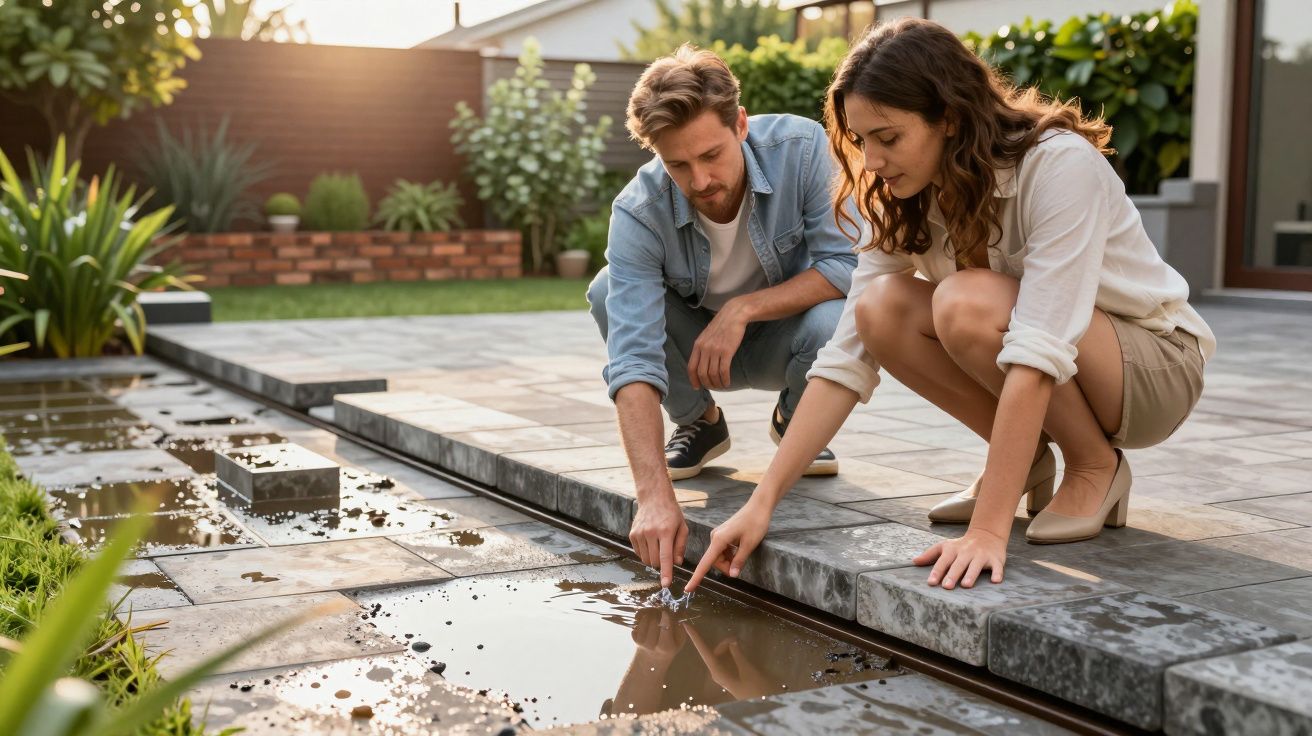
- Check drainage: does water have somewhere to go, or will the patio puddle?
- Look at boundaries: who owns which fence line, and is it sturdy?
- Ask about electrics: exterior sockets, lighting circuits, and warranties
- Consider sun: sit on the patio spot and notice when it falls into shade
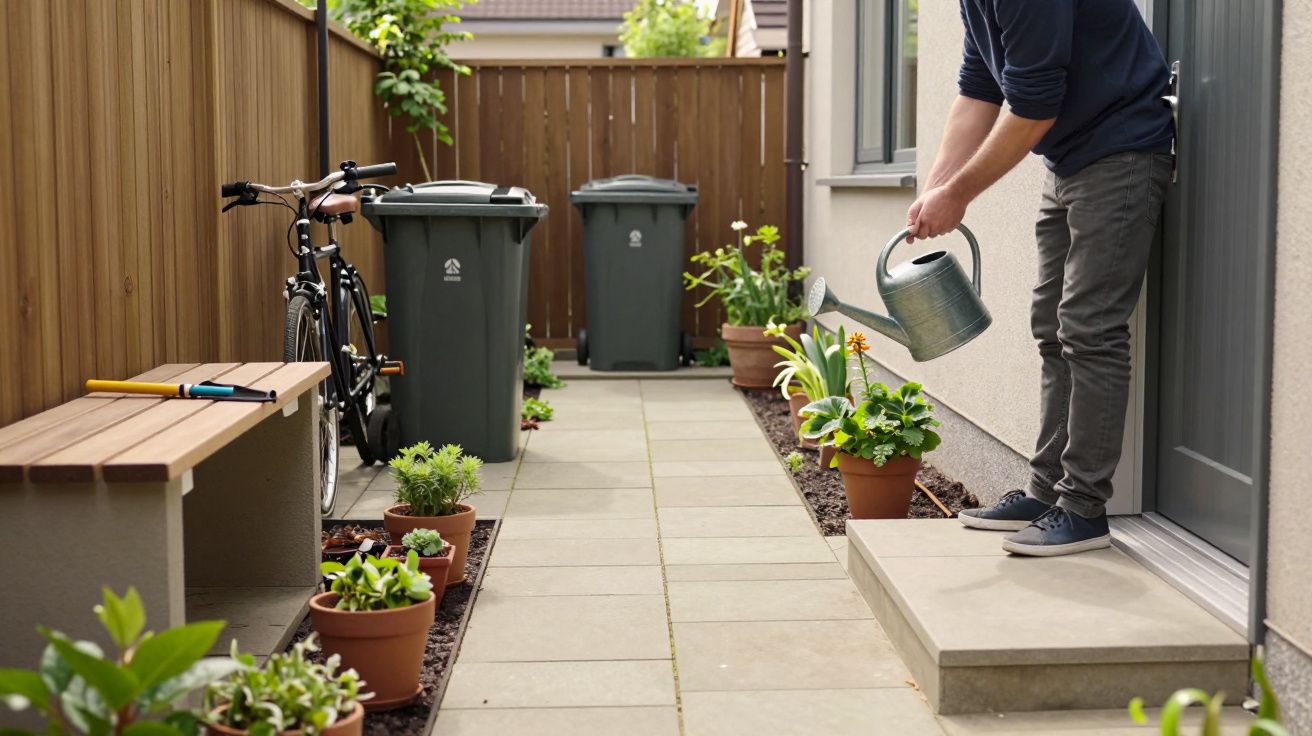
- Think about storage: where do bins, bikes, and tools actually live?
If the garden has been staged with pots and furniture, try mentally removing them. A good layout still works when the props go.
| Upgrade | What it signals | Why it helps sales |
|---|---|---|
| Proper patio + edging | “Finished” and usable | Photos better; fewer buyer objections |
| Screening (slats/pergola/trees) | Privacy and calm | Overlooking feels solved |
| Warm outdoor lighting | Lifestyle, safety | Extends use; adds evening appeal |
FAQ:
- Do these upgrades add real value, or just sell the idea? Both. A well-sized patio, decent boundaries, and lighting can be genuine upgrades, but their biggest power is reducing uncertainty so buyers commit faster.
- What’s the most cost-effective improvement if I’m doing this myself? Define a seating zone with clean edging and a simple surface (paving or compacted gravel), then add one clear focal point like a small tree in a large pot.
- Should I worry about high-maintenance planting in a show-home? Yes. Ask what’s actually included and what’s been temporarily planted. Favour schemes with evergreen structure and repetition rather than lots of delicate seasonal colour.
- How can I tell if privacy screening is well designed? It should frame the seating area without blocking all light. If it feels like a barricade or creates a gloomy corner, it may have been added to hide a bigger issue.


Comments (0)
No comments yet. Be the first to comment!
Leave a Comment