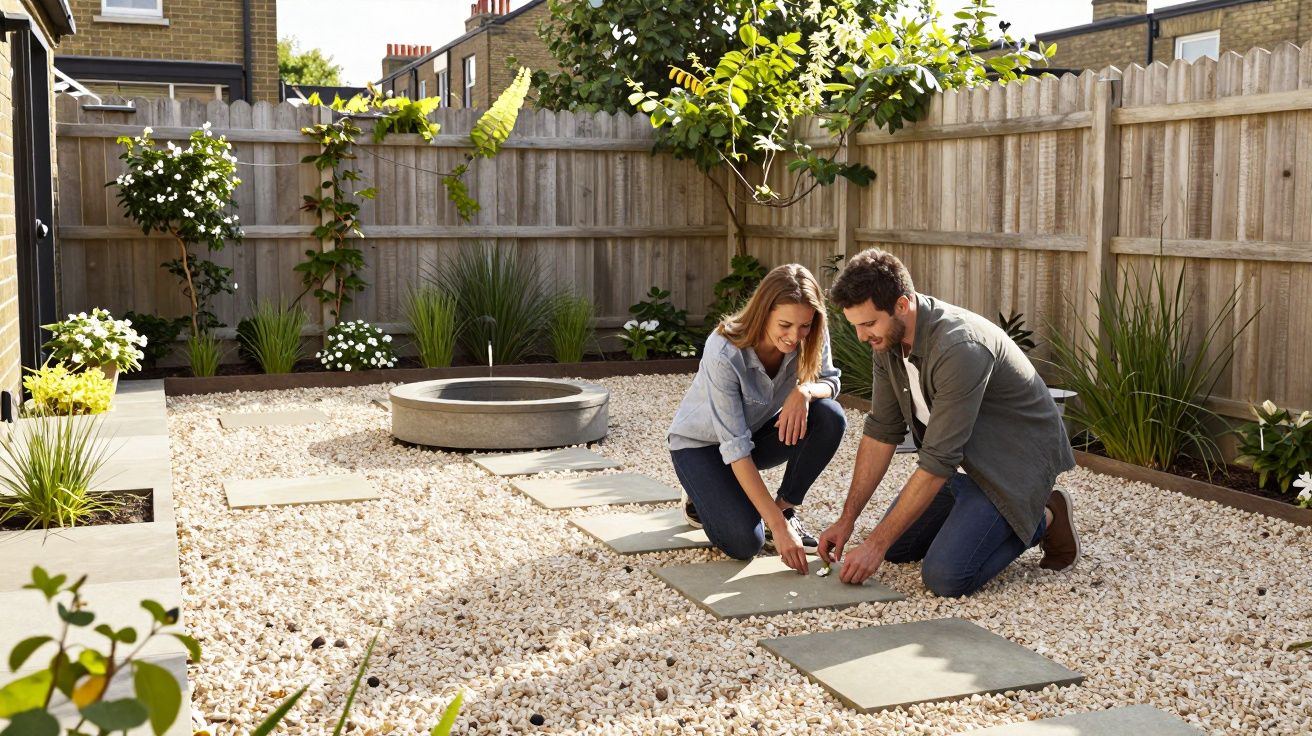
In many london gardens, the problem isn’t lack of planting - it’s the feeling that the space stops at the fence line. Complete garden renovations are increasingly being used to change that perception, reshaping levels, sightlines and boundaries so a modest plot reads as open, calm and lived-in rather than “boxed in”. The good news is that this is less about square metres and more about a few design decisions that make the eye travel.
London’s tight plots also come with quirks: neighbouring windows, awkward side returns, shaded corners, and boundary rules that limit what you can build. A rebuild that works with those constraints can feel bigger than one that fights them.
Why small gardens feel cramped (and why rebuilds help)
Most boxed-in gardens share the same handful of issues. The boundaries are heavy, everything sits on one flat plane, and the layout pulls you towards the back fence where there’s nowhere else for your gaze to go.
A rebuild helps because it lets you change the “read” of the space. Instead of a rectangle with furniture in the middle, you can create depth, borrowed views, and routes that reveal the garden in stages.
The quickest way to make a garden feel larger is to stop showing all of it at once.
Rebuild moves that make the eye travel
1) Break the straight run with a diagonal or offset path
A straight path from patio to shed makes the plot feel like a corridor. Shifting the route by even 10–20 degrees creates visual length, because the boundary lines no longer read as parallel.
Practical options that fit typical London widths:
- A diagonal stepping-stone run across gravel.
- An offset path with two gentle turns.
- A “side-hugging” path that leaves a wider central planting bed.
This isn’t about trickery; it’s about giving the garden more than one moment.
2) Add a mid-garden “pause” instead of a single patio
One big slabbed terrace can dominate a small plot and make everything beyond it feel like an afterthought. A better rebuild tactic is to create two usable zones, with something in between that softens the transition.
Common combinations:
- Small dining terrace near the house + bench nook at the back.
- Morning coffee spot + tiny fire-bowl area.
- Deck by the doors + gravel “courtyard” halfway down.
The pause can be a circular bed, a water bowl, or a small multi-stem tree - something that gives the eye a reason to stop before moving on.
3) Use levels carefully: one step is often enough
London gardens are frequently either dead flat or awkwardly sloped. Full retaining schemes can eat budget and space, but a single level change can create separation without clutter.
A simple one-step split works well:
- Upper terrace (clean, usable, near the kitchen).
- Lower planting zone (softer, immersive, further from the house).
If you do this, keep the step wide and the edges clean. Tight steps and fussy borders are what make small gardens feel busy.
Boundary ideas that stop fences shouting
Soften hard lines with “layered” edges
A fence reads as a hard stop. The rebuild goal is to create layers so the boundary becomes a background, not the headline.
Layering that works in narrow plots:
- Slim climbers on wires (jasmine, honeysuckle, climbing hydrangea for shade).
- A thin strip of evergreen structure (yew domes, clipped pittosporum, or pleached screening where space allows).
- Front-layer perennials and grasses that move in the wind.
Even a 30–45cm deep border can change the whole feel if it’s planted with intent.
Consider a lighter boundary finish
Dark staining can be chic, but in a shaded London plot it often absorbs light and makes the edges feel closer. If you’re rebuilding, test a mid-tone (weathered timber, warm grey, soft brown) that reflects a bit more daylight.
If privacy is the worry, you can still get it with height in the planting rather than height in the fence.
Planting that creates depth, not clutter
A common mistake during complete garden renovations is adding too many different plants in the hope of “making it lush”. In small spaces, that reads as visual noise.
Instead, use repetition and a simple depth plan:
- Back layer: one or two taller anchors (multi-stem amelanchier, small acer, or a tall evergreen in shade).
- Middle layer: repeating shrubs (hydrangea, sarcococca, hebes in sun).
- Front layer: a limited palette of perennials/grasses repeated in drifts.
Repetition is what makes a small garden feel designed rather than crammed.
Light, reflection, and the “borrowed view” trick
Place a mirror only where it has something to do
Mirrors can look gimmicky, but in a side return or a shaded corner they can bounce light and suggest space beyond the fence. The key is placement: angle it to reflect planting, not the neighbour’s bins.
Better uses include:
- Behind a trellis “window” surrounded by climbers.
- At the end of a narrow run to open it up.
- Opposite a pale wall to double the brightness.
Borrow what you can see above the fence
In london gardens, the skyline matters: a tree canopy from next door, a church spire, even a patch of open sky. Rebuild layouts that keep a clear line to that feature will feel less enclosed.
This often means avoiding a tall shed right at the back, and keeping the highest planting slightly off-centre so the view stays open.
Materials that feel spacious underfoot
Busy paving patterns and strong contrasts chop a garden into pieces. A rebuild that aims for openness usually benefits from quieter surfaces.
Good “space-making” material choices:
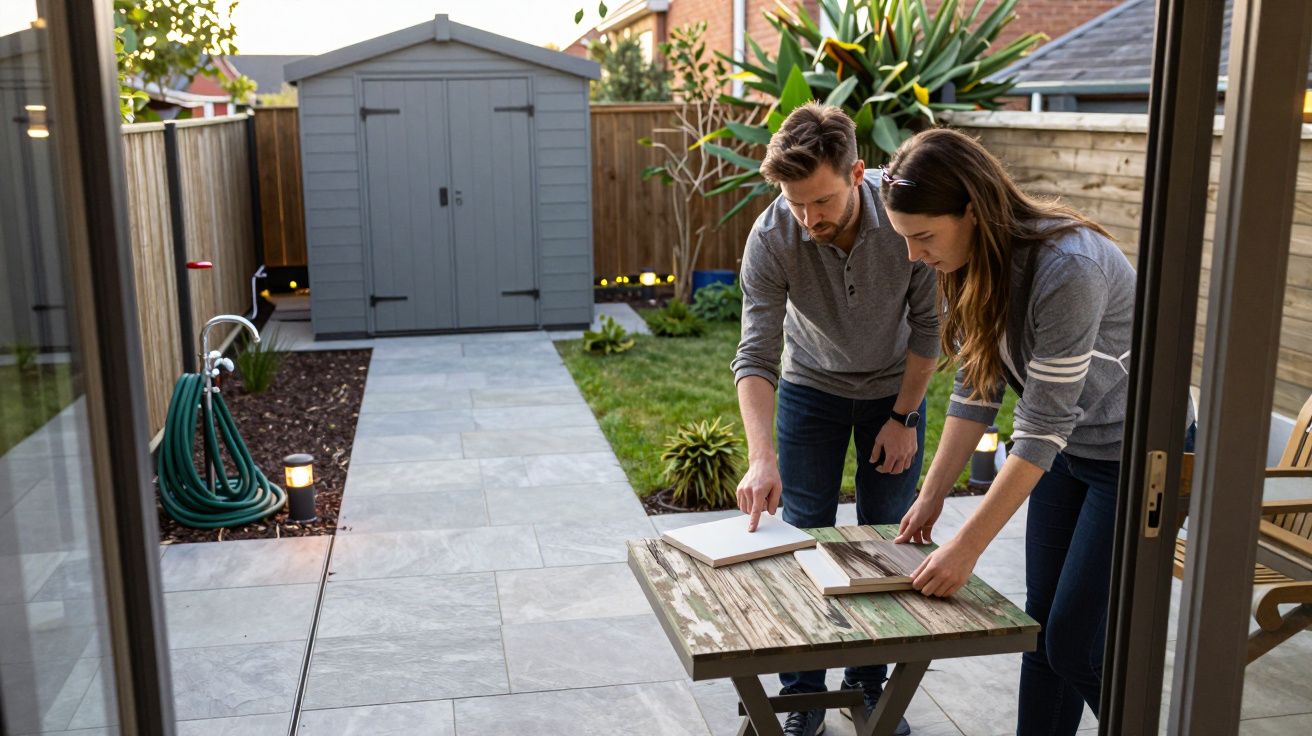
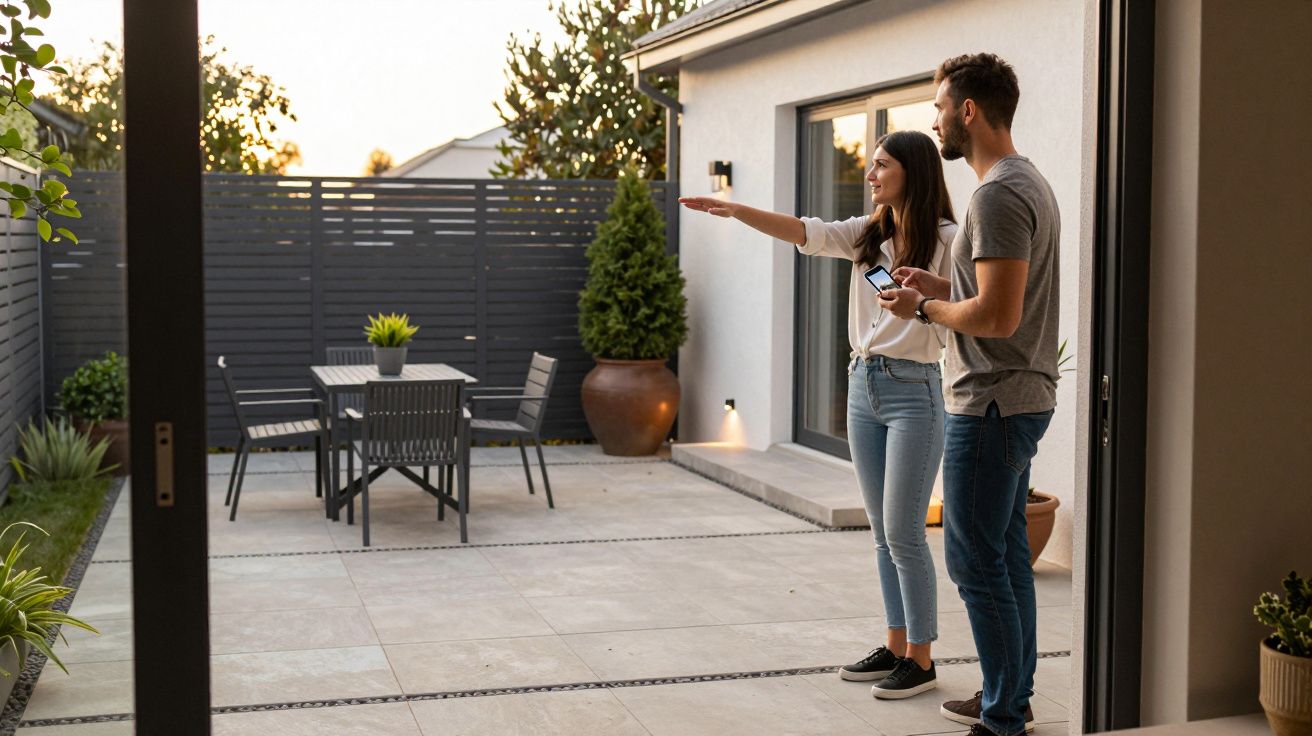
- Large-format slabs with minimal joint lines.
- Gravel for mid-garden areas (it visually recedes and drains well).
- One dominant timber tone, used consistently if decking is needed.
If you want contrast, do it with planting texture rather than multiple hard landscaping finishes.
A quick “boxed-in” checklist before you commit
Before finalising plans, walk the garden and ask:
- Where does my eye stop, and can that stop be softened?
- Can I create two zones instead of one big rectangle?
- Are my boundary lines too straight and too obvious?
- Am I repeating plants/materials, or collecting them?
- Will the garden still feel open in winter, when leaves drop?
Most of the time, fixing the boxed-in feeling is a matter of editing rather than adding.
FAQ:
- Do complete garden renovations always need planning permission in London? Not always, but rules around decking height, boundary treatments, outbuildings and drainage can trigger permissions or restrictions. It’s worth checking with your borough and, for terraces, any party wall considerations.
- What’s the fastest change that makes a small garden feel bigger? Breaking up a straight layout - for example, by offsetting the path and adding a mid-garden pause point - usually has the biggest impact for the least space.
- Are light fences better than dark ones in shaded gardens? Often, yes. Lighter or mid-tones can lift the whole plot and reduce the “closing in” effect, especially in north-facing or heavily overlooked gardens.




Comments (0)
No comments yet. Be the first to comment!
Leave a Comment