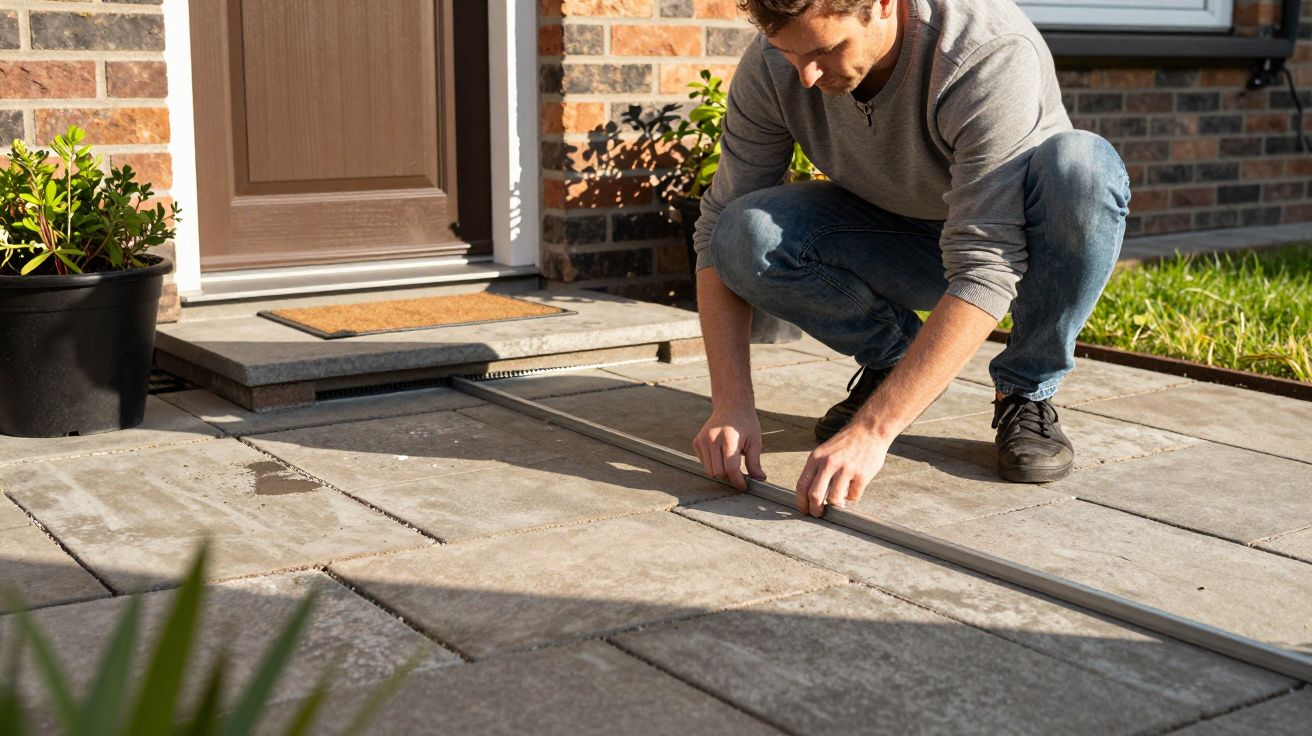
Hard landscaping is the quiet handshake of a home’s exterior: paving, walls, steps, edging and built-in structure that you can feel underfoot. For buyers, it’s also one of the fastest ways to signal property value improvements before they’ve even seen the kitchen. When it looks deliberate and well-finished, people stop thinking “jobs to do” and start thinking “this place has been cared for”.
You can watch the moment it lands. A viewer walks up the path, clocks a crisp edge line, a step that doesn’t wobble, a drain that’s doing its job - and their shoulders drop. They trust the rest of the house more, because the outside isn’t asking for immediate money.
What buyers are really judging (even if they don’t say it)
Most people can’t name a mortar joint or a sub-base depth, but they’re excellent at reading outcomes. They’re scanning for three things: straightness, solidity, and water control. If those are present, your hard landscaping reads as “quality” instantly, even in a small space.
The tell is rarely the expensive material. It’s the finishing decisions: where lines start and stop, how levels change, whether the garden looks like it was designed rather than “done over time”.
The “quality” features that land in the first 10 seconds
1. A proper path to the front door (that feels intentional)
A path that’s wide enough, evenly laid, and clearly directed is a strong signal that the rest of the plot has been thought through. Straight runs, consistent joint spacing, and neat transitions at the threshold do more than fancy stone laid badly.
Look for the small cues buyers love without realising: a clean border, no rocking flags, no patchwork repairs. If it’s lit at night with simple low-level lighting, it feels like a higher-end home before anyone rings the bell.
2. Crisp edging that holds its line
Edging is the “tailor’s seam” of a garden. It’s not glamorous, but it’s what stops paving and beds looking fuzzy. Metal edging, brick soldier courses, stone setts, or even a well-formed kerb all tell the same story: this space is maintained, not merely owned.
The instant giveaway of DIY fatigue is a lawn that’s creeping over blocks, or gravel migrating into borders. A hard edge that still looks sharp suggests the base and detailing were done properly.
3. Steps and level changes that feel safe (and look expensive)
Bad steps scream cost. Uneven risers, odd heights, loose slabs and slippery surfaces raise a safety question in a buyer’s head, and safety questions tend to become negotiation points.
Quality steps have consistent riser heights, a comfortable tread depth, and a clean nosing detail. If there’s a retaining wall involved, buyers read tight lines and tidy coping as “structural” - which often translates as “less hassle later”.
4. Drainage you don’t notice (because it works)
The highest compliment for drainage is that nobody mentions it. Buyers notice puddles by the door, staining on paving, algae lines where water sits, and downpipes that dump into nowhere. They don’t call it “drainage design”; they call it “damp” or “ongoing problems”.
Small hard-landscaping choices read as competence: a gentle fall away from the house, channel drains where needed, gravel strips at the edge, and downpipes tied into a soakaway. When water has a plan, the property feels more valuable because it feels lower-risk.
If a viewer can imagine getting in with shopping in the rain without stepping into a puddle, you’ve already won a point.
5. Retaining walls and raised beds that look engineered, not improvised
A tidy wall does two jobs at once: it adds useable space and it proves the garden isn’t going to move around. Buyers react well to walls with straight courses, consistent mortar colour, and a cap that finishes it properly.
Raised planters can do the same, especially in small gardens where structure matters. Timber can work, but masonry (or timber done neatly with clean joins and solid fixings) tends to read as longer-term.
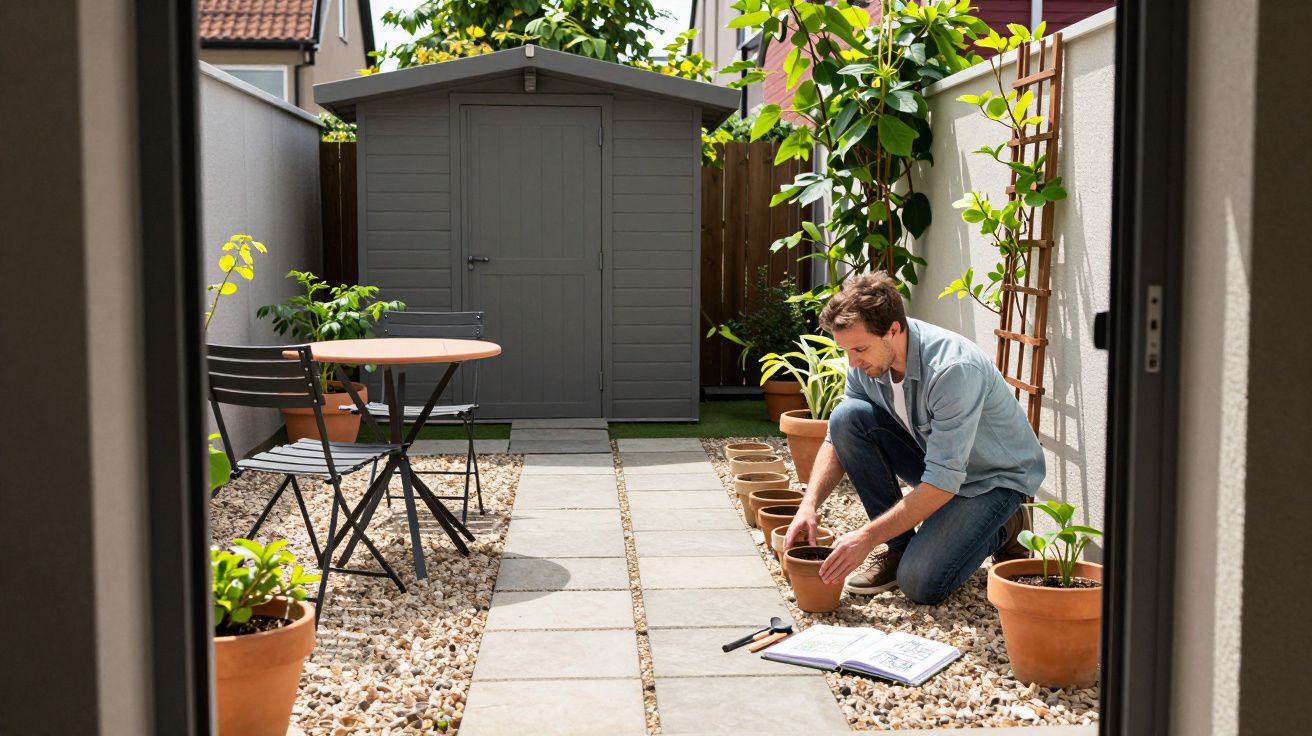
6. A patio with strong geometry and clean joints
Patios are judged like flooring: alignment, spacing, and the feel underfoot. Big wobbly slabs or inconsistent joint width are noticed in seconds, because they look like future relaying.
Buyers also love a patio that makes sense with the house. A clear “zone” for a table, a straight edge parallel to the rear elevation, and a threshold detail that doesn’t trap water all feel like higher quality - even if the material is modest.
7. Driveways that look like they belong to the house
A driveway is a giant surface, so it amplifies workmanship. Block paving with neat lines and a proper kerb, resin-bound gravel with clean borders, or well-laid permeable surfaces all read as premium when the edges are controlled and there’s no rutting.
The quality tell is often the transition: where the drive meets the pavement, where it meets the garage, and how it handles rain. If it’s obviously been designed for cars and weather, buyers assume the house has been upgraded sensibly elsewhere too.
The “cheap” tells that quietly knock confidence
You don’t need to do everything. But if you do something, avoid the finish that advertises shortcuts.
- Mixed paving types with no clear reason (it looks like repairs, not design)
- Loose gravel without proper containment (it migrates and feels temporary)
- Patchy pointing, crumbling joints, or weed-filled gaps
- Water sitting against walls, or downpipes dumping onto paving
- Random level changes with no steps, no ramps, and no visual logic
None of these is catastrophic alone, but together they create that buyer thought: What else has been done like this?
If you’re spending money, spend it where the eye trusts it
The best property value improvements via hard landscaping usually come from front-of-house clarity and back-garden usability. You’re not just making it pretty; you’re reducing perceived work.
A practical order that tends to pay back:
- Make access feel solid: path, steps, handrails if needed, lighting.
- Control water: falls, drainage details, downpipe solutions.
- Define edges and zones: borders, patio shape, tidy transitions.
- Upgrade surfaces last: swap materials only once the layout is right.
It’s the difference between “new paving” and “a home that’s been properly sorted”.
A quick buyer-proof checklist before photos and viewings
Walk the exterior like a stranger and look for the moments where your foot hesitates. That’s where buyers hesitate too.
- Does anything wobble, sink, or flex underfoot?
- Are there weeds in joints or staining that suggests standing water?
- Do edges look straight from the street and from the back door?
- Are level changes obvious and safe in low light?
- Does the garden have at least one clear “useable” area?
If you can answer those confidently, your outside space will read as quality long before anyone talks about square footage.
FAQ:
- Do I need expensive stone for it to look “high quality”? No. Buyers respond more to straight lines, tidy joints, solid edges and good drainage than to the brand or rarity of the material.
- What hard landscaping should I prioritise if I’m selling soon? Front path and steps first, then drainage and edging. They affect first impressions and reduce the sense of future work.
- Will adding a patio always increase value? Not always, but a well-proportioned, well-finished patio that connects cleanly to the house often improves usability and buyer confidence.
- Is gravel seen as cheap? Gravel can look smart if it’s contained with strong edging and kept even. Uncontained gravel that spreads reads as temporary and high-maintenance.
- What’s the biggest “quality killer” buyers notice outside? Poor water control: puddles, algae lines, staining, and downpipes dumping onto paving. It suggests ongoing problems and future cost.



Comments (0)
No comments yet. Be the first to comment!
Leave a Comment