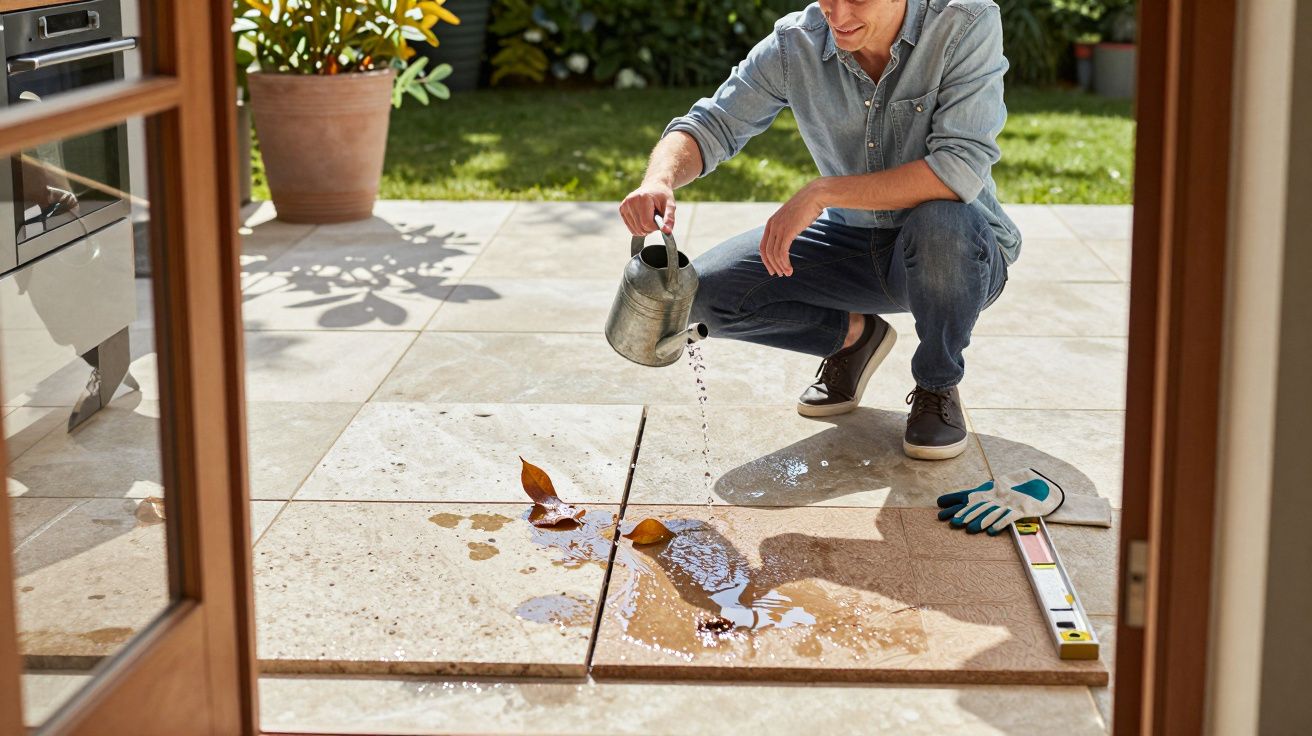
Hard landscaping is meant to be the calm, permanent bit of a garden - the paving you walk on, the edging that holds beds, the steps that don’t wobble. Yet the materials & surfaces you choose decide whether that calm looks quietly expensive in five years, or quietly tired. Most ageing problems aren’t dramatic failures; they’re slow, predictable changes that homeowners only notice once they’ve baked in.
I’ve stood on plenty of patios that looked flawless on install day, then went patchy, slippery, or oddly “busy” once the seasons got to them. Not because anyone made a foolish choice - but because the details that age badly are the ones nobody is trained to look for.
The problem isn’t wear. It’s how things wear.
A garden doesn’t just “get used”. It gets wet, then dries, then freezes, then bakes. Dirt embeds, algae takes hold, joints open, colours fade, metal stains, and the whole thing starts to look a bit like a collage of different decades.
The overlooked mistake is choosing hard landscaping features for how they look when clean and newly laid, rather than how they’ll look when they’re slightly grubby, slightly uneven, and seen from the kitchen window 300 times a year. If you plan for the ageing, the garden stays handsome. If you don’t, it goes scruffy in a way no pressure washer ever fully fixes.
The repeat offenders homeowners don’t spot until it’s too late
1) Pale, porous paving that shows every mark
Light sandstone, limestone, pale porcelain-look concrete, smooth sawn flags - they photograph beautifully. They also display tea stains, barbecue splatter, leaf tannins, and tyre scuffs like a white shirt at a curry night.
Porosity matters more than the name of the stone. If water can carry colour into the surface, it will. The patio doesn’t have to be “dirty” to look dirty; it just needs a few seasons of normal life.
Look for: samples wetted down in the yard. If the colour darkens dramatically when wet, it’s telling you how it will look half the year in the UK.
2) Resin-bound and “seamless” finishes that trap grime in a year
Resin-bound can be brilliant in the right setting: permeable, neat, comfortable. But the ageing is sneaky. Fine debris works into the texture, the binder dulls, and shaded areas darken in blotches that don’t match the “even speckle” you paid for.
The bigger issue is repair invisibility. When a section fails - a hot tyre twist, a poorly prepped edge, a bit of movement - patching rarely blends. You can end up with a garden that looks mended rather than maintained.
Ask upfront: what happens if I need to patch a square metre in three years? If the answer is “you’ll always see it”, believe them.
3) “Modern” jointing that cracks, shrinks, or grows weeds anyway
Homeowners are sold the dream of never weeding a patio again. Then polymeric sands crack on moving sub-bases, cement joints craze with freeze-thaw, and easy brush-in compounds detach at edges where water and frost love to work.
The trap is expecting one product to do two jobs: stay flexible and stay sealed. Most joints fail at the perimeter first - around drain covers, against walls, on the outer edge of the patio - and once the edge goes, the middle follows.
Quiet truth: you’re not choosing “weed-proof”. You’re choosing what kind of maintenance you’ll tolerate.
4) Smooth surfaces in shade: the slip you only discover in socks
A slick finish plus north-facing damp is a slow-motion hazard. The patio becomes a skating rink for half the year, and the fix (aggressive cleaning, harsh chemicals, added anti-slip coatings) often makes it look worse.
Texture is ageing insurance. A lightly riven surface, a decent grip rating on porcelain, or a subtle flame-texture on stone will still look intentional once algae tries to move in. Smooth + shaded rarely stays elegant.
Test: stand where the surface will sit, at the time you’ll actually use it. Morning shade and winter damp tell the truth.
5) Decorative aggregates that migrate and make everything feel untidy
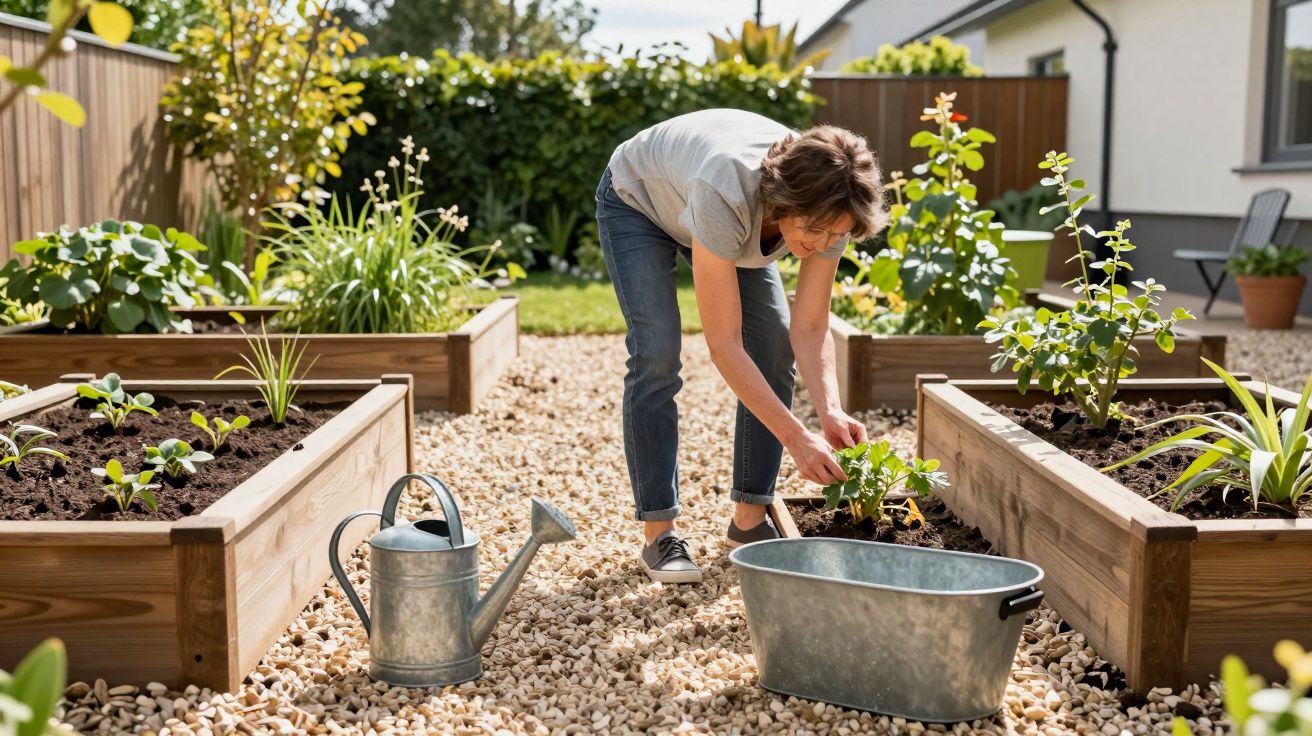
Loose gravel can look crisp. It can also end up in the house, in the lawn, in the guttering, and underfoot like marbles. Over time it “thins” in high-traffic lines and builds up in weird corners, which makes even an expensive garden read as messy.
The overlooked detail is containment. Without proper edging (and enough depth), gravel doesn’t age - it escapes.
Watch for: driveways and paths where tyre tracks have exposed membrane. That’s where your future is heading if the build-up is shallow.
6) Steel edging and corten that stains nearby paving
Corten can be gorgeous, but the early runoff stains are no joke. Standard steel edging can leave rust blooms that look like someone dropped a cup of tea and never wiped it up.
This isn’t “patina”, it’s chemistry. If rainwater carries iron oxide onto pale paving, it will write an orange story you can’t unsee.
Rule of thumb: pair rusting metals with darker materials & surfaces, or detail drainage so runoff doesn’t wash across your paving.
7) Big-format slabs laid dead flat (because they looked level)
Over time, dead-flat becomes puddle-flat. Water sits, joints darken, algae colonises the same rectangles, and the whole patio starts to look uneven even if it isn’t.
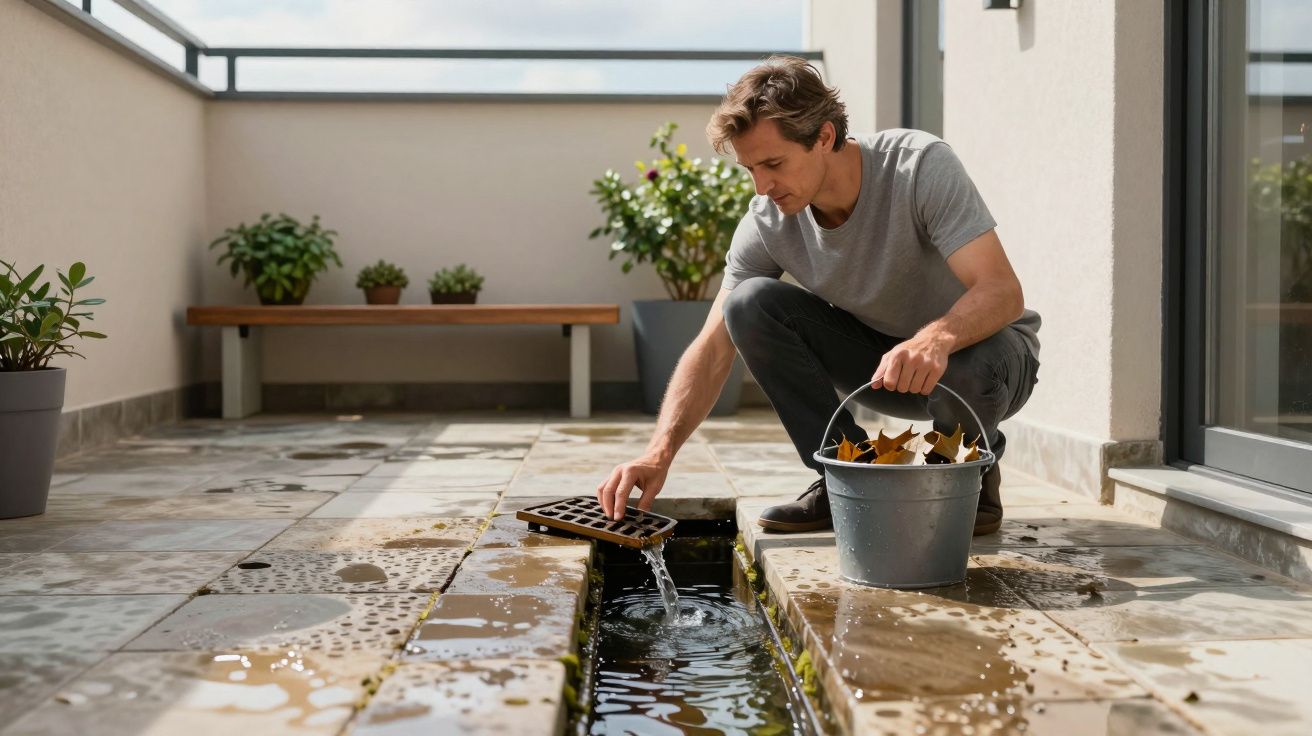
Falls are invisible when new and essential when old. A slight gradient, planned drainage routes, and thresholds that account for water movement are the difference between “low maintenance” and “constant scrubbing”.
If you only remember one thing: standing water is the beginning of every ugly.
How to choose materials & surfaces that still look good when they’re not perfect
You don’t need “premium everything”. You need forgiving surfaces, honest detailing, and a plan for water. That’s it.
Here’s a quick set of filters that saves money and regret:
- Choose mid-tones over extremes. Very pale shows stains; very dark shows limescale and dust. Mid greys, buffs, and mixed aggregates hide normal life.
- Prefer texture that reads intentional. Lightly riven stone, bush-hammered finishes, or grip-rated porcelain age more gracefully than shiny smooth.
- Detail the edges like they matter. Most failures start at perimeters: poor haunching, weak restraints, no drainage route.
- Be realistic about maintenance. If you hate weeding, don’t build a jointing system that depends on “just a quick tidy once a month”.
Let’s be honest: nobody stands in the builder’s merchant imagining February algae. That’s why the same few mistakes repeat.
“Most patios don’t fail in one moment - they slowly look worse until you stop inviting people to sit out,” a landscape contractor once told me. “Design for the dirty version. That’s the one you’ll live with.”
A quick “ageing check” before you commit
Take your top two choices and run this small test in your head, not just on Instagram:
- If this gets darker when wet, will it look blotchy for months?
- If this stains, can it be cleaned without damaging the finish?
- If one slab chips or settles, will a replacement match in colour and texture?
- If leaves sit on it for a week, will it forgive you?
- Where does the water go - actually go - on a heavy rain day?
A garden doesn’t need to stay pristine. It just needs to age in a way that still feels deliberate.
| Feature that ages badly | Why it happens | Better bet |
|---|---|---|
| Pale, porous paving | Staining + wet darkening | Mid-tone, denser stone or grip porcelain |
| Smooth finishes in shade | Algae + slipperiness | Textured/grip-rated surface |
| Rusting metals near pale slabs | Runoff staining | Darker paving or separated drainage |
FAQ:
- What’s the lowest-maintenance patio surface in the UK? Grip-rated porcelain is often the most forgiving day-to-day (less porous, easier to clean), but only if it’s laid properly with correct falls and good jointing.
- Do I need to seal natural stone? Sometimes. Sealing can reduce staining on porous stone, but it doesn’t stop algae or bad drainage. Test a small area and accept it’s a maintenance cycle, not a one-off fix.
- Why does my new paving look patchy after rain? Differential absorption: some slabs are denser than others, or bedding moisture is wicking up unevenly. It can improve as it dries out over weeks, but very porous materials often keep that “patchwork” look.
- Is resin-bound always a bad idea? No. It can perform well, especially on driveways, but it’s sensitive to installation quality and can age unevenly in shade and high-debris areas. Ask about cleaning and patch visibility before committing.
- How do I stop gravel looking scruffy? Use solid edging, correct depth, and consider stabilisation grids on paths. Plan a top-up every so often - gravel maintenance is mostly about containment, not cleaning.



Comments (0)
No comments yet. Be the first to comment!
Leave a Comment