You don’t notice it at first. You just feel that something’s off: the patio looks smaller than it did on the moodboard, the planting seems thin, and the “low-maintenance” promise has turned into weekend guilt. Garden transformations in london gardens are rarely simple because space is tight, light is unpredictable, and every decision has to work harder than it would in a big suburban plot.
Most regrets don’t come from taste. They come from sequence, assumptions, and skipping the boring questions until it’s too late to ask them.
The moment the dream meets the site
London gardens are full of surprises you can’t see in an Instagram reel: old footings, shared drains, a neighbour’s fence that dictates your light, and a slope that turns into a swamp after heavy rain. A transformation that looks effortless on paper can start arguing with the site the minute the first slab goes down.
The fix is rarely “spend more”. It’s “measure more, dig more test holes, and decide in the right order”.
The best garden is the one that behaves well in November, not the one that photographs well in June.
1) Paving first, drainage later (the classic)
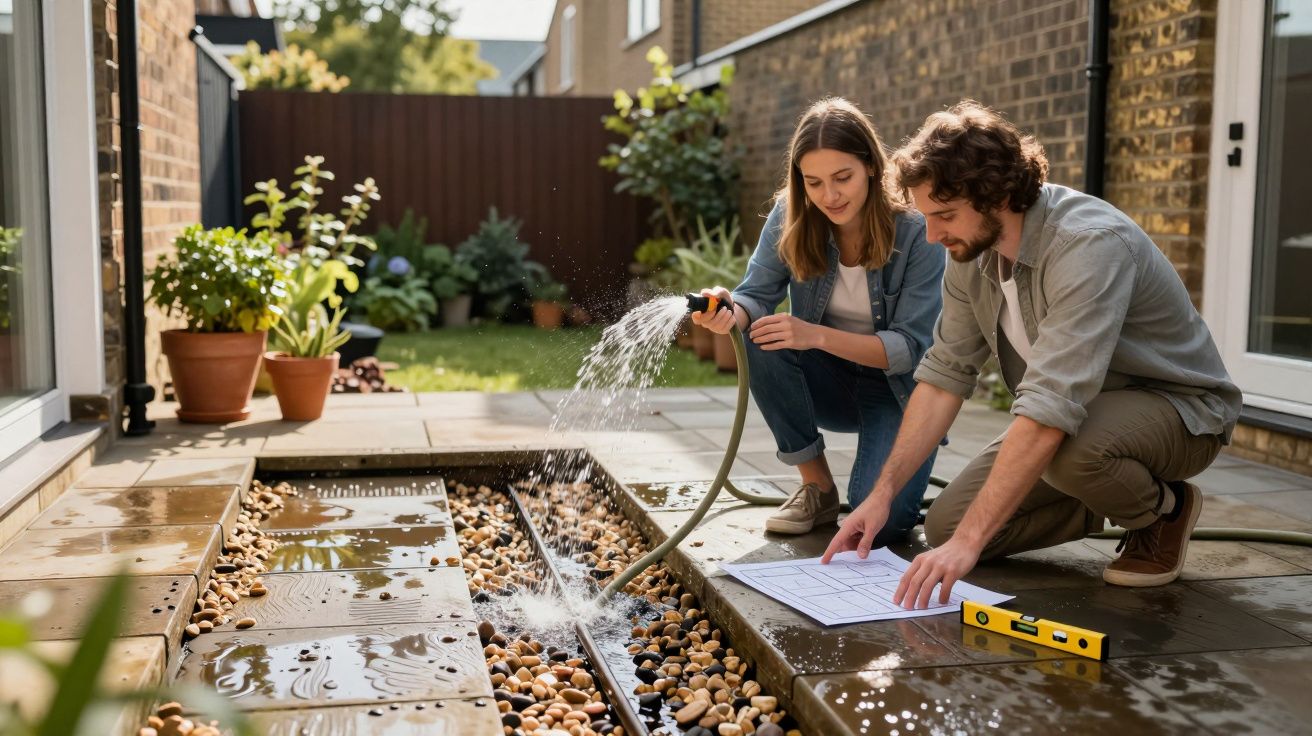
Homeowners often choose materials before they’ve worked out where water will go. In a city that now swings between downpours and hosepipe bans, that’s a costly way round. You get puddles that don’t drain, algae that makes stone slick, and planters that act like baths.
If you’re changing levels, adding a patio, or widening a path, treat drainage like part of the design-not an add-on.
- Ask where surface water currently goes in heavy rain.
- Build falls into hard landscaping (subtle slope away from the house).
- Consider permeable options where suitable, not just “prettiest slab”.
2) Forgetting the garden’s “boring” constraints: access, spoil, noise
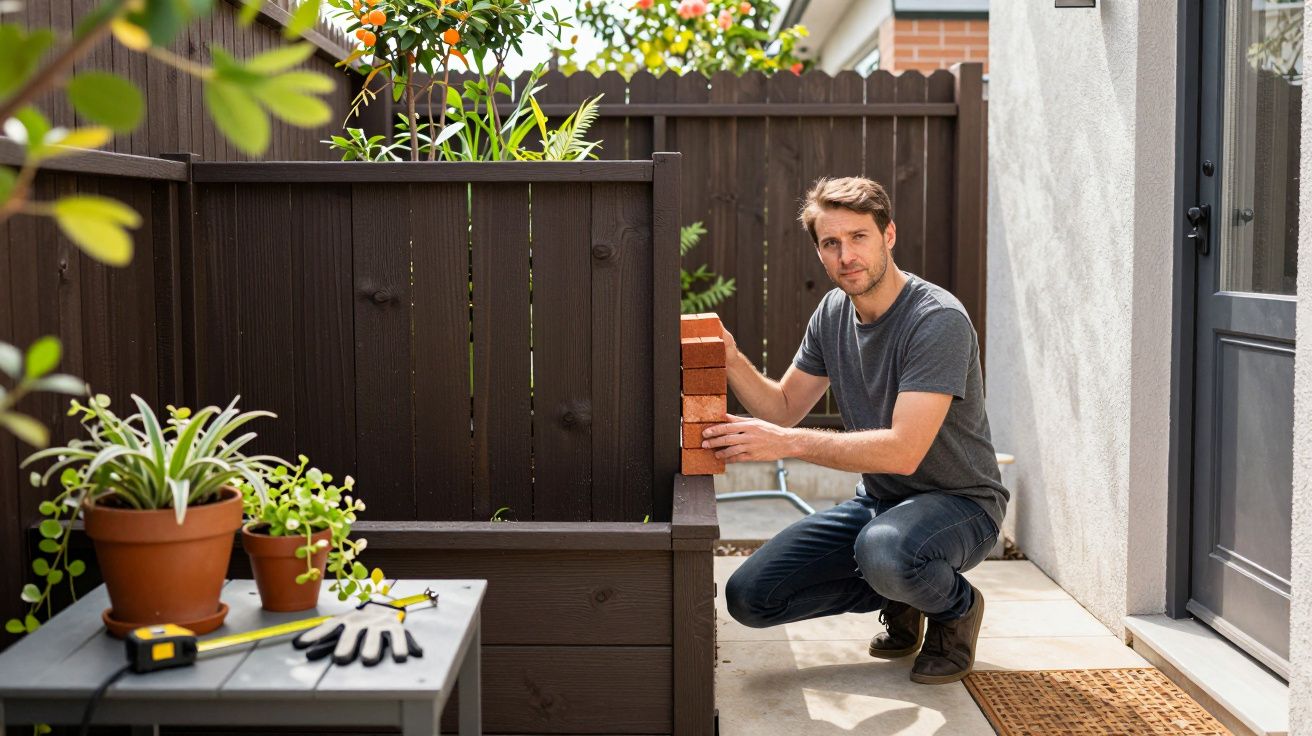
Many london gardens are effectively back-of-house work sites with no side access. That changes everything: materials may come through the house, waste has to be carried out by hand, and timelines stretch. People budget for the build, but not for the logistics.
This is where regret sounds like: “I didn’t realise they’d have to take the fence panel down,” or “The skip couldn’t go on the road without a permit,” or “We paid twice for waste removal.”
Before you commit, get clear on:
- How materials will get in (and what needs protecting inside).
- Where spoil and waste will go (and who’s paying per tonne).
- Whether neighbours need warning for access, scaffolding, or noise.
3) Overbuilding the space: too much hard landscaping, not enough softness
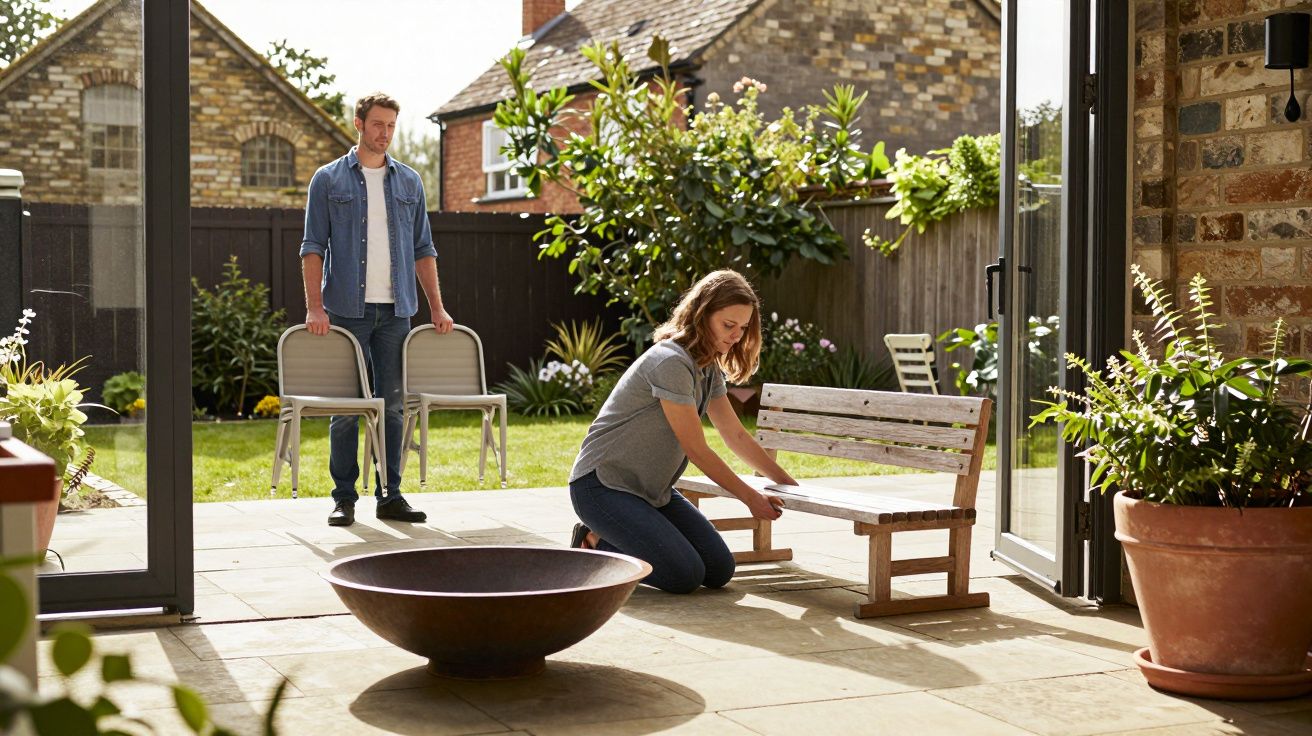
A small garden can’t carry endless zones without feeling chopped up. And a paved-over garden often looks “finished” on day one, then strangely flat by month three. The regret arrives when you realise you’ve created an outdoor room with no atmosphere.
Softness doesn’t mean fussy planting. It means giving the eye places to rest: layered greens, something that moves, and one or two structural plants that look good in winter.
A simple rule that helps: if everything is permanent (slabs, walls, sleepers), nothing can evolve.
4) Choosing plants for the label, not the microclimate
“Full sun” and “part shade” are not enough in London. A north-facing garden with high walls behaves like a different postcode. A south-facing patio can turn into a heat trap that crisps anything too delicate. Wind tunnels between extensions can shred leafy plants that looked “hardy” in theory.
Do a small reality check before buying in bulk:
- Which areas get sun at 9am, 1pm, and 6pm?
- Where does frost linger in winter?
- Where does the wind hit after you add fencing or a pergola?
If you’re unsure, start with a smaller planting plan and leave space to adjust after one full season.
5) Lighting as an afterthought (and then regretting the vibe)
In many london gardens, evening is when the garden is actually used: after work, after bedtime, with a cup of tea or a glass of something. If you don’t plan lighting early, you end up with either harsh security glare or a few token solar spikes that do nothing.
Good lighting isn’t complicated, but it’s deliberate. Think of it as “safe to walk” plus “nice to sit”.
- Light the route: steps, edges, thresholds.
- Add one soft focal point: a tree, a planter, a textured wall.
- Keep colour temperature warm, unless you want it to feel like a car park.
6) Not planning for growth (so it looks bare, then becomes a jungle)
New planting always looks sparse. That’s normal. The mistake is panicking and overfilling, then spending the next two years hacking things back and losing the shape you paid for.
Growth planning is also about boundaries. In tight london gardens, a plant that’s “fine” in a border can swallow your only seat by July.
When you plant, ask two questions:
- What size is this in 12 months?
- What size is it in 3 years, with the care I’ll realistically give it?
7) Buying “low-maintenance” features that actually demand maintenance
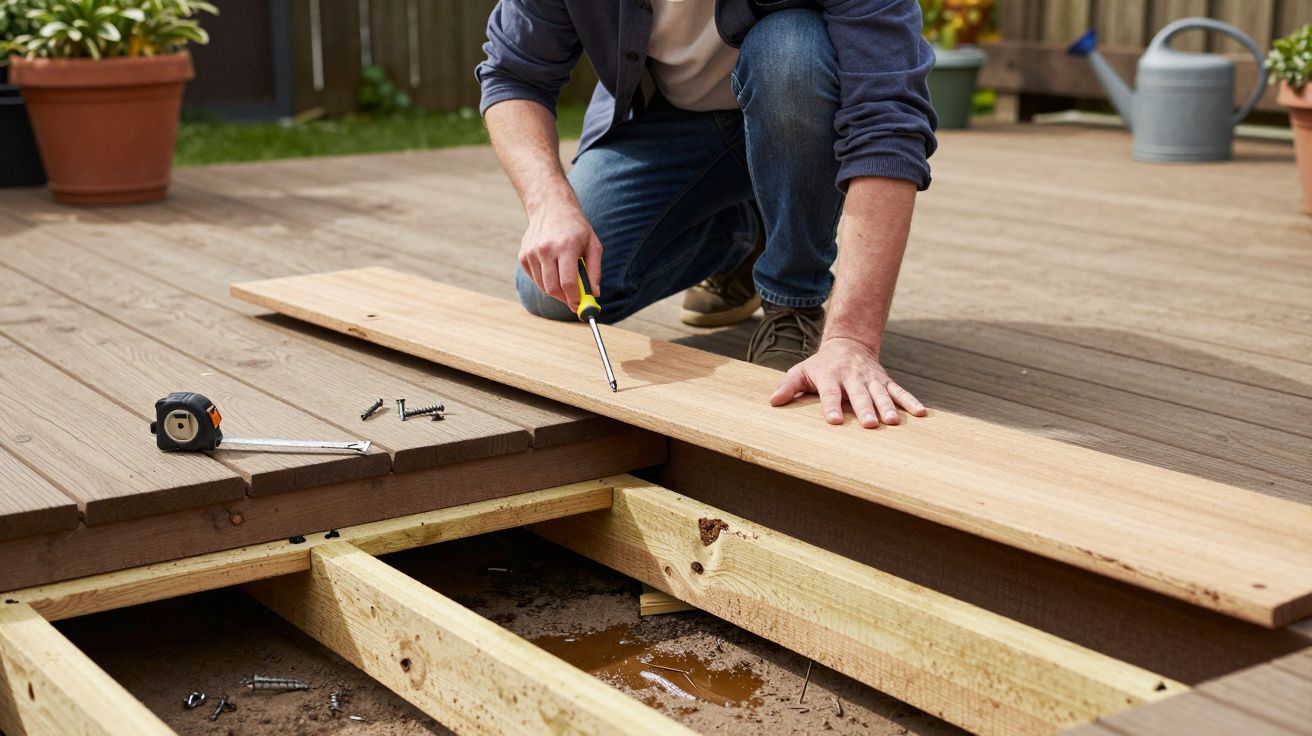
Artificial grass that smells, timber that goes grey and slippery, bargain composite that warps, cheap paint that peels after one winter. These regrets don’t show up at the reveal; they show up after the first hard season.
The most reliable low-maintenance choice is usually the one that can age without looking broken: materials that weather gracefully, planting that can be cut back hard, and surfaces that can be cleaned without special products.
A two-minute regret-check before you sign off the plan
If you can answer these clearly, you’re avoiding most of the pain:
- Where will rainwater go in a storm?
- What will this look like in February?
- How will I get a wheelbarrow of compost into the garden?
- Where do I actually sit, and what do I look at from there?
- What will I stop using first if maintenance slips for a month?
Quick guide: common regrets and the simplest preventative move
| Regret | What it usually looks like | Preventative move |
|---|---|---|
| Constant puddles | Slippery patio, soggy borders | Design falls + drainage early |
| Garden feels smaller | Too many zones, too much paving | Keep one open “breathing” area |
| Planting fails | Crispy pots / leggy shade plants | Map sun and shade across the day |
What “good” looks like, a year later
A successful transformation doesn’t just hold together; it settles. The paving stays clean because water moves away, the planting fills in without smothering everything, and the garden works on a wet Tuesday as well as a sunny Sunday.
If you’re planning garden transformations in london gardens, the win is not perfection on handover day. It’s a space that still feels easy to live with when the weather turns and life gets busy.
FAQ:
- Do I need planning permission for a garden makeover in London? Often not for like-for-like landscaping, but restrictions can apply for listed buildings, conservation areas, major level changes, decking height, or structures. Check with your borough before committing.
- What’s the biggest budget surprise people hit? Waste removal and access logistics (hand-carrying, permits, fence removal) are common extras that aren’t obvious from the design alone.
- Is it better to do everything at once or in phases? If drainage, levels, and electrics are planned from the start, phasing can work well-especially for planting, which benefits from real-season learning.



Comments (0)
No comments yet. Be the first to comment!
Leave a Comment