Outdoor space transformation in high-density residential areas can look like an easy win: a fresh patio, a tidy courtyard, better photos, higher rent. In practice it’s one of the quickest ways landlords create neighbour complaints, damp problems, and ongoing maintenance costs that swallow the “uplift” they expected. The mistakes are rarely dramatic-they’re small, repeatable oversights that compound in tight blocks where heat, shade, noise and drainage have nowhere to hide.
A garden doesn’t behave like an extra room. It’s a live system that shares walls, boundaries, light and water with other people’s homes, and in dense settings that interconnectedness sets the rules.
The “show home” mindset that backfires
Many transformations start with a brief that’s really about the listing: clean lines, low clutter, instant impact. The result often photographs well but performs badly for actual tenants who need shade, storage, drainage and somewhere to put a bike that isn’t in the kitchen.
The fastest tell is a design with no obvious “use case”. If the space can’t comfortably handle bin day, a barbecue (or an agreed no-barbecue policy), and a wet week in November, it’s not finished-just staged.
A good landlord garden feels boring on day one and brilliant on day 100, because it’s been designed for wear.
Mistake 1: Ignoring drainage and making water someone else’s problem
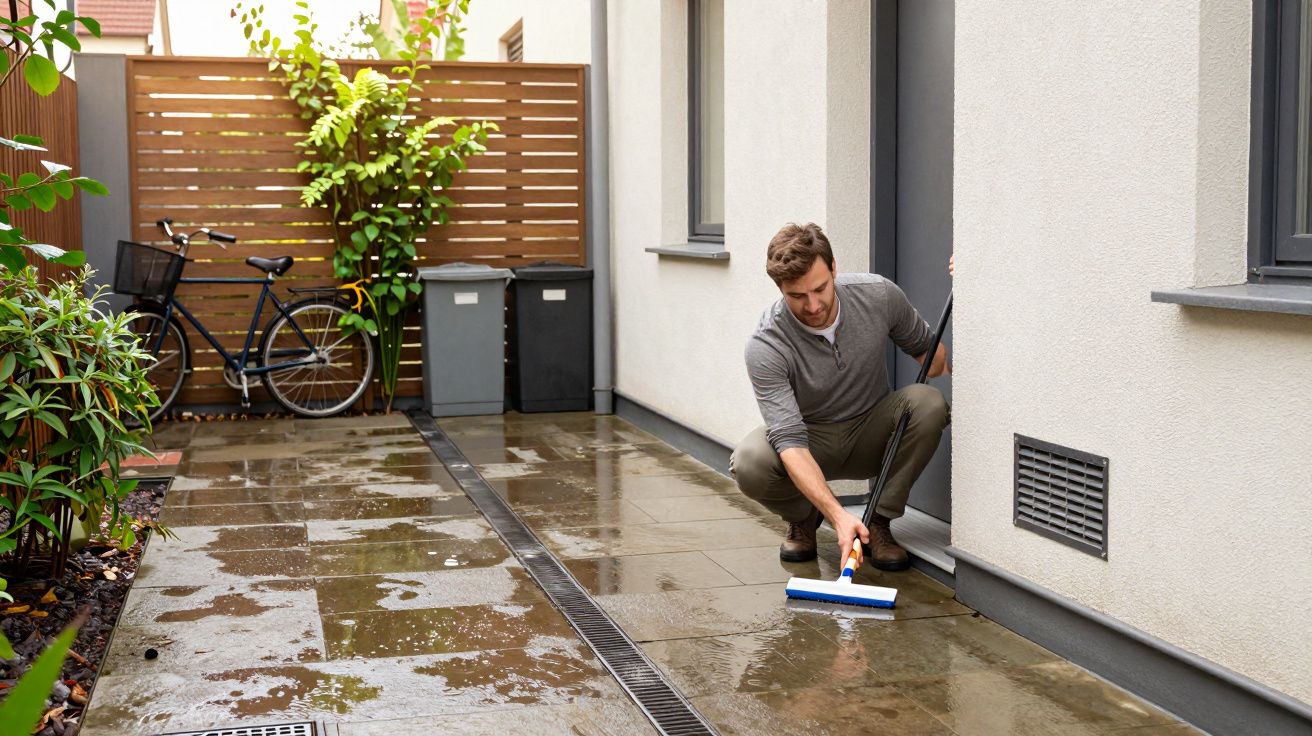
Hard landscaping is the common culprit. Swapping soil for paving without a drainage plan pushes rain towards the building, the neighbour’s wall, or the lowest point where it sits and turns green. In high-density sites, that often means damp at thresholds, flooded lightwells, and a slippery path that becomes a liability.
A quick check is simple: after heavy rain, where does the water go and how long does it linger? If the answer is “towards the house” or “I’m not sure”, you’re designing a future repair.
Drainage basics landlords skip
- Keep finished levels sloping away from the property (subtle, but intentional).
- Use permeable surfaces where possible, especially in small courtyards.
- Add a French drain or channel drain if water has limited escape routes.
- Don’t block air bricks or lower external ground levels without understanding the impact.
If you inherit a paved “pond”, resist the urge to add more sealant. Often the fix is regrading, not coating.
Mistake 2: Choosing materials that punish noise in a courtyard
Dense housing amplifies sound. Timber decking can drum. Loose gravel migrates and crunches at 6am. Thin fences act like speaker panels when someone shuts a gate. The issue isn’t tenants being unreasonable; it’s a space designed like a showroom in a place that behaves like a shared corridor.
This also affects tenant relationships. A single noisy surface can turn a neutral neighbour into a serial complainer, and once that starts, everything becomes “an issue”.
Quieter, tougher choices
- Large-format paving on a solid bed is usually quieter than decking.
- Rubber feet and soft-close hinges reduce the daily clatter more than you’d think.
- Planting (even modest) softens reflections and makes a space feel less “echoey”.
- If you need a screen, consider slatted panels with planting behind rather than one big resonant sheet.
Mistake 3: Over-privacy screens that kill light (and then the plants die)
Landlords often try to “fix” overlooked gardens with tall, solid fencing or heavy screening. In a tight site, that can steal the only usable light and leave tenants with a dim courtyard that grows algae, not herbs. It also triggers disputes if it breaches height rules or blocks neighbours’ light.
Privacy is valid, but it has to be designed with light angles and wind in mind. A breezy, bright courtyard is easier to keep clean and far more likely to be used.
Mistake 4: Planting that’s either too thirsty or too invasive for city conditions
High-density gardens run hotter in summer and drier under eaves and overhangs. Yet many makeovers use thirsty “instant lush” plants that fail the first time a tenant goes away for a week. At the other extreme, landlords add vigorous shrubs without considering spread, seed, and the cost of keeping them civilised.
A city-tough shrub can be a gift if it’s chosen responsibly and maintained with a clear plan. Buddleia, for example, copes with reflected heat and poor soil and pulls in pollinators, but it can self-seed aggressively near disturbed ground. If you use it, pick sterile or low-seed cultivars, prune correctly, and don’t let spent flowers scatter.
A simple urban planting brief that works
- Prefer drought-tolerant plants once established, especially in containers.
- Avoid anything that drops messy fruit or heavy leaf litter into drains and lightwells.
- Choose plants that tolerate shade if the space gets less than half a day of sun.
- Keep a clear access strip for maintenance so gardeners aren’t trampling beds to reach taps.
Mistake 5: Forgetting bins, bikes, and the “boring” logistics
Tenants notice the glamorous bits, but they live with the logistics. If there’s nowhere for bins that doesn’t block the path, the garden becomes a storage yard. If there’s no bike space, bikes end up against walls, scraping render and creating damp traps.
These are the parts of a transformation that prevent wear-and-tear claims later. They also reduce the temptation for tenants to improvise with flimsy sheds, tarps, and fixings into brickwork.
Include these from the start
- A discrete, ventilated bin area with easy access on collection day.
- Bike storage that doesn’t require carrying through the flat.
- An outdoor tap (protected from frost) and a simple hose point.
- External sockets only if installed safely and appropriately rated for outdoors.
Mistake 6: No written “how to use it” plan for tenants
A landlord may understand what’s been installed, but tenants inherit a mystery: “Can we use a fire pit?” “Who trims the hedge?” “Is that drain supposed to fill up?” In dense blocks, uncertainty becomes conflict-between flatmates, neighbours, and managing agents.
A one-page guide prevents most of it. It also protects your investment by turning a fragile makeover into a manageable routine.
If the garden relies on perfect behaviour, it’s not a design-it’s a gamble.
What to include in a tenant garden guide
- Watering expectations (and what “low maintenance” actually means).
- Any restrictions (BBQs, fire pits, smoking, noise hours if relevant).
- How to report issues (blocked drains, loose slabs, fence movement).
- Seasonal notes: what gets cut back, what dies back, what’s normal.
A quick pre-handover checklist
Walk the space like a tenant in the rain and in the dark. That’s when the sharp edges show up.
- Does water drain away from doors and walls?
- Are there trip hazards, wobbly steps, or slippery surfaces?
- Can two people pass each other with a bin?
- Is there at least one comfortable spot with shade or shelter?
- Are boundary fixes secure and reasonable for wind load?
If you can answer those confidently, your transformation is far more likely to stay attractive-and complaint-free-through real use.
FAQ:
- Do I need planning permission for garden changes in a dense area? Sometimes. Fencing heights, boundary walls, lighting, decking levels, and drainage changes can trigger rules or lease restrictions, especially in flats. Check your local authority guidance and any freeholder or management company requirements.
- What’s the biggest money-waster landlords repeat? Paving over everything without a drainage plan. It often leads to damp, algae, pooling, and expensive rework.
- How do I make a small courtyard feel private without blocking light? Use layered privacy: partial slatted screening, climbing plants, and strategic seating position rather than one tall solid barrier.
- Can “low maintenance” planting still look good for tenants? Yes, if you match plants to the light and heat of the site and keep the palette simple. Fewer, tougher plants usually outperform a crowded “instant garden” in a rental.





Comments (0)
No comments yet. Be the first to comment!
Leave a Comment