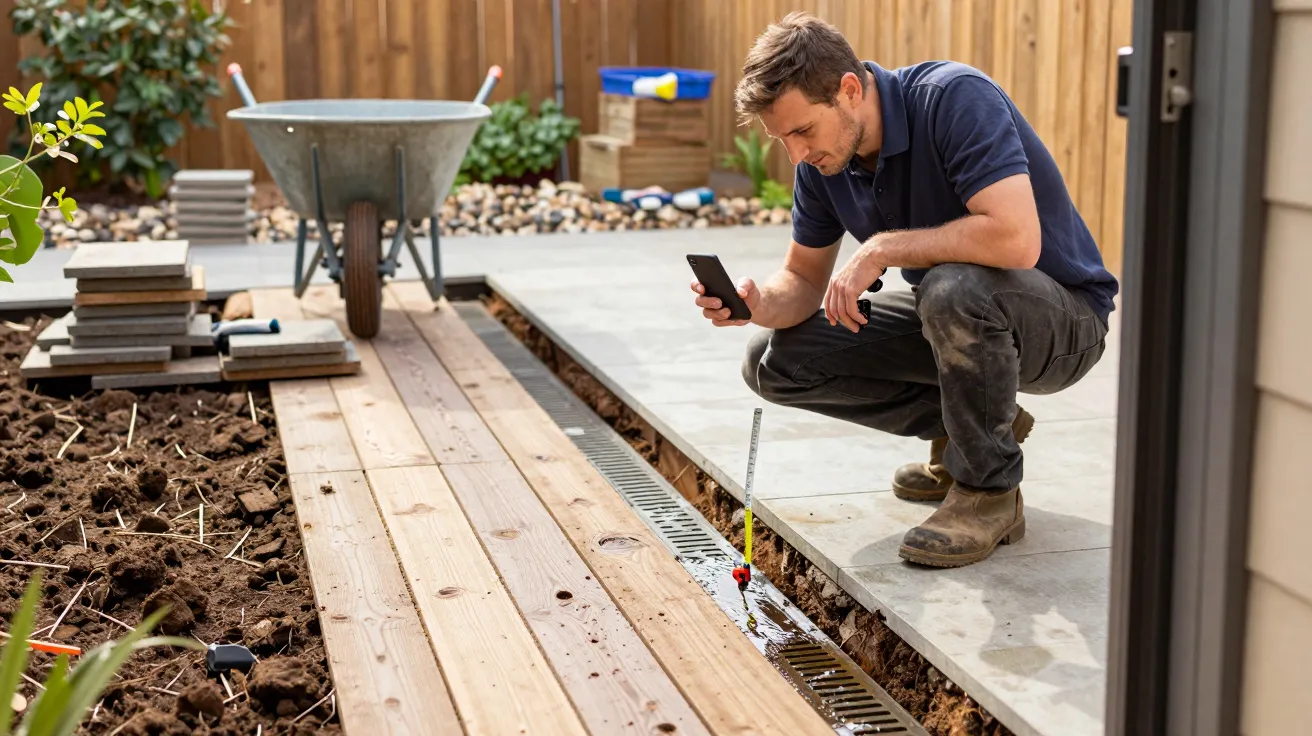
Complete garden renovations rarely look like those glossy before / after transformations while they’re happening. They look like churned soil, half-laid edging, a skip you keep walking into, and a patio that’s somehow both finished and not usable. It matters because this middle bit is where budgets wobble, decisions stack up, and a “quick tidy” becomes a season-long project.
I realised how little we talk about it the day the garden became a corridor. One narrow path from back door to bin, boards underfoot, tools migrating like they paid rent. Neighbours saw the dust sheets and asked what we were “doing with the space”, and I smiled like there was a calm plan instead of a spreadsheet and a mild sense of dread.
This is the rebuild phase: the part nobody posts because it’s chaos, and because chaos doesn’t translate well in square photos.
The unphotogenic middle that decides the outcome
The rebuild is when the garden stops being a place and becomes a worksite. Levels are being corrected, drainage is being redirected, and everything you thought was “just cosmetic” turns out to be connected to something structural. If you’re doing complete garden renovations, this phase is the difference between a garden that looks good on day one and a garden that still works in year five.
It’s also when timelines get real. Materials arrive when they arrive, weather does what it wants, and the “one more small change” piles up until it’s not small. The glamorous bit isn’t the new paving; it’s the boring decisions that stop the paving sinking.
A garden doesn’t fail on reveal day. It fails slowly, where water sits, where soil slips, and where you cut corners because you’re tired.
What chaos actually consists of (and why it’s normal)
The mess isn’t just mess. It’s multiple jobs overlapping because they have to.
- Spoil heaps waiting for removal, then waiting for access, then waiting for dry ground.
- Edges pegged out “temporarily” that end up dictating the final shape.
- Plants in pots longer than planned, quietly stressing in the wrong light.
- A patio base that looks finished but can’t be sealed because the forecast won’t behave.
- Deliveries you can’t store neatly, so your lawn becomes a warehouse.
And yes, it’s emotionally loud. You lose your usual routines: hanging washing out, letting the dog roam, having a cuppa outside. The space is present but unavailable, which is oddly draining.
The decisions that make or break it (made in boots, not on Pinterest)
In the middle, you’ll be asked questions you didn’t know were coming. Do you want the path 900mm or 1m? Is the step rise compliant? Where does the water go when it hits the patio? Each one feels minor until you see how it affects everything else.
A useful way to approach it is to separate “look” choices from “function” choices. Colours and finishes can be tweaked later. Levels and drainage are expensive to redo.
A quick grid for the rebuild phase
| Decision area | What to check | Why it matters |
|---|---|---|
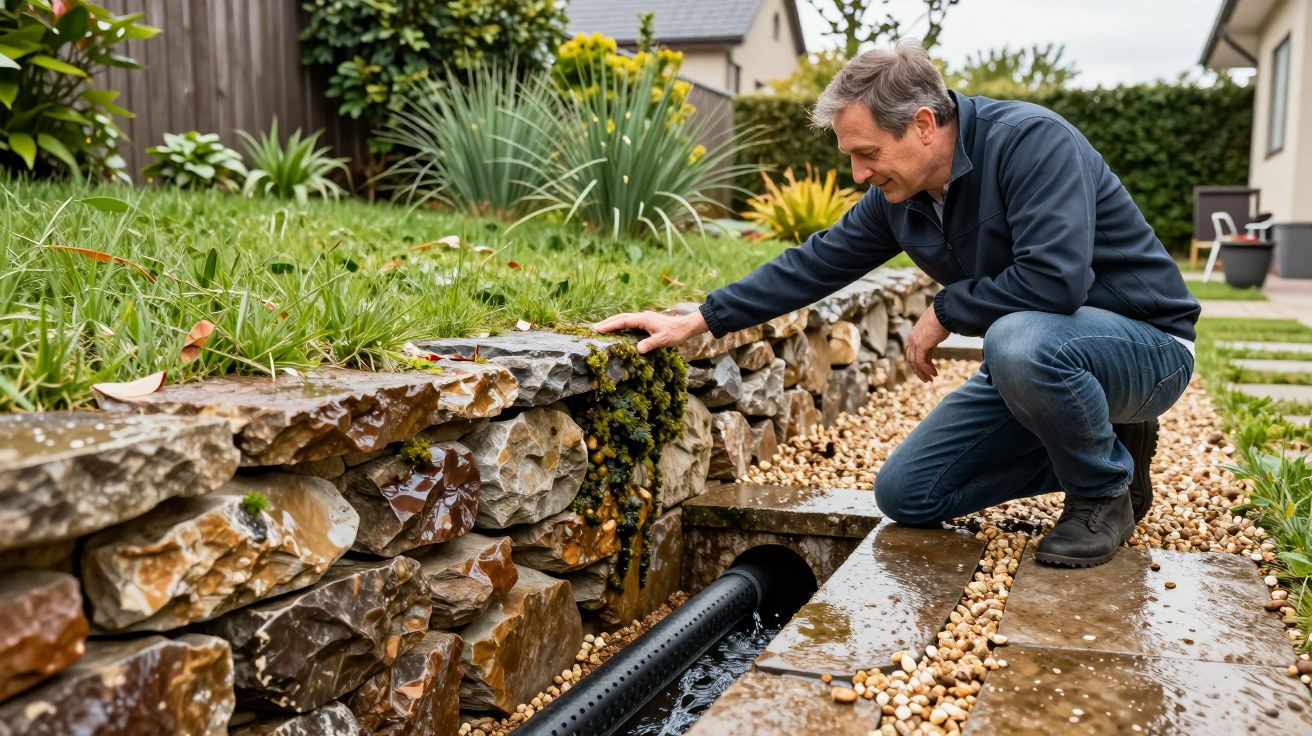
| Levels & falls | Where water runs in heavy rain | Prevents pooling, algae, movement |
| Sub-base | Depth, compaction, membrane | Stops sinking and wobbly slabs |
| Access & storage | Route for barrows, pallets, skips | Saves time and avoids damage |
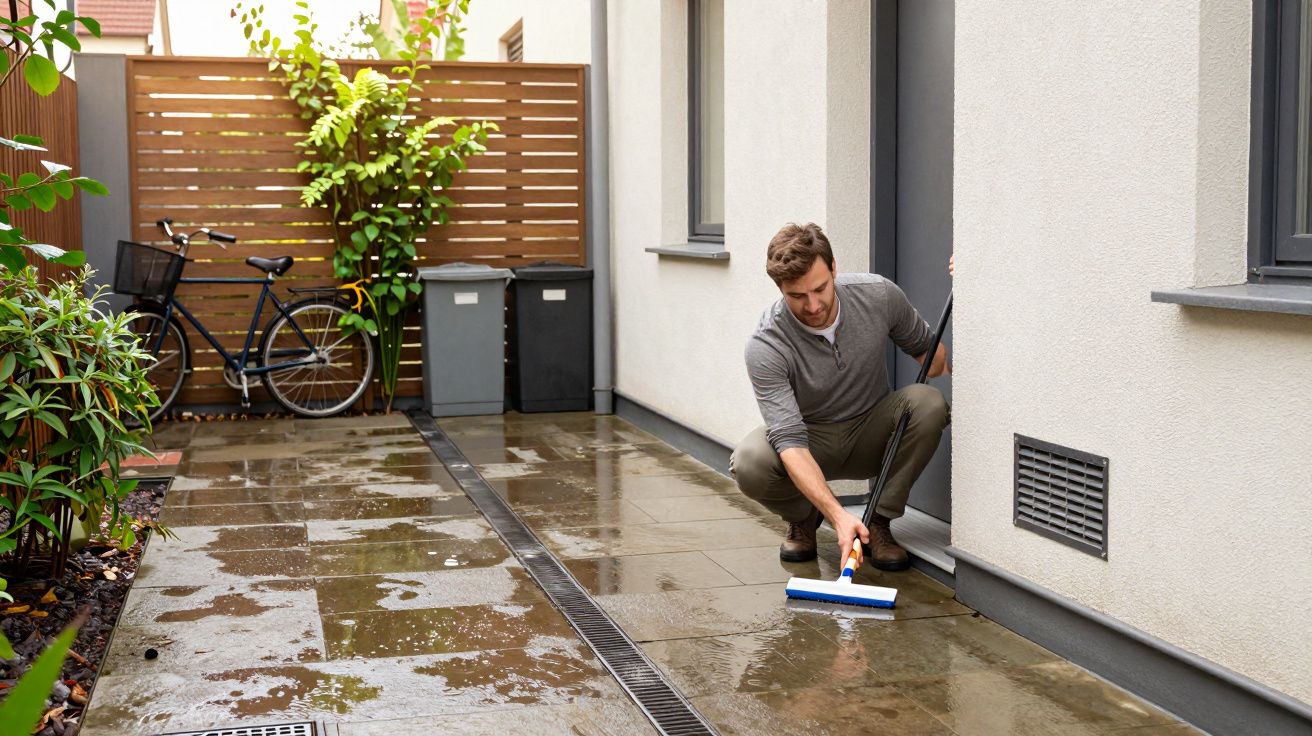
If you’re stuck, default to function. The nicest porcelain tile in the world won’t make up for a patio that holds water against your back door.
The “before” you need to record (so your after is real)
Before / after transformations are satisfying, but the rebuild phase is where you prove the “after” isn’t just a facelift. Take photos that feel boring now and priceless later: drain runs, pipe locations, cable routes, base layers, edging details. That’s not content; that’s insurance.
A simple routine helps: one wide shot, one close-up, one photo with a tape measure in frame. Drop them in a folder called “Under here” and you’ll thank yourself when you’re planting and suddenly wonder what’s buried where.
Common rebuild slip-ups (they’re predictable, which is good news)
- Rushing the base because you’re sick of the mess. The mess is temporary; the base is permanent.
- Ignoring where spoil goes. If there’s nowhere for it to sit, it will sit everywhere.
- Planting too early to make it feel “done”. New plants and heavy foot traffic are a cruel pairing.
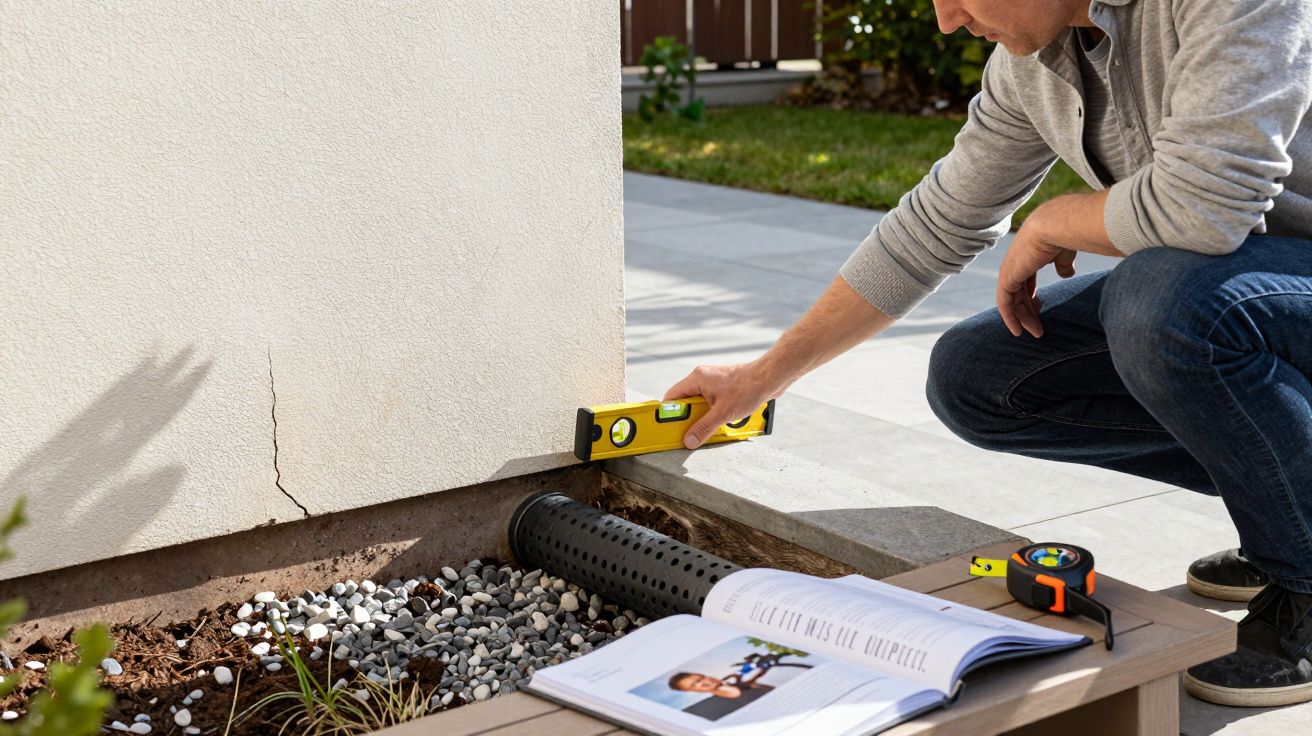
- Changing levels without thinking through thresholds. Doors, steps, and air bricks don’t negotiate.
- Forgetting lighting and power until the hard landscaping is finished. Retrofitting is always messier.
None of this is moral failure. It’s fatigue. The rebuild phase is a long string of small, practical choices made when you’re already tired of making choices.
A rebuild timeline that won’t crush your spirits
Chaos feels endless when it has no edges. Give it edges, even if they’re soft ones.
- Pick one “non-negotiable route” from door to bin and keep it safe daily.
- Set a weekly checkpoint: what’s done, what’s blocked, what needs ordering now.
- Keep one small area clean on purpose (a bench, a step, a corner). It’s a psychological handrail.
- Decide your “stop point” for the day before you start, so you don’t chase closure in the dark.
Let’s be honest: nobody keeps a pristine site all week. Aim for controlled chaos, not perfection, and you’ll protect your energy for the decisions that matter.
What you can tell yourself when it looks worse than when you began
If the garden looks dreadful halfway through, it’s often a sign the hard work is actually happening. Old concrete has been lifted, the ground has been opened up, and you’re seeing the bones. This is the price of getting a layout that drains properly, lasts longer, and feels intentional rather than accidental.
The part people post is the reveal. The part that delivers the reveal is the muddle: pegs, mud, arguments over edging, and the quiet triumph of a fall that finally sends water the right way. When your garden is in bits, you’re not “behind”. You’re in the only stage that makes the rest believable.
FAQ:
- How long should the rebuild phase take in complete garden renovations? It varies with access, weather, and scope, but allow longer than you think for groundwork and curing times; most delays come from bases, drainage, and waiting for dry conditions.
- What’s the single most important thing to get right? Levels and drainage. If water management is wrong, everything above it deteriorates faster and is harder to fix later.
- How do I keep momentum when it feels like a building site? Break it into weekly milestones (base done, edging set, first area finished) and keep one usable path and one clean corner so daily life doesn’t grind you down.
- Are before / after transformations misleading? Not intentionally, but they skip the middle. Take “during” photos of what’s under the surface so your after reflects sound build quality, not just a pretty finish.



Comments (0)
No comments yet. Be the first to comment!
Leave a Comment