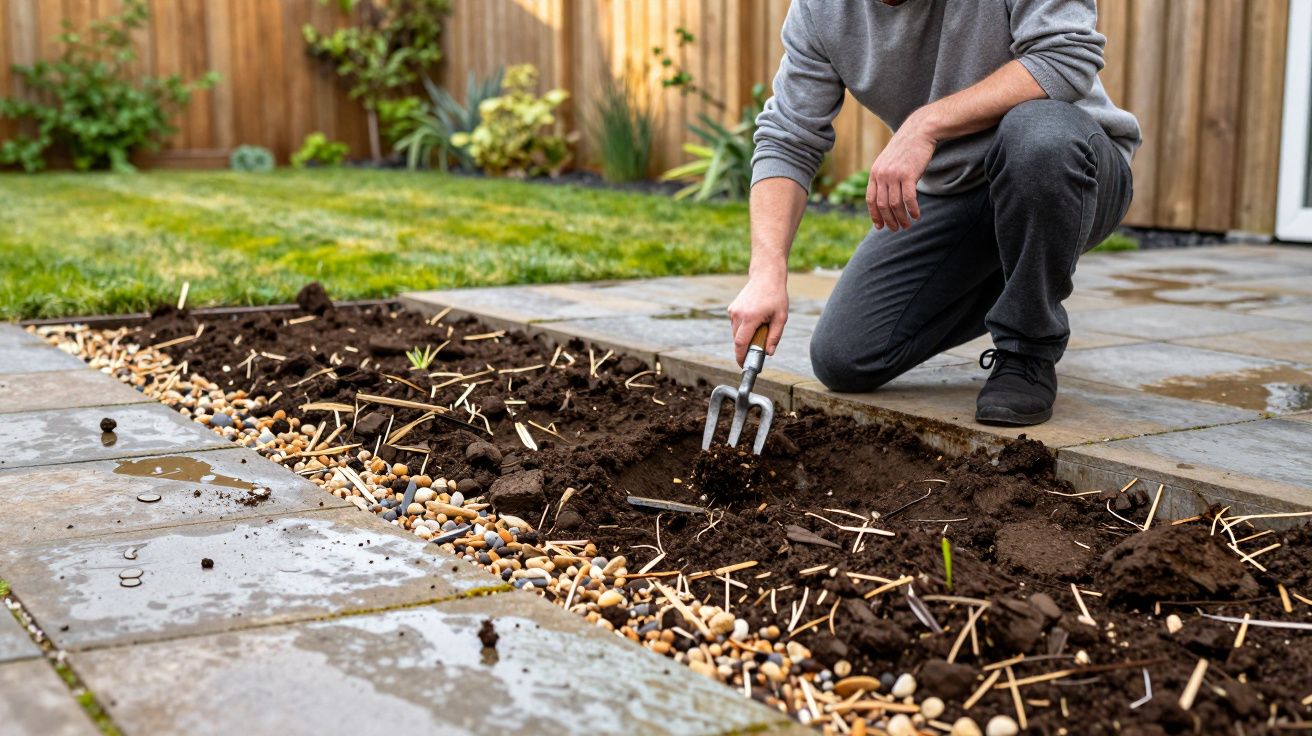
You don’t plan for complete garden renovations when you’re only trying to keep the lawn alive, yet that’s where many gardens end up once a few seasons start behaving differently. The trap is that we treat the fixes as time-restricted projects-one frantic weekend for drainage, one hurried fortnight for turf-when the problem is structural and keeps moving. If your plants are failing “for no reason”, it’s usually because the conditions have quietly changed, and the garden is simply responding.
I saw it this spring on a new-build edge in the Midlands: a neat patio, smart borders, and a strip of grass that had become either a sponge or a crust depending on the week. The owner had spent money on replacement shrubs and fresh topsoil twice, but the garden still looked tired. It wasn’t neglect. It was a system that no longer matched the weather, the shade, the soil compaction, and the way water now behaves.
When your garden isn’t “failing” - it’s adapting faster than you are
Gardens don’t collapse overnight. They drift. A tree canopy thickens, a neighbour adds an extension, a hedge starts pulling more moisture, and the sun shifts from “full day” to “two hot hours at midday”.
Then the bigger changes arrive: longer dry spells, sudden downpours, warmer winters that don’t properly reset pests and disease. What used to be a reliable planting plan becomes a gamble, and the garden starts asking for interventions you didn’t budget for.
The most expensive part is not the plants. It’s the correction work underneath: soil structure, drainage routes, levels, and access. That’s the rebuild nobody expects because it doesn’t look like a “feature” until it starts working.
The quiet indicators: what to notice before you start spending again
Before you buy another hydrangea, look for the repeating patterns. You’re trying to spot whether the garden’s foundations-light, water, and soil air-have shifted.
- Water lingers for more than 24 hours after heavy rain, especially in dips near patios or lawn edges.
- Cracks and hard crust form quickly in beds, and water beads then runs off rather than soaking in.
- Moss expands in areas that used to be fine, or lawn thins despite feeding.
- Plants scorch in the same places each summer, even when you water.
- Mulch disappears oddly fast, leaving soil exposed and hydrophobic (repelling water).
- Paving joints green up while nearby beds look dry-often a sign of runoff and misplaced water.
None of these mean you’ve done something wrong. They mean the site is behaving differently than it did when the garden was first planted.
Why “one quick fix” rarely sticks (and costs more than it should)
A common pattern is spending in slices: new turf one year, a soakaway the next, then replacing dead planting again. Each slice feels manageable and time-limited, which is exactly why it’s tempting.
But if you don’t address the cause-compaction, levels, shade, or water flow-you’re repeatedly paying for symptoms. Turf laid over compacted subsoil will always struggle. New shrubs planted into tired, airless ground will always need babying. A French drain installed without fixing where water is coming from often just becomes an underground puddle.
A rebuild sounds dramatic, but it’s often a tidy sequence of corrections: open up soil, manage water, then re-plant to match the new reality.
The reset approach: rebuild the garden as a system
Think like a paramedic rather than a stylist. Stabilise first, then beautify.
1) Restore air to the soil (the bit nobody photographs)
Soil that can’t breathe can’t handle rain or drought. The quickest improvement often comes from decompaction and organic matter, not more watering.
- Fork and lift (don’t turn) compacted beds, working in well-rotted compost.
- In lawns, hollow-tine aerate then brush in a sandy loam/top-dressing where appropriate.
- Stop walking on wet ground; it undoes a year’s improvement in minutes.
- Mulch thickly (5–8 cm) to buffer heat and reduce evaporation.
If you do nothing else, get this right. It changes how every other job performs.
2) Re-route water, don’t just remove it
In shifting conditions, the goal isn’t “dry” or “wet”. It’s control. You want water to go where it helps, and leave where it harms.
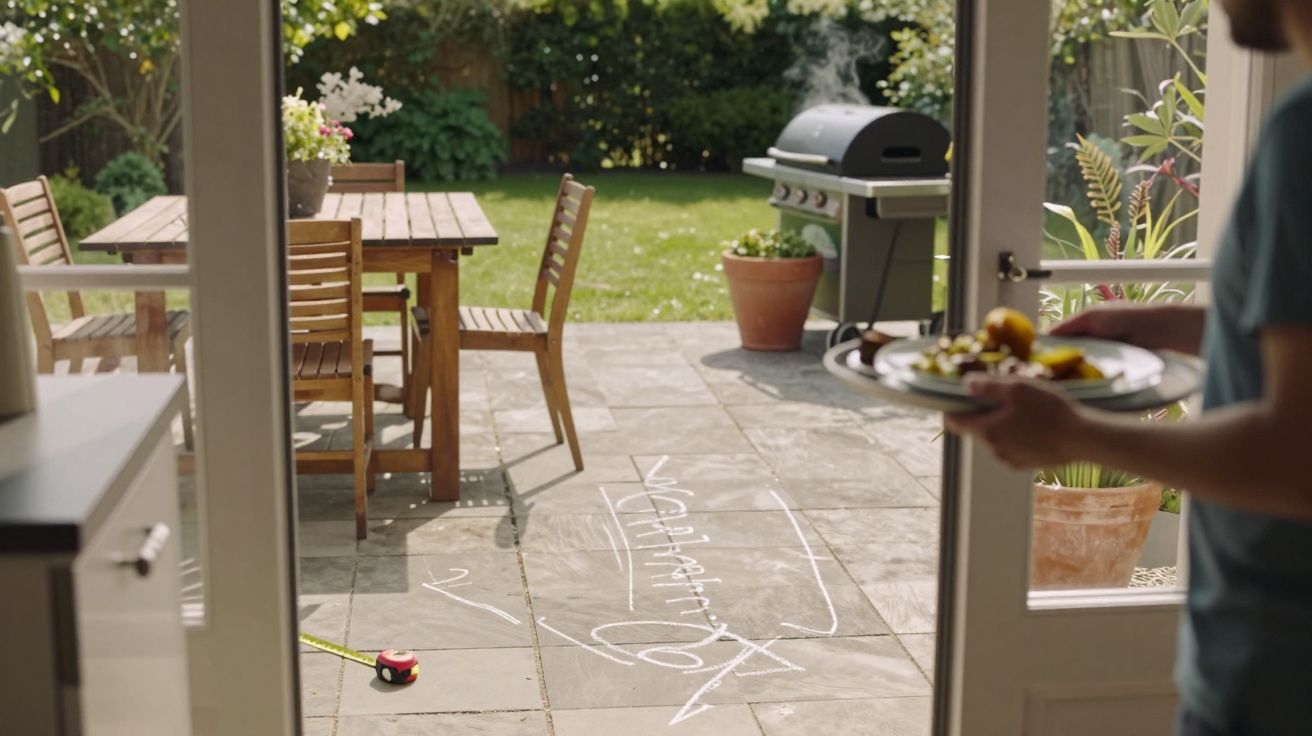
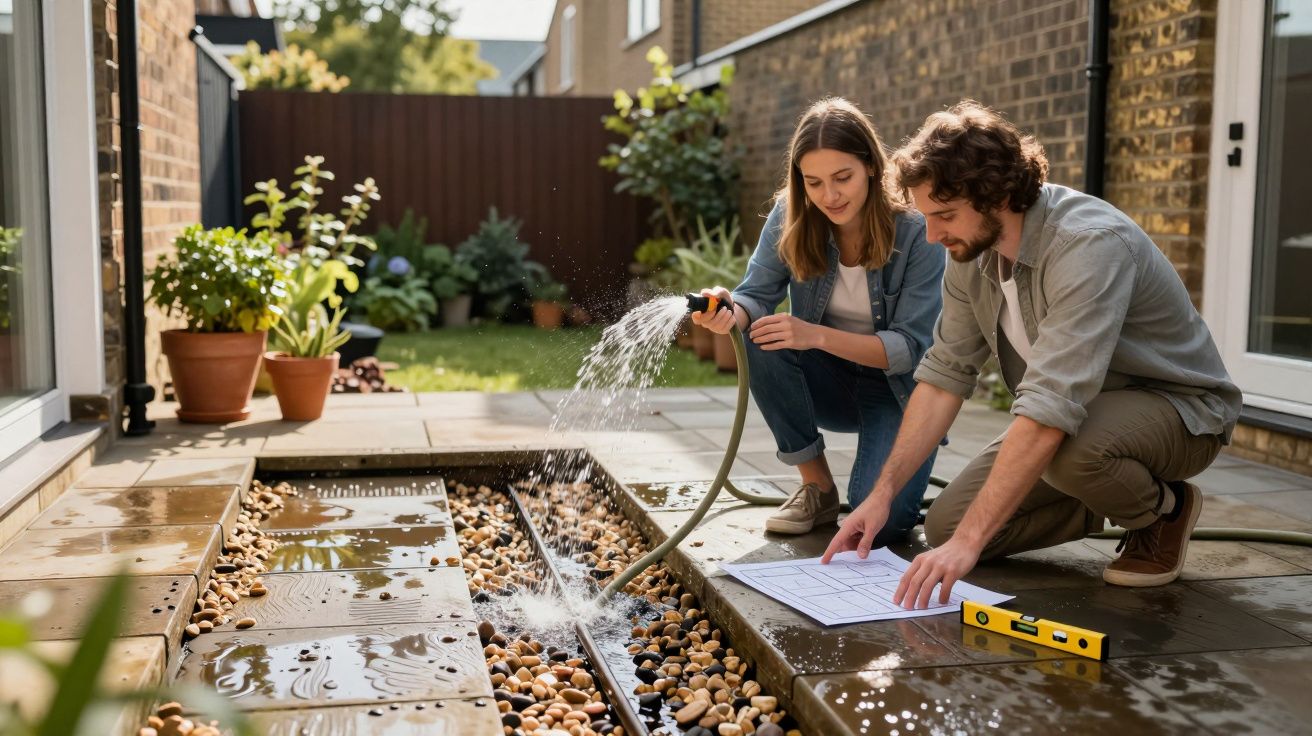
- Check levels: patios and paths should fall away from the house, and towards somewhere water can safely soak in.
- Add a gravel strip or shallow channel at bed edges to catch runoff from paving.
- Use rain gardens (a planted hollow) in suitable spots to hold and infiltrate storm water.
- Consider water butts, but treat them as capture-not drainage.
If the garden is on heavy clay, infiltration can be slow. That doesn’t mean defeat; it means designing for temporary storage and slow release.
3) Plant for the microclimate you now have, not the one you remember
This is where most “time-restricted projects” go wrong: we replant the same palette that failed, then blame the weather again.
Start with observation. Where is it wind-scoured? Where is it reflected heat off fences and paving? Where is shade now permanent?
- For hotter, drier pockets: Mediterranean herbs, ornamental grasses, salvias, euphorbias, cistus (where sheltered).
- For wet, heavy spots: iris, cornus, filipendula, ligularia, moisture-tolerant ferns (depending on light).
- For part-shade that’s growing: hellebores, epimedium, geranium macrorrhizum, hydrangea paniculata (more sun-tolerant than macrophylla).
The aim is fewer rescues. A garden that matches its conditions needs less urgency, less replacing, less spending.
The budgeting blind spot: what to price before you commit
Complete rebuilds get expensive when you discover the hard costs too late. Price the unseen first, then choose finishes.
| Hidden cost area | What it includes | Why it matters |
|---|---|---|
| Levels & access | Disposal, skips, machinery access, making good | Sets the true scope and timeline |
| Drainage & water | Channels, soakaways/rain gardens, pipework | Prevents repeat failures in lawns and beds |
| Soil rebuild | Compost, mulch, aeration/top-dress, edging changes | Improves survival rates and reduces maintenance |
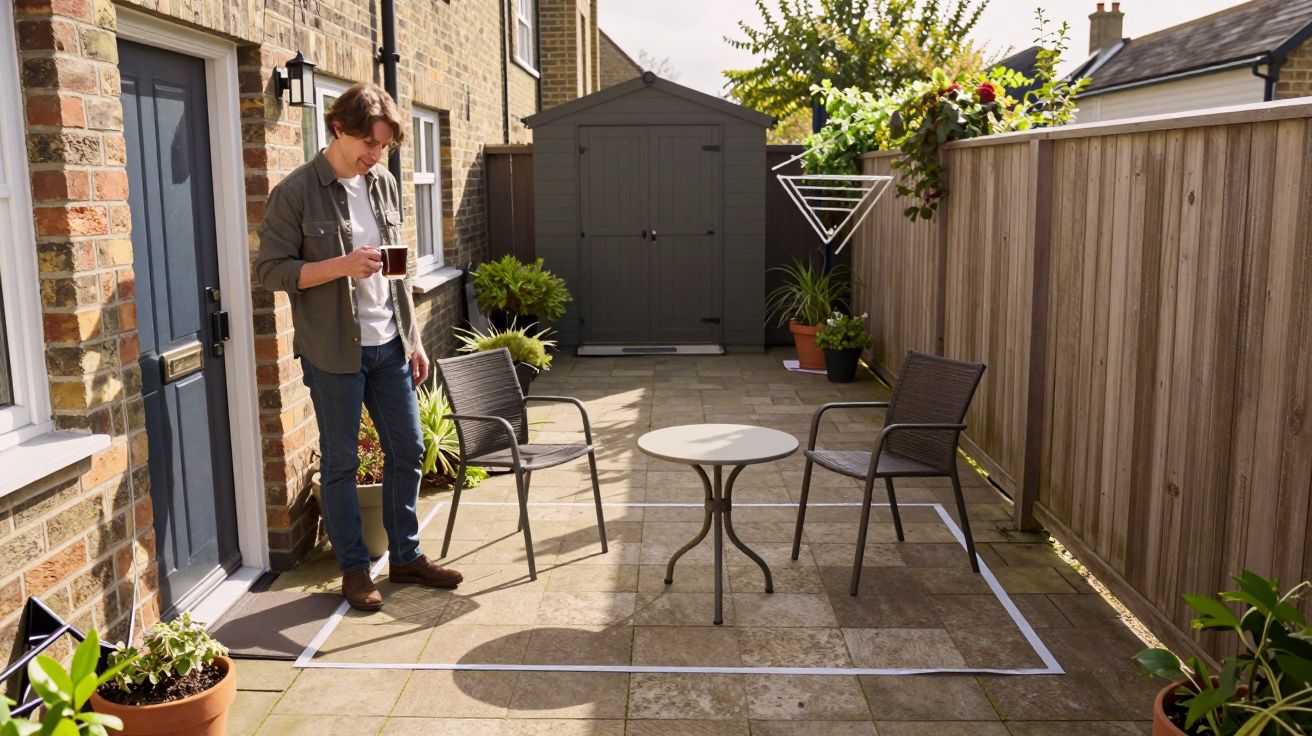
A useful rule: if you’re changing levels or adding drainage, it’s no longer a “quick refresh”. It’s a renovation, and the budget should reflect that before you start.
A practical way to avoid the spiral: phase the work without pretending it’s “just a weekend”
You can still stage it. Just stage it logically.
- Season 1 (now): fix water flow, stop compaction, mulch heavily, remove the worst performers.
- Season 2 (autumn/spring): replant the backbone (trees/shrubs), adjust bed shapes, add groundcover.
- Season 3: refine-pots, lighting, furniture, the things you actually see every day.
This approach keeps cashflow manageable without locking you into endless emergency weekends. It also means your planting goes into improving soil, not into a losing fight.
The surprising upside: the rebuild often looks calmer, not busier
When conditions shift, a successful garden usually becomes simpler: fewer fussy plants, more structure, more mulched ground, and clearer routes for water and feet. It looks intentional because it stops apologising for itself.
If your garden keeps demanding urgent, time-boxed interventions, take it as a signal. The smartest spend isn’t another round of replacements-it’s rebuilding the underlying conditions so the garden can do what it’s meant to do: carry on without drama.
FAQ:
- Can I do a partial renovation without it looking unfinished? Yes. Start by reshaping and mulching beds, then plant a small number of structural shrubs or grasses. A mulched, well-edged bed looks deliberate even before it’s fully planted.
- How do I know if I need drainage or just better soil? If water sits for more than 24 hours after rain, suspect drainage/levels. If it runs off and won’t soak in, suspect compaction and hydrophobic soil. Many gardens have both, which is why soil work and water routing are often paired.
- Is it worth saving existing plants during a rebuild? Often, yes. Lift and heel-in (temporarily plant) anything healthy, then replant once soil and water issues are addressed. Saving mature plants can free budget for groundwork.
- When is the best time to start? If waterlogging is the issue, start in late summer into autumn when soil is workable but not bone dry. For planting, autumn and spring are safest. Avoid major soil work when ground is saturated.

Comments (0)
No comments yet. Be the first to comment!
Leave a Comment