
Garden construction is the bit where your dream patio becomes a trench, and your project context suddenly matters more than your Pinterest board. It’s used in real gardens, on real soil, with real access constraints-and it’s relevant because this is the phase that decides whether the finished space drains properly, lasts through winters, and doesn’t quietly cost you twice.
It rarely looks like progress. It looks like your garden has been “started” and then abandoned, with pallets, spoil heaps, and a path you can’t use without stepping over something sharp. This is the part nobody posts.
The week your garden stops being a garden
It starts innocently: a delivery, a few tidy stacks of materials, a sense of momentum. Then the first cuts go in and the whole place turns inside out. Turf gets peeled back like a lid, borders get edged, and suddenly you’re living next to exposed sub-base and a skip that seems to breed.
The disruption isn’t just mess; it’s the constant small friction. The hose is always in the wrong place. The side gate won’t open fully. You keep calculating whether you can get to the shed without twisting an ankle. And in the background, you’re learning what your garden actually is-levels, runoff, clay, old rubble-rather than what it looked like from the kitchen window.
What’s really happening under the surface
The unglamorous truth is that the “middle” of garden construction is mostly invisible work. It’s measuring, setting out, digging, and building the boring layers that stop the pretty layers failing.
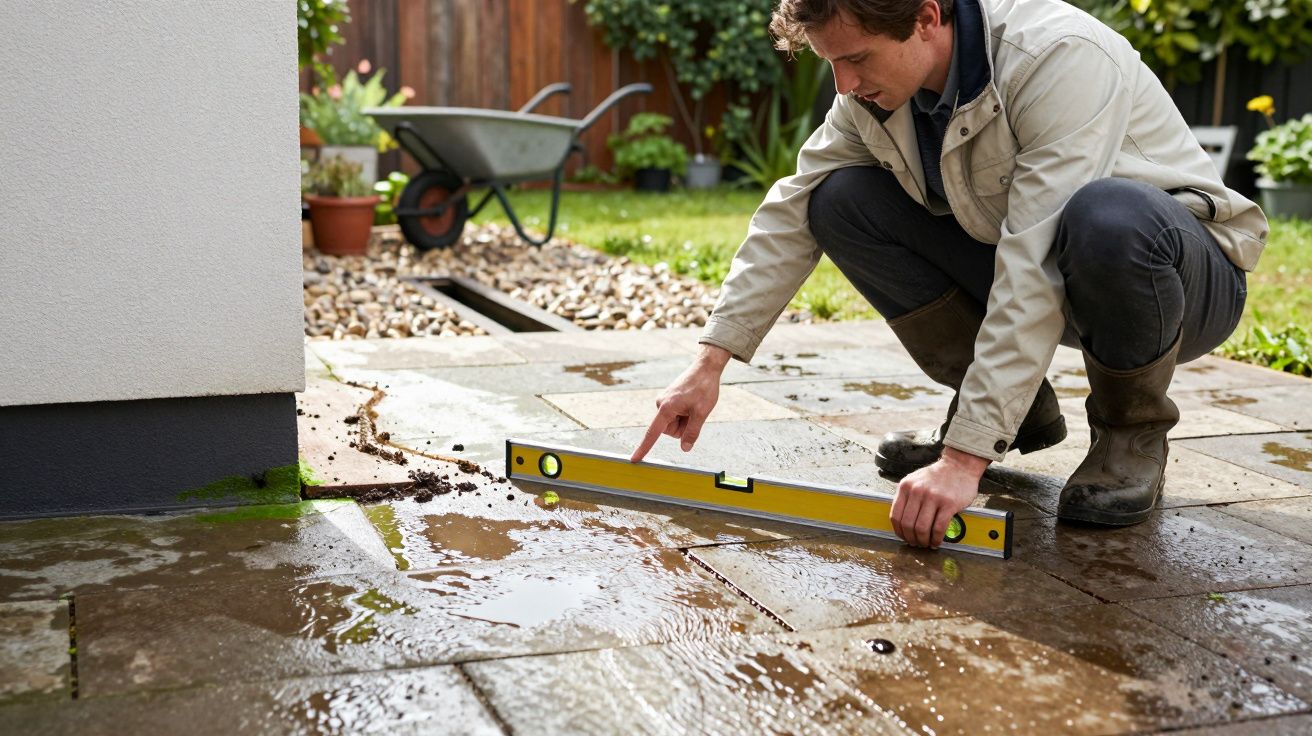
A good team will treat levels like law. They’ll talk about falls away from the house, threshold heights, and where water is meant to go when it can’t soak in fast enough. If you hear a lot about millimetres, that’s a good sign; if you hear “we’ll sort it later”, that’s where later becomes cracking, rocking slabs, or a lawn that squelches forever.
Here’s what tends to be happening while it looks like chaos:
- Formation and excavation: removing soft material until there’s something stable to build on.
- Setting falls and finished levels: working backwards from doors, drains, and edges so nothing ends up too high (or trapping water).
- Sub-base and compaction: the repetitive, noisy part that stops settlement.
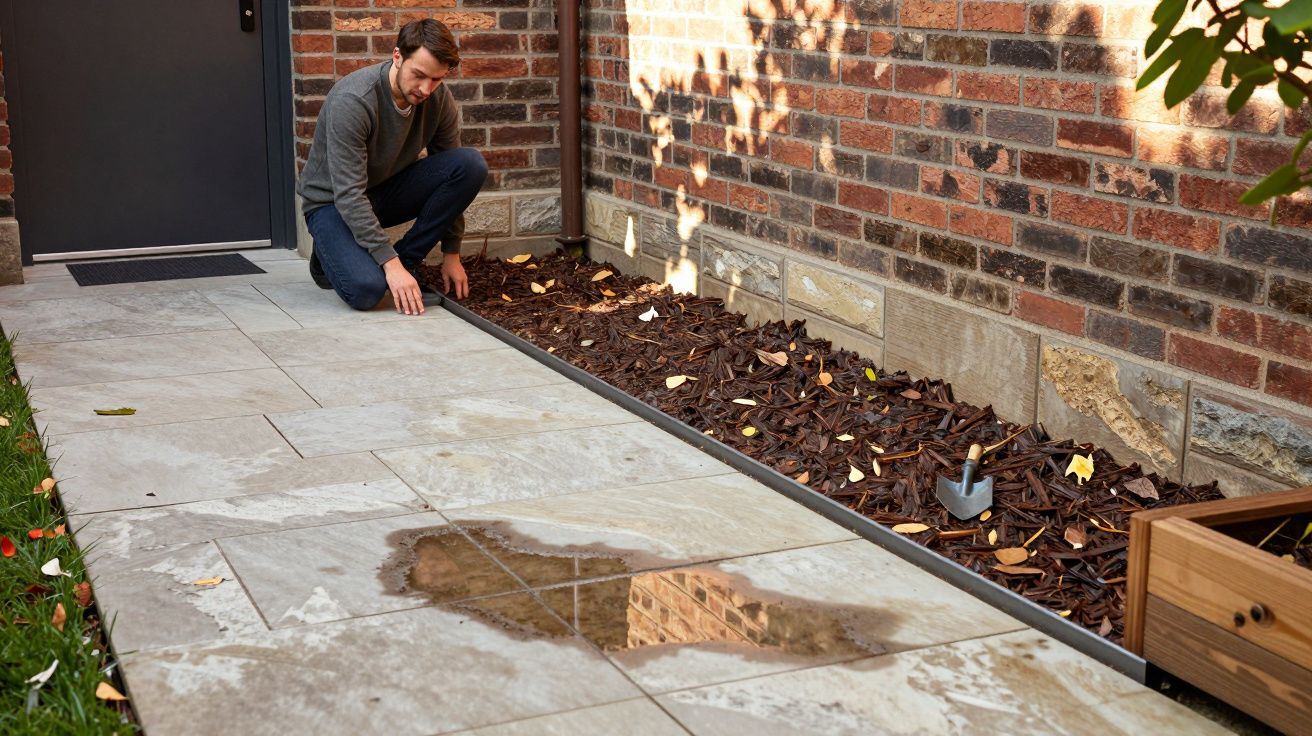
- Edging and restraint: the “invisible frame” that keeps paving and gravel from migrating.
- Drainage decisions: the quiet fork in the road-soakaway, channel drain, permeable build-up, or simply better grading.
A useful way to think of it: the finished surface is the outfit. The sub-base is the posture that makes it sit right.
The project context that changes everything
Two gardens can look identical on day one and behave completely differently by month six, because their project context isn’t the same. Soil type, slope, access, and what’s already underground decide the method more than taste does.
Clay soil can hold water like a bowl; sandy soil can slump if it’s not contained. A gentle slope can be your friend, unless it aims at your back door. Poor access can double labour time if everything has to come through the house in builders’ bags. And existing services-electric, water, drainage-turn “simple digging” into “careful digging”.
If you want fewer surprises, ask early questions that force the hidden realities into daylight:
- Where is water expected to go in heavy rain?
- What are the finished levels relative to the house damp-proof course and air bricks?
- Is the build-up suitable for the intended load (foot traffic, BBQs, a hot tub, a car)?
- What happens if we uncover rubble, old footings, or a previous patio base?
- How will access and storage work day-to-day, not just on delivery day?
The best answers aren’t dramatic. They’re specific.
The “awkward middle” decisions that cost the most (if you avoid them)
There’s a moment in most builds when you’re asked to decide something that isn’t photogenic: a drain position, a step height, the exact line of an edge. It can feel petty compared to choosing stone, but it’s the stuff that locks in comfort and maintenance.
Common ones include whether to add lighting conduit now (even if lights come later), how to handle a manhole cover without making it the centrepiece, and where the thresholds land so doors open cleanly. These are the decisions that, if delayed, get “solved” with compromises you’ll notice every time you use the space.
A small rule that saves big regret: if a future change would require lifting hard landscaping, do the groundwork now.
How to live through it without hating your own house
There’s no way to make this phase elegant, but you can make it survivable. Think of it like bad weather: you don’t fight it, you kit out for it.
- Create one clean route from back door to bin/driveway and protect it; insist it stays clear.
- Agree working hours and noise windows so you’re not constantly bracing for the next cut-off saw.
- Store materials deliberately (not “wherever”) so access doesn’t deteriorate as deliveries stack up.
- Ask for a weekly reset: a 30-minute tidy at the end of the week that makes Monday feel possible.
- Photograph progress every few days; it stops the “nothing’s happening” spiral when the work is mostly below ground.
And be honest about your own threshold. If you work from home, tell your contractor what you actually need-quiet mornings, a clear patio door, somewhere to park. Good builds run on practical agreements, not heroic endurance.
The messy middle isn’t a sign your project is failing. It’s often the sign it’s being built properly.
| Point clé | Détail | Intérêt pour le lecteur |
|---|---|---|
| The chaos is structural work | Levels, sub-base, edging, drainage | Helps you judge progress beyond appearances |
| Project context drives method | Soil, slope, access, services | Reduces surprises and budget creep |
| Early “boring” decisions matter | Thresholds, manholes, conduits, falls | Prevents expensive rework and daily annoyances |
FAQ:
- What’s the biggest red flag during garden construction? Vague answers about levels and drainage. If nobody can explain where water goes, you’re gambling with the finished result.
- How long should the messy phase last? It depends on scope and access, but the groundwork often takes longer than people expect because it’s measured, compacted, and checked in stages.
- Why does it look worse before it looks better? Because the usable surface has to be removed to build the layers that make the new surface stable and long-lasting.
- Can I change the design mid-build? Sometimes, but changes that affect levels, drainage, or retaining edges can cascade into extra labour and materials. Ask what needs redoing before you say yes.
- What should I ask for in updates? Photos of set-out lines, level readings, sub-base depth, and drainage details-small proofs that the invisible work is being done properly.




Comments (0)
No comments yet. Be the first to comment!
Leave a Comment