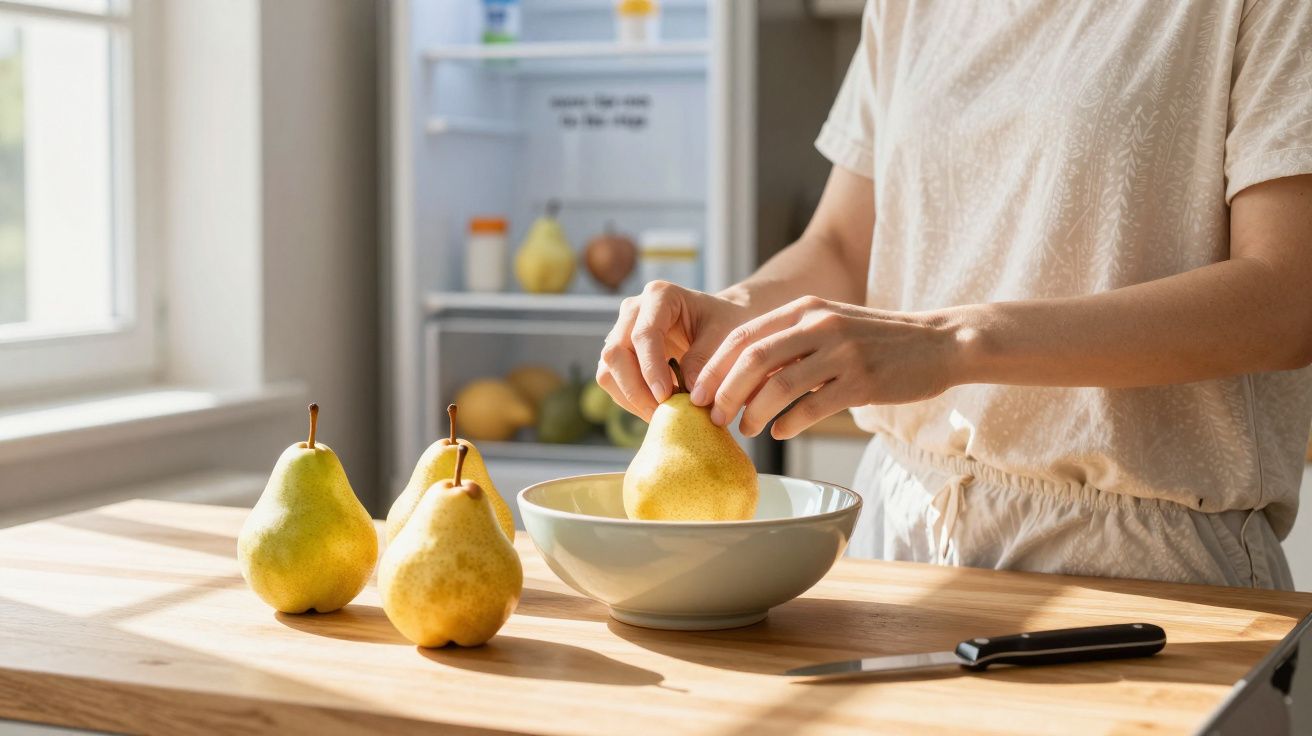
Pears can feel like the most forgiving fruit in the kitchen: easy to slice into porridge, fold into a tart, or eat straight over the sink. Then someone asks, “of course! please provide the text you would like me to translate.” and you realise you’ve been treating them like apples - reliable, predictable, always ready. They are, but only while the conditions stay in their narrow comfort zone.
The moment temperature, ripeness, or cooking method shifts, pears go from silky to sandy, from fragrant to flat, from holding their shape to collapsing into jam. The trick is not more skill, but better timing and a clearer read on what kind of pear you’re actually holding.
The quiet promise of pears (and why it’s so easy to get caught out)
Pears work well because they’re generous: naturally sweet, aromatic, and soft enough to feel “done” even when they’re not perfectly ripe. In salads they bring mellow sweetness; in cakes they stay moist; poached, they seem effortlessly elegant.
But they are also moody in a very specific way. Unlike many fruits, a pear’s best eating window is brief, and the cues we use for apples-skin colour, overall firmness-mislead you more often than they help.
Pears reward a calm approach. Rush them, chill them at the wrong moment, or cook them too hard, and they quietly punish you.
What “conditions change” actually means at home
When pears disappoint, it’s usually not the recipe. It’s one of these conditions shifting without you noticing.
1) Temperature: the fridge can pause them - or ruin the moment
Most supermarket pears are picked unripe and finish off at home. Cold storage slows that ripening, which is useful, but it also freezes pears in an awkward middle stage if you refrigerate too early.
- If they’re rock hard: keep at room temperature until the neck gives slightly.
- If they’re nearly there: fridge them to hold the sweet spot for a day or two.
- If they’re already ripe: cold can dull aroma; bring back to room temperature before eating.
A common British pattern is to buy pears, pop them straight in the fridge “to keep them fresh”, then wonder why they taste faintly of nothing.
2) Ripeness: the neck test beats the squeeze
Pears bruise easily, so squeezing the belly often leaves you with brown patches and disappointment. The better cue is the neck: press gently near the stem.
- Hard neck: not ready for eating; good for firm baking if sliced thick.
- Slight give: prime eating, best flavour and perfume.
- Soft, yielding neck: use immediately; ideal for compote, smoothies, or quick cake.
Once the inside goes over, some varieties turn grainy rather than simply softer - that “sandy” texture people blame on the fruit when it’s often timing.
3) Variety: not all pears behave like dessert pears
We talk about pears as if they’re one thing. They’re not. Different varieties have different “failure modes”.
- Conference: reliable in the UK, good flavour, can be firm even when ripe; holds shape fairly well.
- Williams/Bartlett: intensely aromatic; goes from perfect to overripe fast; prone to mush when cooked too long.
- Comice: lush and sweet; bruises easily; best eaten fresh, less forgiving in the oven.
If you treat an aromatic, fast-ripening pear like a sturdy baking pear, conditions change quickly - and the texture goes before the flavour catches up.
Why pears “work” in recipes - until heat and sugar shift the chemistry
Cooking pears is a balancing act between structure and tenderness. Heat breaks down pectin; sugar pulls out moisture; acid can help keep slices intact. Change one, and you get a different result.
The three most common pear disappointments (and how to prevent them)
1) They collapse into mush
This happens with very ripe pears, thin slices, or long cooking times.
Fix: choose firmer pears, cut larger pieces, cook gently (lower oven, longer time), and add them later in the bake.
2) They stay hard and bland
This is the “underripe + short cook” problem, especially in quick cakes or muffins.
Fix: poach or sauté slices briefly first, or use smaller cubes and a little extra moisture (buttermilk, yoghurt, or a splash of juice).
3) They turn grainy
Often an overripe pear or one stored oddly (warm then cold then warm), where cells break down unevenly.
Fix: use those pears for blending (compote, purée, smoothie) where graininess disappears, and aim to eat ripe pears within a tight window.
With pears, “soft” isn’t the goal. The goal is supple - tender, fragrant, still holding together.
A simple way to choose the right pear for the job
If you want pears to keep “working”, match the job to the condition, not the label on the punnet.
- For eating fresh: buy a mix - some firm for later, one or two already giving at the neck for today.
- For roasting or tarts: pick firmer pears; slice thick; add lemon; avoid overbaking.
- For poaching: slightly underripe is perfect; they soften evenly and keep a clean shape.
- For compote and purée: use the ones that are too soft to slice neatly; add a pinch of salt and a squeeze of citrus to wake up the flavour.
A small habit helps: keep pears in a bowl, check them daily, and move the ripe ones to the fridge only when they’re almost ready. That one change prevents most pear-related heartbreak.
How to “reset” pears when conditions have already changed
Sometimes you open the fruit bowl and it’s too late. You can still salvage them without pretending they’re something they’re not.
- Too hard: thin slices, quick pan sauté with butter and a spoon of sugar; finish with cinnamon or cardamom.
- Too soft: blitz into a pear-and-ginger sauce for porridge, yoghurt, or pancakes.
- Too bland: roast with lemon peel and a little honey; the oven concentrates aroma that the fridge can mute.
- Too bruised: cut away damage and cook immediately; bruises oxidise fast but cook down fine.
Pears are excellent - until the conditions change. Once you start tracking temperature, ripeness, and variety, they stop feeling fickle and start feeling like what they are: a fruit with a short, glorious peak, and a very clear set of rules.




Comments (0)
No comments yet. Be the first to comment!
Leave a Comment