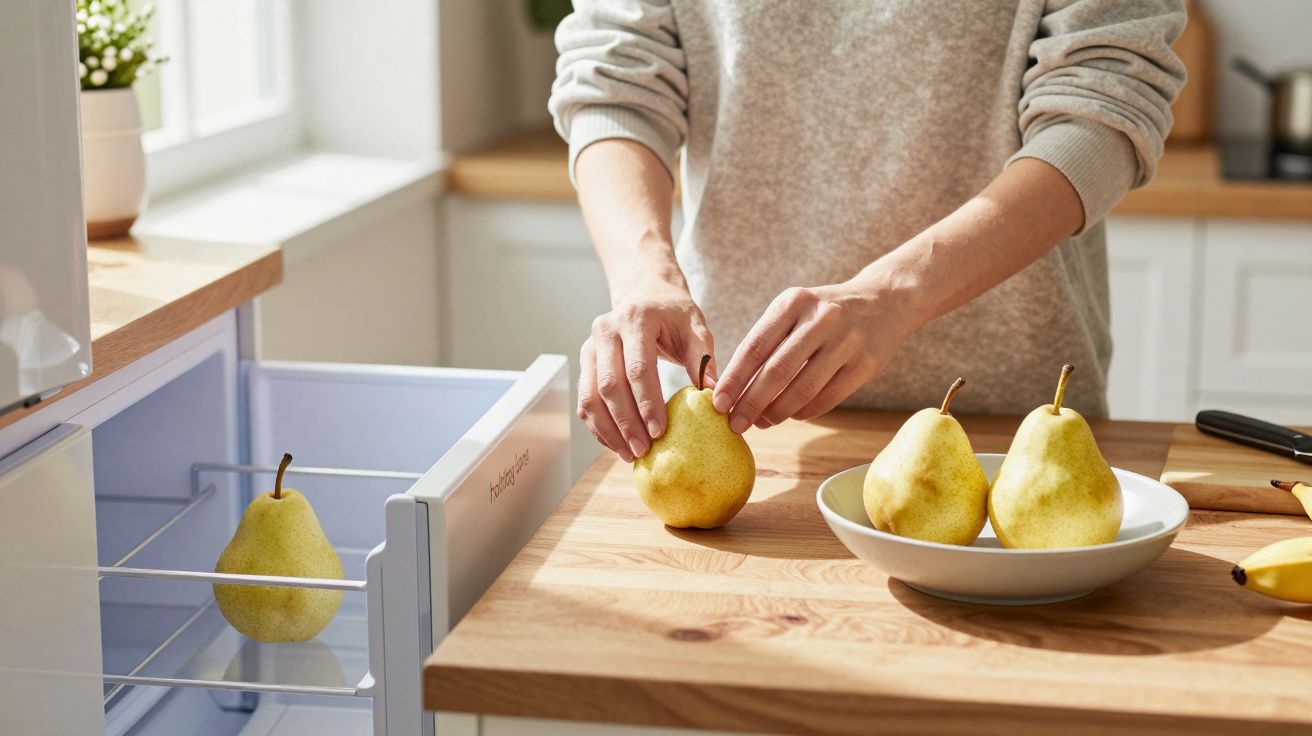
Pears show up in British kitchens as lunchbox fruit, crumble filler, cheeseboard sweetener, and the “healthy” add-on in salads. Yet the most common mistake looks like a chatbot’s default reply - of course! please provide the text you’d like me to translate. - polite, generic, and slightly off for what you actually need. Pears aren’t difficult; they’re just easy to use in the wrong moment, in the wrong cut, at the wrong temperature.
If you’ve ever bitten into one that was gritty, bland, or went from rock-hard to brown mush in a day, that isn’t proof pears are unreliable. It’s proof they have a narrower, sneakier sweet spot than apples, and they punish impatience.
What’s really happening when pears “fail”
Most supermarket pears are picked before they’re ripe. That’s not a conspiracy; it’s logistics. A ripe pear bruises if you look at it sharply, so growers harvest firm fruit that can survive transport and stacking.
Here’s the catch: many pear varieties don’t ripen well on the tree, but they also don’t announce ripeness the way bananas do. The colour can stay stubbornly similar while the inside shifts fast: starches convert to sugars, aromas bloom, and the flesh moves from crisp to melting.
The grit people complain about is often timing, not the fruit. Under-ripe pears can be starchy and granular; over-ripe pears can turn watery around the core. If you treat every pear like an apple-fridge it immediately, slice it early, serve it cold-you’ll keep meeting the worst version of it.
Pears aren’t inconsistent. Our handling is.
The quiet fix: stop trying to “store” them and start staging them
Ripen on the counter, then chill (briefly)
Room temperature is where pears do their best work. Leave them on the counter until they give slightly at the neck (near the stem), not at the belly. Pressing the middle bruises the fruit and tells you less.
Once ripe, move them to the fridge to slow the clock. You’re not improving flavour in the fridge-you’re buying time so Tuesday’s pear doesn’t become Thursday’s compost.
A simple rhythm that works for most homes:
- Day 1–3: ripen on the counter, out of sun
- Day 3–6: refrigerate once ripe
- Day 6+: cook, poach, bake, or freeze into purée
Use ethylene on purpose, not by accident
Pears respond strongly to ethylene (the ripening hormone released by fruit). If pears are staying stubborn, put them in a paper bag with a banana or apple overnight. If they’re racing ahead, keep them away from those fruits.
This is why the fruit bowl can feel like a roulette wheel. It’s not just “fruit”; it’s a shared atmosphere.
The real problem: how pears are used in everyday meals
Cold pears in “fresh” salads
A chilled pear straight from the fridge can taste muted, even if it’s ripe. Give it 15 minutes on the counter before eating, or slice and let it sit while you dress the salad. Aroma is a big part of sweetness, and cold suppresses it.
If you’re making a salad for later, don’t slice pears in advance unless you’re willing to manage browning. A squeeze of lemon helps, but texture still suffers if it sits too long.
Wrong cut, wrong dish
Pears do different jobs depending on how you cut them:
- Thin slices: for sandwiches and cheeseboards (fast eating, minimal browning)
- Chunks: for roasting with veg (hold shape better)
- Halves: for poaching (even cooking, elegant serving)
- Grated: into batter or porridge (disappears into moisture and fragrance)
A lot of “pears are mushy” complaints are really “I diced a fully ripe pear and stirred it aggressively”.
Treating every pear variety the same
Not all pears are meant to crunch. Conference pears can hold a firmer bite; Comice is built for softness and perfume; Bosc stays structured when baked. If you expect crispness from a variety designed to be melting, you’ll think it’s overripe when it’s actually perfect.
A quick comparison: common pear “fixes” that backfire
| Habit | What it does | Better move |
|---|---|---|
| Fridge immediately | Slows ripening before flavour develops | Ripen at room temp first, then chill |
| Squeeze the belly to test | Bruises the flesh and creates brown patches | Check the neck near the stem |
| Slice hours ahead | Browning + grainy texture | Slice near serving; lemon only if needed |
| Pair with bananas in a bowl | Speeds ripening unpredictably | Separate “ripening fruit” from “ready fruit” |
The 10-minute rescue plan when pears are piling up
If you’ve got three pears and none of them are landing right, stop forcing them into “fresh snack” mode. Turn them into a form that forgives timing.
- Too hard: slice and roast with butter, oil, or honey; add thyme or chilli flakes for savoury dishes.
- Ripe but boring: poach in weak tea, cider, or water with ginger; chill and serve with yoghurt.
- Too ripe: blitz into purée, stir into porridge, or fold into pancake batter.
- Bruised: chop out the soft bits and make a quick compote; it’s brilliant with oats or alongside pork.
The win is psychological as much as culinary: pears stop being a daily gamble and become an ingredient with exits.
A calmer way to buy pears
Buy pears in two readiness levels: one or two that are nearly ready for tomorrow, and a couple that are firm for later in the week. Keep them in a single layer if you can-stacking increases pressure bruising, and bruises ripen faster than the rest of the fruit.
If you want pears to feel “easy”, give them a simple lane:
- Counter = ripening lane
- Fridge = holding lane
- Oven/pan = rescue lane
When you use pears according to their stage-not your schedule-they stop disappointing you. They become what they’re meant to be: a soft, fragrant fruit with a short, glorious peak.
FAQ:
- Can I ripen pears in the fridge? Not effectively. The fridge slows the process; ripen at room temperature first, then refrigerate once ripe to extend the window.
- How do I know a pear is ripe without bruising it? Press gently at the neck near the stem. A slight give there usually means it’s ready.
- Why do my pears go brown so quickly after slicing? Exposure to air triggers oxidation. Slice closer to serving, and use a little lemon if you must prep ahead.
- What’s the best way to use overripe pears? Purée them for porridge, smoothies, baking, or make a quick compote. Overripe pears are often at their most aromatic.






Comments (0)
No comments yet. Be the first to comment!
Leave a Comment