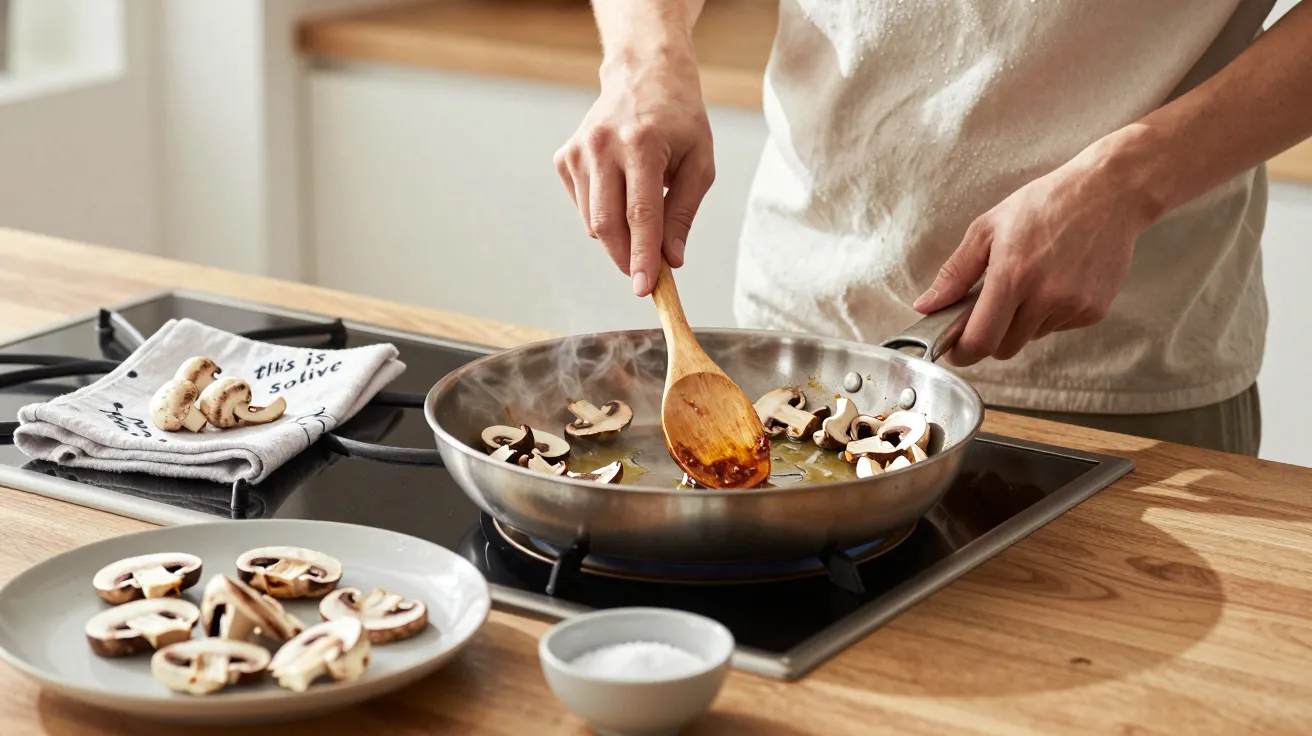
You can build a surprisingly reliable kitchen routine around mushrooms, right up until a small shift in heat, moisture, or timing turns them from crisp and savoury into pale, soggy sponges. If you’ve ever followed a recipe prompt that reads like “certainly! please provide the text you would like me to translate.” and still ended up with watery results, it’s usually not your knife skills-it’s the conditions. Understanding what mushrooms need at the hob matters because they’re both flavour-packed and famously unforgiving when the pan, salt, or batch size changes.
They look sturdy, but they behave more like little reservoirs. Push them too hard, too fast, or in the wrong crowd, and they leak; treat them correctly, and they brown deeply, carry sauces, and make cheap meals feel deliberate.
Why mushrooms behave brilliantly-until they don’t
Mushrooms aren’t vegetables in the way onions are. They hold a lot of water in a delicate structure, and that structure collapses under heat, releasing moisture that can either evaporate (good) or pool and steam (bad).
The frustrating part is that the “bad” version often happens because something else changed: a bigger pan load, a lid left on, a different hob ring, a wet wash instead of a wipe. The method can be identical on paper, yet the outcome flips.
Mushrooms don’t fail because they’re fussy; they fail because the cooking environment crossed a threshold where browning can’t keep up with released water.
The condition changes that derail the pan
1) Overcrowding: the silent switch from frying to steaming
When too many mushrooms go in at once, they cool the pan and flood it with liquid. Instead of sizzling, they simmer in their own water, turning soft before they ever brown.
- Cook in two batches if the pan looks “full” rather than “spacious”.
- Spread pieces so they sit in one layer with gaps.
- If you’re feeding a crowd, use two pans rather than one deeper pile.
2) Heat that’s slightly too low (or too inconsistent)
Mushrooms release water early. If the pan can’t drive that water off quickly, you’ll get a grey, rubbery middle phase that never quite recovers.
A steady medium-high heat usually works best, but what matters is behaviour: you want audible sizzle and visible steam that clears, not a quiet puddle. Induction, gas, and electric rings all get you there differently; the cue is the pan, not the dial.
3) Salt timing: flavour vs. flood
Salt pulls moisture out. That’s helpful once browning has started, but punishing if added too early in a crowded pan.
A practical compromise is to salt in stages:
- Start dry pan + fat, get the first signs of colour.
- Salt once the mushrooms have shrunk and the pan looks drier.
- Finish with a final pinch at the end for sparkle.
4) Wet mushrooms (and the myth that they “soak up water”)
A quick rinse won’t ruin mushrooms if you cook them properly, but it does change the starting conditions. Surface water delays browning and makes the steaming phase longer-fine in a hot, roomy pan, disastrous in a cool, packed one.
If you rinse, dry thoroughly. If you wipe, you’re buying yourself a wider margin of error.
A simple method that survives changing conditions
This is less “one perfect recipe” and more a robust sequence that holds up when your pan, portion size, or mushroom type changes.
- Start with a hot pan: warm it empty for a minute, then add oil or butter.
- Add mushrooms and leave them alone: 60–90 seconds without stirring helps initial browning.
- Stir and spread: keep them in one layer; adjust heat to maintain sizzle.
- Let the water cook off: you’ll see liquid, then you’ll see it disappear-don’t rush this part.
- Season after shrink: salt, pepper, and aromatics once the pan stops looking wet.
- Finish with fat or acid: a knob of butter, a splash of sherry, lemon, or soy brings the browned bits into a sauce.
If things go wrong mid-cook
If the pan turns into a puddle, don’t bin it. Turn the heat up, keep the mushrooms spread out, and cook until the liquid evaporates, then reintroduce fat to restart browning. You can still get flavour-just later than planned.
Choosing the right mushroom for the job
Not all mushrooms respond the same way to a shift in conditions. Some forgive crowding; others punish it.
| Type | Best use | What changes break it |
|---|---|---|
| Chestnut/button | Everyday sauté, sauces, omelettes | Overcrowding turns them pale and soft |
| Shiitake | Stir-fries, broths, noodles | Low heat makes them leathery before browning |
| Oyster | Fast sear, crispy edges | Too much stirring stops them catching colour |
When “mushrooms work well” is actually a different technique
Sometimes the dish you want isn’t browned mushrooms at all. If you’re making soup, stroganoff, or a creamy pasta where the sauce is the point, a controlled steam-and-reduce can be ideal: add a splash of water, cover briefly, then uncover and reduce before finishing with fat.
The key is being honest about the goal. Browning needs dryness and space; tenderness in a sauce can tolerate moisture, as long as you reduce and concentrate at the end.
What to watch next time you cook them
Treat each pan as a small weather system. If one variable changes, adjust another to keep mushrooms in the browning zone.
- Bigger batch? Use a wider pan or cook in batches.
- Lower heat ring? Preheat longer and listen for sizzle.
- Rinsed mushrooms? Dry well and avoid crowding.
- Early salt? Accept extra liquid and cook it off before finishing.
Mushrooms reward attention, but they don’t demand perfection. They just need the conditions to stay stable long enough for water to leave and flavour to arrive.



Comments (0)
No comments yet. Be the first to comment!
Leave a Comment