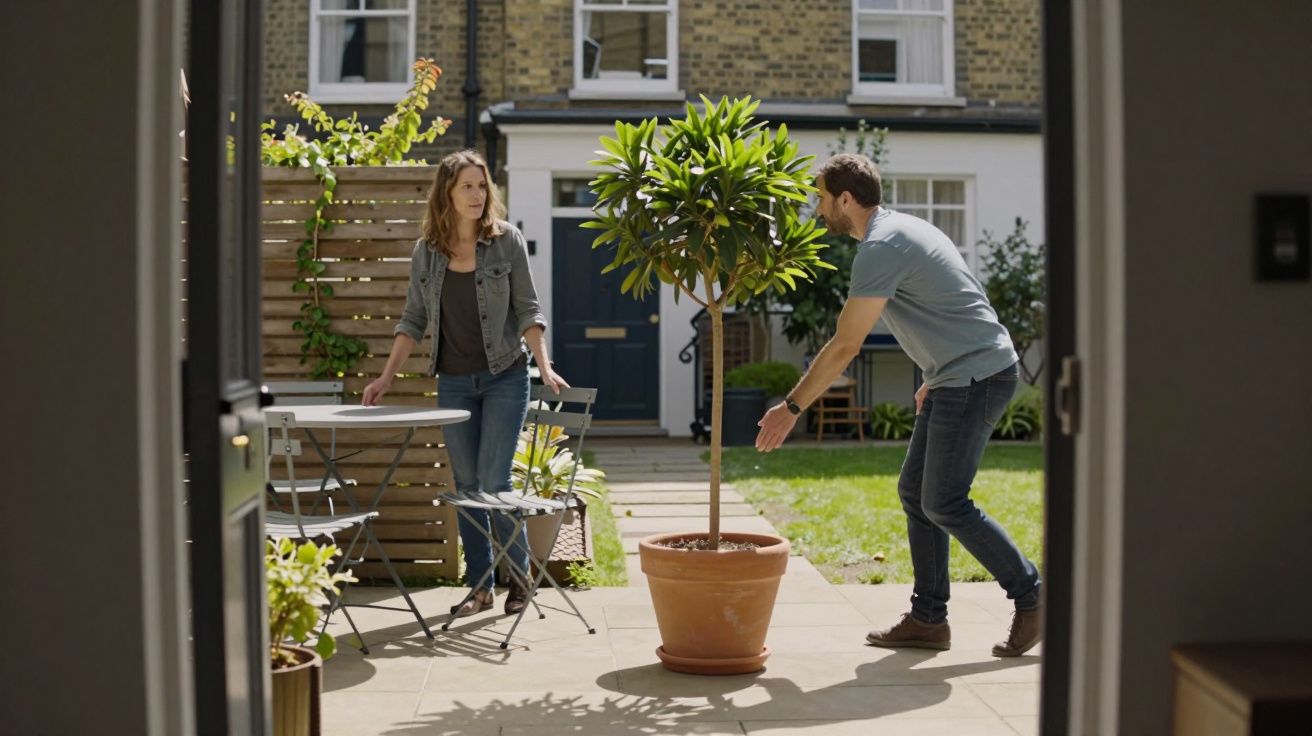
London gardens reward you quickly: a bench here, a path there, a climber to soften a fence. But the layout trap they hide more than any other city is poor sightline control-those invisible lines of view that decide whether a space feels calm, private and usable, or oddly exposed and hard to settle in.
The surprise is how often it happens in “nice” gardens too. London plots are tight, boundaries are overlooked, and a single badly placed feature can make the whole space feel like a corridor or a stage, even when the planting is lush.
The London layout trap: you can see everything at once
In many cities, distance forgives a lot. In London, the garden is often a short rectangle with neighbouring windows on three sides, so every decision becomes magnified. When the back door opens straight onto a clear view of the entire plot, the brain reads it as a thoroughfare, not a place to linger.
That’s why gardens can feel strangely uncomfortable even when they look tidy. If the best seat is on axis with a neighbour’s kitchen window, or the patio faces directly into the brightest part of the garden, you’ll unconsciously keep moving rather than relaxing.
A garden that reveals itself all at once often feels smaller, busier and less private than one that unfolds in stages.
Why it’s worse in London than elsewhere
Overlooked from above, not just from the side
Terraces, loft conversions and higher rear extensions change the angle of being seen. A fence can block lateral views, yet do nothing for sightlines from upstairs. London gardens are also more likely to back onto other gardens, doubling the number of potential viewpoints.
The “through-line” problem
Many homes have a back door aligned with the centre of the plot. Add a straight path to a shed, a central lawn, or a pergola in the middle, and you’ve created a long runway. The garden becomes something you look down and walk through, not somewhere you occupy.
Hard edges amplify exposure
Brick walls, pale paving and wide open patios bounce light and draw the eye. In a small space, that makes sightlines feel even sharper, and it exaggerates the sense that you’re on display.
The quick self-test: find your unwanted sightlines
You don’t need a plan drawing. You need ten minutes and a willingness to stand in slightly odd places.
- Stand at the back door at night with the interior lights on. What can a neighbour see straight through?
- Sit where you want to sit (not where the current furniture forces you). What are you looking at: bins, a gate, a blank fence?
- Walk to the far end and look back to the house. Is there a single straight line from fence to door?
- Check the “diagonals”: corner to corner. These are often the strongest sightlines in narrow plots.
If the answer is “everything is visible, everywhere”, you’ve found the trap.
Fix the view before you buy more plants
Planting is powerful, but it’s slower than moving a path or changing the position of a sitting area. The most effective approach is to control what the eye meets first, then decide what gets revealed second.
Start with a focal stop, not a full screen
A common mistake is trying to block all views with tall, dense screening. In small gardens, that can feel claustrophobic and steals light. A better move is a focal point that stops the main sightline without sealing the space.
Good “stops” for London plots include:
- A small multi-stem tree placed off-centre (amelanchier, crab apple, birch in the right spot)
- A slatted screen with planting in front (airy, not solid)
- A pergola post line that breaks the runway
- A large pot or water bowl used as a visual anchor
Shift the route, even slightly
If your path runs dead straight down the middle, consider a gentle dog-leg. You’re not trying to create a maze; you’re simply preventing the garden from reading as one long tube.
A tiny adjustment often works:
- Move the path 30–60 cm off-centre.
- Widen it near the seating area, narrow it elsewhere.
- Let planting “nick” the edge so the line isn’t crisp.
That change alone can make the garden feel wider and more private.
Seating is where sightline control becomes real
People don’t experience gardens from above. They experience them from a chair, with a mug, under a bit of wind and neighbour noise. If the seat is wrong, nothing else lands.
The two-seat rule that saves small gardens
London gardens often need more than one usable perch, even if they’re both small.
- One seat near the house for quick use (morning coffee, watching kids).
- One seat deeper in the garden for evening calm and a different view.
These don’t need to be full dining sets. A narrow bench, a bistro pair, or built-in seating can be enough, as long as each spot has a distinct outlook and doesn’t sit on the main runway.
If your only seat is on the main axis, you’ll feel watched even when nobody is watching.
Aim the seat at greenery, not boundaries
When space is tight, people default to pushing furniture against a wall. That often points you straight at fences and makes the garden feel boxed in. Angling seating 10–20 degrees can change the entire experience, because your eye stops scanning the boundary line.
A simple layout pattern that works in many London gardens
You can think in “rooms”, but keep it light. In small plots, two zones are usually enough.
| Zone | What it’s for | What should dominate the view |
|---|---|---|
| Near-house terrace | Daily use, easy access | A focal stop 3–6 m out |
| Back zone | Quiet, storage, secondary seat | Planting mass + one feature |
This isn’t about complexity. It’s about making the garden feel intentional, with a first view and a second view.
Common fixes that backfire in London plots
Over-screening the fence line
Tall evergreen panels everywhere can turn a bright garden gloomy. They also make the space feel narrower by emphasising the corridor edges. Use targeted screening where sightlines actually land, and let other sections stay open.
Central lawn with hard borders
A lawn rectangle can be lovely, but in a narrow plot it often reinforces the runway effect. If you want grass, soften one edge with a deeper border so the eye doesn’t read perfect parallel lines.
Putting storage on the main axis
Sheds, bike stores and bin bays are necessary, but when they sit dead centre at the end of the garden, they become the inevitable focal point. Shifting storage to a corner and giving it a green face (climber, trellis, tall pot) improves the whole view instantly.
The quickest “weekend” upgrades that change the feel
If you can’t rebuild anything, you can still improve sightline control with small moves that have outsized impact.
- Add a tall pot with an upright plant (bamboo alternative like clumping grasses, or a small tree) to break the main view.
- Use a slatted panel near the patio edge, not at the back fence, so privacy starts where you sit.
- Create one asymmetrical planting bed that pushes into the lawn/paving line and disrupts the corridor.
- Move the dining table slightly off-centre and angle it so you face planting, not windows.
London gardens don’t need to be bigger to feel better. They need the first view to be kinder, and the main line of sight to be interrupted just enough that the space feels lived-in rather than looked-into.






Comments (0)
No comments yet. Be the first to comment!
Leave a Comment