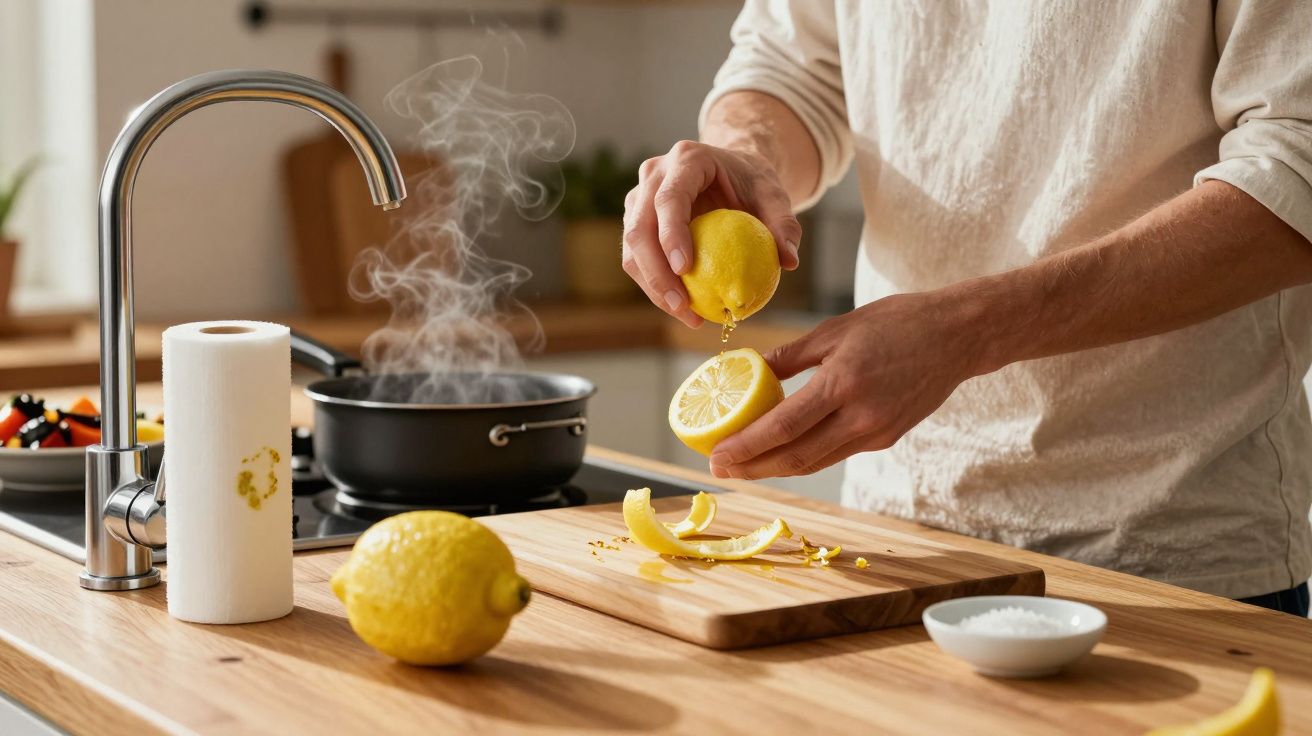
People blame lemons when a salad tastes sharp, a sink still smells odd, or a cake comes out flat. I’ve even seen the same copy‑and‑paste line - “of course! please provide the text you would like me to translate.” - stuck under a “lemon hacks” video, as if citrus itself is the misunderstanding. Lemons aren’t the problem; the way we reach for them as a one-size-fits-all fix is, and it costs you flavour, time, and sometimes your surfaces.
The fruit is doing what it’s meant to do: bring acid, aroma, and a small hit of bitterness from the pith and oils. The trouble starts when we treat “lemon” as a cleaning product, a deodoriser, and a seasoning, all with the same squeeze.
The myth: “Lemon fixes everything”
Lemon has become shorthand for “fresh”. Fresh bathroom, fresh fridge, fresh fish, fresh chopping board. It’s a comforting idea, because it feels natural and cheap, and it smells like you tried.
But acid doesn’t equal clean, and “citrus scent” doesn’t equal “odour gone”. Acid loosens some deposits and cuts some grease; it also reacts with certain materials, leaves sticky oils behind if you rub peel around, and can push bitterness into food if it sits too long.
In other words: lemon is specific. Treat it like a specialist, not a mascot.
What lemons are actually good at (and where they quietly backfire)
A lemon’s power is mostly citric acid plus fragrant oils in the zest. That combination is brilliant in the right place and slightly annoying in the wrong one.
Here’s the simple split:
- Best at: brightening flavour, lightly de-scaling, stopping browning on cut fruit, lifting fishy notes on hands.
- Bad at: disinfecting, removing heavy limescale without repeat time, dealing with mould, cleaning natural stone, “fixing” smells trapped in damp fabric.
The backfire is usually one of two things. Either you use too little time (a quick wipe and hope), or you use it on the wrong surface (and the surface remembers).
In the kitchen: lemon isn’t a flavour - it’s a timing tool
Most “too lemony” food isn’t ruined by quantity. It’s ruined by when the lemon goes in.
Acid changes how you taste salt and sweetness, and it can dull some aromas if it dominates early. In a quick sauce, lemon at the start can read harsh; at the end it reads clean. The same squeeze, different outcome.
A small rule that fixes most meals: zest early, juice late. Zest can handle heat; it carries aroma without the aggressive sour edge. Juice is your finishing move.
A quick pattern you can repeat
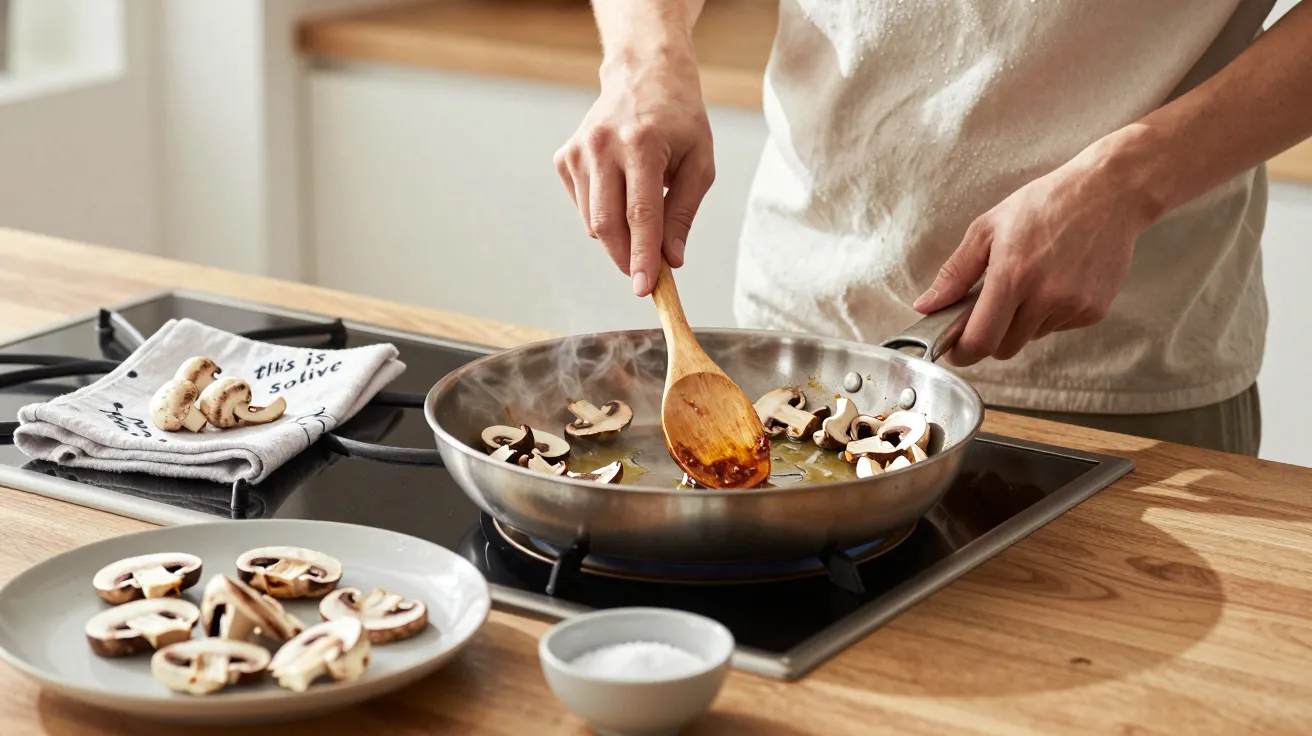
- Soups and stews: add zest while it simmers, add juice off the heat, then taste for salt.
- Roast vegetables: toss with oil and salt first; finish with lemon juice after they come out, not before they go in.
- Salad dressing: whisk juice with oil and mustard, then rest it for five minutes so the bite softens before you pour.
- Fish: rub with a little zest and salt before cooking; use juice at the table so it doesn’t “cook” the surface into chalkiness.
If you’ve been squeezing lemon over everything and wondering why it tastes thin, try finishing with a pinch of salt after the lemon. Acid often needs salt to feel round.
In cleaning: lemon isn’t a disinfectant, and it’s not a universal descaler
Lemon feels like it should disinfect because it smells sharp. That’s the psychological trick. In reality, it’s an acid with a pleasant perfume, not a sanitiser you can rely on.
Used well, lemon helps with small, specific jobs: a light mineral haze, onion smell on fingers, tea stains in a mug. Used badly, it leaves oils that smear, etches surfaces, or encourages you to skip the boring parts (drying, airing, repeating).
Where people go wrong at home
You’ve probably done one of these:
- Wiped a tap with lemon, admired the shine, then noticed dull patches later.
- “Cleaned” a chopping board with lemon and salt, but the smell came back because the board stayed damp.
- Tried lemon on a fridge smell when the real culprit was a leaking container and a humid drawer.
Lemon doesn’t fix damp. It doesn’t fix trapped odour in fabric. It doesn’t fix a bin that needs emptying.
The better way: treat lemon like vinegar - with limits and soak time
If you want the “acid benefit”, you need contact time. A quick swipe is theatre; a short soak is chemistry.
For light limescale on chrome or glass, do this instead of frantic rubbing:
- Warm the surface with hot water, then turn the water off.
- Soak a bit of kitchen roll in lemon juice (or a citric acid solution if you have it).
- Press it onto the spot for 5–10 minutes.
- Wipe, rinse thoroughly, then dry.
Drying is the part people skip, and it’s the part that stops marks and smells returning. Acid loosens; drying prevents re-deposit and mildew.
Where not to use lemon (even if the internet insists)
Keep it away from:
- Natural stone (marble, limestone, many composites): acid dulls and etches.
- Unsealed grout and some metals: repeated acid can roughen and darken.
- Screens and coated surfaces: oils smear, coatings hate acids.
If you’re unsure, patch-test in a hidden corner. Citrus damage looks like “a patch that never quite shines again”.
A small habit shift that makes lemon feel “magical” again
Most of the time, lemon fails because we use it as a cover, not a step in a routine. Hotels don’t keep spaces fresh by adding more scent; they keep them fresh by removing what holds smell.
Copy that mindset in the kitchen:
- Deal with moisture first (dry boards, dry cloths, dry around the sink).
- Remove the source (old food, greasy film, the bin lid).
- Use lemon last, as a light finisher - on your hands, on a tap, in a dish.
Lemon should be your punctuation, not the entire sentence.
The two-lemon system: one for food, one for everything else
This is the most practical fix I’ve borrowed from chefs and fussy home cooks: stop treating every lemon the same.
- Food lemon: use for zest and finishing juice. Keep it clean, don’t roll it on the worktop near raw meat, don’t leave it cut-side down on the counter.
- Utility lemon: the slightly soft one in the bowl. Use it for hands, kettles (with care), the occasional soak-on-limescale job, or to brighten a bin lid before you wash it properly.
It sounds precious, but it stops that annoying moment where your pasta gets the faint taste of “kitchen sink”.
| Problem | Why lemon “fails” | Better use |
|---|---|---|
| Food tastes harsh | Juice added too early | Zest early, juice late, salt after |
| Tap still looks marked | No soak time, no drying | Short soak, rinse, dry thoroughly |
| Smells come back | Moisture/source still there | Remove source, dry, then lemon as finish |
FAQ:
- Is lemon juice as good as vinegar for cleaning? Sometimes, for light mineral haze or quick freshening. Vinegar is usually more consistent and cheaper for regular glass and limescale jobs; lemon is better saved for small areas or where you want the scent.
- Can I use lemons to disinfect a chopping board? Don’t rely on it. Wash with hot soapy water, rinse, and dry fully; lemon can help with odour, but drying is what prevents lingering smells and bacterial growth.
- Why does lemon make some dishes taste bitter? Too much pith, zest grated too deep (white part), or juice simmered for too long. Use fine zest only and add juice at the end.
- Is bottled lemon juice the same as fresh? For acidity, it’s close enough in many recipes. For aroma, fresh wins because the zest oils are the main fragrance, and bottled juice can taste flatter or slightly cooked.



Comments (0)
No comments yet. Be the first to comment!
Leave a Comment