The first time I watched someone swear off broccoli, it wasn’t because of broccoli. It was because someone had treated it like a punishment: grey florets, boiled to surrender, dumped beside chicken with the weary caption of “healthy”. And then, as if the meal needed a final indignity, someone chirped, “of course! please provide the text you would like me to translate.” - a line that landed like a pop-up ad in the middle of dinner.
Broccoli matters because it’s one of the cheapest, most available ways to add fibre, vitamins, and that clean, brassy bitterness that makes richer food taste better. But used badly, it turns into a wet, sulphurous proof that good intentions aren’t the same as good cooking. The vegetable isn’t the problem. Our defaults are.
The real enemy is overcooking (and under-seasoning)
Broccoli is mostly water, held in place by structure. Break that structure with too much heat for too long, and you get two things: softness without pleasure, and that cabbagey smell people blame on the plant rather than the process. A lot of broccoli “hate” is simply trauma from a pot left unattended.
There’s also the quieter issue: people cook broccoli as if it should taste like nothing. No salt in the water. No oil on the roasting tray. No acid at the end. Then they’re surprised it tastes like warm lawn clippings. Bitterness needs framing; it wants salt, fat, and a little sharpness the way a strong coffee wants milk, or a ripe tomato wants flaky salt.
Broccoli is assertive. Treat it as a supporting actor and it will upstage the meal in the worst way.
How to cook it so it tastes like food, not a lecture
If you want broccoli to win people over, aim for one clear outcome: bright green with bite, or properly browned with crisp edges. The middle ground-soft, pale, and damp-is where enthusiasm goes to die.
Here are three repeatable methods that work on a weeknight and don’t require a new personality.
1) Blanch, then dress (for salads and “I can eat this cold” leftovers)
Bring a pot of water to a real boil and salt it until it tastes like the sea. Drop in florets for 90 seconds to 2 minutes, then drain and cool quickly under cold running water (or into an ice bath if you’re feeling organised). You’re not “cooking it through”; you’re setting the colour and taking the raw edge off.
Then treat it like you would any salad that deserves respect:
- Olive oil
- Lemon juice or vinegar
- Salt and black pepper
- Optional: grated Parmesan, toasted nuts, chilli flakes
The point is to let broccoli stay broccoli, but make it sociable.
2) Roast it hard (for crisp edges and conversion therapy)
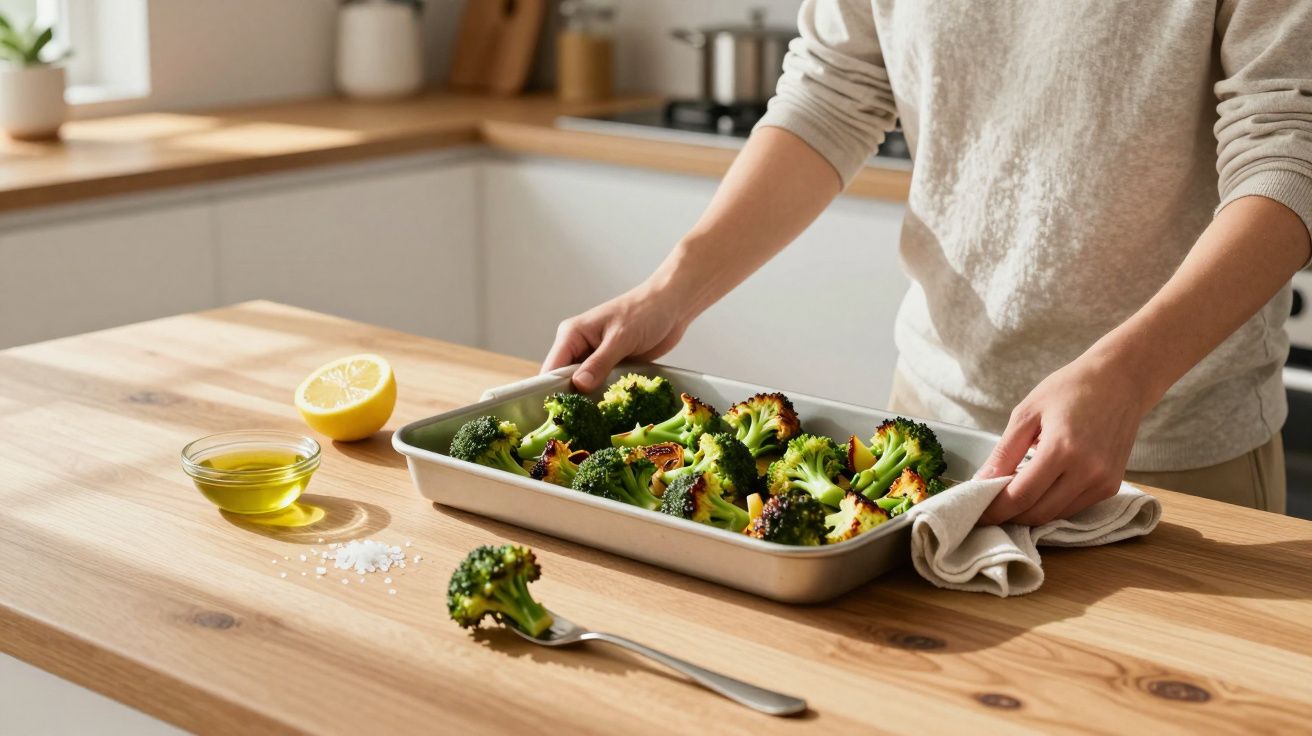
High heat gives you the flavour people think broccoli doesn’t have. Roast at 220°C (200°C fan) with enough oil to coat and enough space that steam can escape. If the tray is crowded, you’re steaming again, just in a different costume.
A simple rule: florets for texture, sliced stems for sweetness. The stems caramelise beautifully when you stop treating them like waste.
- 15–20 minutes, turning once
- Finish with salt and something sharp: lemon, yoghurt, feta, or even a splash of cider vinegar
If you only change one thing about how you cook broccoli, make it this: let it brown.
3) Stir-fry it properly (for those who like snap)
Cut florets small and slice stems thin. Cook quickly over high heat, and don’t fear the aggressive sizzle. A little water at the end (a tablespoon or two) can help steam the thicker bits without turning everything soft.
Finish with a sauce that knows what it’s doing-soy, sesame, garlic, ginger, chilli, a pinch of sugar-then stop. Broccoli doesn’t need a long monologue.
The stem is the best part you’re probably binning
Most people throw away the stems because they look tough, and because nobody taught them what to do with them. Peel the fibrous outer layer with a vegetable peeler, then slice the pale core into coins or matchsticks. It’s sweet, crisp, and far less prone to going mushy than the florets.
If you’re batch-cooking, stems also reheat better. They keep their shape, which means your lunch doesn’t turn into green fog by Thursday.
A small “broccoli protocol” that makes it almost impossible to mess up
When you’re tired, hungry, and cooking on autopilot, defaults matter. Borrow a trick from any good system: a simple checklist you can repeat without thinking.
- Pick a texture: crisp-tender (blanch), browned (roast), or snappy (stir-fry).
- Salt early: salted water, or salt on the tray before roasting.
- Add fat: oil, butter, tahini, yoghurt-choose one.
- Finish with acid: lemon, vinegar, or a pickled element.
- Optional umami: Parmesan, anchovy, miso, soy, toasted nuts.
This isn’t cheffy fussiness. It’s just the difference between “vegetable on the side” and “food I’d choose again”.
What to pair it with so it stops feeling like an obligation
Broccoli is excellent with foods that are rich, cheesy, or slightly sweet. It also loves spice. Pairing is where it stops being a health symbol and becomes part of a meal.
| Pairing idea | Why it works | Fast add-on |
|---|---|---|
| Roast broccoli + sausages | Fat meets bitterness; browning echoes browning | Mustard + lemon |
| Blanched broccoli + pasta | Crunch breaks up softness; green lifts richness | Parmesan + chilli |
| Stir-fried broccoli + tofu or beef | Snap + savoury sauce = balance | Soy + sesame |
The point isn’t to “eat your greens”. It’s to stop wasting them.
When broccoli is cooked with intention, it stops being a moral test and becomes a tool: for contrast, for freshness, for that satisfying bite that cuts through heavy food. People don’t dislike broccoli; they dislike the version of it that tastes like someone gave up halfway.
If you’ve been blaming the vegetable, try blaming the method for one week. Roast it once. Salt it properly. Finish it with lemon. Then decide.
Comments (0)
No comments yet. Be the first to comment!
Leave a Comment